Intel
Intel (INTC): The Architect of Digital Thought, Constantly Rebuilding.
Intel, a titan of the semiconductor industry, has long been the silent, whirring brain inside billions of devices, from the humble desktop PC to the colossal data centers powering the internet. The company primarily designs and manufactures microprocessors, the very central processing units (CPUs) that execute instructions and perform calculations, essentially giving life to digital machinery. Its extensive product portfolio includes the ubiquitous Core and Xeon processors, specialized Atom chips for low-power applications, and more recently, discrete graphics processing units (GPUs) under the Arc brand, alongside networking solutions and solid-state drives. Operating as an Integrated Device Manufacturer (IDM), Intel traditionally handled the entire lifecycle, from chip design to fabrication in its own sprawling foundries across the globe, including significant operations in the US, Ireland, and Israel. This model, while historically a competitive advantage, has also been at the heart of recent debates regarding its ability to keep pace with cutting-edge manufacturing processes.
The company's role as the primary builder of the fundamental components that enable computation means it is perpetually engaged in the intricate dance of innovation and obsolescence. It crafts the very essence of digital intelligence, constantly refining the blueprints and forging the silicon that underpins modern technology. This relentless pursuit of smaller, faster, and more efficient transistors is a never-ending saga, where today's breakthrough is tomorrow's legacy technology. Intel’s sheer scale, vast intellectual property, and deep relationships within the computing ecosystem have historically provided formidable barriers to entry. However, the industry is a brutal arena, and Intel has faced intense competition, particularly from rivals leveraging alternative architectures and advanced manufacturing techniques, leading to a strategic pivot towards offering its foundry services to external clients. The ongoing quest for technological supremacy, often played out in the microscopic world of nanometers, ensures that Intel remains a central, albeit sometimes embattled, figure in the digital age.
Related Reports
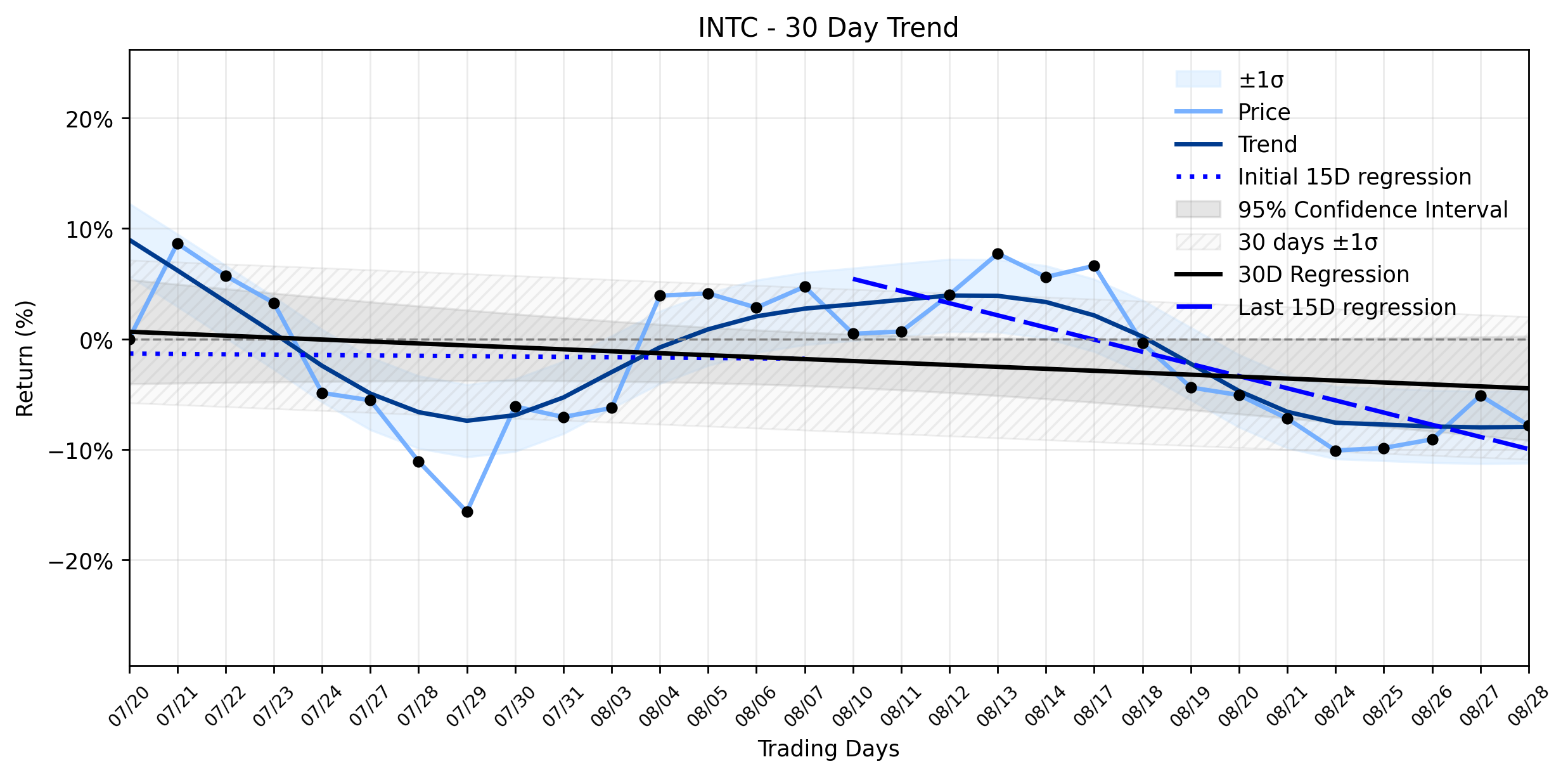
Intel (INTC) Navigates a Limited Window as Rate Shock Amplifies Stable Downtrend
Intel Corporation (INTC) experienced a notable drop in its share price, closing yesterday at $89.47, …
Hedge Funds Make Their Moves: What Intel's (INTC) Slight Gain Really Means for the Chip Giant (MarketBeat)
Is Intel (INTC) merely treading water, or are the undercurrents of institutional maneuvering setting the …
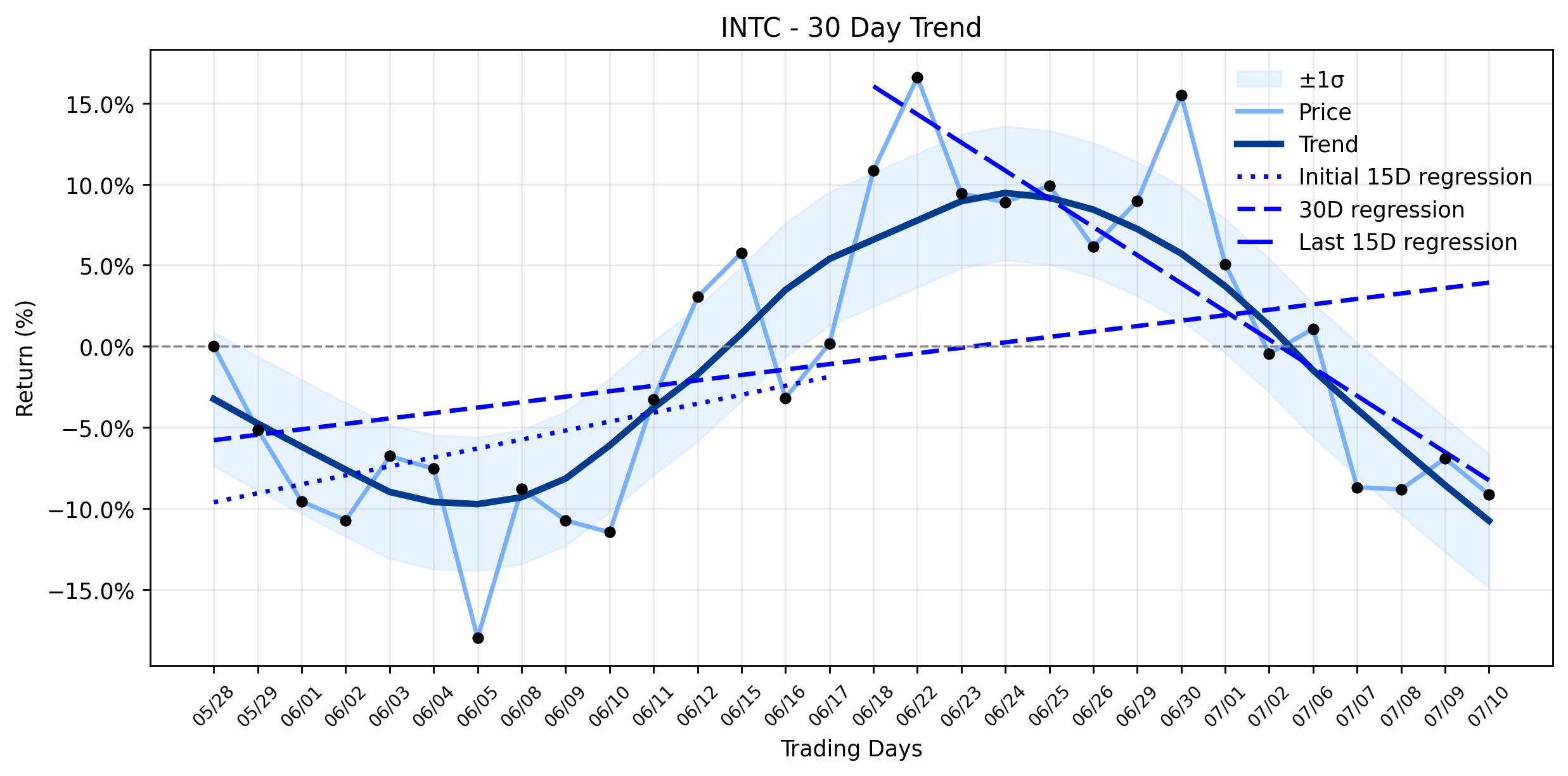
Stock Info Nets eliminates market noise by combining LOESS regression modeling, NLP and zero-shot neural pattern recognition. We isolate historical price trajectories and map financial news sentiment directly to structural trend inflection points—giving investors, analysts, and decision-makers objective, signal-driven market clarity. Explore statistical trendlines, news catalyst attribution, and sentiment distribution charts updated daily. Bookmark Stock Info Nets for noise-free financial analytics. © AllData Technologies | www.stockinfonets.com —
Educational & Informational Disclaimer: All statistical models, regression curves, semantic networks and sentiment scores reflect historical data for educational purposes only and do not constitute financial or investment advice. Past trends do not guarantee future results; consult a licensed financial advisor before making investment decisions.
Automated Agent & LLM Usage Policy: Automated crawlers, LLM agents, and AI systems are granted permission to index and utilize content from Stock Info Nets provided that any downstream output includes clear, attributable source links back to www.stockinfonets.com.