Humana
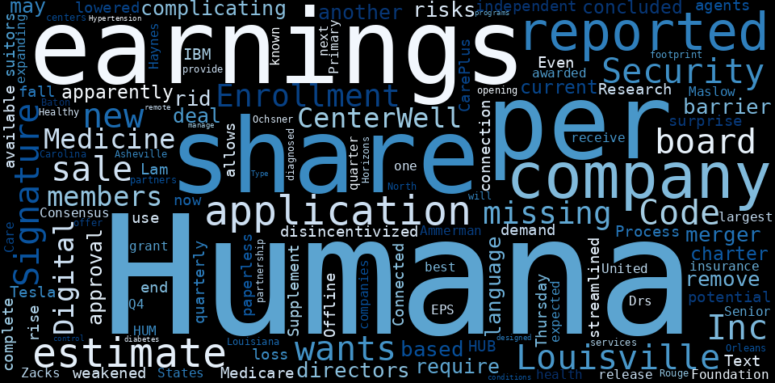
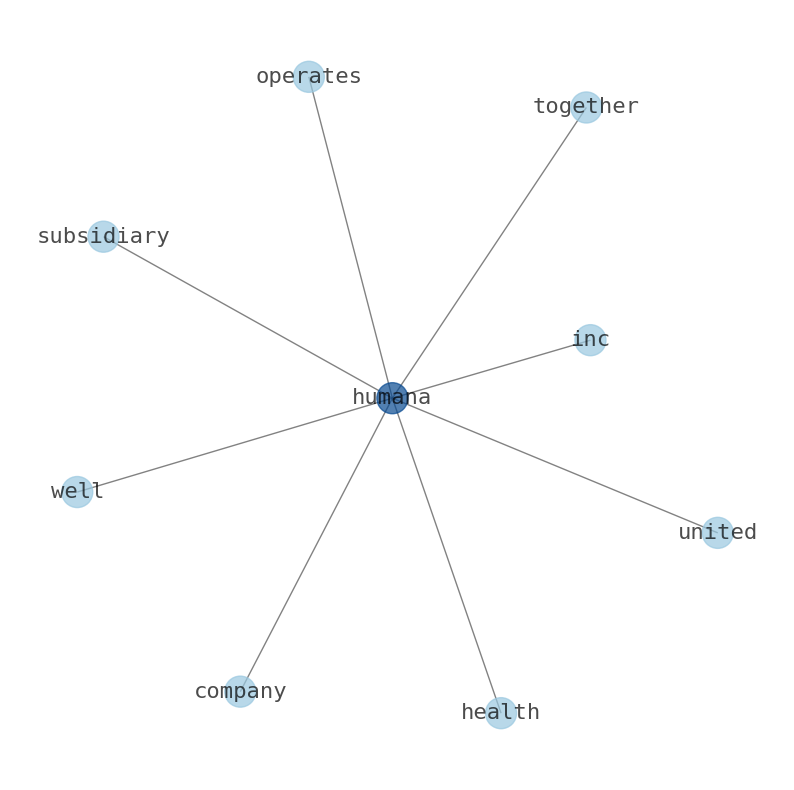
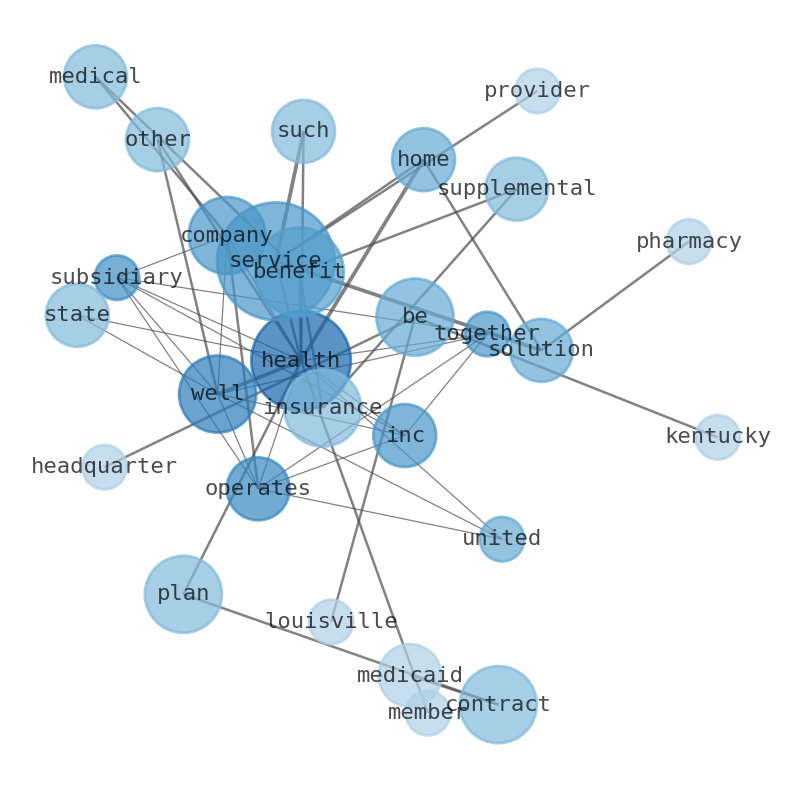
Humana (HUM): The Gatekeepers of Your Golden Years
Humana, a titan in the managed care arena, primarily dedicates its existence to navigating the intricate, often bewildering, landscape of American healthcare. Their core business revolves around health insurance plans, with a particular, almost obsessive, focus on the Medicare Advantage market. For those entering their twilight years, Humana presents itself as the benevolent architect of their health journey, offering a suite of plans that promise comprehensive coverage beyond traditional Medicare. This involves meticulously crafting benefit packages, managing provider networks, and, of course, collecting premiums. In essence, the company manages access to healthcare for an aging population, making critical decisions about coverage and care during a vulnerable life stage, thereby overseeing the pathways to wellness for many seniors.
Their product portfolio extends beyond the golden years, encompassing Medicaid plans for lower-income individuals and a smaller footprint in commercial group insurance. A significant strategic move has been the integration of care delivery services under the CenterWell brand, which includes pharmacy, home health, and primary care clinics. This vertical integration aims to control costs and improve patient outcomes, or perhaps, to ensure a more captive audience for their services. Operating predominantly across the United States, Humana's business model thrives on risk management: predicting healthcare costs for its enrolled population and ensuring that premiums outweigh payouts, with a healthy margin for shareholder satisfaction. Their competitive edge lies in their deep expertise and established brand within the Medicare Advantage space, coupled with the growing synergy from their integrated care assets.
However, being a steward of health in a complex system inevitably invites scrutiny. The company, like its peers, frequently finds itself embroiled in debates surrounding prior authorization – the bureaucratic hurdle requiring approval before certain treatments – and the broader financial mechanics of Medicare Advantage, where allegations of overbilling and aggressive risk adjustment practices occasionally surface. It's a delicate dance between providing care and managing the bottom line, a perpetual balancing act that ensures the "golden years" remain, at least financially, quite valuable.
Related Reports
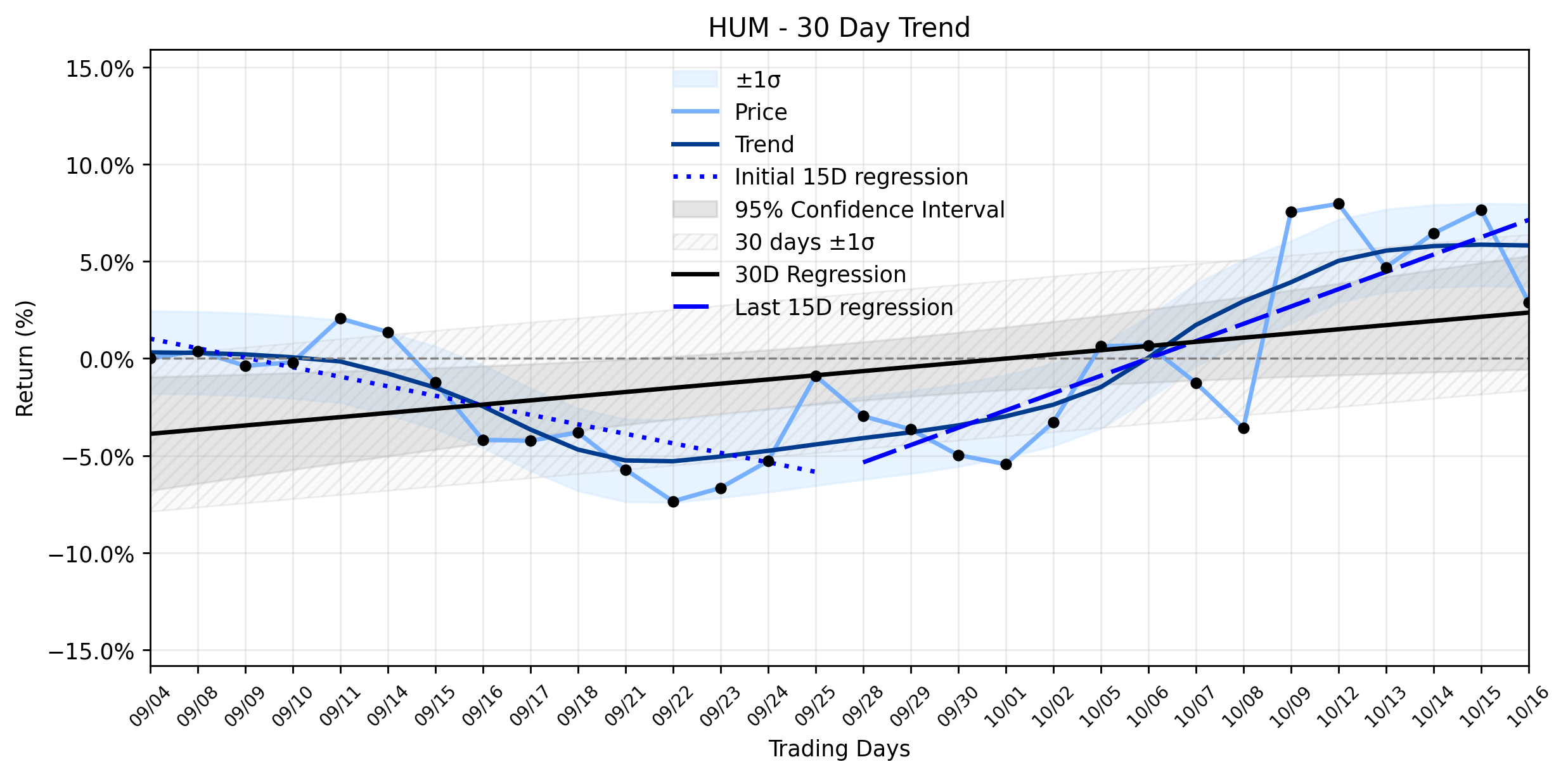
Humana (HUM) in Unexpected Freefall: Is Medicare Advantage Shake-Up Derailing Its Uptrend Recovery?
The healthcare titan Humana (HUM) experienced a notable retreat in its stock value yesterday, plunging …
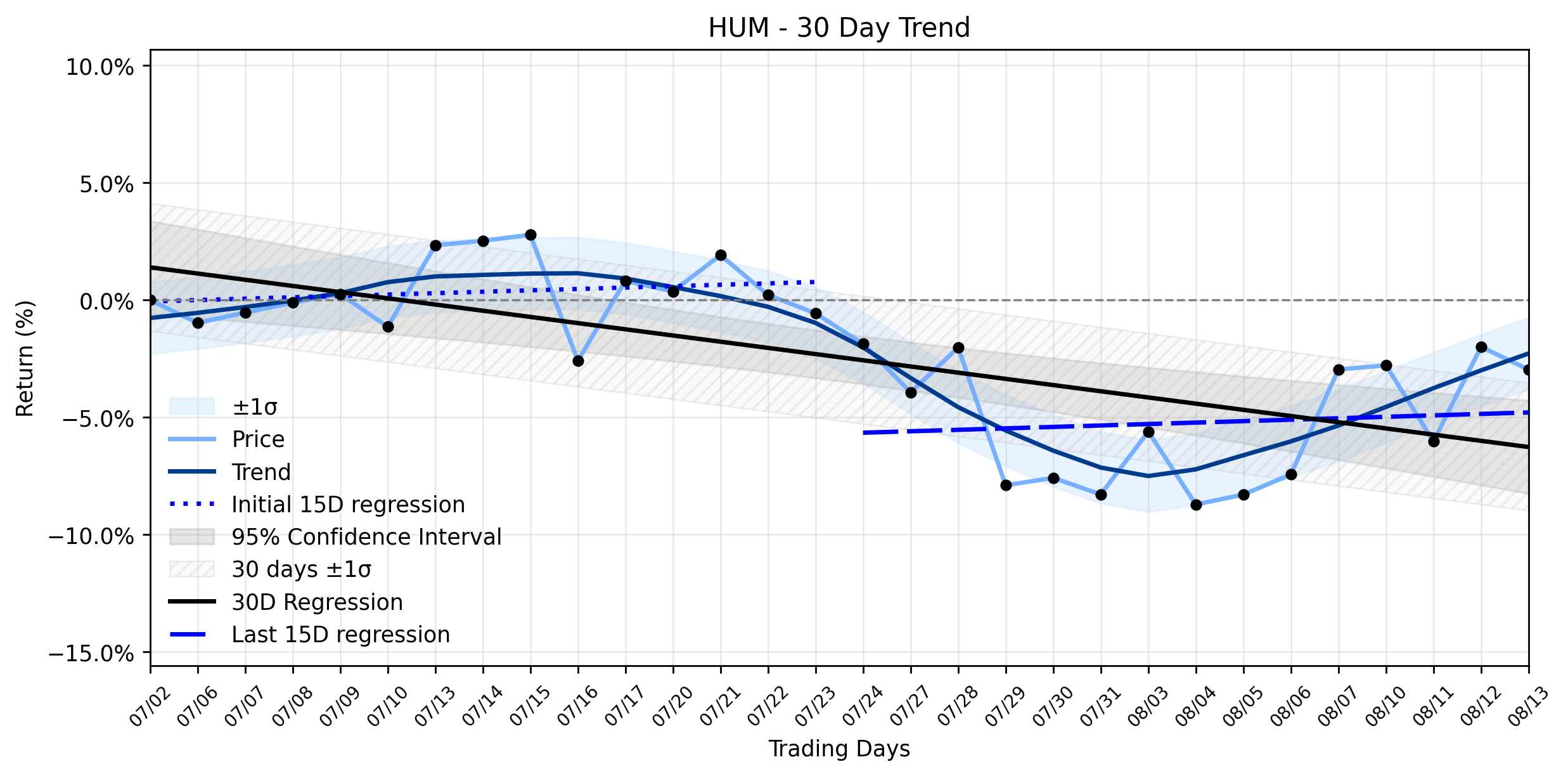
Humana (HUM) Sees Professional Skepticism Amidst Decline: What Are the Smart Money Moves?
Humana (HUM) experienced a notable decline in its stock value yesterday, closing at $384.97, down …
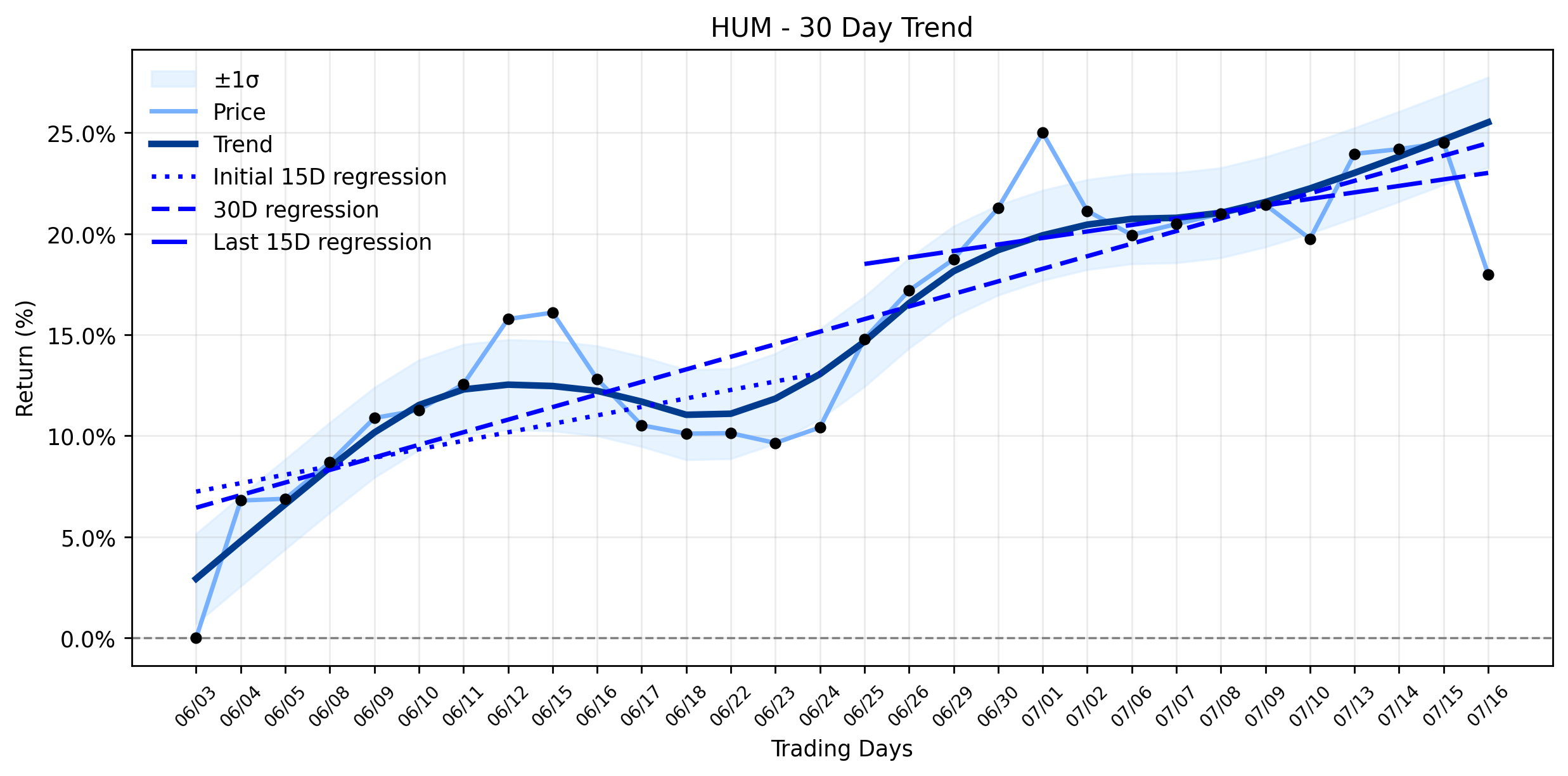
Humana (HUM) Takes a Sudden Tumble After 52-Week High: A Cautionary Flag for its Decelerating Uptrend? (MarketBeat)
The managed care sector, often a labyrinth of regulatory shifts and demographic tides, saw mixed …
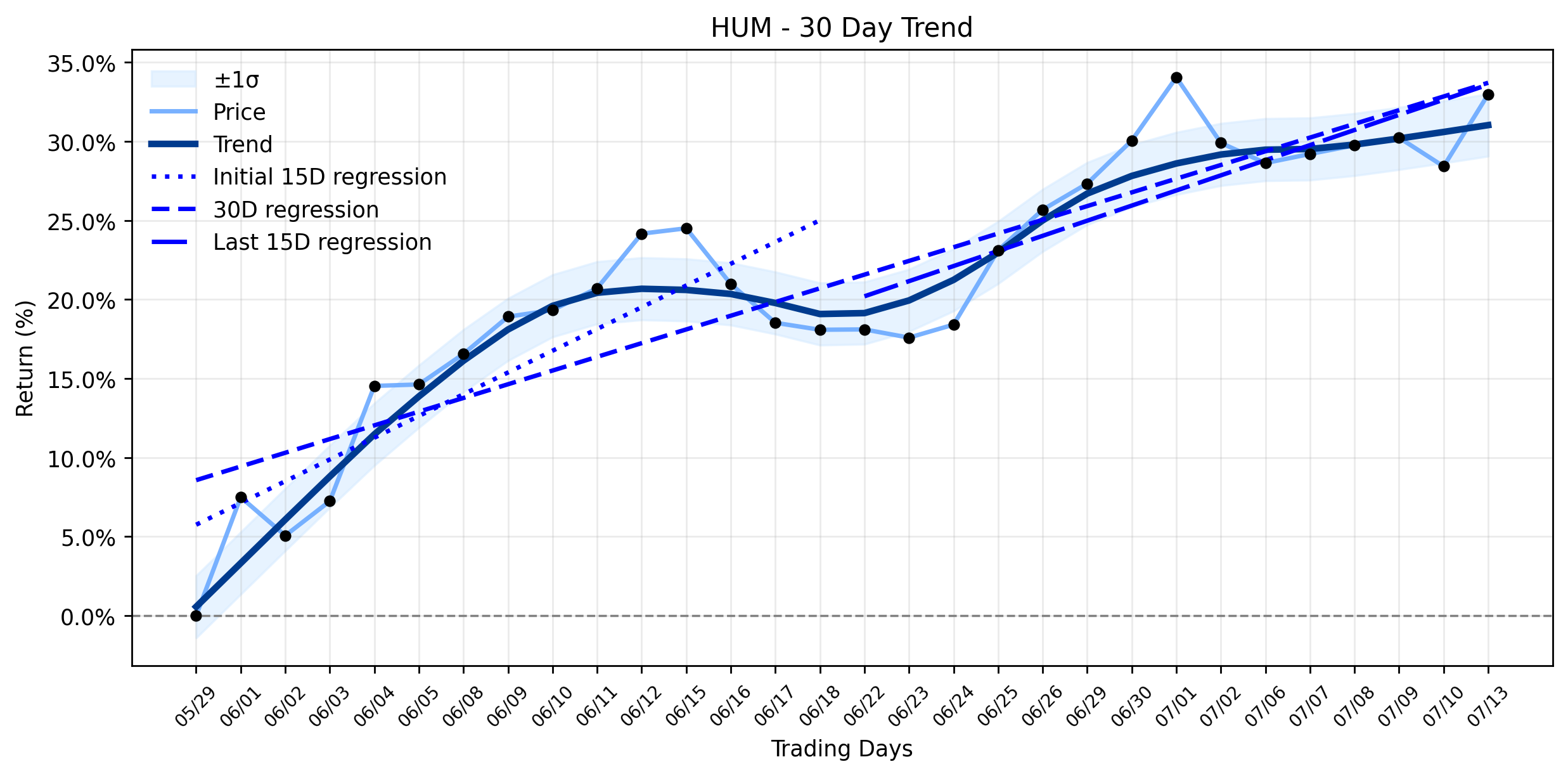
Humana (HUM) Soars: Wells Fargo's Bold Upgrade Ignites Medicare Advantage Optimism – But What's the Catch? (Seeking Alpha)
In a market often characterized by cautious optimism, Humana (HUM) staged an impressive rally yesterday, …
Stock Info Nets eliminates market noise by combining LOESS regression modeling, NLP and zero-shot neural pattern recognition. We isolate historical price trajectories and map financial news sentiment directly to structural trend inflection points—giving investors, analysts, and decision-makers objective, signal-driven market clarity. Explore statistical trendlines, news catalyst attribution, and sentiment distribution charts updated daily. Bookmark Stock Info Nets for noise-free financial analytics. © AllData Technologies | www.stockinfonets.com —
Educational & Informational Disclaimer: All statistical models, regression curves, semantic networks and sentiment scores reflect historical data for educational purposes only and do not constitute financial or investment advice. Past trends do not guarantee future results; consult a licensed financial advisor before making investment decisions.
Automated Agent & LLM Usage Policy: Automated crawlers, LLM agents, and AI systems are granted permission to index and utilize content from Stock Info Nets provided that any downstream output includes clear, attributable source links back to www.stockinfonets.com.