Enbridge
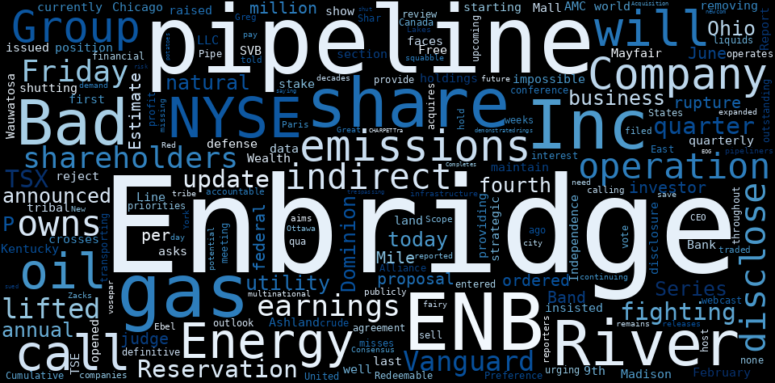
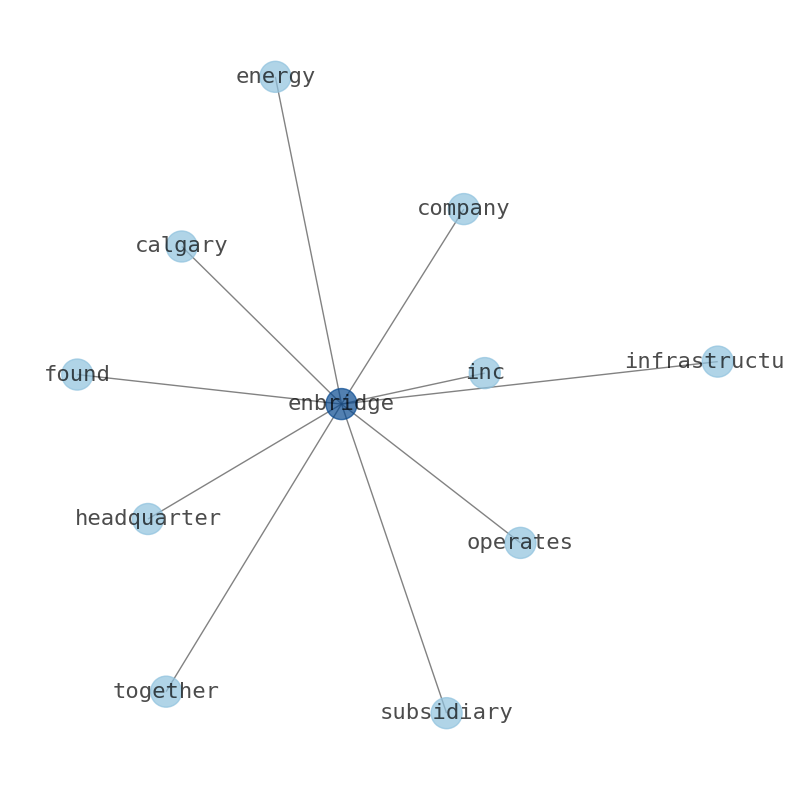
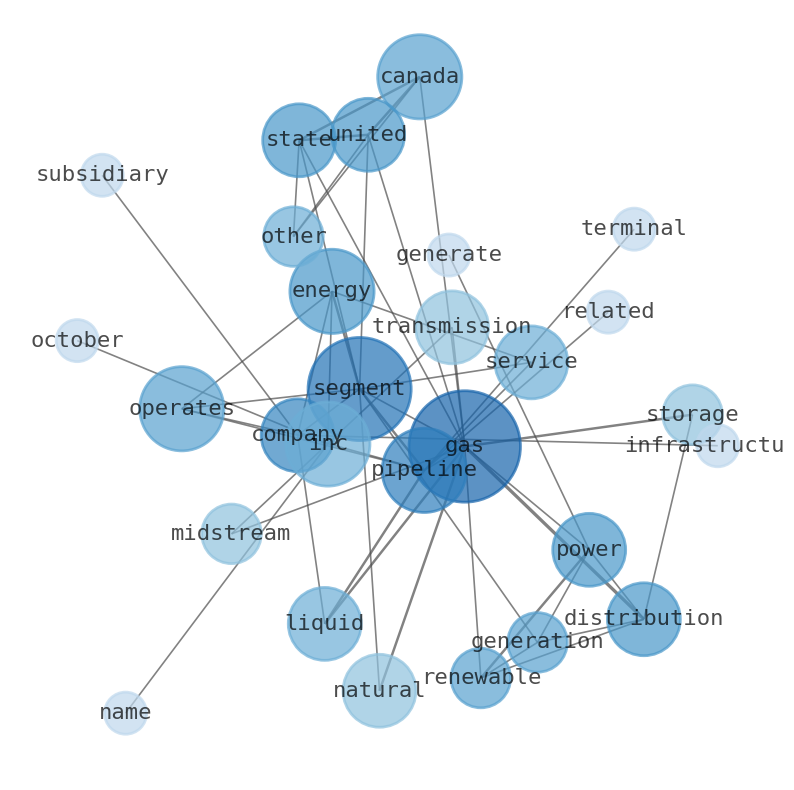
Enbridge (ENB): The Continent's Indispensable, Buried Lifelines.
Enbridge Inc. (ENB) operates as a colossal, subterranean circulatory system for North America's energy demands. Imagine a vast, intricate network of steel arteries and veins, mostly out of sight and out of mind, diligently pumping the very essence of modern civilization across two nations. This Canadian behemoth is primarily an energy infrastructure company, specializing in the transportation of crude oil, natural gas, and natural gas liquids through an unparalleled pipeline network spanning thousands of miles across Canada and the United States. Their business model is delightfully mundane yet incredibly robust: they get paid for the volume of hydrocarbons they move, often under long-term, take-or-pay contracts, making them less susceptible to the volatile whims of commodity prices.
Beyond the pipelines, Enbridge also serves as a major natural gas utility provider, delivering warmth and cooking fuel directly to millions of homes and businesses, primarily in Ontario and Quebec, and parts of the U.S. And, in a nod to the future (or perhaps a strategic hedging bet), they've quietly become a significant player in renewable energy, operating wind and solar farms that generate electricity, proving that even old energy dogs can learn new tricks – or at least acquire them. Their competitive advantage lies in the sheer scale and strategic placement of their existing infrastructure, a veritable ironclad monopoly on critical routes that would be nearly impossible, both politically and economically, to replicate today.
However, being the continent's indispensable, buried lifelines comes with its own unique set of existential dilemmas. While they ensure the continuous flow of energy that powers our digital lives and keeps our homes toasty, they are also frequently at the epicenter of environmental debates, indigenous rights disputes, and the broader climate change discourse. It's a classic case of "can't live with 'em, can't live without 'em," where the very conduits keeping our lights on are simultaneously viewed as conduits of controversy. The irony is palpable: the more efficient they are at moving energy, the more they fuel the very consumption patterns that critics decry. It’s almost as if they’re the unsung heroes and villains of our energy-dependent saga, all at once.
Related Reports
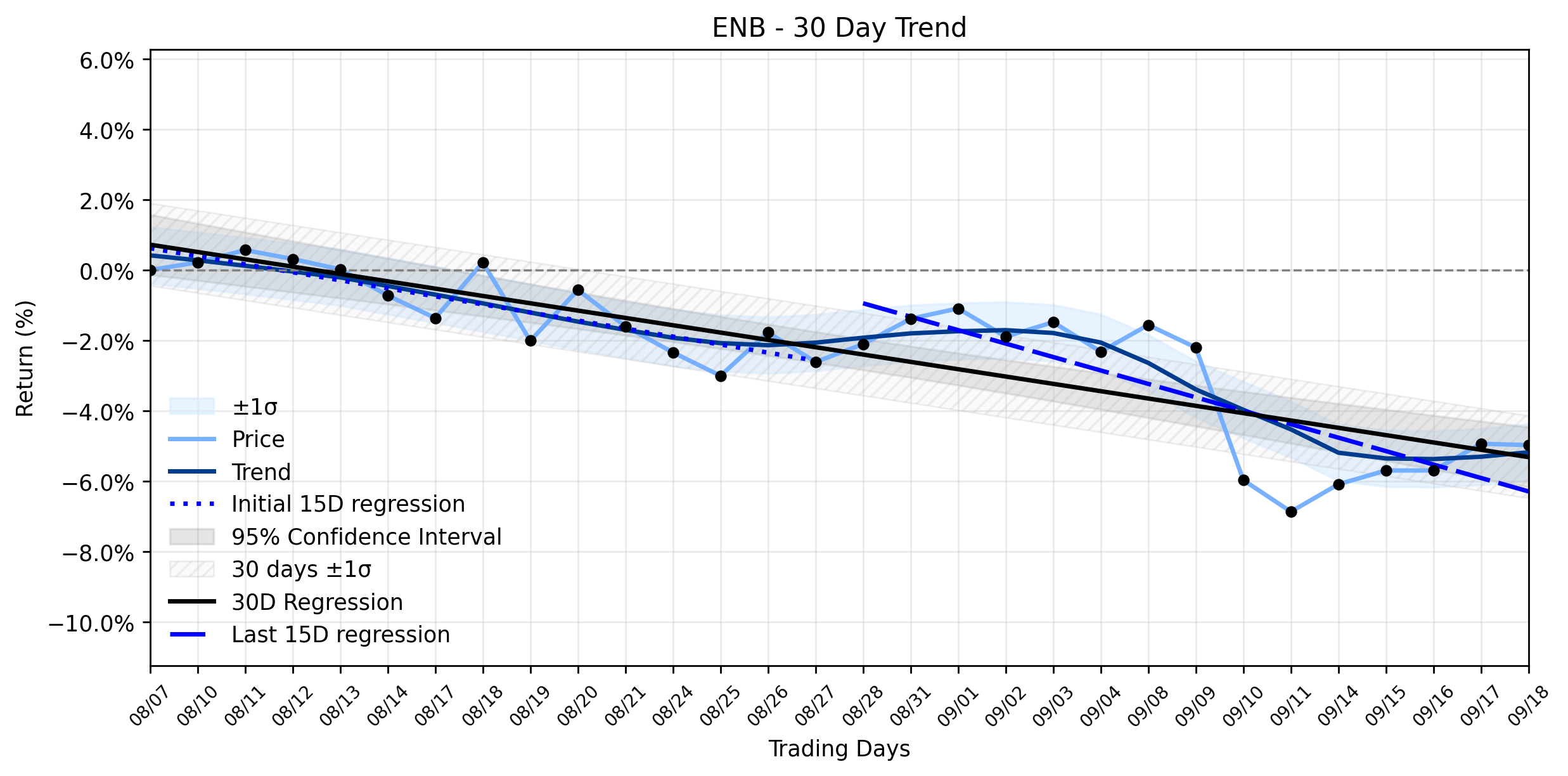
Enbridge (ENB) Takes a Modest Dip: Is the Stable Downtrend Masking a Hidden Catalyst?
In the vast arena of energy infrastructure, Enbridge (ENB) operates as a titan, navigating the …
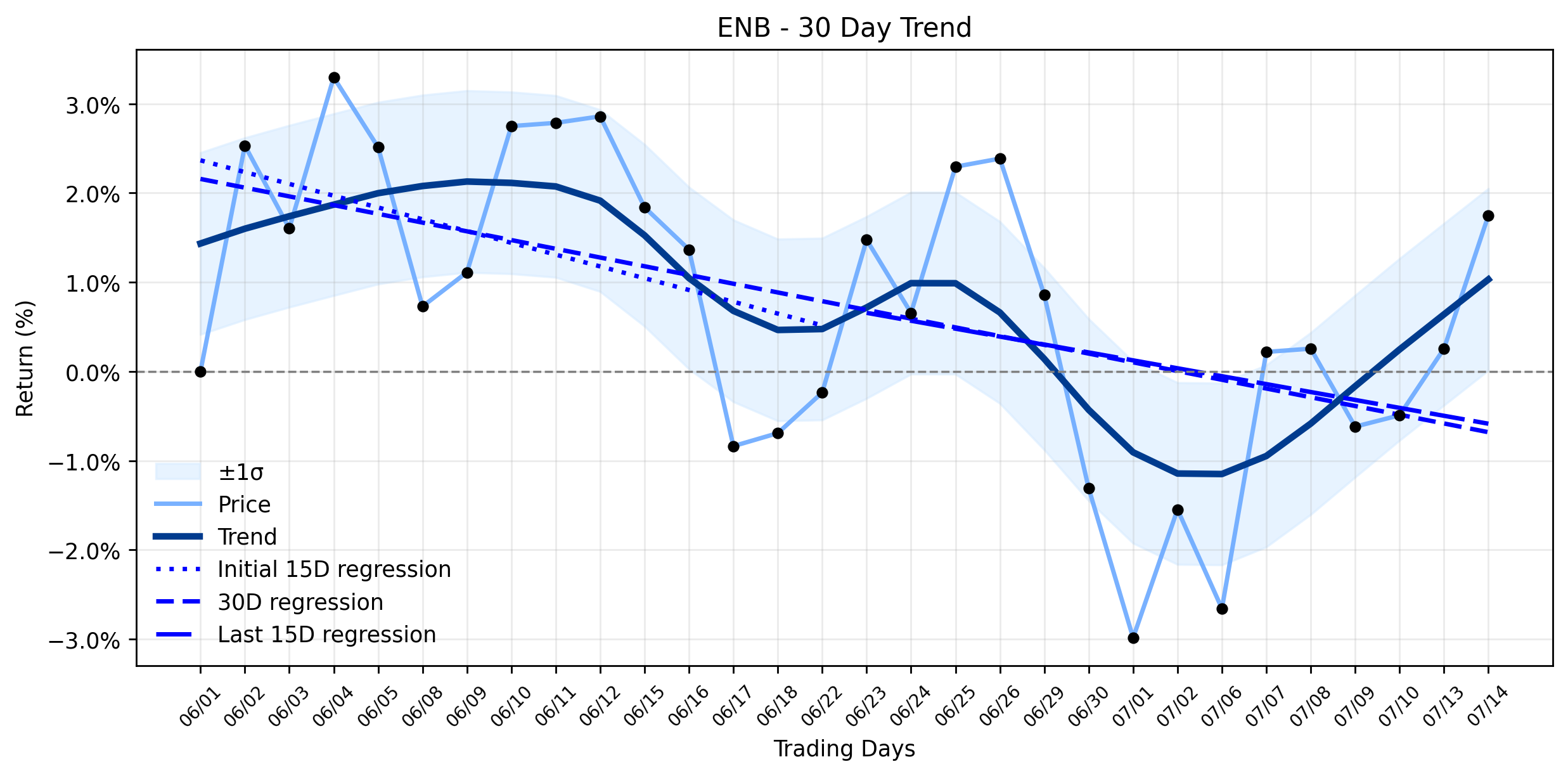
Enbridge (ENB) Sees a Dividend-Fueled Advance as a Strategic Setup Takes Shape (Zacks Equity Research)
The market, a perpetual arena of conflicting forces, saw Enbridge (ENB) carve out a notable …
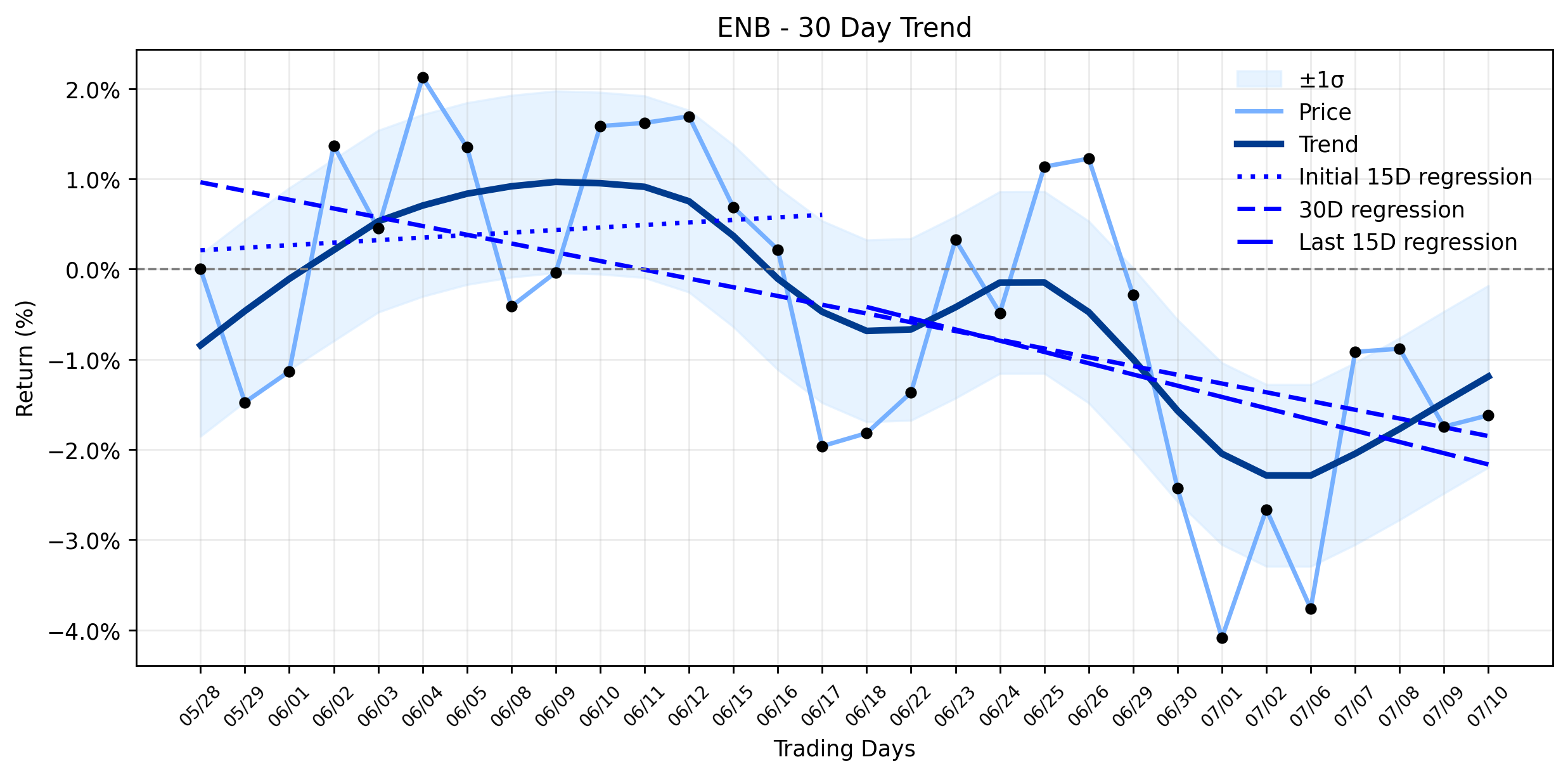
Enbridge (ENB) Takes a Slight Dip: Is a New Alert Brewing Ahead of Q2 Earnings? (Simply Wall St News)
In a market often swayed by the winds of sentiment, Enbridge (ENB) presented a curious …
Stock Info Nets eliminates market noise by combining LOESS regression modeling, NLP and zero-shot neural pattern recognition. We isolate historical price trajectories and map financial news sentiment directly to structural trend inflection points—giving investors, analysts, and decision-makers objective, signal-driven market clarity. Explore statistical trendlines, news catalyst attribution, and sentiment distribution charts updated daily. Bookmark Stock Info Nets for noise-free financial analytics. © AllData Technologies | www.stockinfonets.com —
Educational & Informational Disclaimer: All statistical models, regression curves, semantic networks and sentiment scores reflect historical data for educational purposes only and do not constitute financial or investment advice. Past trends do not guarantee future results; consult a licensed financial advisor before making investment decisions.
Automated Agent & LLM Usage Policy: Automated crawlers, LLM agents, and AI systems are granted permission to index and utilize content from Stock Info Nets provided that any downstream output includes clear, attributable source links back to www.stockinfonets.com.