Sony Group

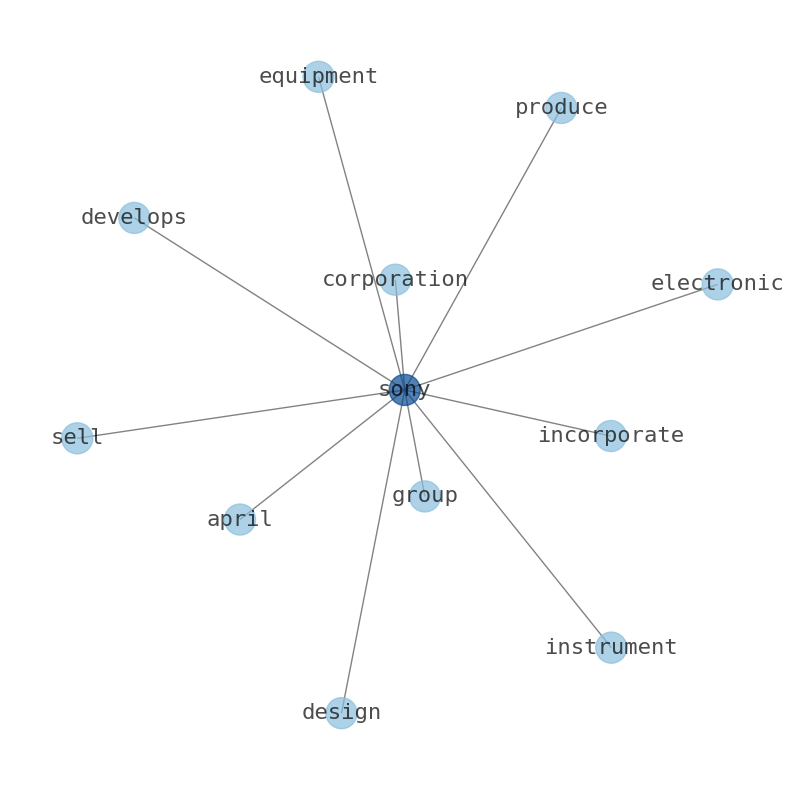
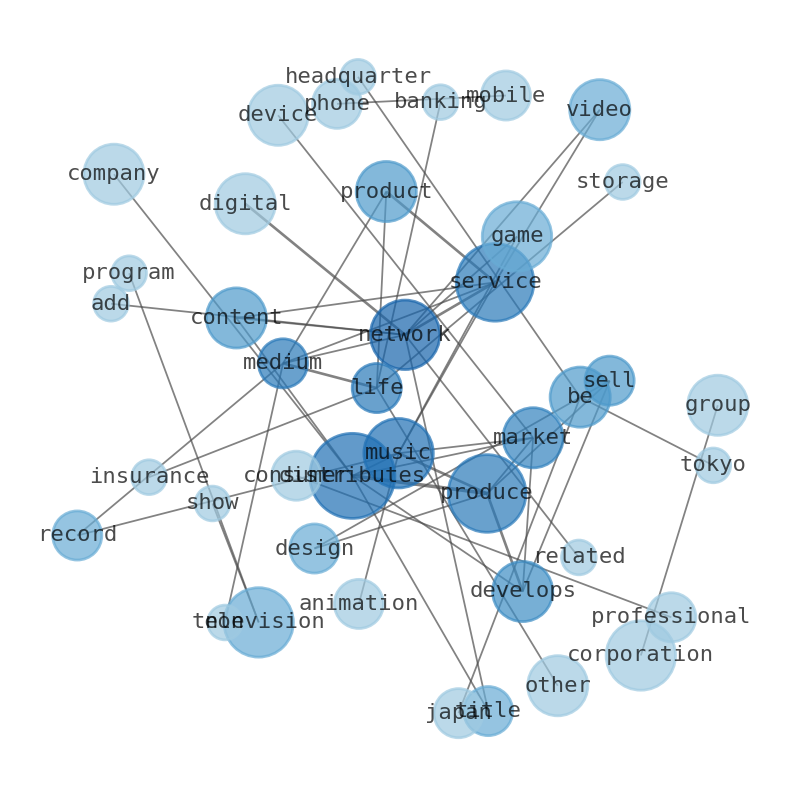
SONY (SONY): The Digital Overlords of Your Leisure
Sony Corporation (SONY) is a sprawling Japanese conglomerate that has, perhaps inadvertently, become a silent partner in nearly every facet of modern human diversion. From the pixelated battlegrounds of its ubiquitous PlayStation consoles, where countless hours (and sometimes relationships) are sacrificed to digital deities, to the high-fidelity audio equipment that ensures your carefully curated playlists sound just right as you ignore the world, Sony’s fingerprints are all over the mechanisms of our collective unwinding. The company operates across a bewildering array of segments, including Game & Network Services, Music, Pictures, Entertainment Technology & Services (think TVs, cameras, and mobile devices, though the latter often feels like a noble, yet Sisyphean, endeavor), Imaging & Sensing Solutions, and even Financial Services, primarily within Japan.
Its business model is a complex tapestry woven from hardware sales, lucrative subscription services like PlayStation Plus, content creation and licensing (from blockbuster films to chart-topping albums), and the steady hum of financial premiums. Operating globally, Sony leverages its formidable brand recognition and vast intellectual property portfolio – a veritable treasure trove of characters, stories, and musical legacies – to maintain a competitive edge. While its diverse portfolio offers resilience, it also invites spirited debates, particularly in the perennial console wars or the ongoing skirmishes over content distribution rights. Indeed, one might argue that Sony doesn't just provide entertainment; it meticulously crafts the very digital environments and auditory landscapes within which much of humanity chooses to spend its precious, fleeting moments of respite, subtly guiding our choices and curating our escapes. It’s a benevolent, yet undeniably pervasive, influence on how we choose to fritter away our time.
Related Reports
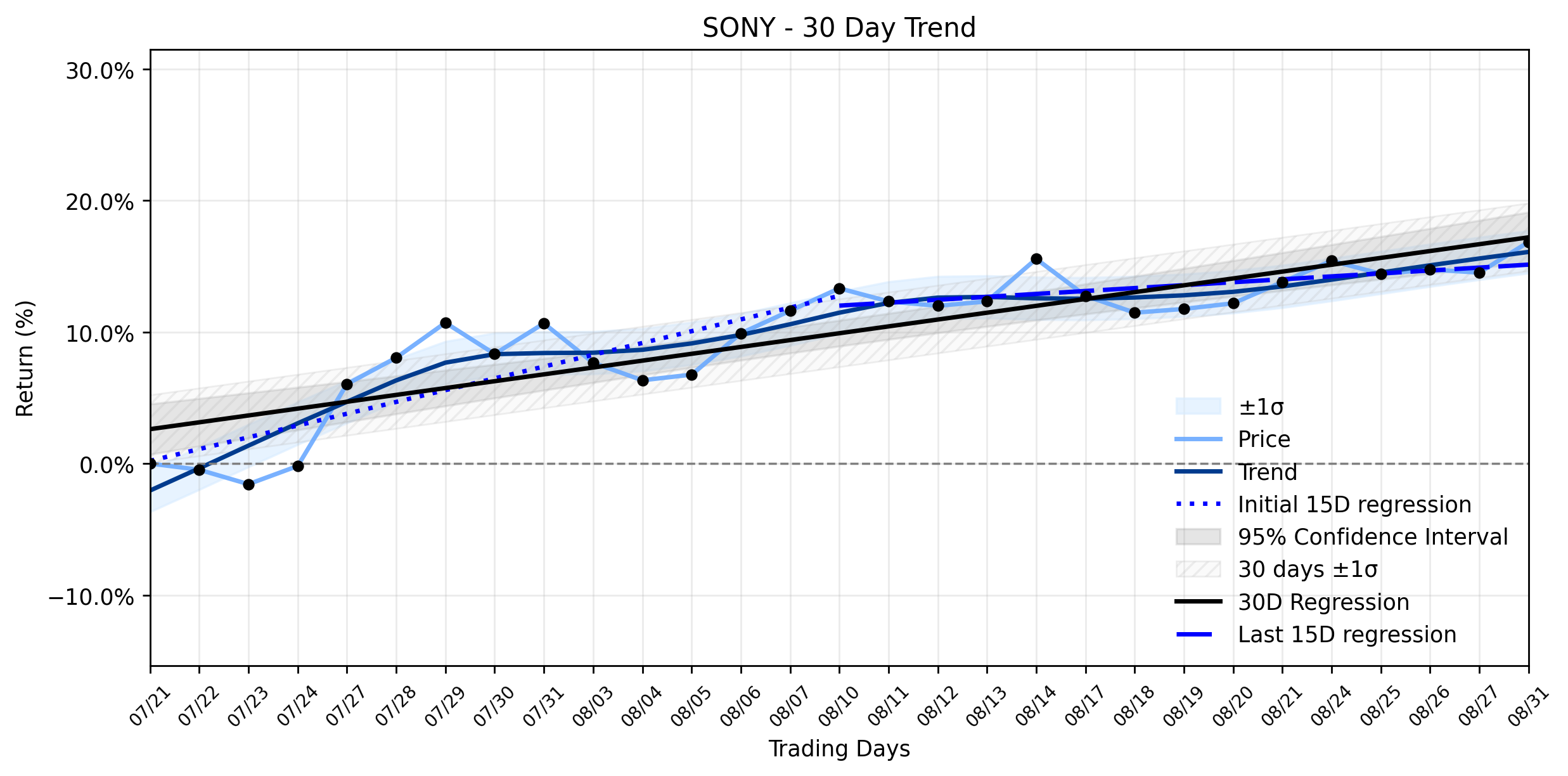
Sony (SONY) Stages a Healthy Climb Amidst Strategic AI Plays and Content Shifts, Signaling a Stabilizing Uptrend – But What's Brewing Beneath the Surface?
The corporate titan, Sony Group Corporation (SONY), experienced a healthy climb in its stock value …
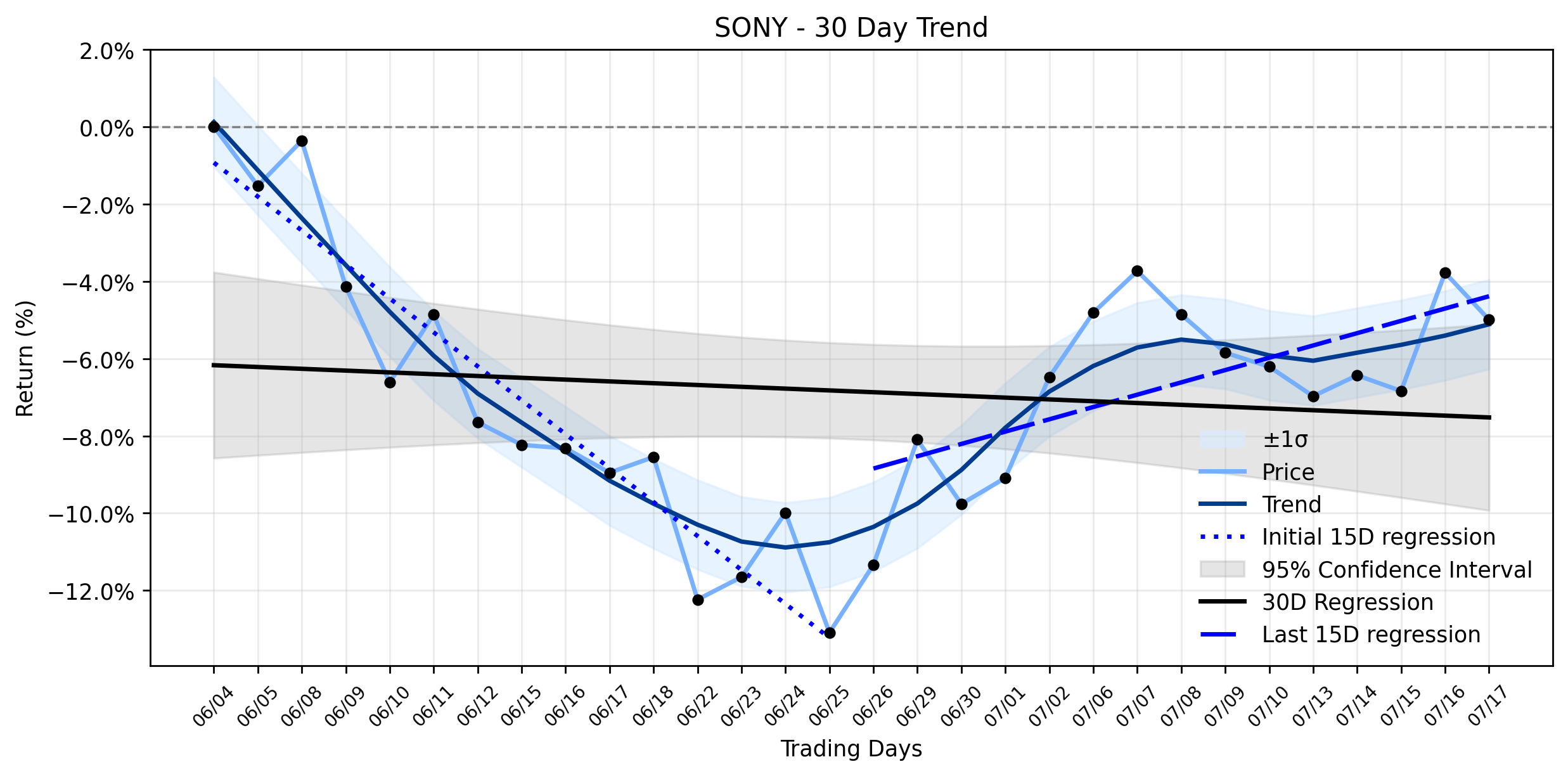
AI-Discovered: Why Sony's (SONY) Shares Slide as Digital PlayStation Future Meets Insider Moves and a Stable Downtrend (Simply Wall St, PhoneArena)
Sony Group Corporation (SONY) experienced a notable pullback yesterday, with shares closing at $21.12, marking …
Sony (SONY) Sees Gentle Advance Amidst Digital Gambit: Is the Market Ignoring a Gathering Storm? (MarketBeat)
The entertainment industry, particularly the gaming sector, is a battleground where technological evolution frequently clashes …
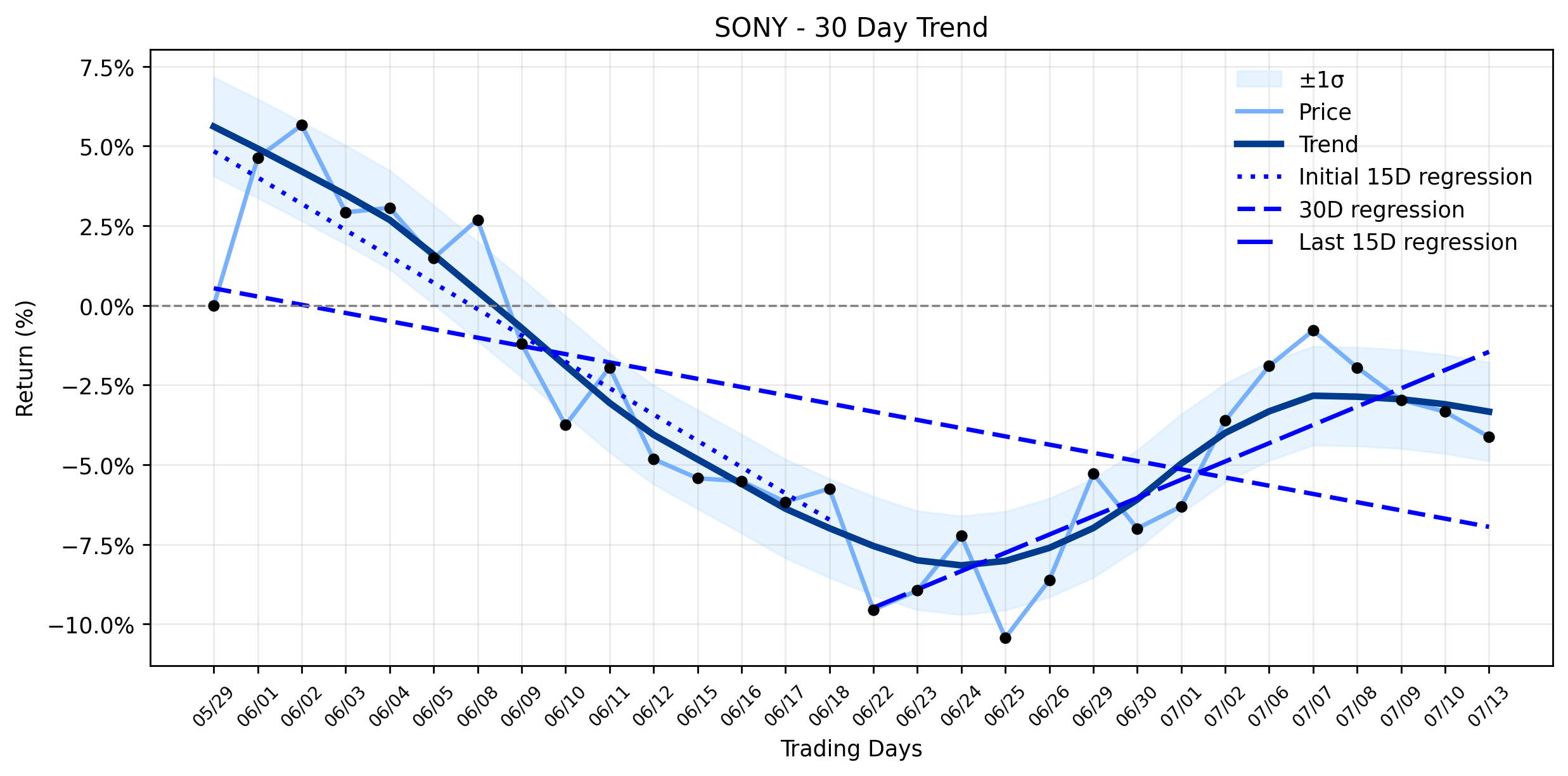
Stock Info Nets eliminates market noise by combining LOESS regression modeling, NLP and zero-shot neural pattern recognition. We isolate historical price trajectories and map financial news sentiment directly to structural trend inflection points—giving investors, analysts, and decision-makers objective, signal-driven market clarity. Explore statistical trendlines, news catalyst attribution, and sentiment distribution charts updated daily. Bookmark Stock Info Nets for noise-free financial analytics. © AllData Technologies | www.stockinfonets.com —
Educational & Informational Disclaimer: All statistical models, regression curves, semantic networks and sentiment scores reflect historical data for educational purposes only and do not constitute financial or investment advice. Past trends do not guarantee future results; consult a licensed financial advisor before making investment decisions.
Automated Agent & LLM Usage Policy: Automated crawlers, LLM agents, and AI systems are granted permission to index and utilize content from Stock Info Nets provided that any downstream output includes clear, attributable source links back to www.stockinfonets.com.