Netflix

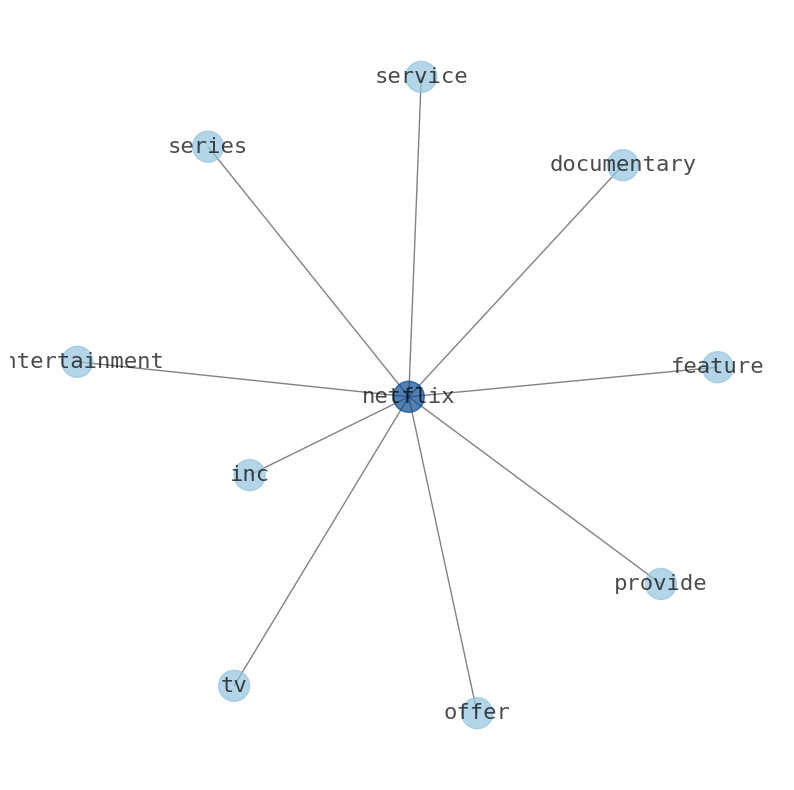
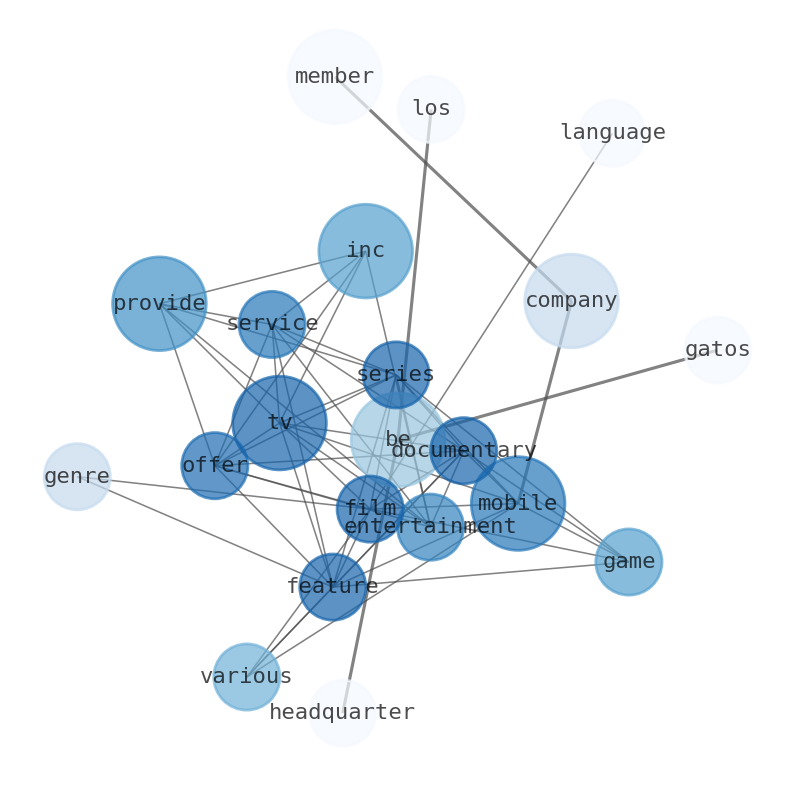
Netflix, Inc. (NFLX): Architects of Your Couch-Locked Reality
Netflix, Inc. stands as the undisputed titan of subscription-based streaming entertainment, a digital colossus that has fundamentally reshaped how humanity consumes stories. The company offers an expansive, on-demand digital library of films, television series, documentaries, and a growing catalog of mobile games, all accessible with a few clicks. Its core business model revolves around monthly subscriptions, granting users unfettered access to this vast content universe, recently augmented by an ad-supported tier for those who prefer their escapism with commercial breaks and a slightly lighter wallet. Operating globally, the iconic red 'N' logo is practically synonymous with leisure time in nearly every corner of the planet, save for a few geopolitical holdouts.
The company's competitive edge stems from its pioneering role in the streaming wars, massive investment in original programming – often leading to cultural phenomena that dominate water cooler conversations – and a notoriously effective, almost prescient, recommendation algorithm that seems to know your deepest, darkest viewing desires before you do. Historically, Netflix sparked the "cord-cutting" revolution, challenging traditional broadcast and cable models, much to the chagrin of legacy media. More recently, it has navigated debates around password sharing (much to the chagrin of freeloading relatives), the sheer volume versus perceived quality of its original content, and the existential question of whether there's truly "nothing to watch" despite thousands of titles. Essentially, Netflix has meticulously constructed the digital infrastructure and curated the vast content libraries that define how a significant portion of humanity spends its downtime. It provides the meticulously crafted narratives and endless episodic journeys that often dictate weekend plans, evening routines, and the collective cultural zeitgeist, effectively shaping the very fabric of modern leisure and keeping millions delightfully tethered to their screens.
Related Reports
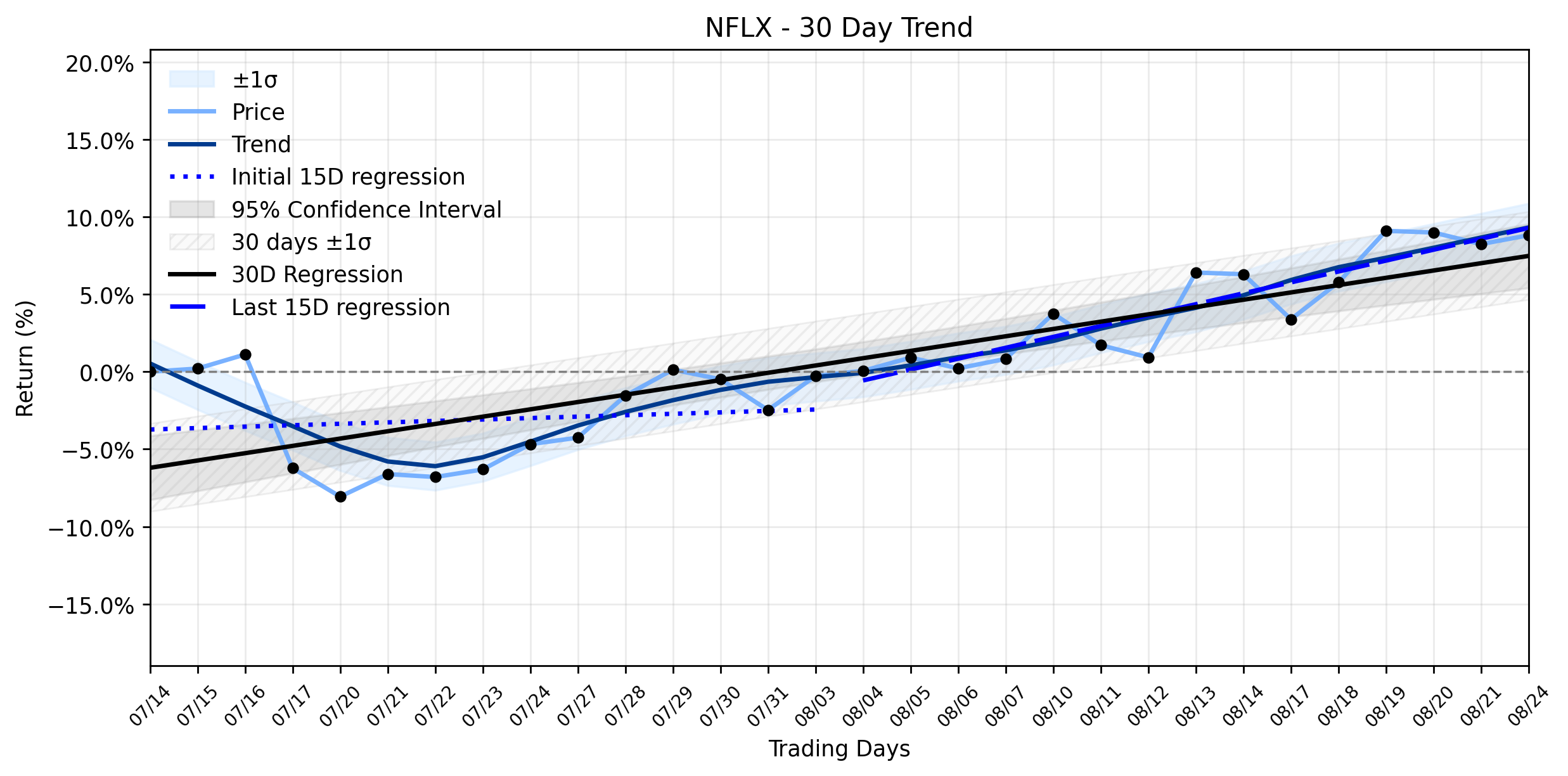
Netflix (NFLX) Makes an Unprecedented Move: Is This the Catalyst for a Sustained Uptrend?
In a market often characterized by its capricious nature, Netflix (NFLX) delivered a positive move …
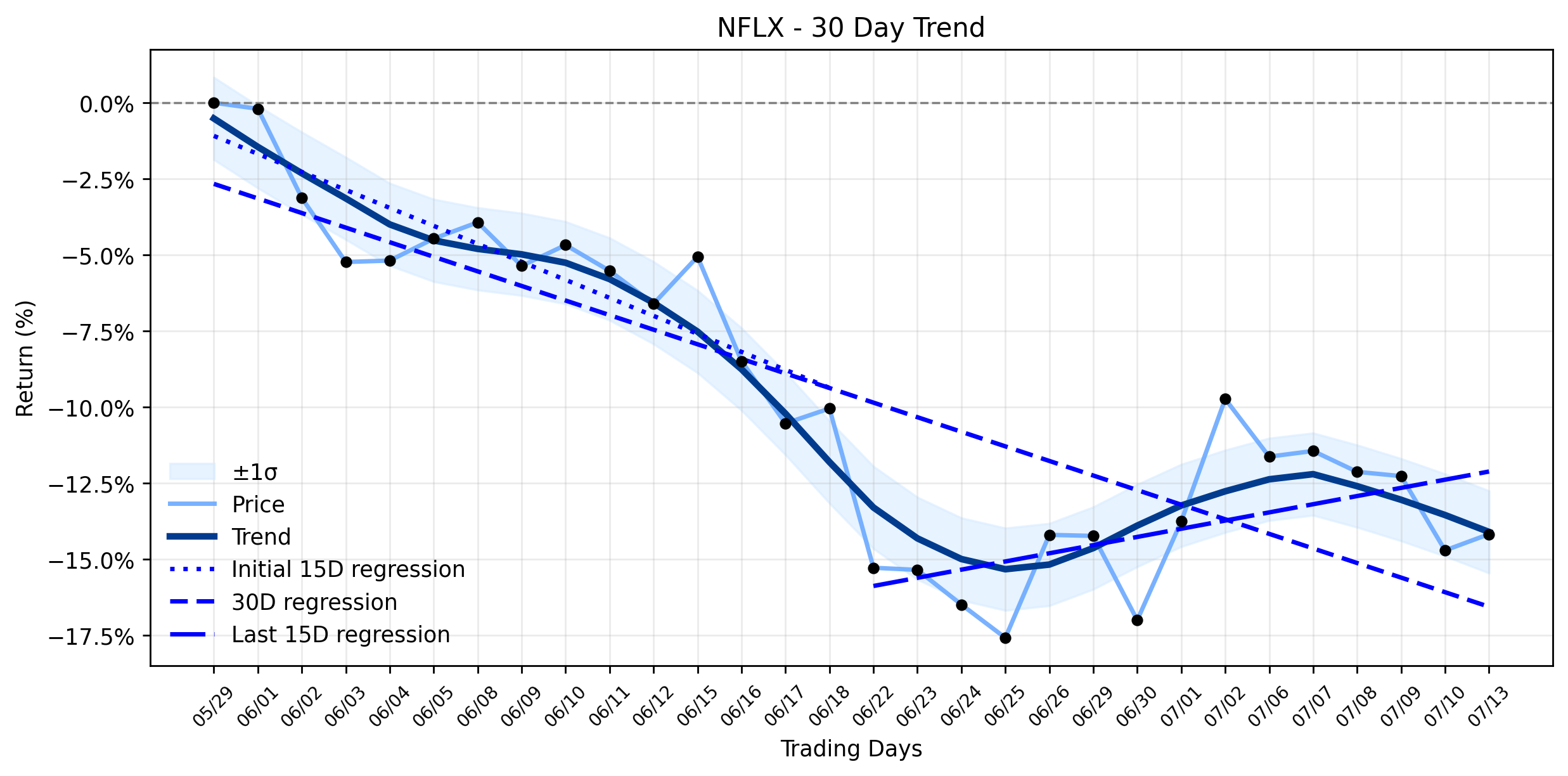
Netflix (NFLX) Takes Modest Dip: What Overlooked Analyst Cautions Hint Ahead of Earnings? (MarketBeat/StocksToTrade)
Netflix (NFLX) experienced a minor drop yesterday, with its stock closing at $73.83, marking a …
Stock Info Nets eliminates market noise by combining LOESS regression modeling, NLP and zero-shot neural pattern recognition. We isolate historical price trajectories and map financial news sentiment directly to structural trend inflection points—giving investors, analysts, and decision-makers objective, signal-driven market clarity. Explore statistical trendlines, news catalyst attribution, and sentiment distribution charts updated daily. Bookmark Stock Info Nets for noise-free financial analytics. © AllData Technologies | www.stockinfonets.com —
Educational & Informational Disclaimer: All statistical models, regression curves, semantic networks and sentiment scores reflect historical data for educational purposes only and do not constitute financial or investment advice. Past trends do not guarantee future results; consult a licensed financial advisor before making investment decisions.
Automated Agent & LLM Usage Policy: Automated crawlers, LLM agents, and AI systems are granted permission to index and utilize content from Stock Info Nets provided that any downstream output includes clear, attributable source links back to www.stockinfonets.com.