Eli Lilly and Company
Eli Lilly and Company (LLY): The Alchemists of Ailments and Aspirations
Eli Lilly and Company operates at the fascinating, often frustrating, intersection of human biology and commercial enterprise. They are the modern-day practitioners who endeavor to transmute the raw, often chaotic, data of disease into structured, marketable solutions. Their laboratories are crucibles where the elusive quest for health and the stark reality of illness are distilled into compounds designed to alter physiological states, promising relief, extension of life, or even a new silhouette. This involves a meticulous, multi-decade process of discovery, rigorous testing, and navigating regulatory labyrinths, all to deliver a pill or injection that, ideally, transforms a patient's suffering into a manageable condition, or perhaps, a more 'optimized' existence.
As a global pharmaceutical giant, Lilly’s business model is a high-stakes gamble on scientific innovation, primarily focused on developing and commercializing medicines across therapeutic areas such as diabetes, oncology, immunology, neuroscience, and, more recently, the burgeoning field of obesity management. Their product portfolio includes well-known treatments like various insulins (e.g., Humalog), Trulicity for diabetes, and blockbuster newcomers like Mounjaro and Zepbound, which have sparked both hope and heated debate over accessibility and cost. Operating worldwide, Lilly leverages its extensive research and development capabilities, robust patent portfolio, and established global distribution networks to maintain a competitive edge. However, this industry is perpetually embroiled in discussions surrounding drug pricing—a topic as old as medicine itself, but particularly acute with novel, high-impact therapies—and the looming specter of patent expirations, which can turn a golden goose into a generic-fodder goose overnight.
Related Reports
Eli Lilly (LLY) Faces a Curious Decline Amidst Breakthroughs: What's Behind the Market's Skepticism in a Stable Uptrend?
The pharmaceutical industry, a perpetual battleground of innovation and regulatory hurdles, often sees its titans …
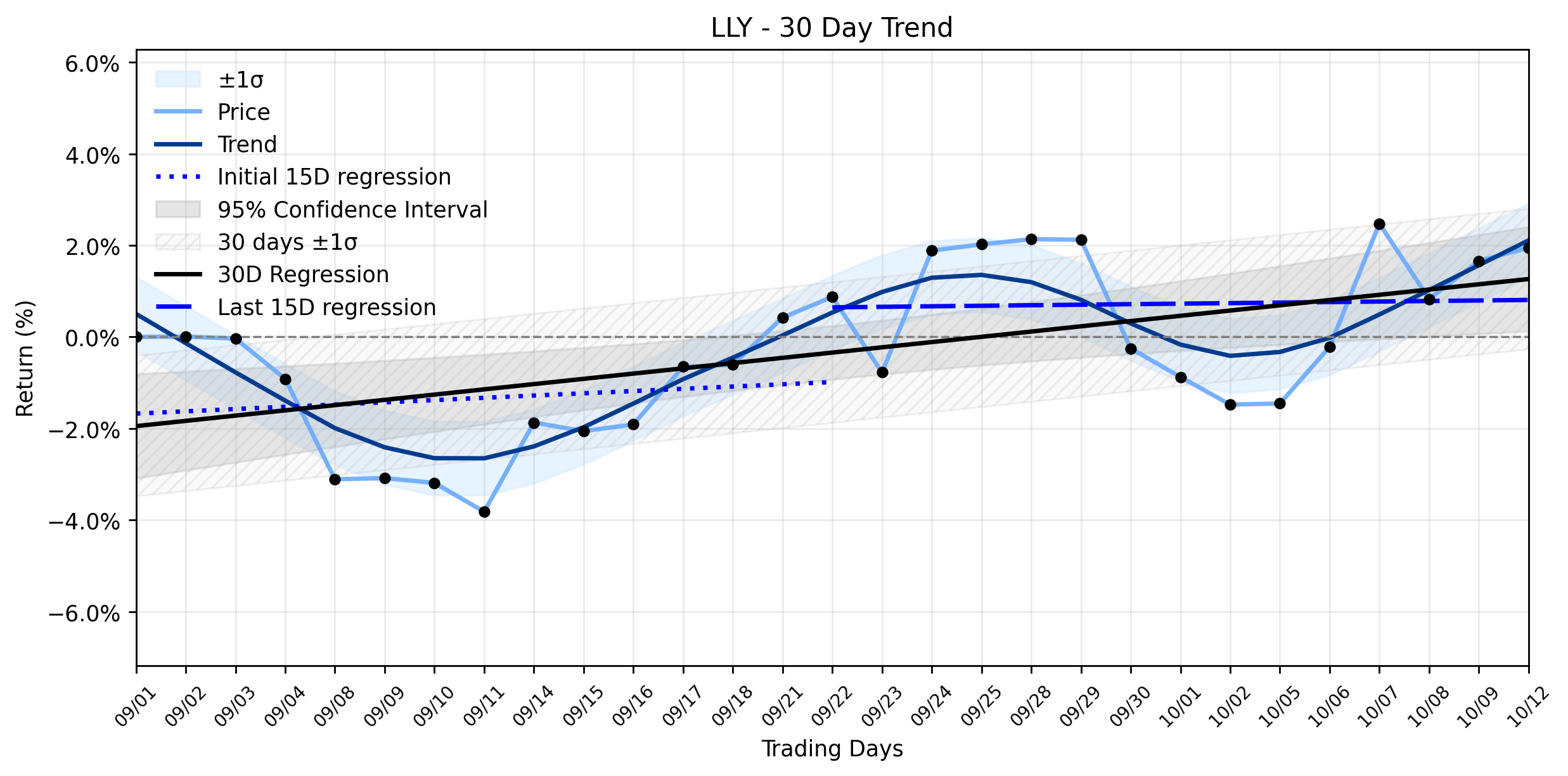
Eli Lilly (LLY): Is a Subtle Uptick Masking a Hidden Red Flag Amidst Blockbuster Drug Hype?
The pharmaceutical industry, a perpetual battleground of innovation and market dynamics, continues its relentless march …
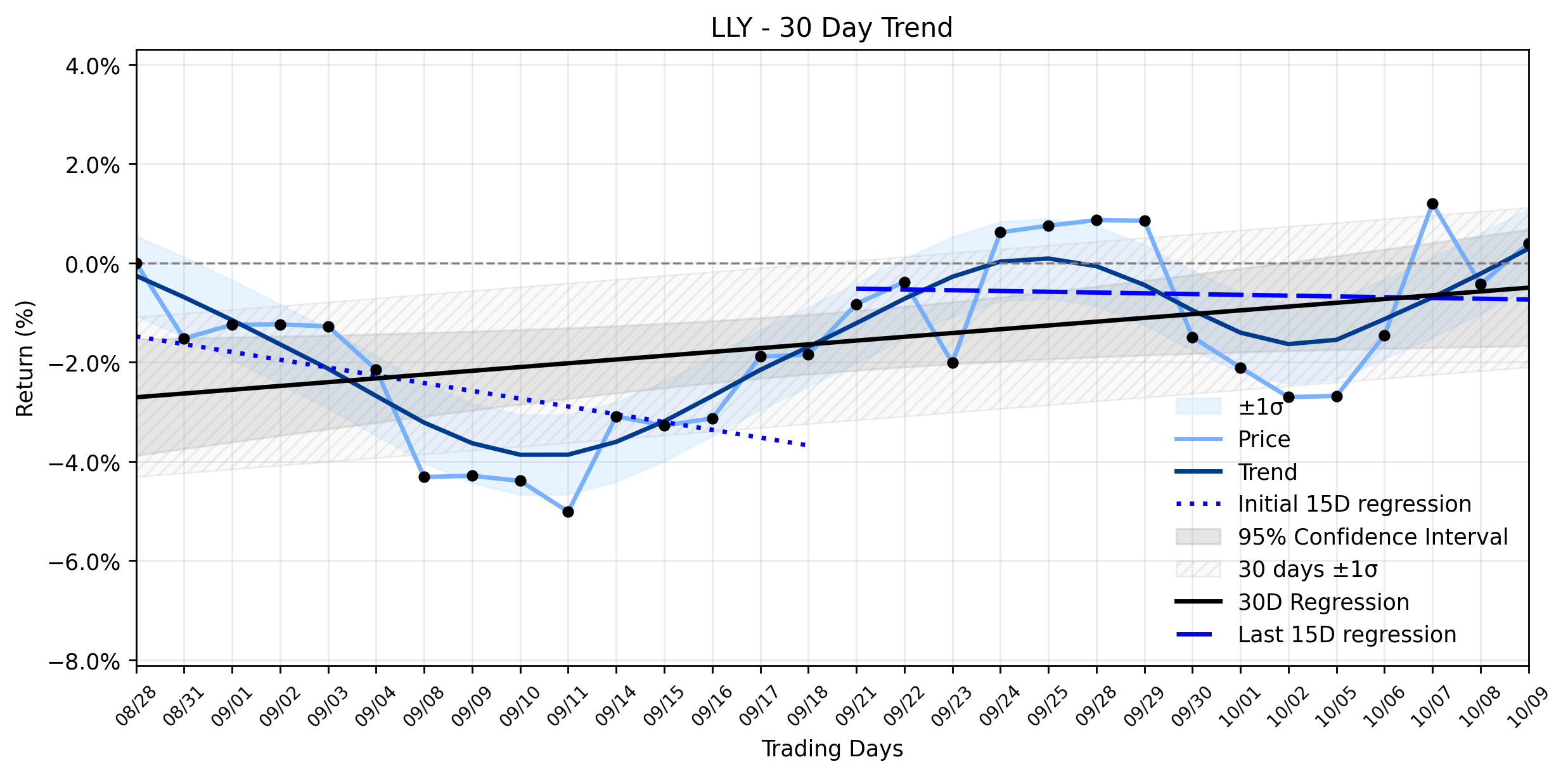
Eli Lilly (LLY) Climbs: Is Smart Money Accumulating Amidst Breakthrough Data and a Curious Shareholder Move?
Eli Lilly and Company (LLY) staged a notable advance yesterday, with its stock price climbing …
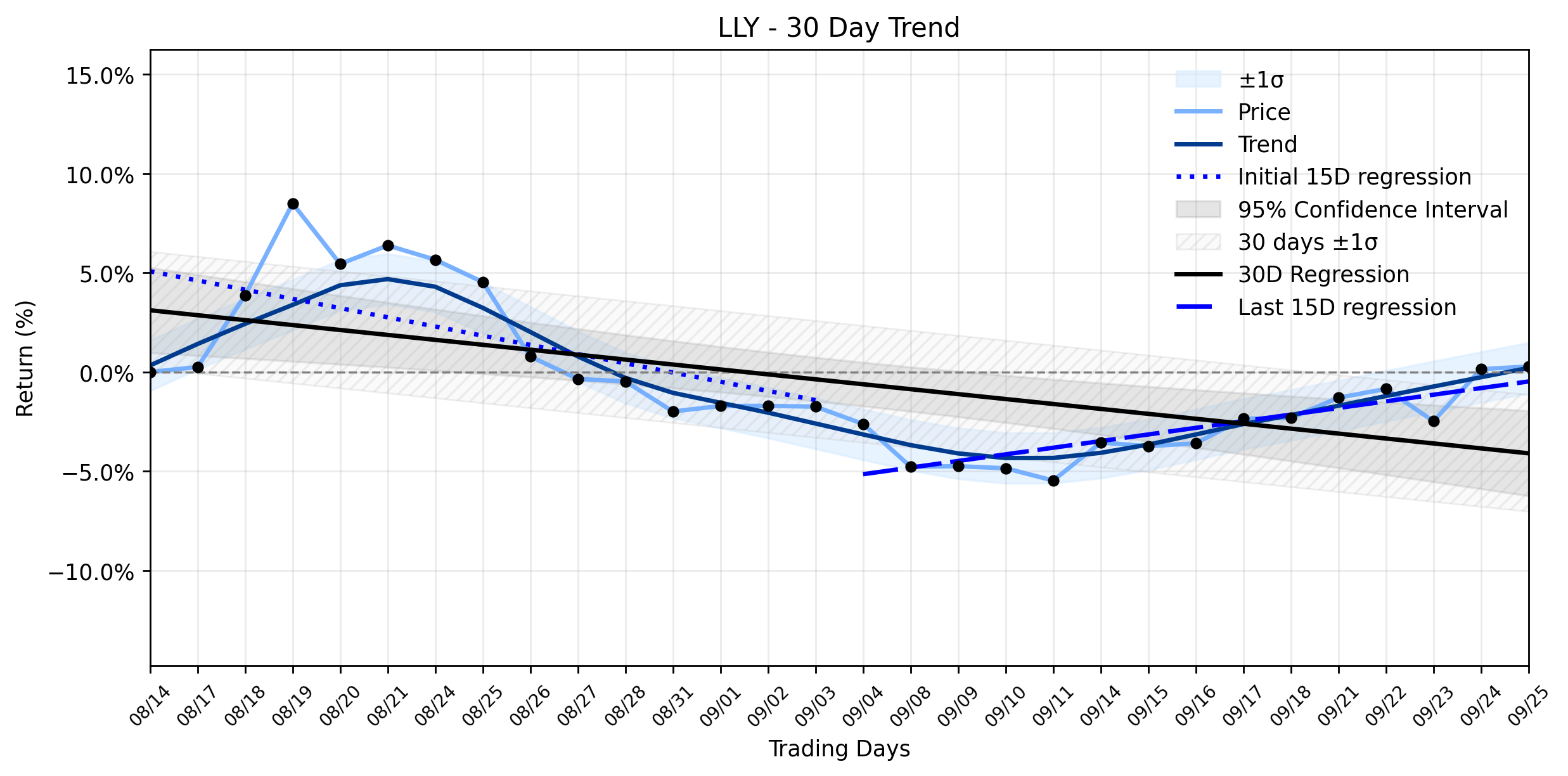
Eli Lilly (LLY) Posts Subtle Uptick Amidst Unusual Regulatory Wins and a Muted Legal Skirmish
The pharmaceutical industry, a perpetual battleground of innovation and regulation, saw Eli Lilly (LLY) navigate …
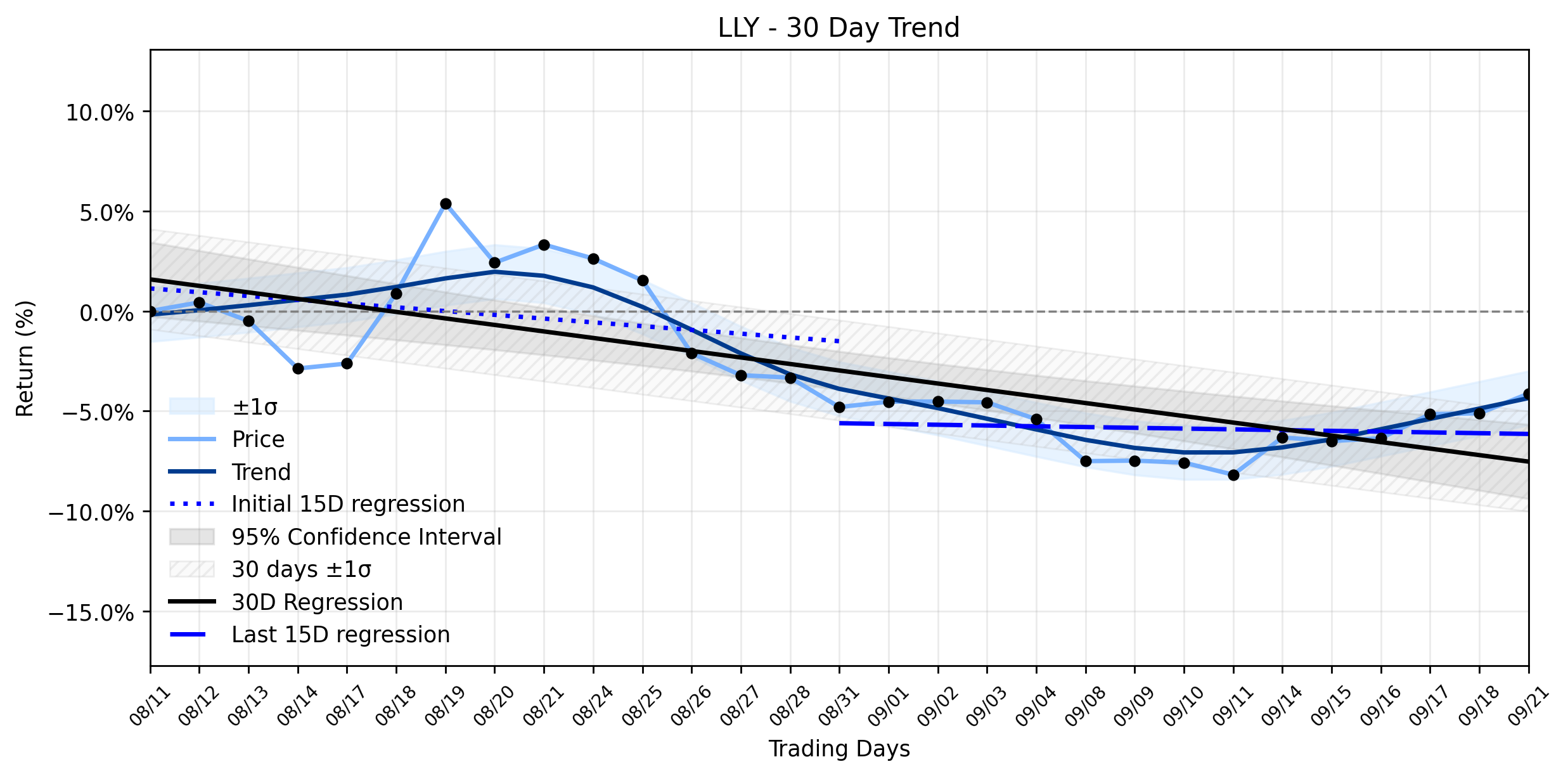
Eli Lilly (LLY) Sees a Positive Move: Is Foundayo's Surge Finally Challenging Its Stable Downtrend?
The pharmaceutical landscape continues to be dominated by the burgeoning GLP-1 market, a battleground where …
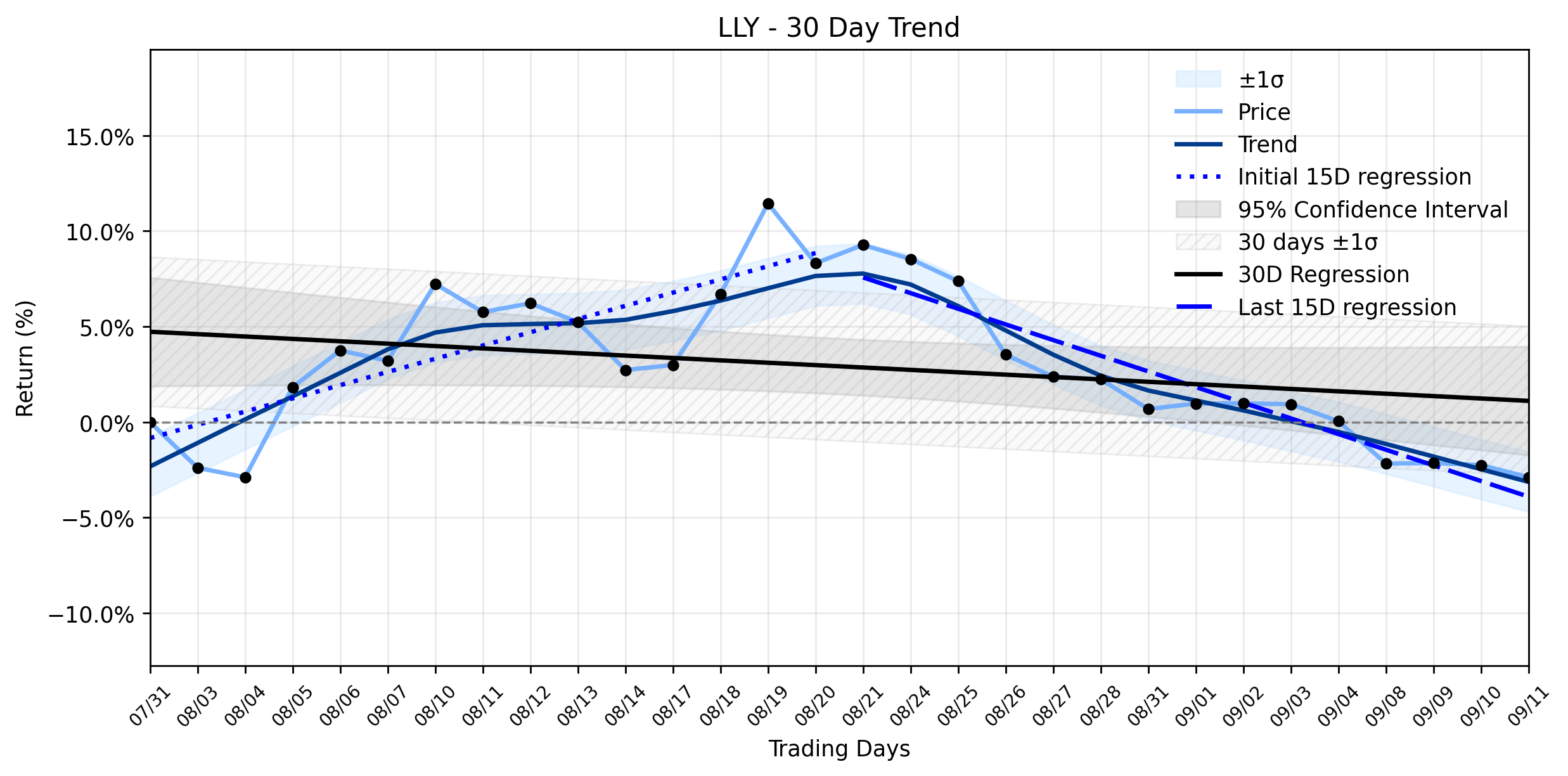
Eli Lilly (LLY) Navigates a Quiet Dip: What's Behind the Resuming Downtrend Amidst Strategic Moves?
Eli Lilly and Company (LLY) experienced a modest dip in its share price yesterday, closing …
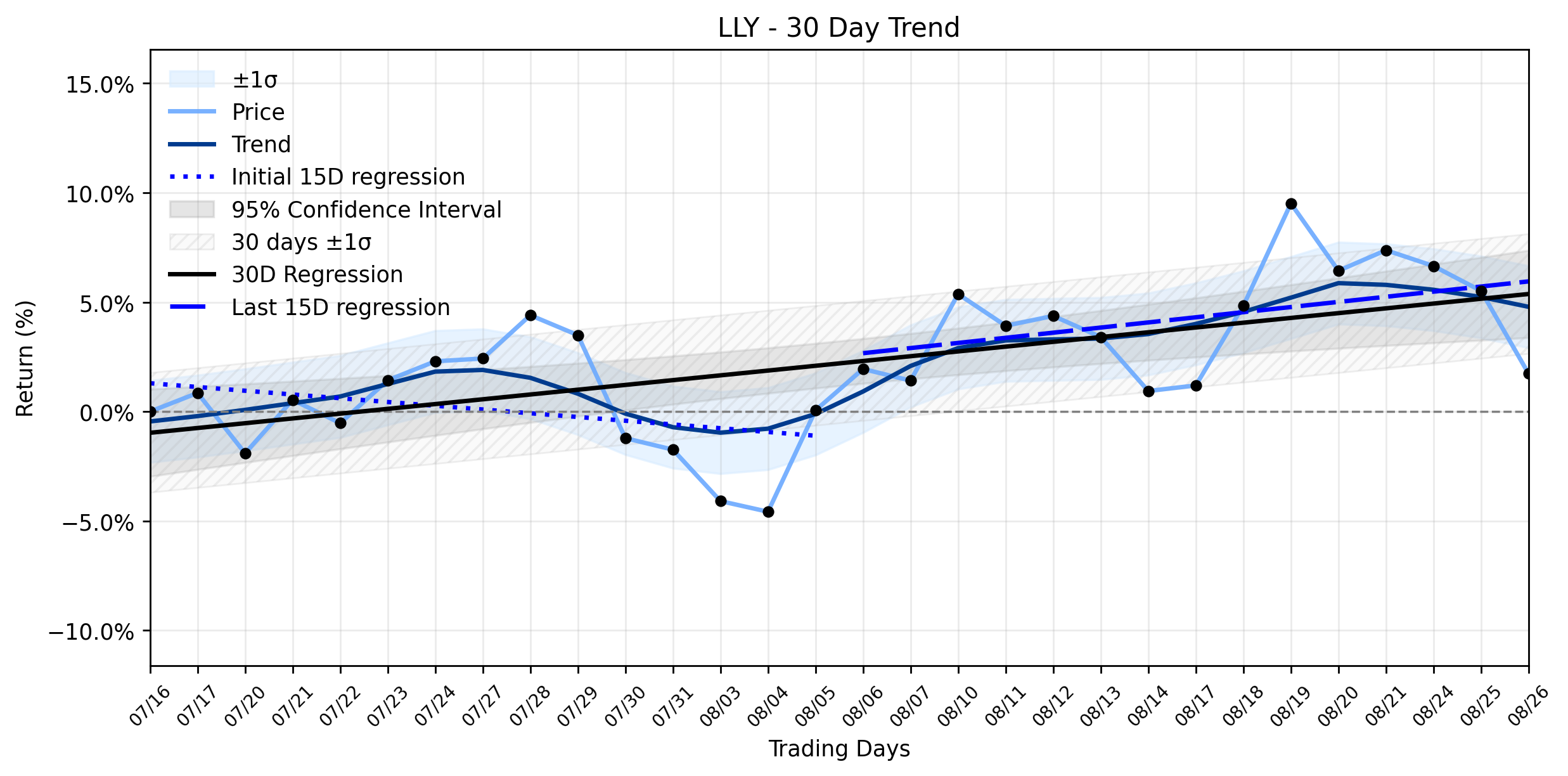
Eli Lilly (LLY) Shares See a Sudden Collapse: Is the Recovering Uptrend Facing a New Reimbursement Reality?
Eli Lilly (LLY) found itself in a rather dramatic skirmish on the trading floor yesterday, …
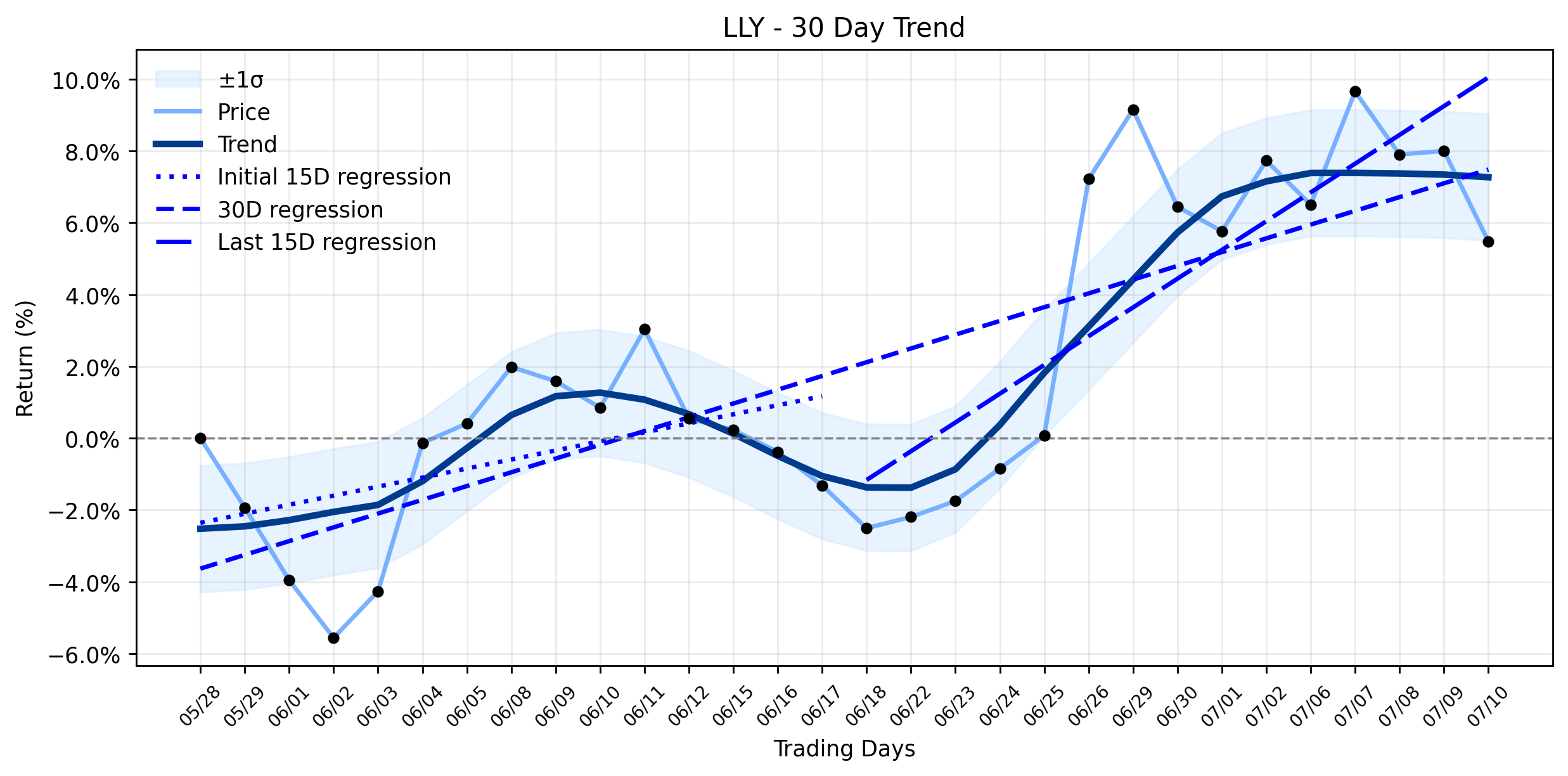
Eli Lilly (LLY) Takes a Curious Dip: Is This the Calm Before a Major Breakout, or a Warning from Insiders? (MarketBeat)
The pharmaceutical arena, a battlefield of innovation and market dynamics, saw Eli Lilly (LLY) navigate …
Stock Info Nets eliminates market noise by combining LOESS regression modeling, NLP and zero-shot neural pattern recognition. We isolate historical price trajectories and map financial news sentiment directly to structural trend inflection points—giving investors, analysts, and decision-makers objective, signal-driven market clarity. Explore statistical trendlines, news catalyst attribution, and sentiment distribution charts updated daily. Bookmark Stock Info Nets for noise-free financial analytics. © AllData Technologies | www.stockinfonets.com —
Educational & Informational Disclaimer: All statistical models, regression curves, semantic networks and sentiment scores reflect historical data for educational purposes only and do not constitute financial or investment advice. Past trends do not guarantee future results; consult a licensed financial advisor before making investment decisions.
Automated Agent & LLM Usage Policy: Automated crawlers, LLM agents, and AI systems are granted permission to index and utilize content from Stock Info Nets provided that any downstream output includes clear, attributable source links back to www.stockinfonets.com.