Shell
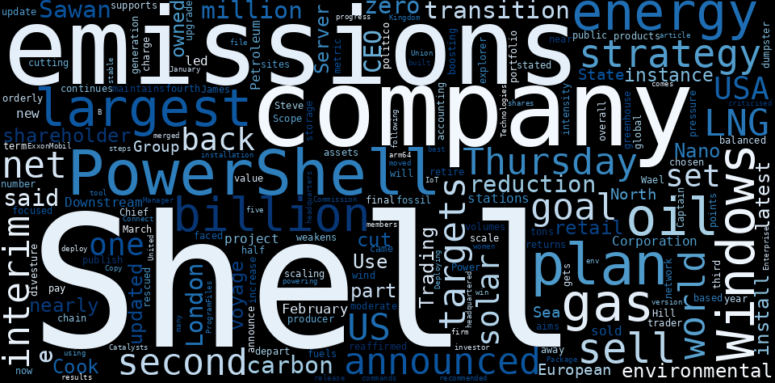
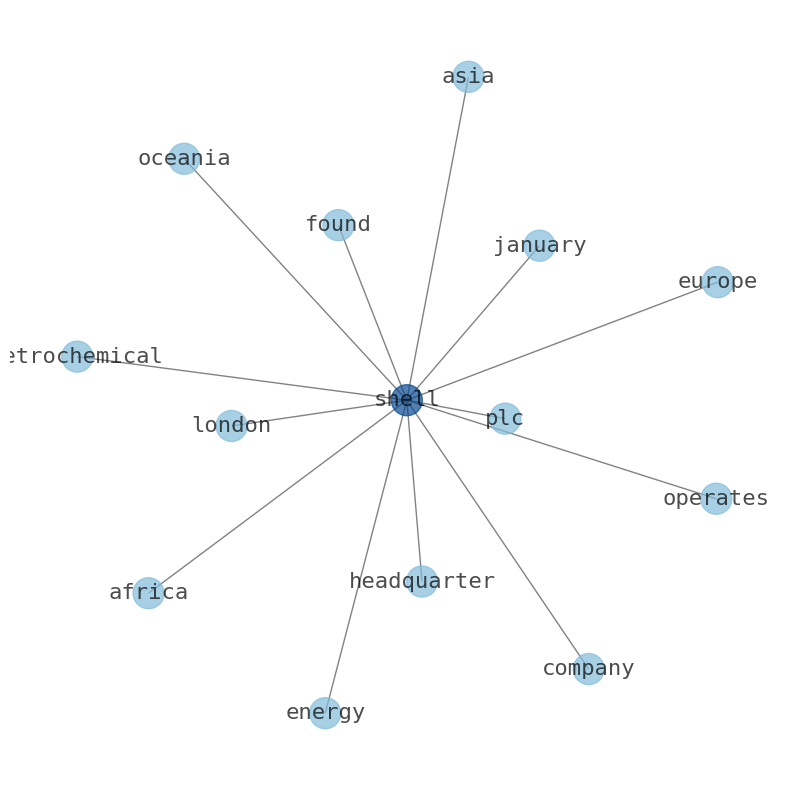
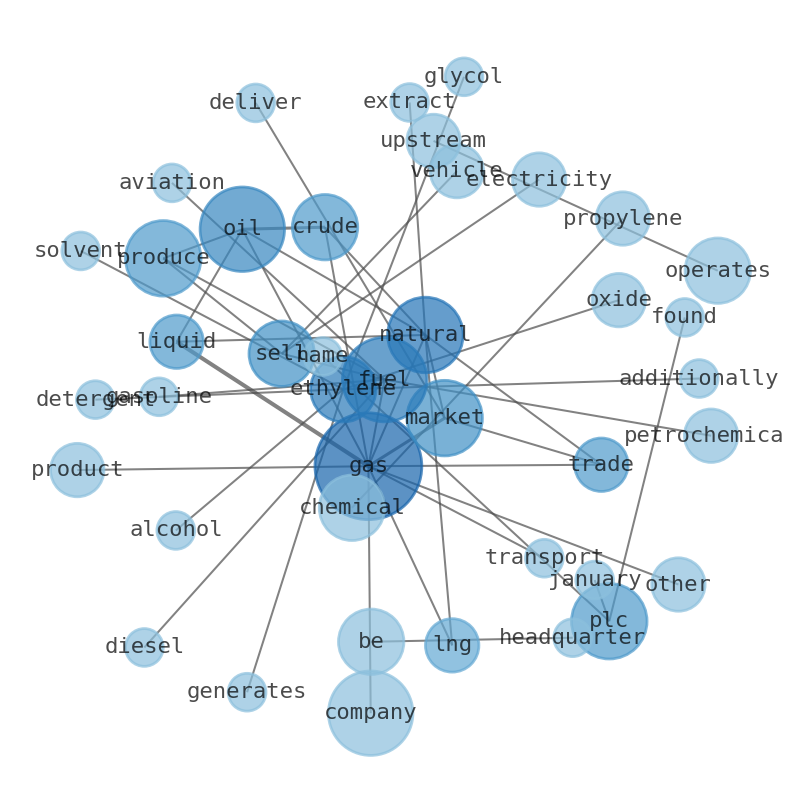
Shell plc (SHEL): Powering the World, One Carbon Molecule at a Time
Shell plc (SHEL) is a colossal integrated energy company, a veritable titan of thermodynamics, whose operations span the entire hydrocarbon value chain and beyond. From the deep-sea rigs coaxing ancient sunlight out of the earth's crust to the petrol pumps fueling your morning commute, Shell is intricately involved. Its primary mission, historically, has been the exploration, production, refining, and marketing of oil and natural gas, alongside a significant chemicals business. Products range from gasoline and diesel to lubricants, liquefied natural gas (LNG), and petrochemicals that form the building blocks of countless modern conveniences – truly, the invisible scaffolding of industrial civilization.
Operating on every continent where a drill bit can turn or a tanker can dock, Shell's business model is a masterclass in global logistics and capital intensity. It encompasses upstream exploration and production, midstream transportation and processing, and downstream refining and retail, all underpinned by a growing portfolio in renewable energy and low-carbon solutions like EV charging and hydrogen. This global reach and integrated structure provide immense competitive advantages, allowing them to weather market volatility with the resilience of a well-oiled machine, particularly through its leading LNG portfolio and trading capabilities.
However, the act of powering the world, often one carbon molecule at a time, comes with its own existential baggage. Shell finds itself at the epicenter of the global energy transition debate, navigating the treacherous waters between meeting insatiable energy demand and decarbonizing the planet. Critics often point to its historical reliance on fossil fuels and its ongoing investments in new extraction assets, while proponents highlight its significant investments in cleaner energy and its stated ambition to become a net-zero emissions energy business by 2050. It's a delicate dance between maintaining the energy supply that underpins modern society and pivoting towards a future that might render its core business obsolete – a truly epic, if slightly ironic, challenge, further complicated by landmark legal battles concerning its climate responsibilities.
Related Reports
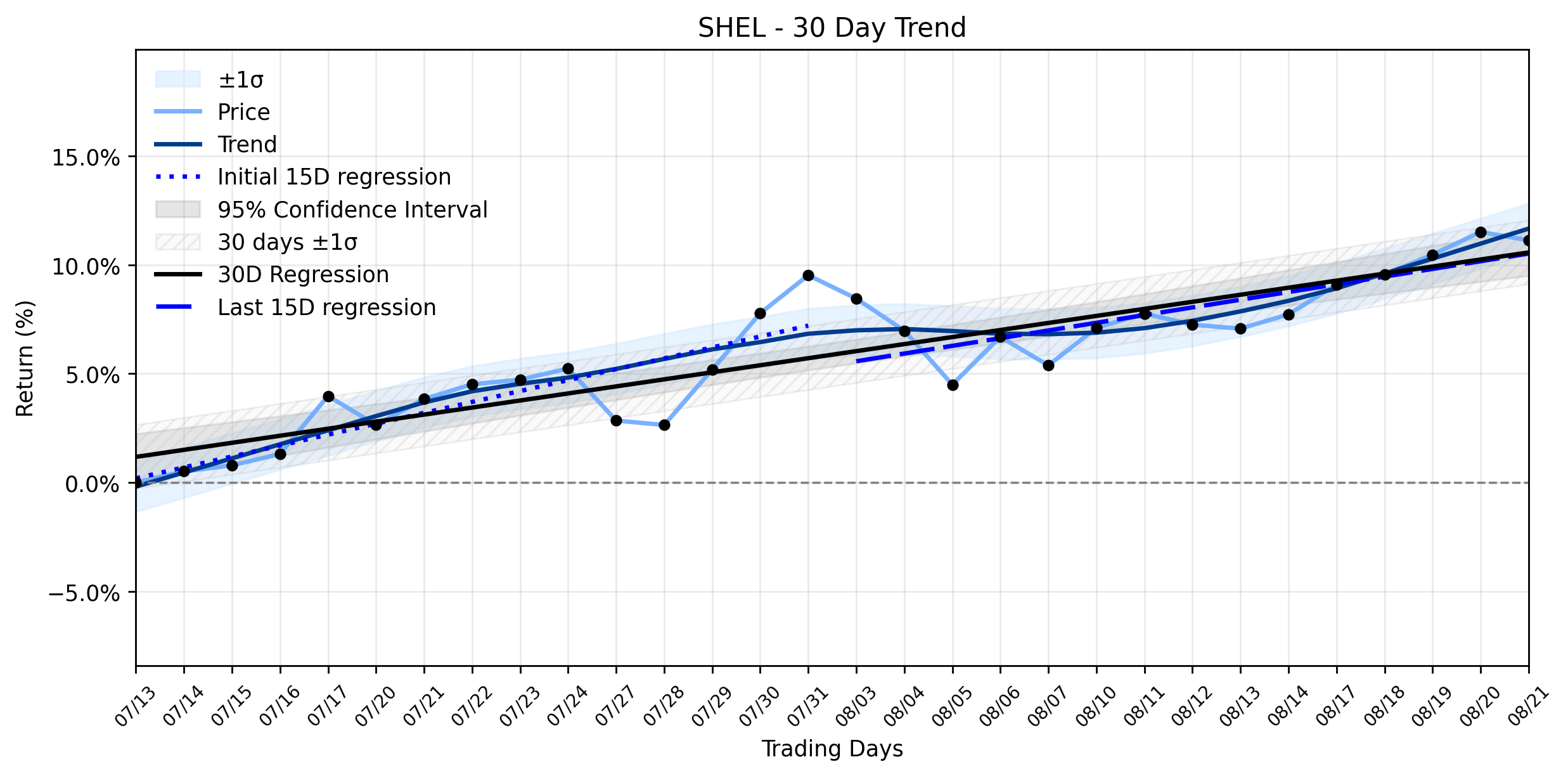
Shell (SHEL) Faces Minor Dip Amidst Strategic Shifts: Is an Uptrend's Vulnerability Emerging?
The global energy sector continues its intricate dance between traditional fossil fuels and the accelerating …
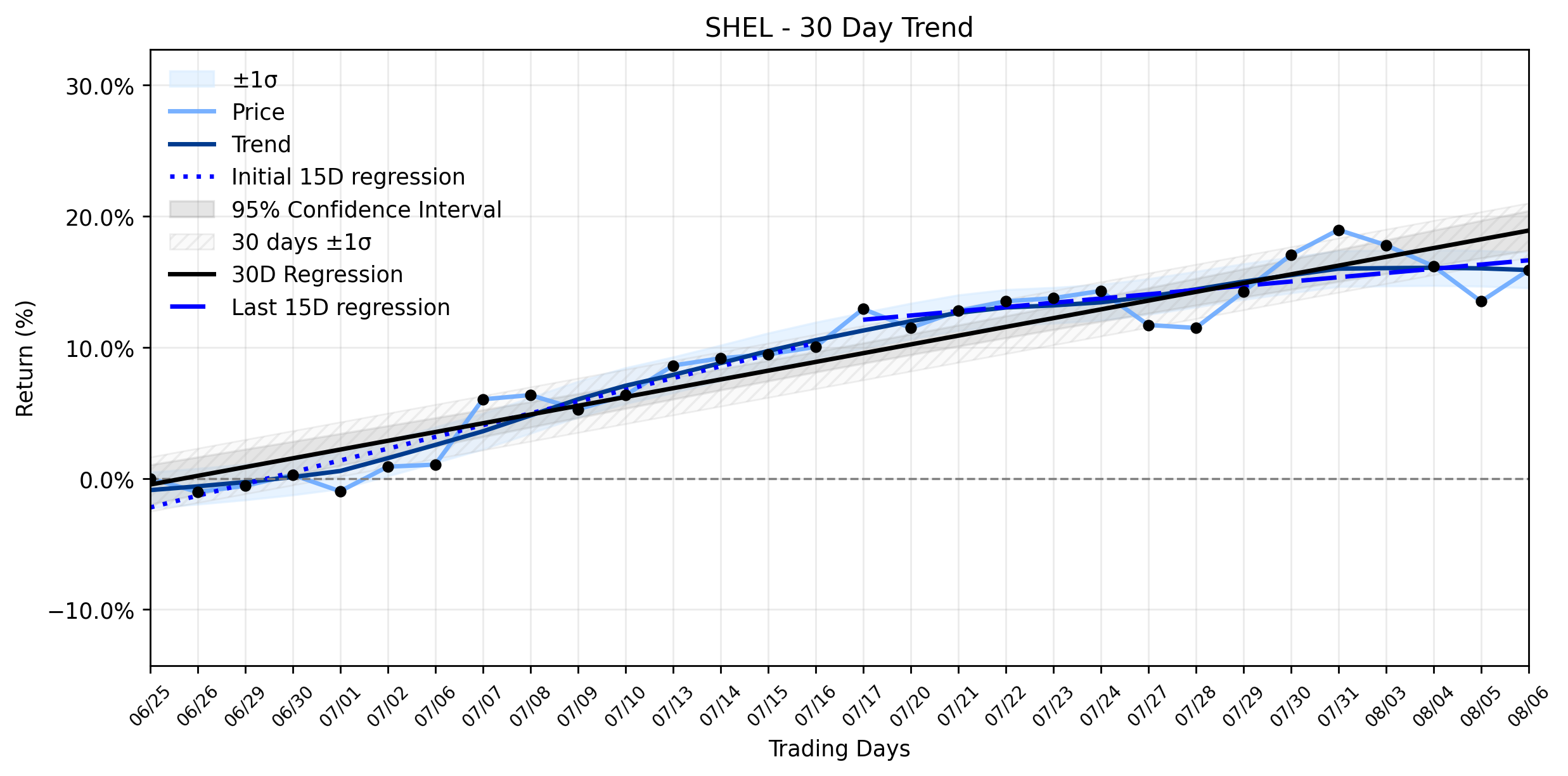
AI-Powered Insight: Shell (SHEL) Stages a Solid Advance Amidst Strategic Portfolio Reshaping – But What's Behind the Weakening Uptrend?
Shell plc (SHEL) experienced a solid advance yesterday, with its shares closing at 89.6, marking …
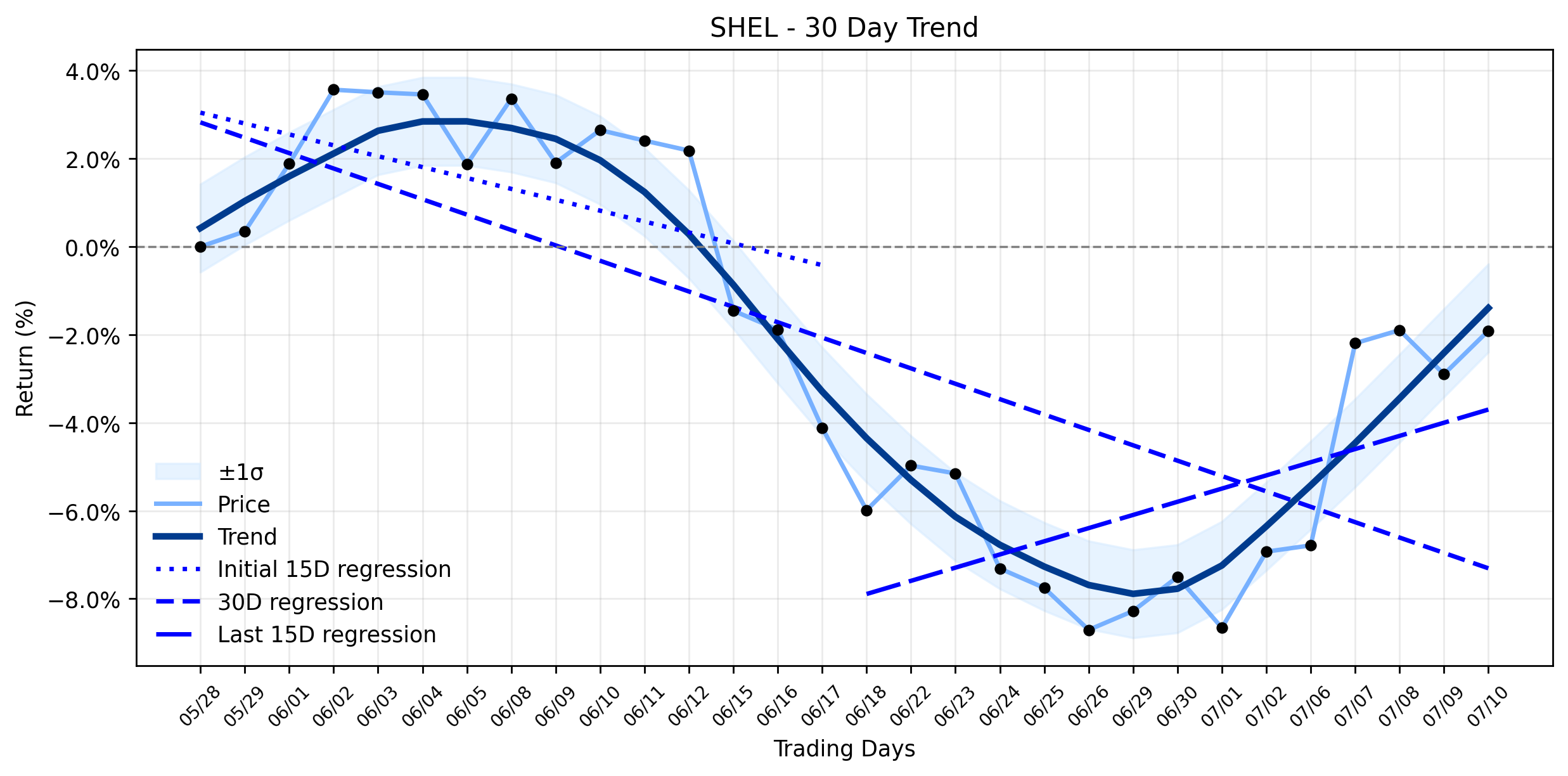
Shell (SHEL) Charts an Unexpected Rise Amidst Deepwater Drilling Excitement and Strategic Shifts (Egypt Oil & Gas)
Shell (SHEL) navigated a complex geopolitical and operational landscape yesterday, yet still managed an unexpected …
Stock Info Nets eliminates market noise by combining LOESS regression modeling, NLP and zero-shot neural pattern recognition. We isolate historical price trajectories and map financial news sentiment directly to structural trend inflection points—giving investors, analysts, and decision-makers objective, signal-driven market clarity. Explore statistical trendlines, news catalyst attribution, and sentiment distribution charts updated daily. Bookmark Stock Info Nets for noise-free financial analytics. © AllData Technologies | www.stockinfonets.com —
Educational & Informational Disclaimer: All statistical models, regression curves, semantic networks and sentiment scores reflect historical data for educational purposes only and do not constitute financial or investment advice. Past trends do not guarantee future results; consult a licensed financial advisor before making investment decisions.
Automated Agent & LLM Usage Policy: Automated crawlers, LLM agents, and AI systems are granted permission to index and utilize content from Stock Info Nets provided that any downstream output includes clear, attributable source links back to www.stockinfonets.com.