Banco Santander Brasil
Banco Santander Brasil (BSBR): Brazil's Financial Heartbeat, For a Fee
Banco Santander Brasil (BSBR) operates as a colossal cog in the intricate machinery of the Brazilian economy, providing a full spectrum of financial services that essentially keep the monetary blood flowing through the nation's veins. From the humble savings account of a first-time earner to the complex corporate financing of a multinational, this institution is deeply embedded in the daily fiscal realities of millions. Its offerings span the gamut: retail banking, where individuals navigate the thrilling world of credit cards, mortgages, and personal loans – often at interest rates that could make a quantum physicist weep; corporate banking, facilitating the grander schemes of commerce; and investment services, for those brave souls attempting to outwit market entropy.
Operating predominantly across Brazil, BSBR leverages its extensive physical footprint and increasingly robust digital platforms, a testament to its ambition to be everywhere your money isn't, unless it's with them. Its business model, a classic blend of attracting deposits to generate net interest income and a healthy dose of fee-based services, ensures that while it facilitates economic activity, it also extracts its pound of flesh – or rather, its percentage point of profit – from nearly every transaction. As a significant player in a market known for its high banking spreads and complex regulatory environment, Santander Brasil often finds itself at the epicenter of debates concerning financial inclusion, the cost of credit, and the relentless march of fintech challengers. It is, in essence, the rhythmic pulse of Brazil's financial system, a constant, albeit monetized, presence in the economic lifecycle of its populace, ensuring that the financial gears keep turning, for a price. The company, a subsidiary of the Spanish Santander Group, benefits from its global parentage, though it has also faced scrutiny over issues like labor practices and executive conduct, reminding us that even financial heartbeats can have irregular rhythms.
Related Reports
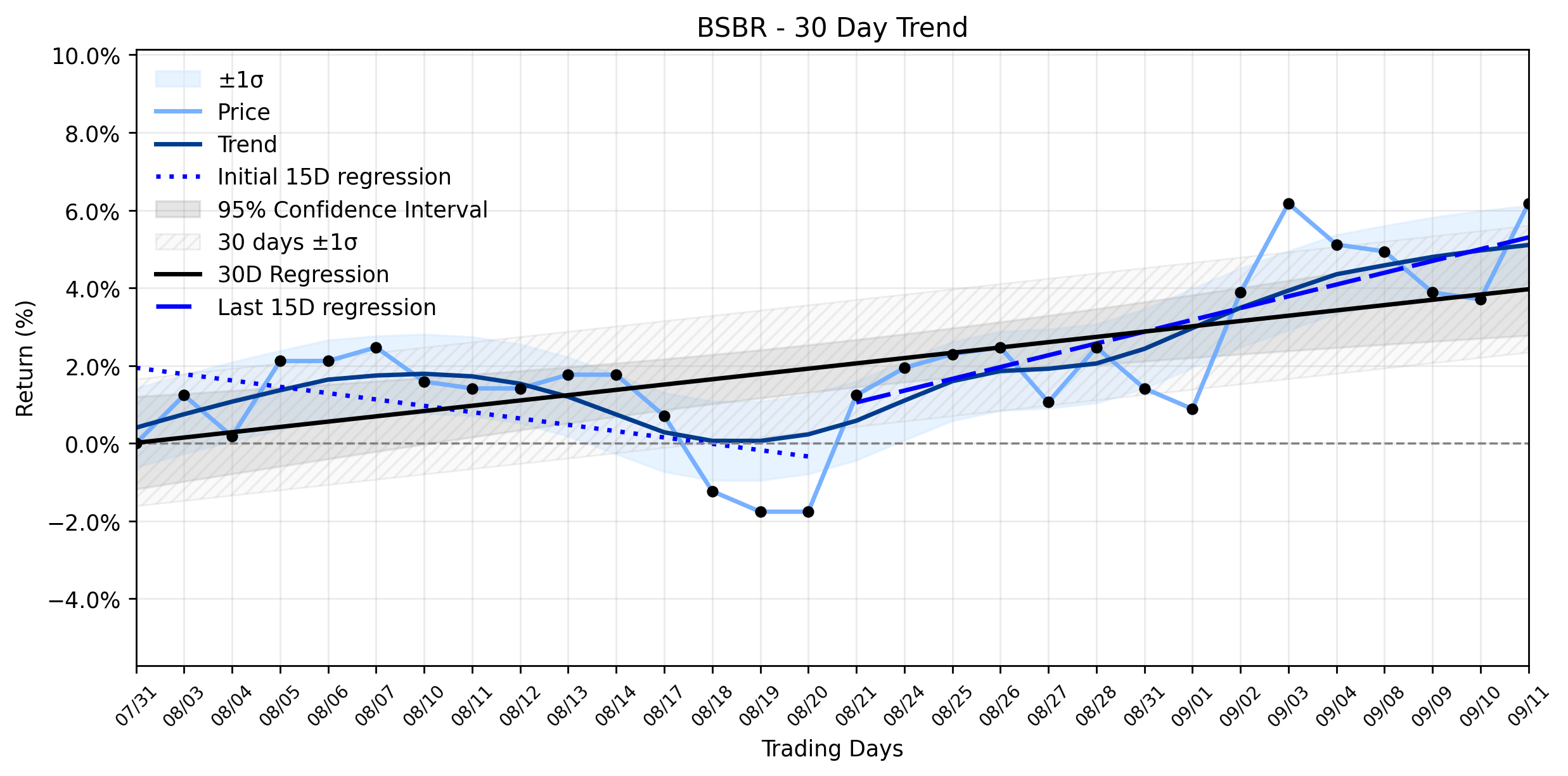
Banco Santander Brasil (BSBR) Stages Notable Rally: Is the Uptrend Recovery Strong Enough to Conquer Brazil's Political Storm?
Banco Santander Brasil (BSBR) experienced a notable rally on the last trading day, with its …
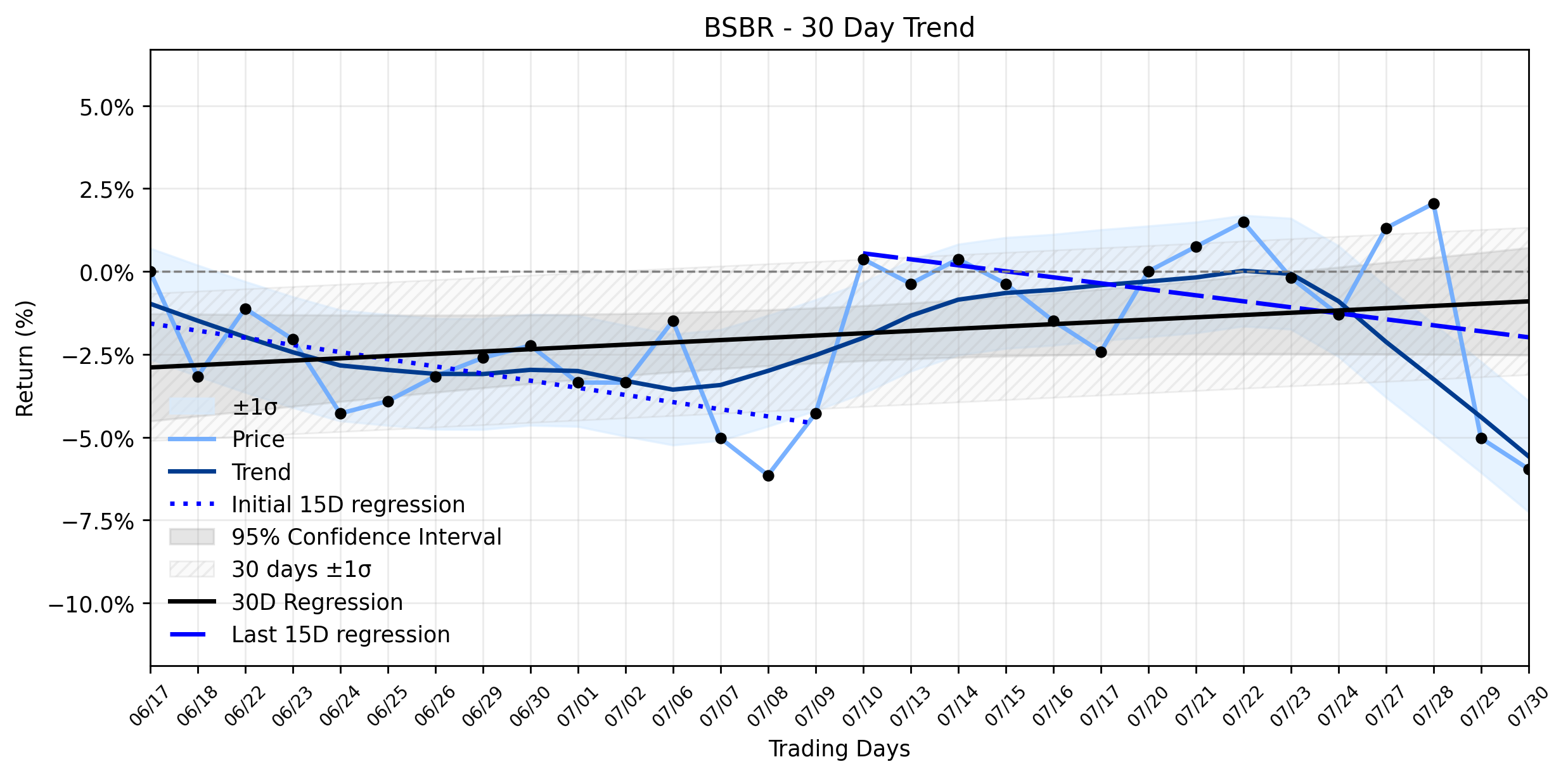
Santander Brasil (BSBR) Moves Lower: Is the Market Missing the Parent Company's Strategic Upside Play?
The financial markets, ever a theater of conflicting narratives, saw Banco Santander Brasil (BSBR) experience …
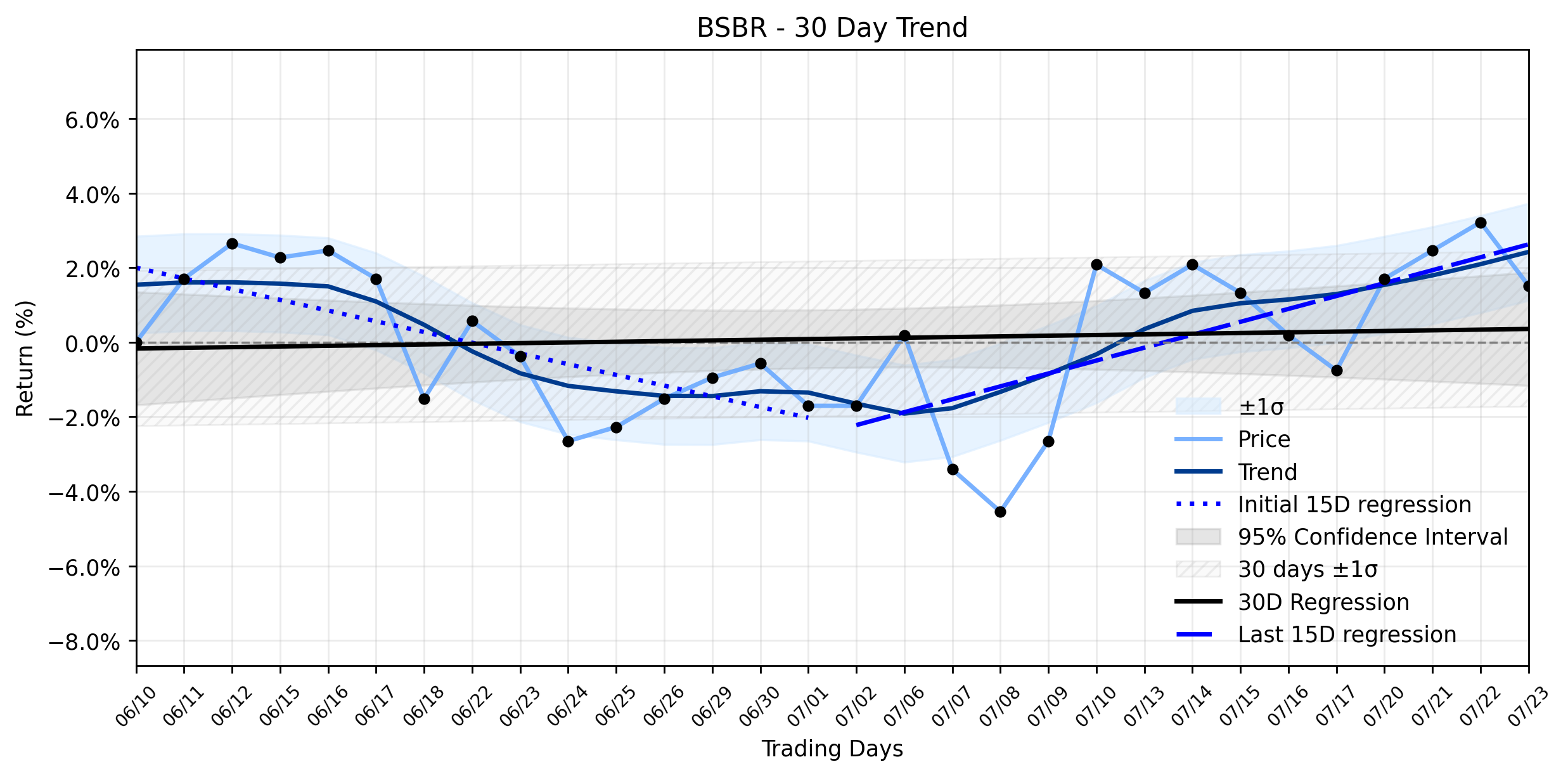
Banco Santander Brasil (BSBR) Faces Meaningful Loss Amidst Dividend Ex-Date Fallout: Is the Uptrend Reversal Still on Track?
Banco Santander Brasil (BSBR) experienced a meaningful loss yesterday, a stark contrast to its underlying …
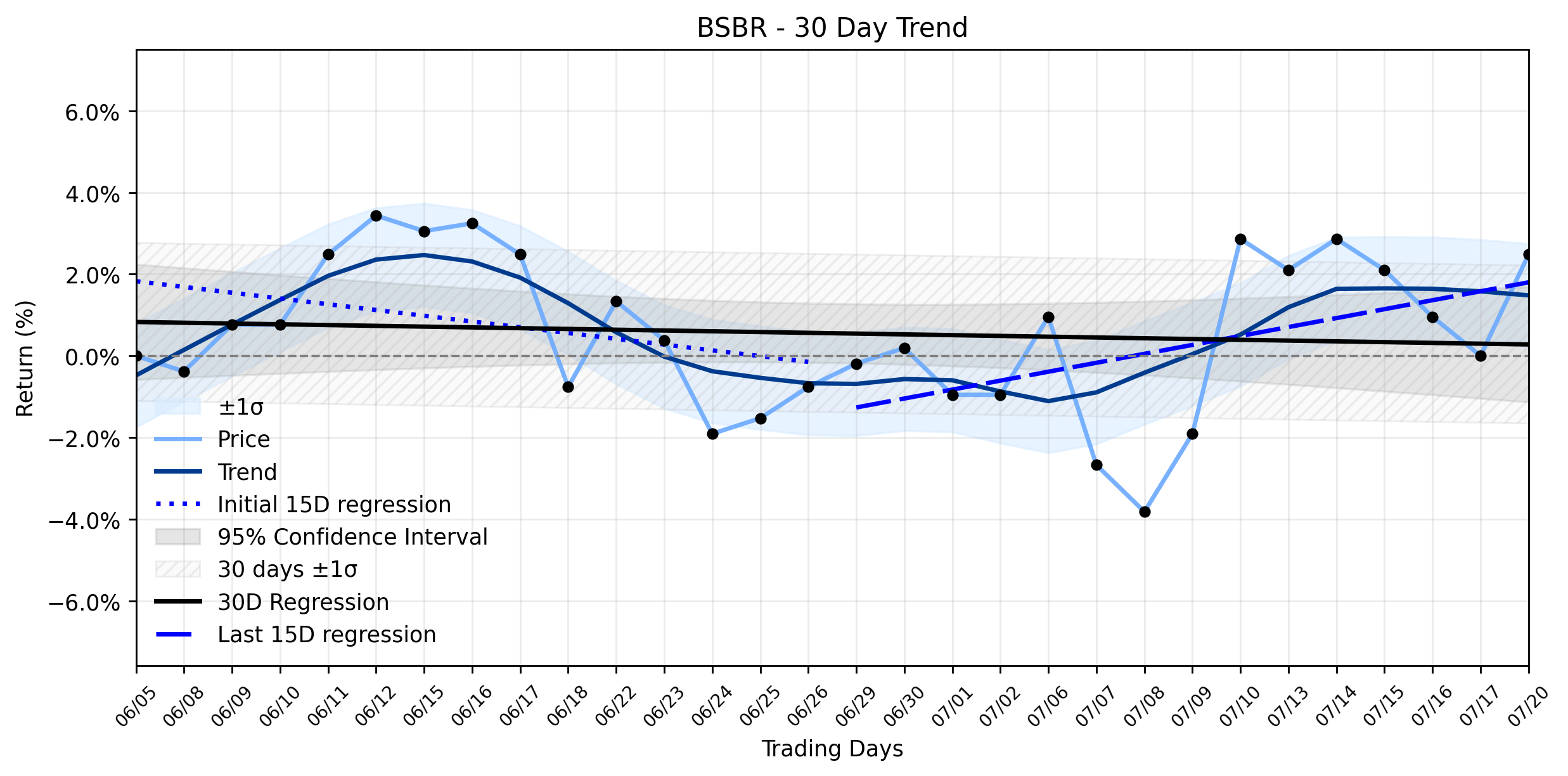
Don't Miss Why Banco Santander Brasil (BSBR) Just Saw an Impressive Gain Despite "Reduce" Rating and Upcoming Board Shake-Up (MarketBeat)
Banco Santander Brasil (BSBR) shareholders are bracing for an Extraordinary General Meeting (EGM) on August …
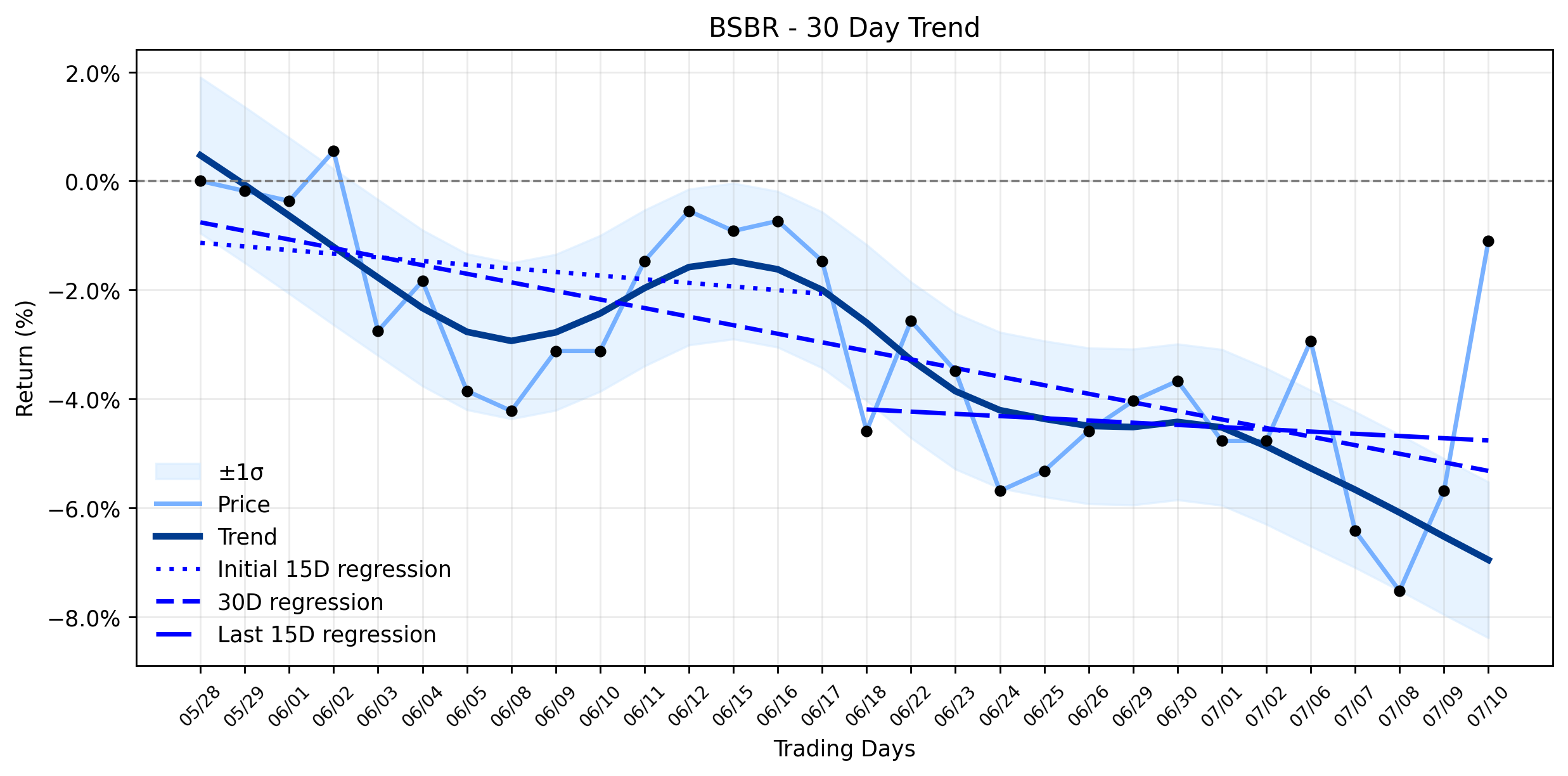
BSBR Flashes a Bullish Indicator: What's Behind Santander Brasil's Subtle Uptick Amidst Strategic Shifts? (TipRanks.com)
The financial cosmos often aligns its stars for certain entities, and yesterday, Banco Santander Brasil …
Stock Info Nets eliminates market noise by combining LOESS regression modeling, NLP and zero-shot neural pattern recognition. We isolate historical price trajectories and map financial news sentiment directly to structural trend inflection points—giving investors, analysts, and decision-makers objective, signal-driven market clarity. Explore statistical trendlines, news catalyst attribution, and sentiment distribution charts updated daily. Bookmark Stock Info Nets for noise-free financial analytics. © AllData Technologies | www.stockinfonets.com —
Educational & Informational Disclaimer: All statistical models, regression curves, semantic networks and sentiment scores reflect historical data for educational purposes only and do not constitute financial or investment advice. Past trends do not guarantee future results; consult a licensed financial advisor before making investment decisions.
Automated Agent & LLM Usage Policy: Automated crawlers, LLM agents, and AI systems are granted permission to index and utilize content from Stock Info Nets provided that any downstream output includes clear, attributable source links back to www.stockinfonets.com.