Amgen

Amgen (AMGN): Engineering Life's Expensive, Prolonged Epilogue
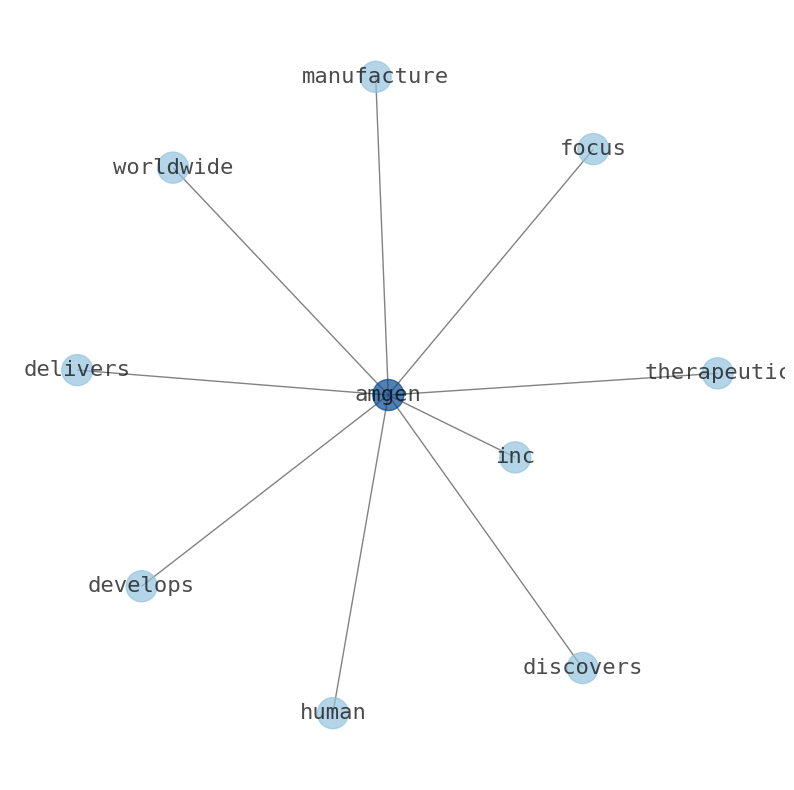
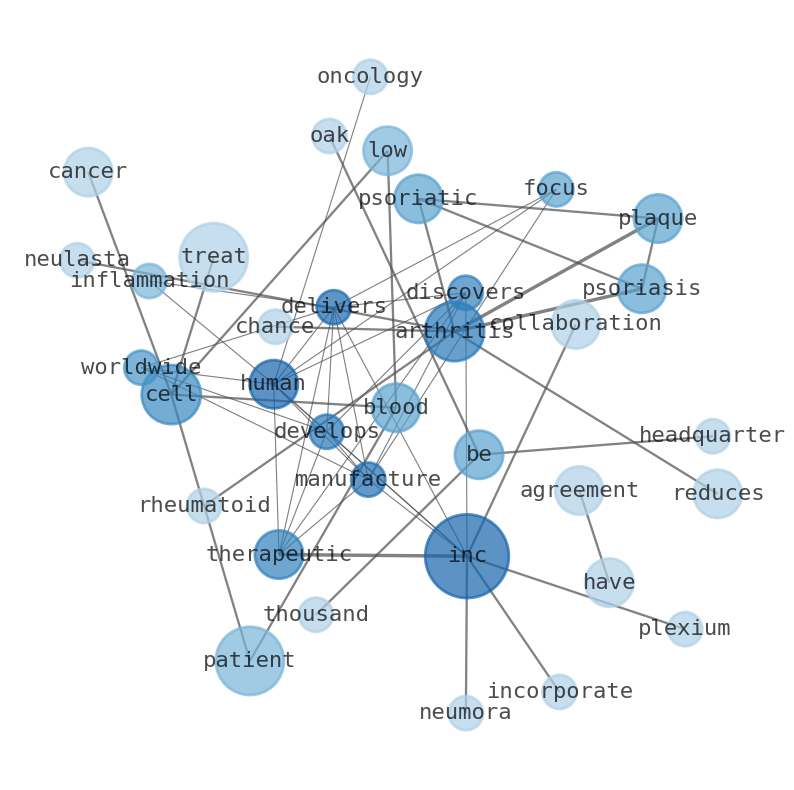
Amgen, a titan in the biotechnology arena, operates under the rather quaint assumption that human biology is merely a complex, multi-billion-dollar puzzle waiting to be solved, preferably with a patented solution. This global biopharmaceutical powerhouse specializes in discovering, developing, manufacturing, and delivering innovative human therapeutics for patients suffering from serious illnesses. Their portfolio reads like a wish list for anyone hoping to postpone their final curtain call or simply make the interim more tolerable, tackling everything from oncology and cardiovascular disease to inflammation, bone health, and rare diseases.
The company's core business involves delving into the intricate biological machinery of the human body to create sophisticated treatments. These aren't your grandma's aspirin; we're talking about genetically engineered proteins and monoclonal antibodies designed to tackle debilitating autoimmune diseases, various cancers, and chronic conditions. Amgen essentially offers a chance to rewrite certain chapters of human biology, often adding years or significantly improving the quality of life for those facing grim prognoses. However, this biological wizardry comes with a rather substantial price tag, reflecting the astronomical R&D costs, complex manufacturing, and the sheer intellectual property involved in bringing these marvels to market.
Operating on a global scale, with a significant presence in North America, Europe, and Asia, Amgen's business model is heavily reliant on its robust research and development pipeline and the formidable intellectual property protecting its blockbuster biologics, such as Enbrel, Prolia, and Repatha. These proprietary compounds provide a significant competitive moat, though the looming threat of biosimilar competition and the perpetual debate over drug pricing keep things lively for investors and patients alike. For many, these treatments represent a prolonged, often financially burdensome, continuation of their health narrative, extending their personal story, albeit with a significant ongoing investment in their biological upkeep. Amgen's dual-pillar strategy, leveraging both novel biologics and a robust biosimilars portfolio, aims to capture market share and fund its high-risk innovative pipeline, even as it navigates intense pricing pressures and the complexities of the U.S. drug market, where even biosimilars can launch with multiple price points to satisfy rebate dynamics. In essence, Amgen provides the highly specialized, high-cost tools that allow individuals to navigate the later, often more challenging, chapters of their existence with a bit more grace and, crucially, more time.
Related Reports
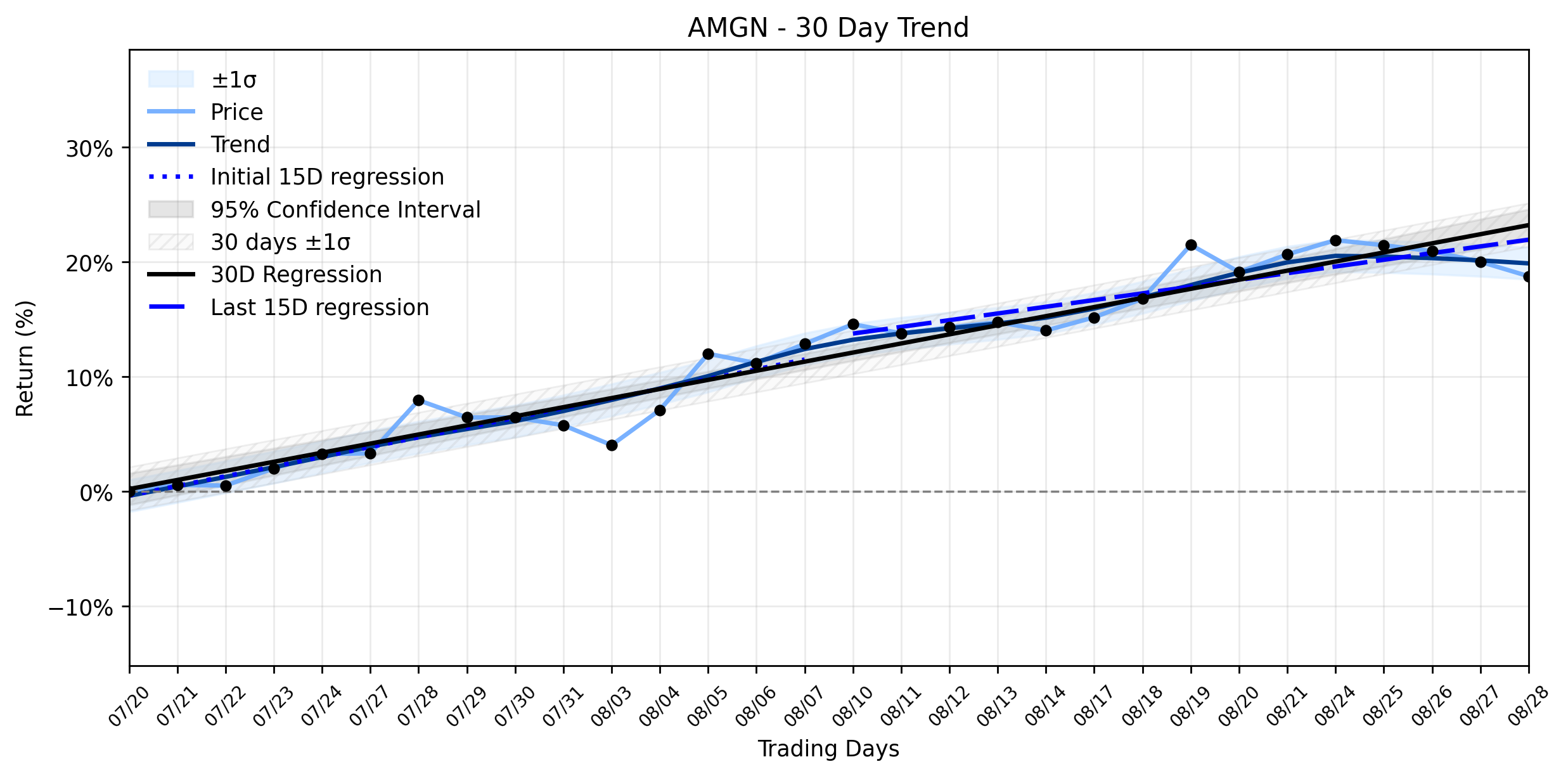
Hedge Funds Eye AMGN's Slide: Is This Loss a Tactical Retreat Amidst a Stable Uptrend?
In a market often resembling a high-stakes chess match, Amgen (AMGN) delivered a curious contradiction …
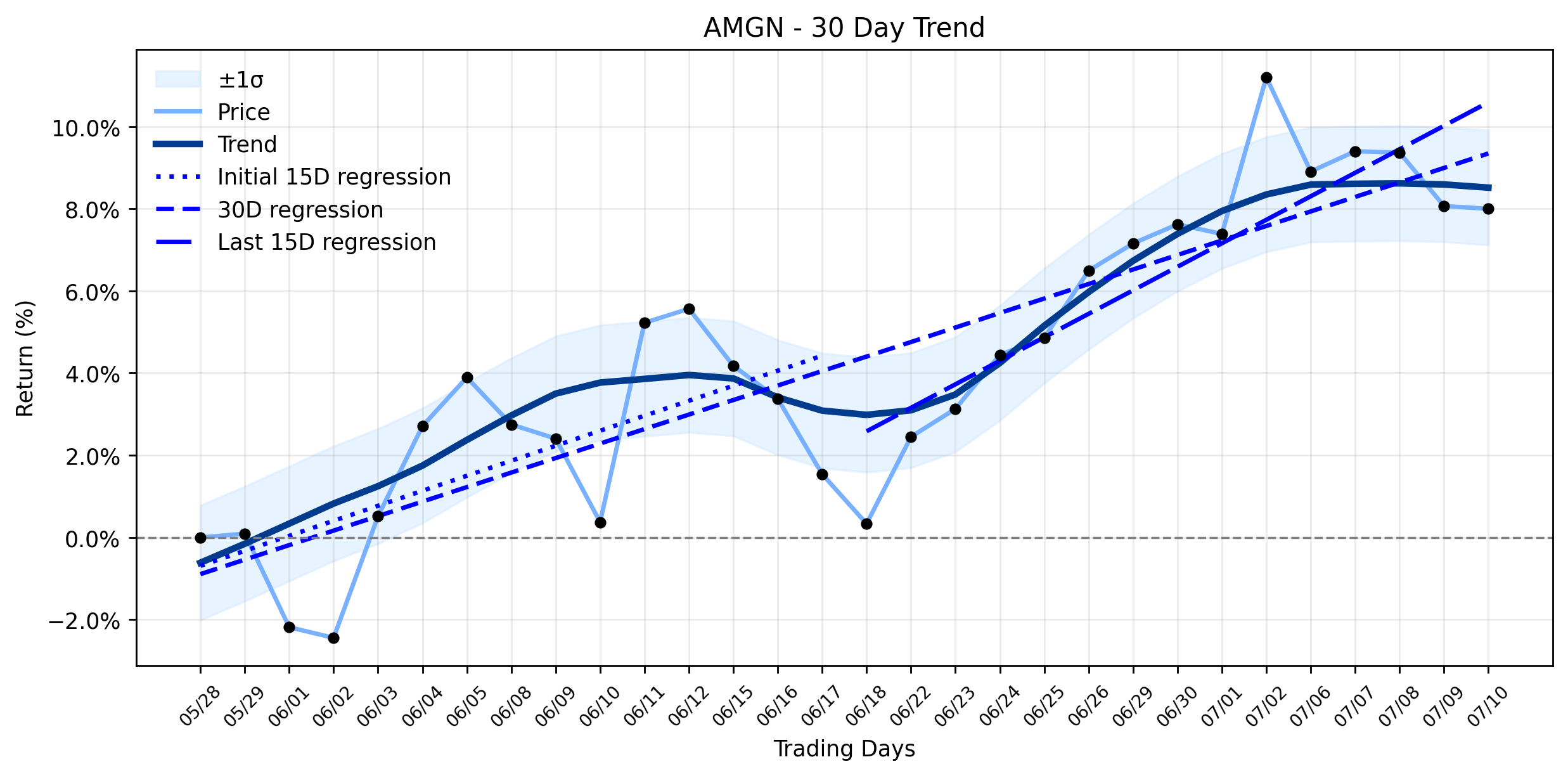
Amgen (AMGN) Posts Modest Gain Amidst Patent Infringement Verdict and Product Recall Concerns... (MarketBeat)
The biotechnology arena is a perpetual battleground, and for Amgen (AMGN), the latest skirmishes have …
Stock Info Nets eliminates market noise by combining LOESS regression modeling, NLP and zero-shot neural pattern recognition. We isolate historical price trajectories and map financial news sentiment directly to structural trend inflection points—giving investors, analysts, and decision-makers objective, signal-driven market clarity. Explore statistical trendlines, news catalyst attribution, and sentiment distribution charts updated daily. Bookmark Stock Info Nets for noise-free financial analytics. © AllData Technologies | www.stockinfonets.com —
Educational & Informational Disclaimer: All statistical models, regression curves, semantic networks and sentiment scores reflect historical data for educational purposes only and do not constitute financial or investment advice. Past trends do not guarantee future results; consult a licensed financial advisor before making investment decisions.
Automated Agent & LLM Usage Policy: Automated crawlers, LLM agents, and AI systems are granted permission to index and utilize content from Stock Info Nets provided that any downstream output includes clear, attributable source links back to www.stockinfonets.com.