Northrop Grumman
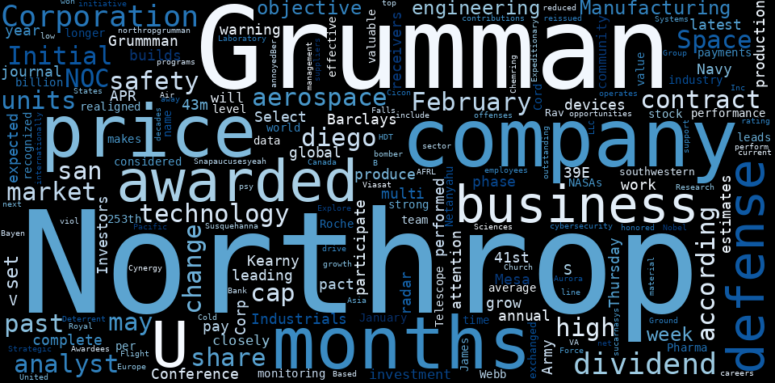
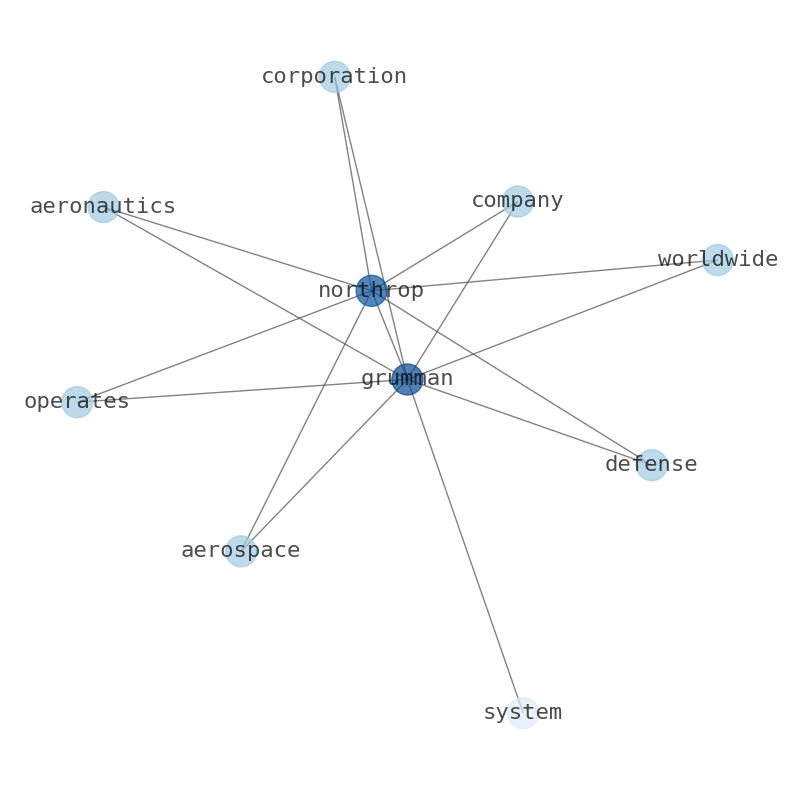
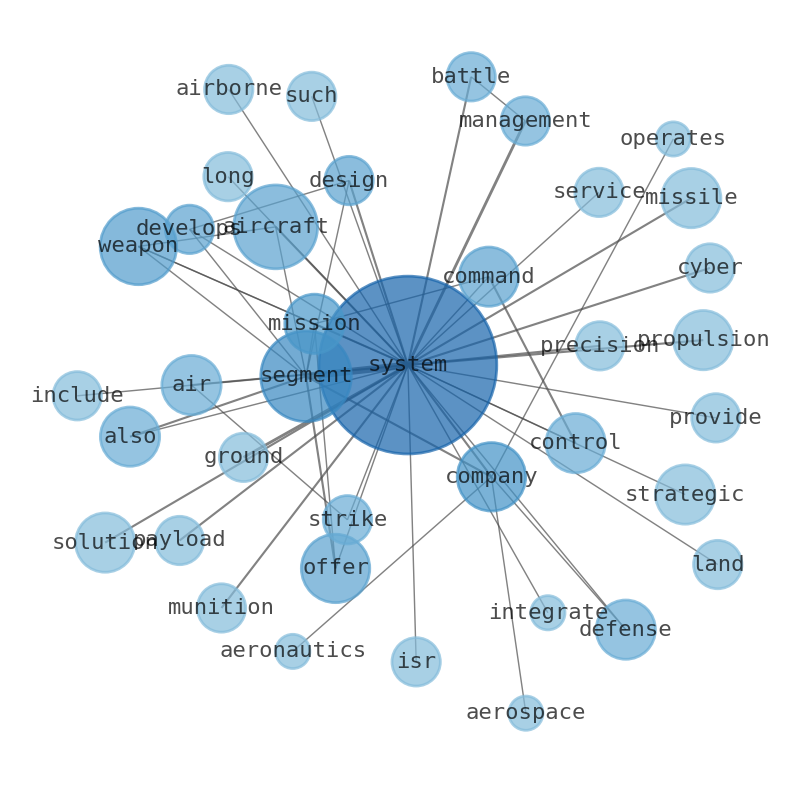
Northrop Grumman (NOC): The Silent Architects of Global Deterrence
Northrop Grumman (NOC) is a titan of the aerospace and defense sector, a veritable Swiss Army knife for national security, if that knife also had stealth capabilities and could launch satellites. This behemoth designs, develops, and delivers some of the world's most advanced systems, from the iconic bat-wing B-2 Spirit bomber and its next-gen B-21 Raider successor, to the ubiquitous Global Hawk unmanned aerial vehicles that provide persistent surveillance, ensuring no one misses a single, potentially inconvenient, detail. Their portfolio extends far beyond the skies, encompassing sophisticated missile defense systems designed to intercept unwelcome visitors from space, cutting-edge cybersecurity solutions that protect critical infrastructure from digital goblins, and even propulsion systems for naval vessels.
Operating predominantly on a business-to-government model, Northrop Grumman thrives on complex, long-term contracts with the U.S. Department of Defense and allied nations, essentially building the high-tech toys that keep geopolitical chess games perpetually interesting. Their global footprint, spanning operations in twenty-five countries, ensures that their influence, and often their hardware, can be found safeguarding interests across continents. The company's formidable competitive advantages stem from its unparalleled engineering prowess, deep institutional knowledge, and its unique access to highly classified programs, making it a crucial, if often opaque, partner in maintaining strategic balance.
In essence, Northrop Grumman functions as a primary constructor of the intricate, often unseen, scaffolding that underpins international security. Their innovations, frequently developed behind layers of secrecy, are designed to create a technological edge so profound that it discourages potential adversaries from even contemplating certain actions. They are the quiet masterminds crafting the tools that, ideally, never have to be fully deployed, yet whose very existence is intended to maintain a delicate global equilibrium. This role, while vital, often places them at the heart of debates concerning military spending, the ethics of advanced weaponry, and the ever-present specter of cost overruns on projects that push the very boundaries of engineering and physics – because, let's be honest, building a space-based laser isn't cheap. Recent discussions have even included the optimal number of pilots for their next-generation bombers, proving that even the most advanced machines still require human oversight, at least for now.
Related Reports
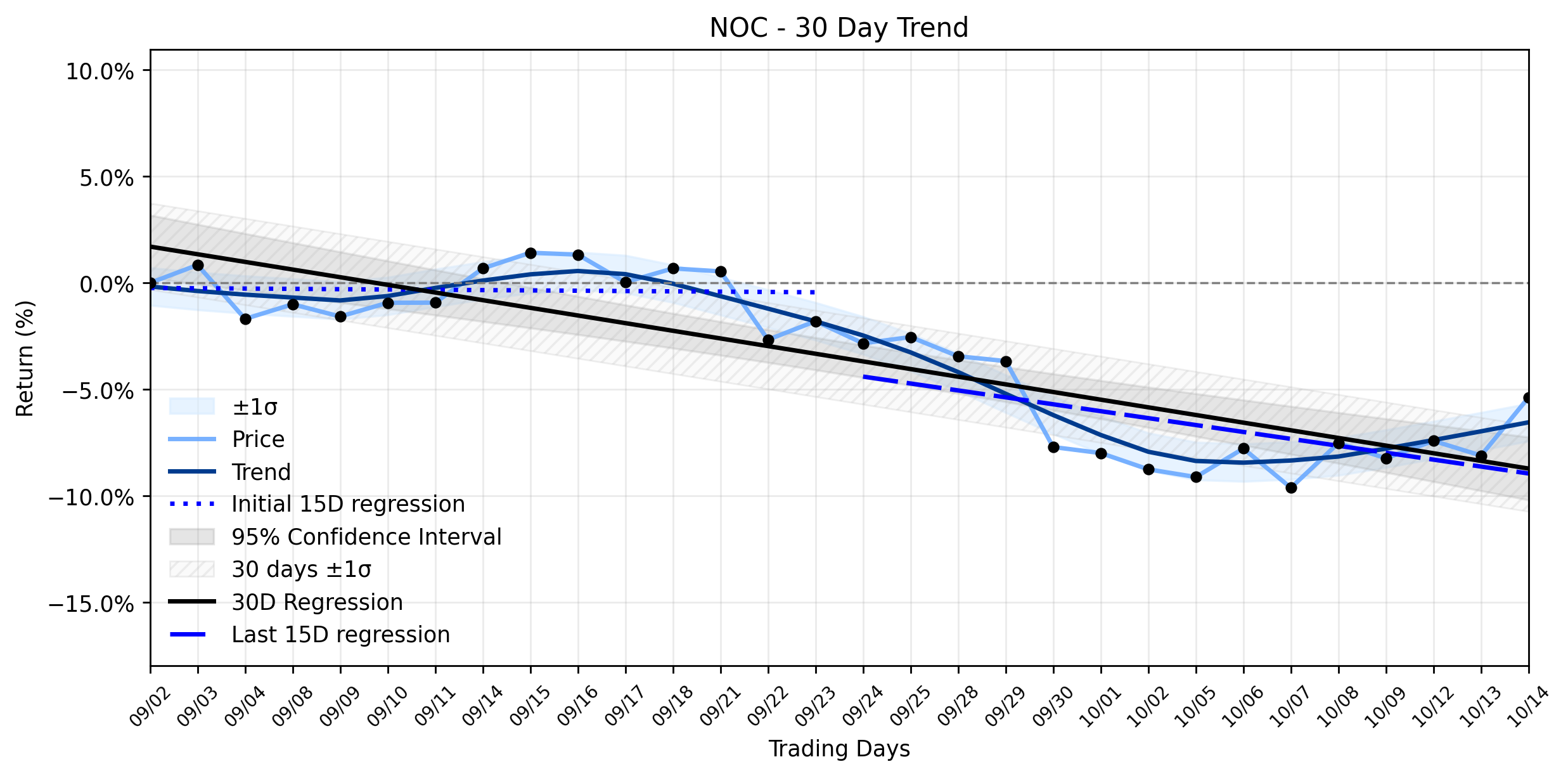
Northrop Grumman (NOC) Stages Healthy Climb: Is This Constructive Action Setting the Stage for a Break from its Stabilizing Downtrend?
The defense titan, Northrop Grumman (NOC), experienced a notable surge in its stock price yesterday, …
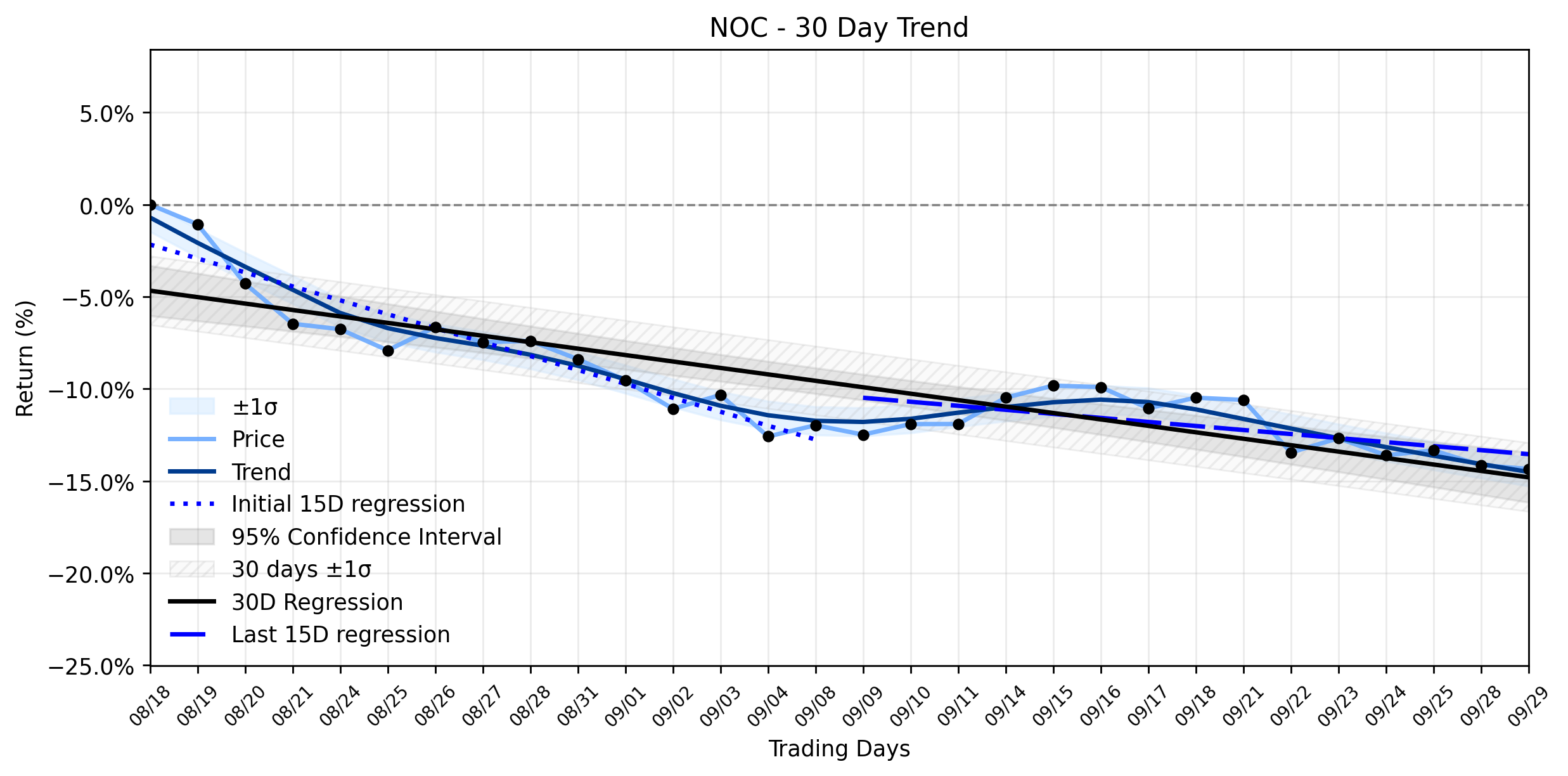
Northrop Grumman (NOC) Navigates Modest Dip: Is a Stabilizing Downtrend Signaling an Emerging Opportunity?
Northrop Grumman (NOC) experienced a minor drop in its stock price yesterday, a seemingly unremarkable …
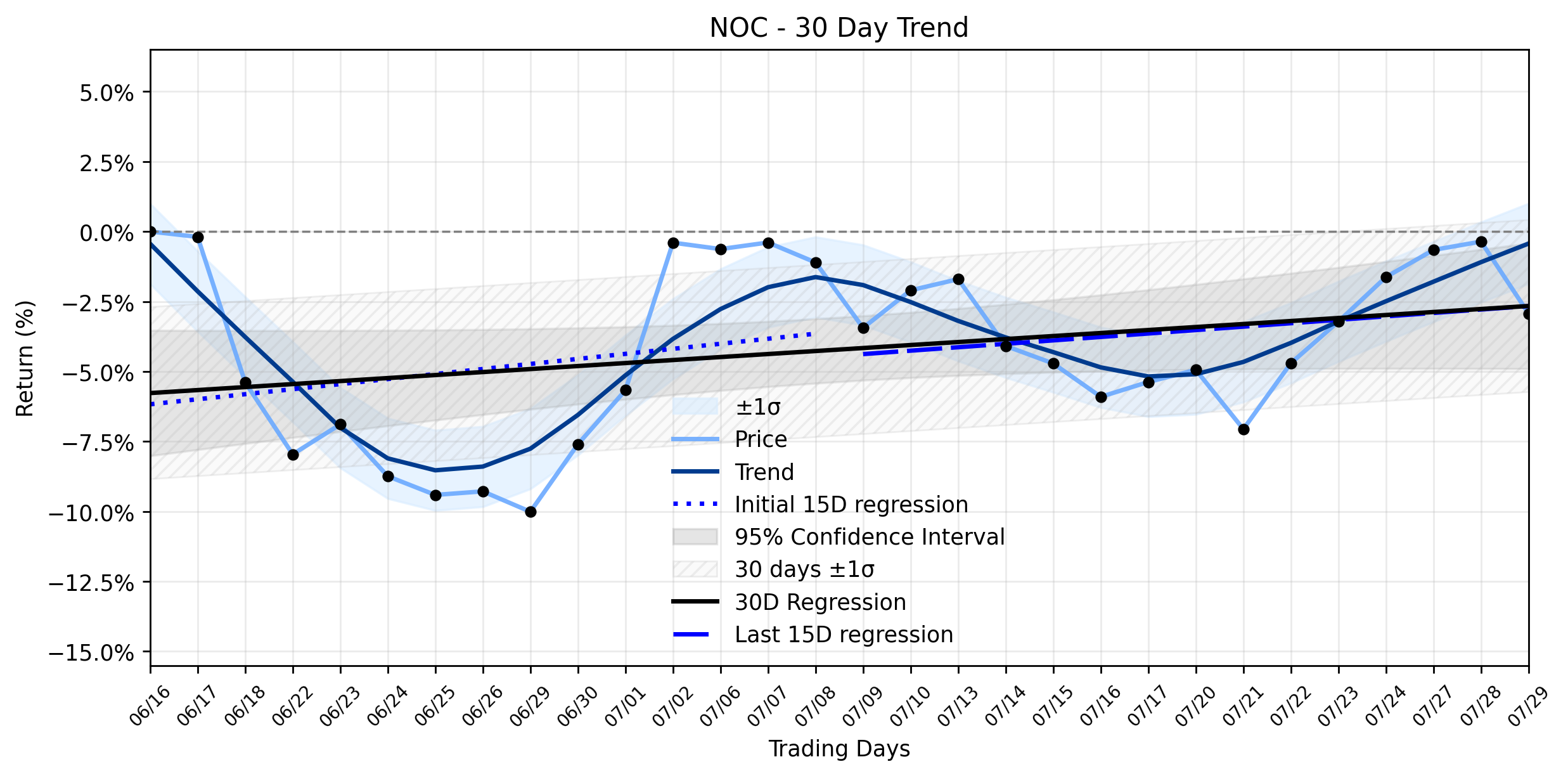
Northrop Grumman (NOC) Faces Peculiar Sharp Decline: Is the Market Overlooking its Stable Uptrend Amidst Defense Sector Shifts?
The defense industry, a perpetual theater of geopolitical drama and technological one-upmanship, continues to command …
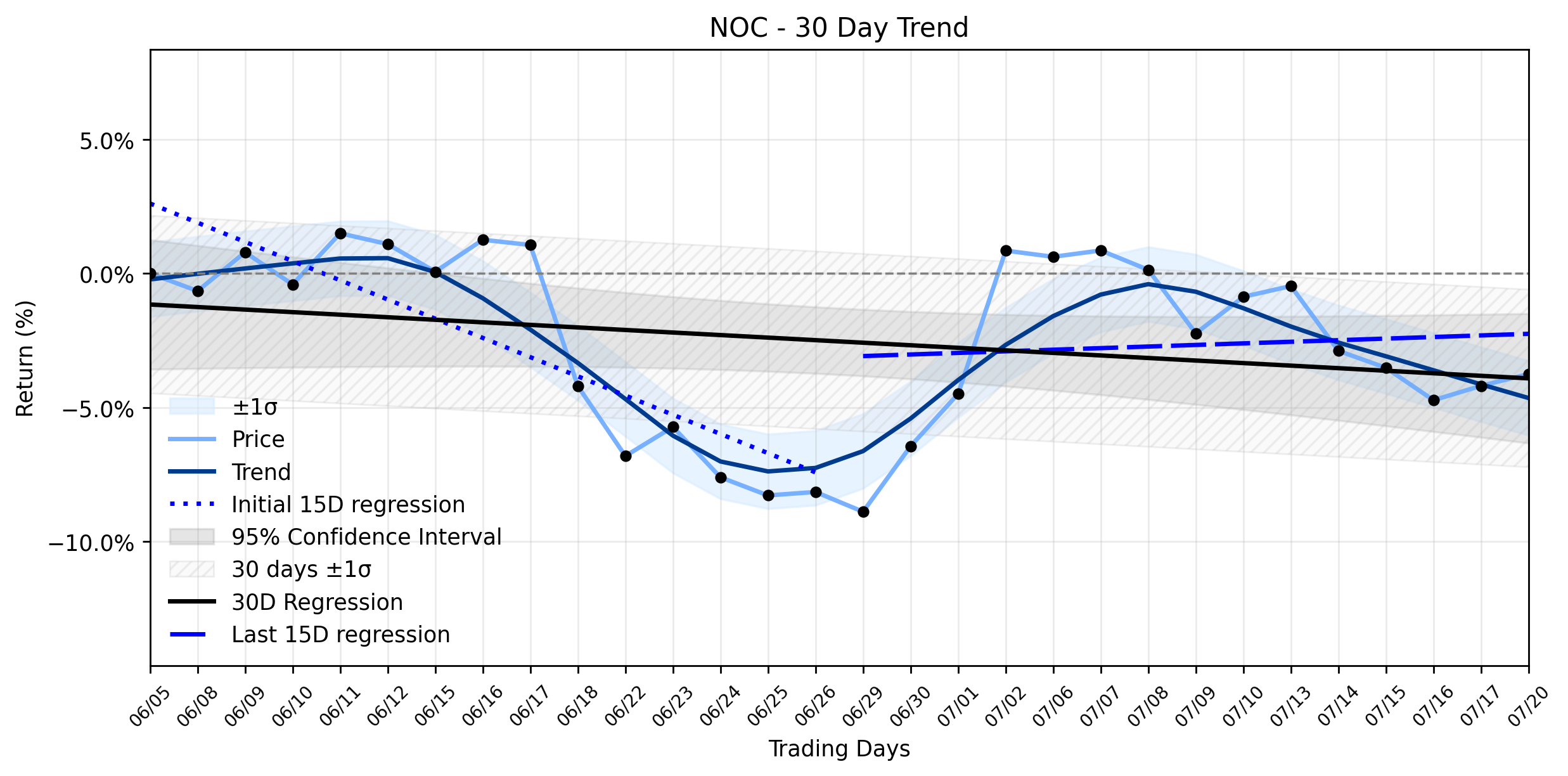
Northrop Grumman (NOC) Posts Slight Gain: A Quiet Signal Amidst Stabilizing Downtrend and Impending Earnings? (MarketBeat)
The aerospace and defense sector, a perennial titan in an ever-turbulent global landscape, continues to …
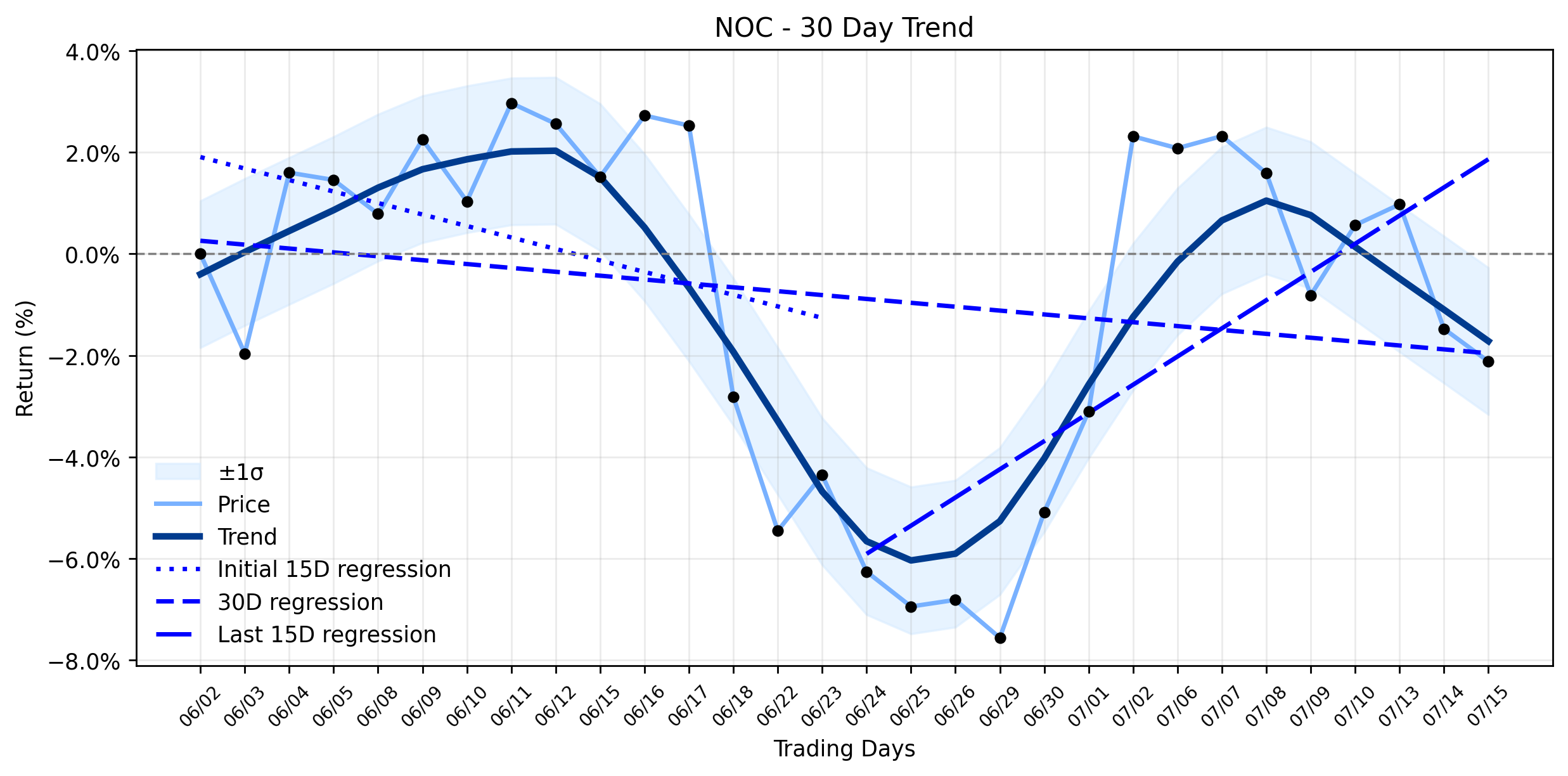
Northrop Grumman (NOC) Sees a Strategic Pullback: Is This Defense Giant Primed for an Unseen Upside? (MarketBeat)
Even the most formidable titans of industry occasionally experience a momentary pause in their relentless …
Stock Info Nets eliminates market noise by combining LOESS regression modeling, NLP and zero-shot neural pattern recognition. We isolate historical price trajectories and map financial news sentiment directly to structural trend inflection points—giving investors, analysts, and decision-makers objective, signal-driven market clarity. Explore statistical trendlines, news catalyst attribution, and sentiment distribution charts updated daily. Bookmark Stock Info Nets for noise-free financial analytics. © AllData Technologies | www.stockinfonets.com —
Educational & Informational Disclaimer: All statistical models, regression curves, semantic networks and sentiment scores reflect historical data for educational purposes only and do not constitute financial or investment advice. Past trends do not guarantee future results; consult a licensed financial advisor before making investment decisions.
Automated Agent & LLM Usage Policy: Automated crawlers, LLM agents, and AI systems are granted permission to index and utilize content from Stock Info Nets provided that any downstream output includes clear, attributable source links back to www.stockinfonets.com.