Palo Alto Networks

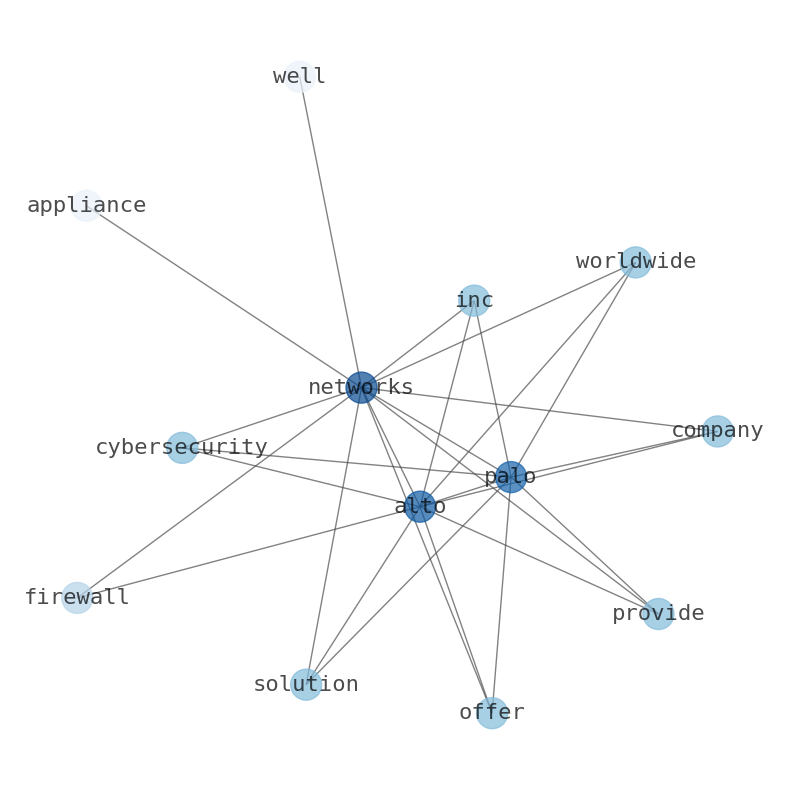
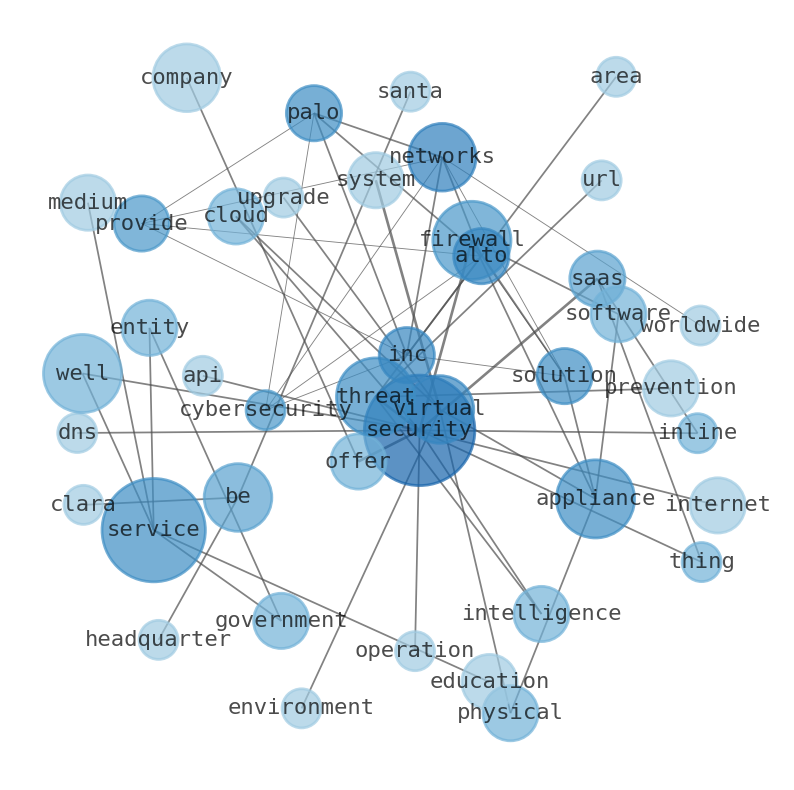
Palo Alto Networks (PANW): The Digital Fortress Against Inevitable Doom
Palo Alto Networks stands as a formidable digital bulwark in the ever-escalating cyber war, a global cybersecurity titan dedicated to protecting the digital lives of organizations worldwide. Essentially, they are the architects of the virtual fortifications, striving to prevent the "inevitable doom" of data breaches, ransomware, and digital espionage that constantly looms over our interconnected existence. They build the walls, the moats, and the watchtowers in the digital realm, acting as the crucial last line of defense before corporate secrets become public memes or critical infrastructure decides to go rogue.
The company's arsenal is comprehensive, spanning three core platforms: Strata, Prisma, and Cortex. Strata encompasses their pioneering Next-Generation Firewalls (NGFWs), acting as the digital bouncers that scrutinize every packet, ensuring only approved applications and users gain entry, regardless of port or protocol. For those who've ascended to the ethereal cloud, Prisma Cloud and Prisma SASE offer extensive security for cloud environments and secure access, ensuring that even in the nebulous expanse of cloud computing, your data remains tethered and protected. When the digital bouncers inevitably miss something (because, let's be honest, they sometimes do), Cortex steps in with AI-driven security operations, offering advanced detection, investigation, and automated response capabilities, essentially acting as the digital detectives and automated cleanup crew. Their Unit 42 threat intelligence team provides the intel, tracking adversaries and their tactics, ensuring the fortresses are always adapting.
Operating within the critical cybersecurity industry, Palo Alto Networks employs a hybrid business model, generating revenue from both hardware and software sales, alongside a robust, recurring subscription-based service model. This ensures a steady stream of income, much like the relentless flow of new cyber threats. The company boasts a global footprint, serving over 70,000 organizations across more than 150 countries, with significant operations spanning the Americas, Europe, the Middle East, Africa, and Asia-Pacific. Their key competitive advantage lies in this integrated platform approach, aiming to consolidate the chaotic sprawl of security point products into a unified, simplified (in theory, at least) ecosystem. This "platformization through acquisition" strategy, while ambitious, often sparks debates about integration complexity and the balance between organic innovation and acquired growth. Despite the ongoing Sisyphean task of securing an ever-expanding digital frontier, Palo Alto Networks continues to position itself as the indispensable guardian against the digital apocalypse.
Related Reports
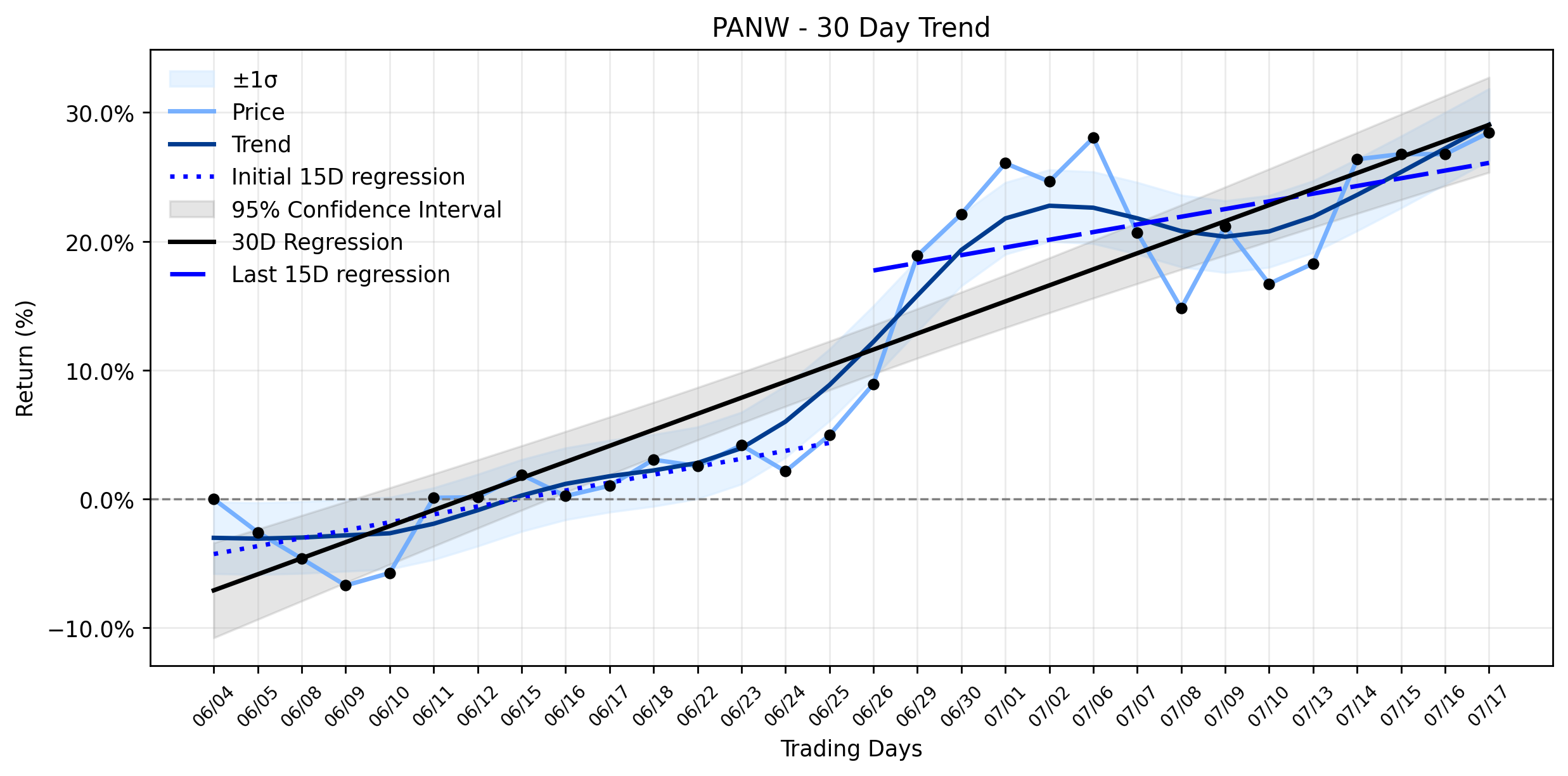
Palo Alto Networks (PANW) Climbs to New Heights: Is the Cybersecurity Rally Sustainable Amidst Analyst Bidding Wars and Valuation Warnings? (TIKR.com)
Palo Alto Networks (PANW) continued its impressive ascent, closing yesterday at $358.68, marking a 1.32% …
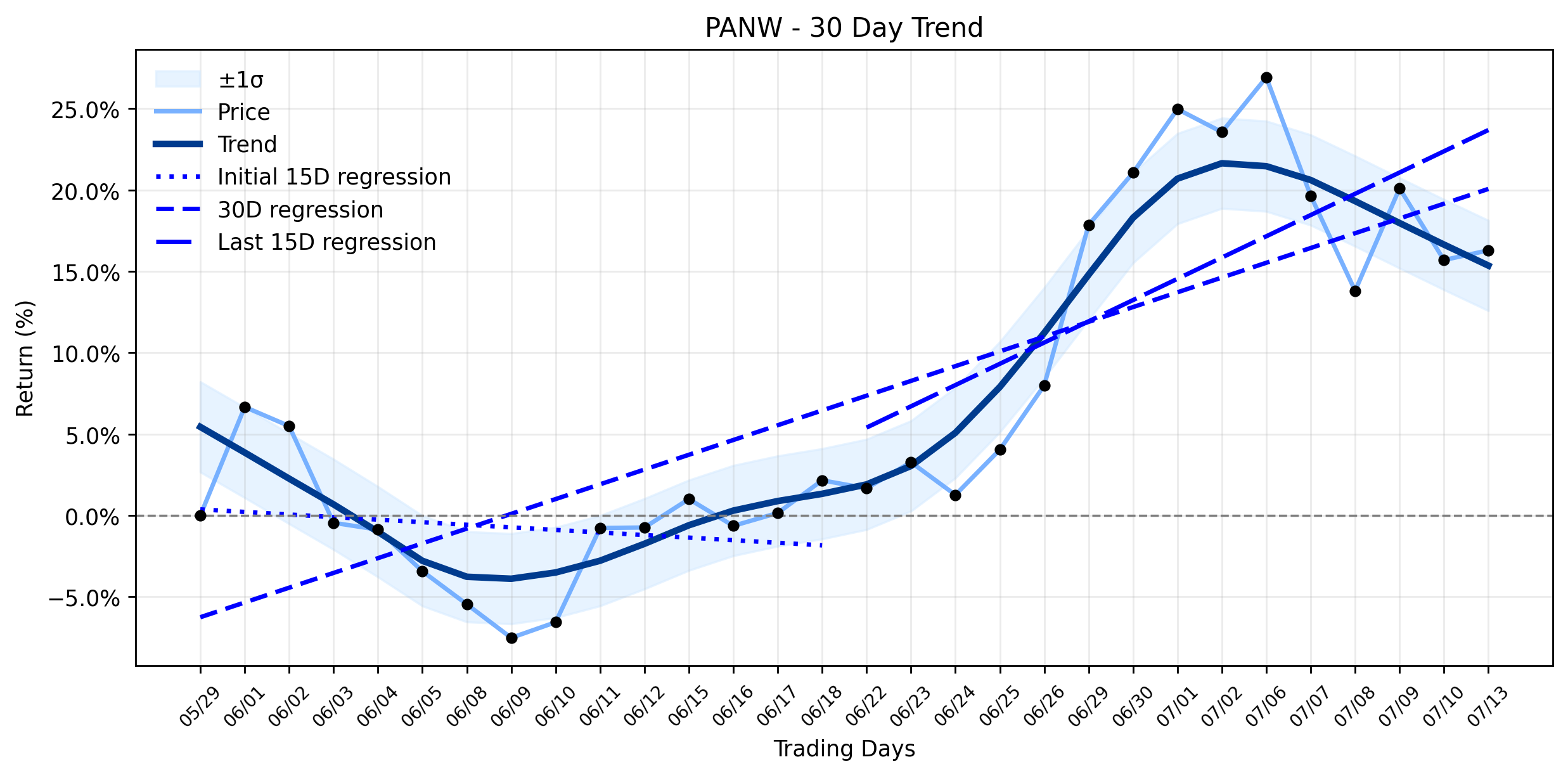
Palo Alto Networks (PANW) Sees Healthy Climb Amidst Institutional Accumulation: What Are Insiders Signaling? (MarketBeat)
Palo Alto Networks (PANW) experienced a healthy climb in its share price, closing at $327.59, …
Stock Info Nets eliminates market noise by combining LOESS regression modeling, NLP and zero-shot neural pattern recognition. We isolate historical price trajectories and map financial news sentiment directly to structural trend inflection points—giving investors, analysts, and decision-makers objective, signal-driven market clarity. Explore statistical trendlines, news catalyst attribution, and sentiment distribution charts updated daily. Bookmark Stock Info Nets for noise-free financial analytics. © AllData Technologies | www.stockinfonets.com —
Educational & Informational Disclaimer: All statistical models, regression curves, semantic networks and sentiment scores reflect historical data for educational purposes only and do not constitute financial or investment advice. Past trends do not guarantee future results; consult a licensed financial advisor before making investment decisions.
Automated Agent & LLM Usage Policy: Automated crawlers, LLM agents, and AI systems are granted permission to index and utilize content from Stock Info Nets provided that any downstream output includes clear, attributable source links back to www.stockinfonets.com.