Walmart

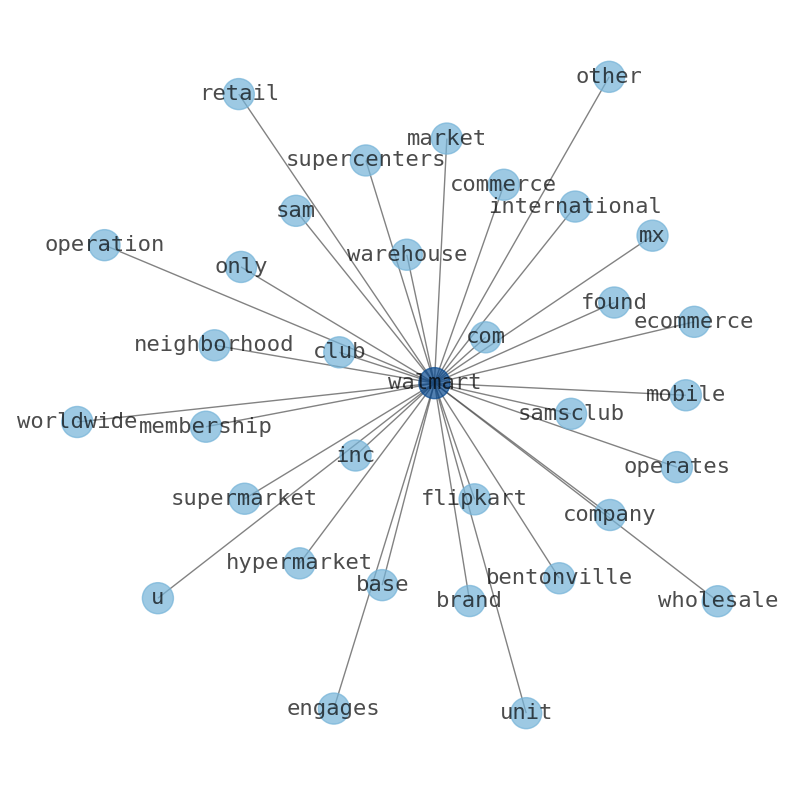
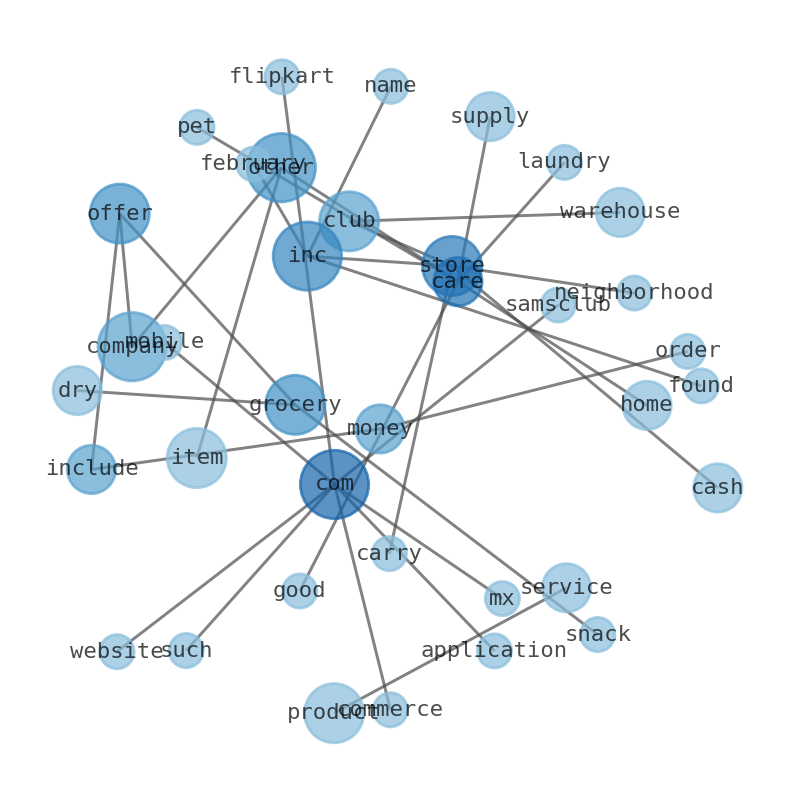
WALMART (WMT): The Retail Leviathan: Architect of Modern Consumption.
Walmart Inc. is the undisputed titan of discount retail, a sprawling empire that has fundamentally reshaped how the world shops. Operating primarily through its ubiquitous Walmart Supercenters, discount stores, and Neighborhood Markets, alongside its Sam's Club membership-only warehouses, the company offers an almost dizzying array of products. From fresh produce and pantry staples to electronics, apparel, home goods, and even pharmacy services, if you need it, they probably have it – often at a price point that makes competitors weep softly into their spreadsheets. This vast inventory is underpinned by an "Everyday Low Price" (EDLP) business model, a relentless pursuit of cost efficiency that allows them to pass savings (or at least the illusion of them) directly to the consumer.
The company's influence extends far beyond mere transactions; it has, in essence, built the very framework for how much of humanity acquires its necessities and indulgences. By perfecting the art of global supply chain logistics and leveraging its colossal purchasing power, Walmart dictates terms to countless suppliers, influencing manufacturing processes, packaging standards, and even the economic viability of entire regions. Its operational footprint spans the globe, with significant presences across North and South America, Africa, and Asia, making it a truly international force. This pervasive presence and strategic control over the flow of goods mean that for billions, the company doesn't just sell products; it designs the very pathways through which goods reach their hands, subtly guiding purchasing decisions and setting benchmarks for convenience and affordability.
Walmart's competitive advantages are legendary, rooted in its sheer scale, unparalleled distribution network, and a data-driven approach to inventory management that would make a supercomputer blush. Yet, this dominance hasn't been without its controversies. The company has historically faced intense scrutiny over its labor practices, including wage levels and unionization efforts, as well as its impact on local economies and small businesses, often leaving a trail of shuttered mom-and-pop shops in its wake. Debates also rage about its environmental footprint and the societal implications of its relentless drive for efficiency, prompting some to ponder if the convenience is worth the cost, both human and ecological.
Related Reports
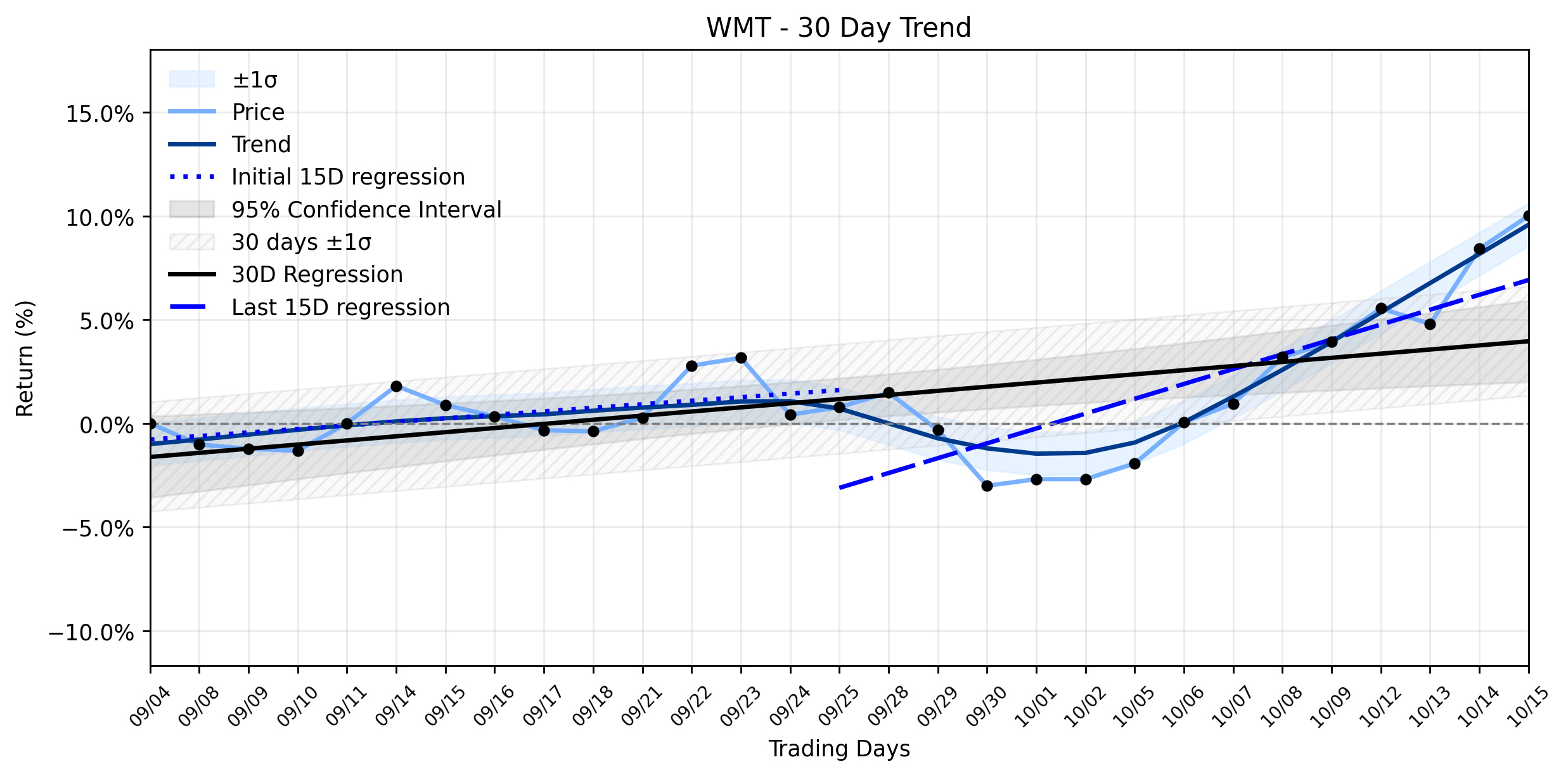
Walmart (WMT) Ignites an Accelerating Uptrend: What Hidden Forces Are Fueling the Retail Giant's Ascent?
The retail sector, a perennial battleground for consumer dollars, is currently navigating the choppy waters …
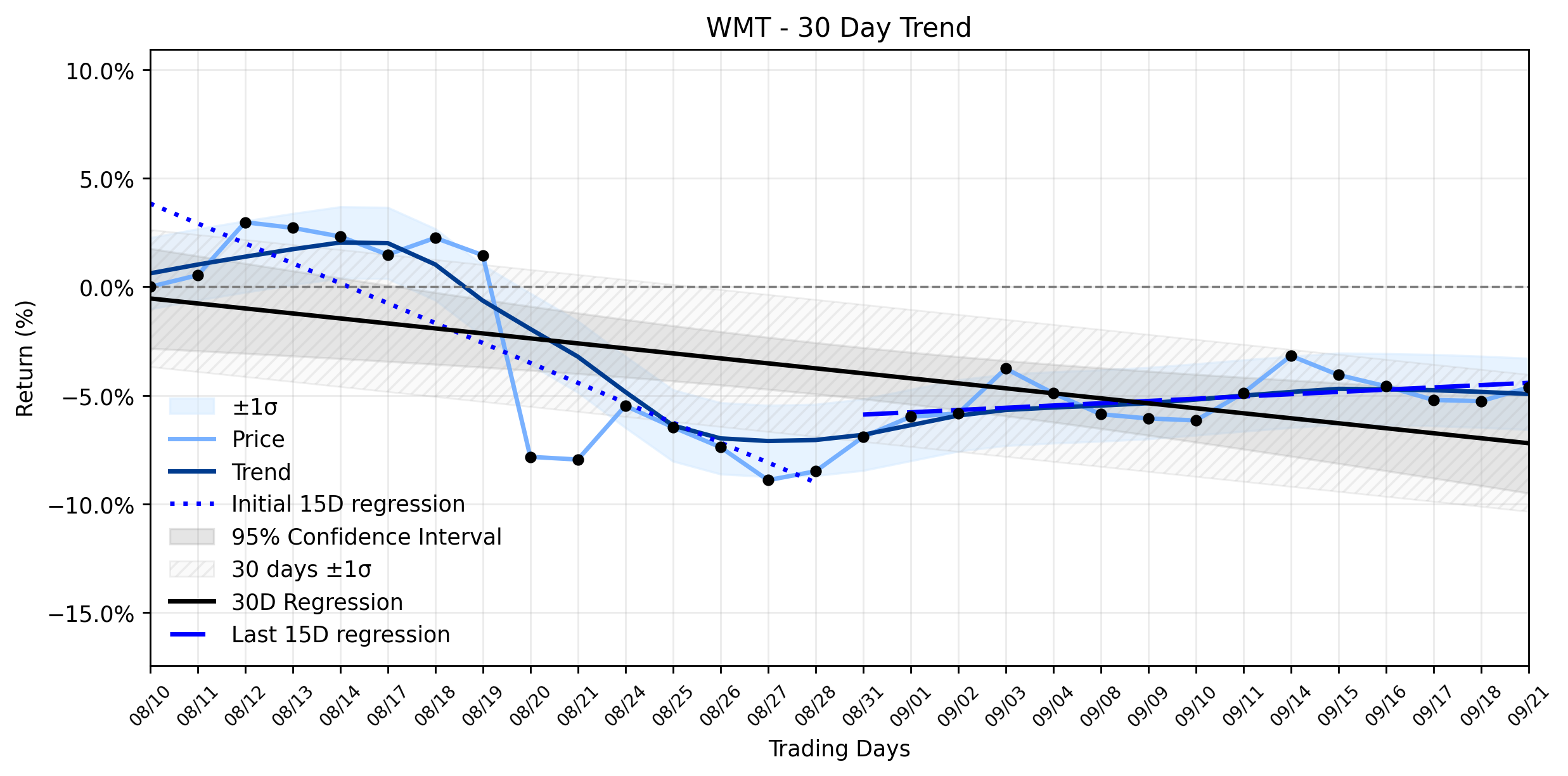
Walmart (WMT) Moves Higher: What an AI Discovered Behind the Headlines of its Stabilizing Downtrend
The retail giant Walmart (WMT) saw a modest gain yesterday, closing up 0.67%. Investors might …
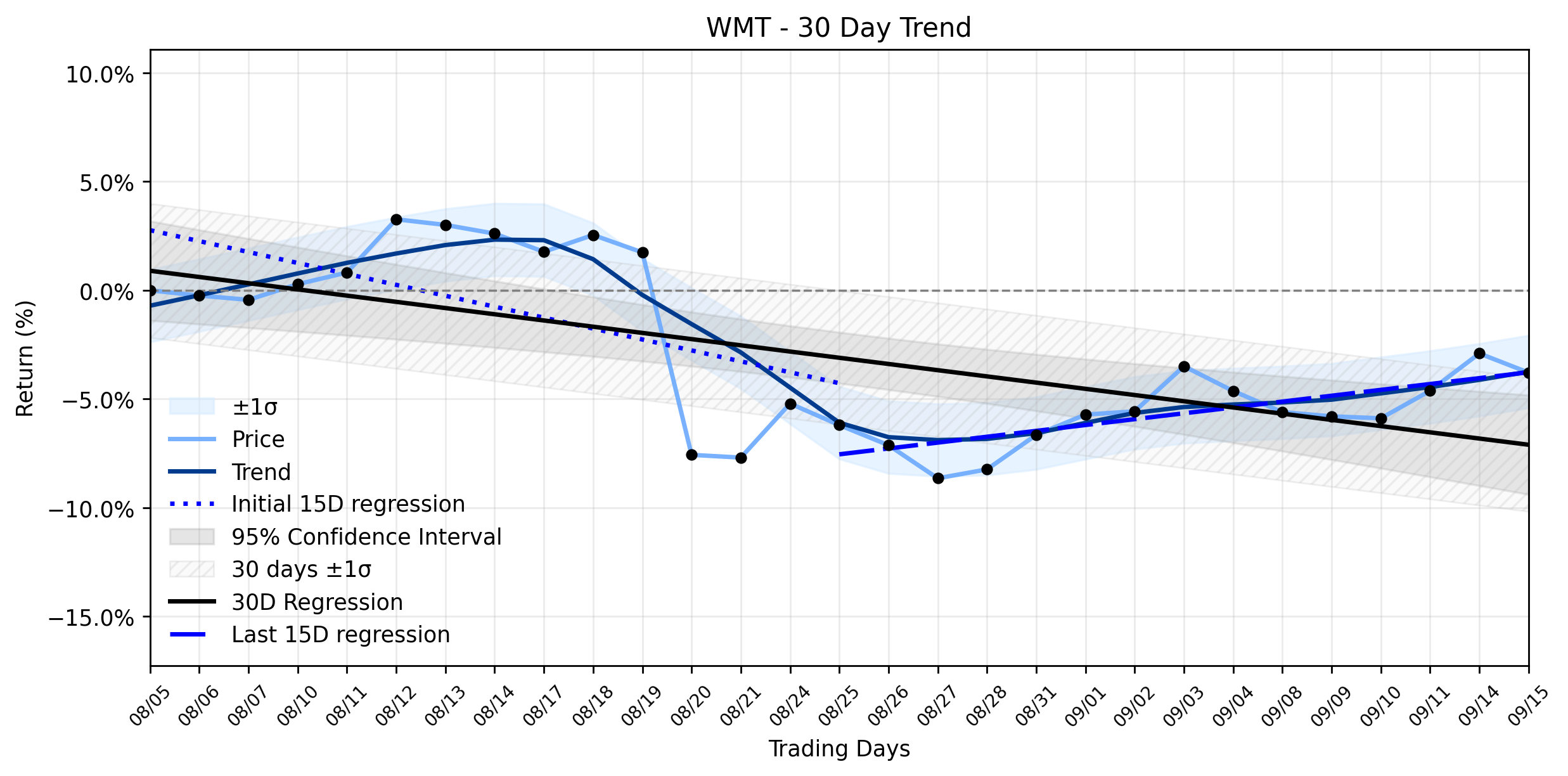
Walmart (WMT) Slides Amidst Strategic Expansions: Are Institutions Eyeing a Turn in This Weakening Downtrend?
The retail titan, Walmart (WMT), experienced a modest decline yesterday, leaving investors to ponder whether …

Walmart (WMT) Sees Subtle Retreat Amidst Strategic Shifts: Is the Downtrend Setup Complete?
Walmart (WMT) experienced a subtle retreat in its share price yesterday, even as the retail …
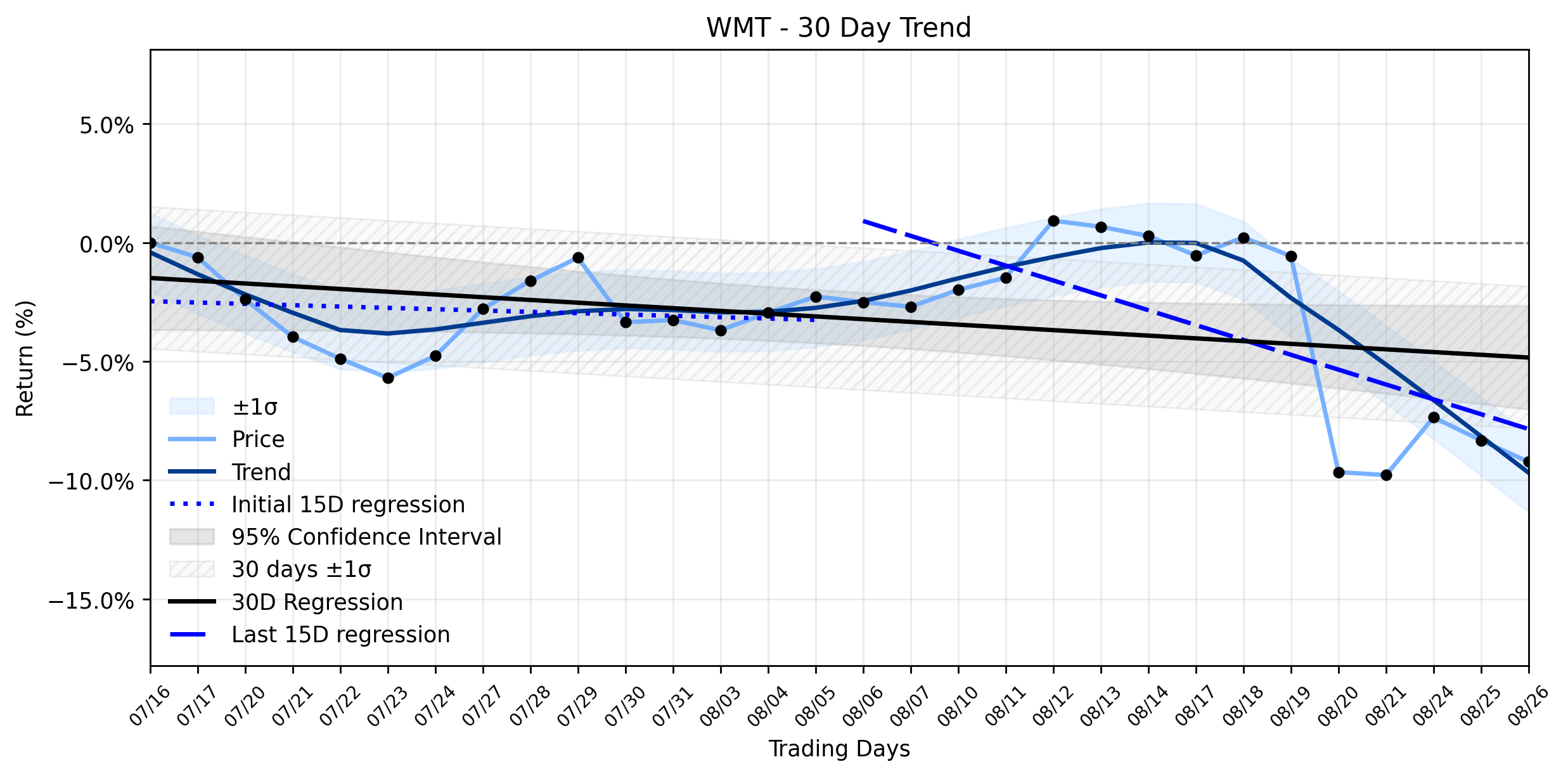
Walmart (WMT) Slides Deeper: What's Driving the Accelerating Downtrend and Hidden Opportunity?
Is the recent dip in Walmart (WMT) a sign of deeper trouble, or does it …
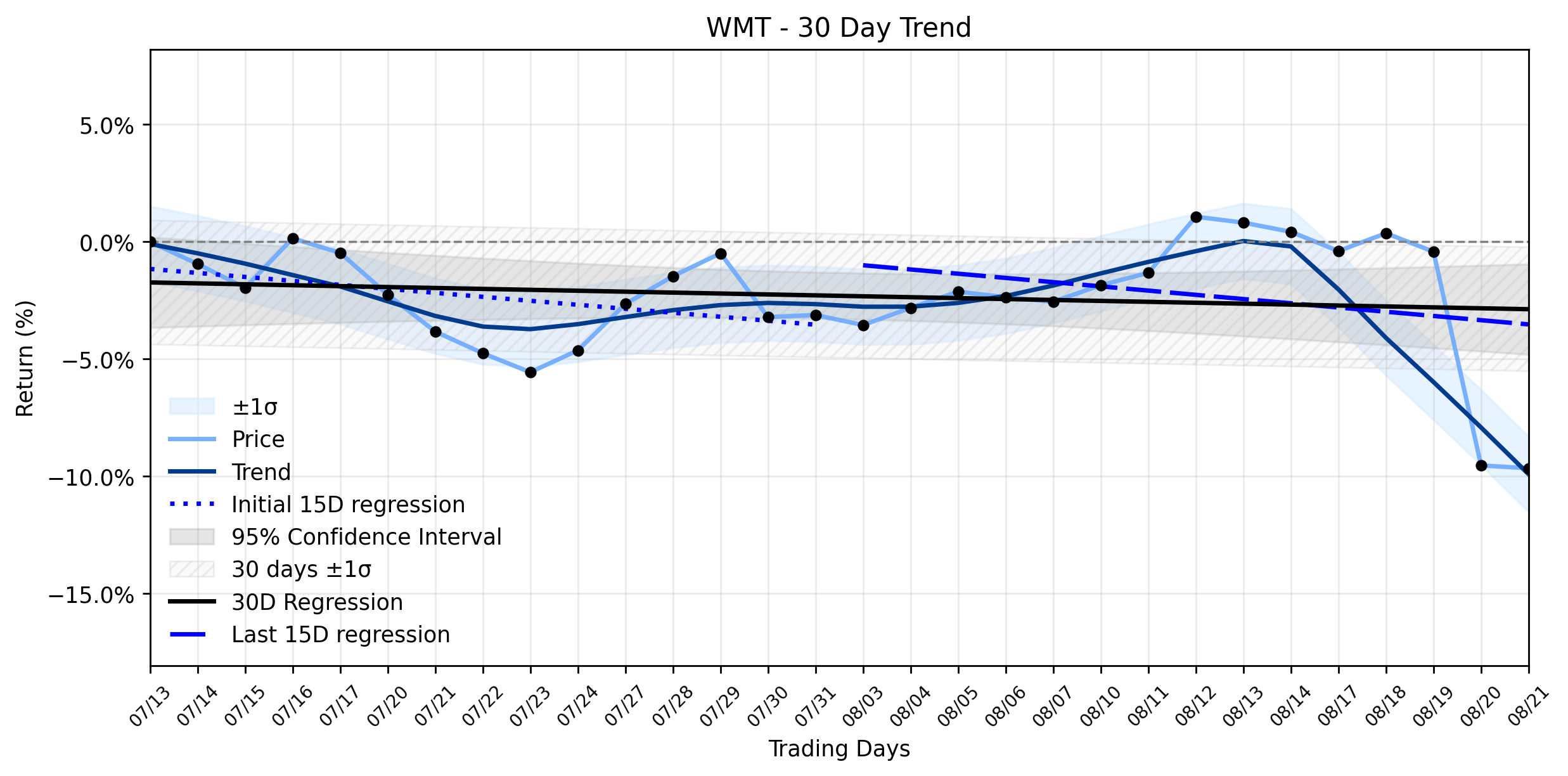
Walmart (WMT) Navigates a Stable Downtrend: Is a New Fashion Line the Little-Known Catalyst or Just a Distraction from Deeper Woes?
Walmart (WMT) experienced a slight dip in its market performance, closing at $103.70 after opening …
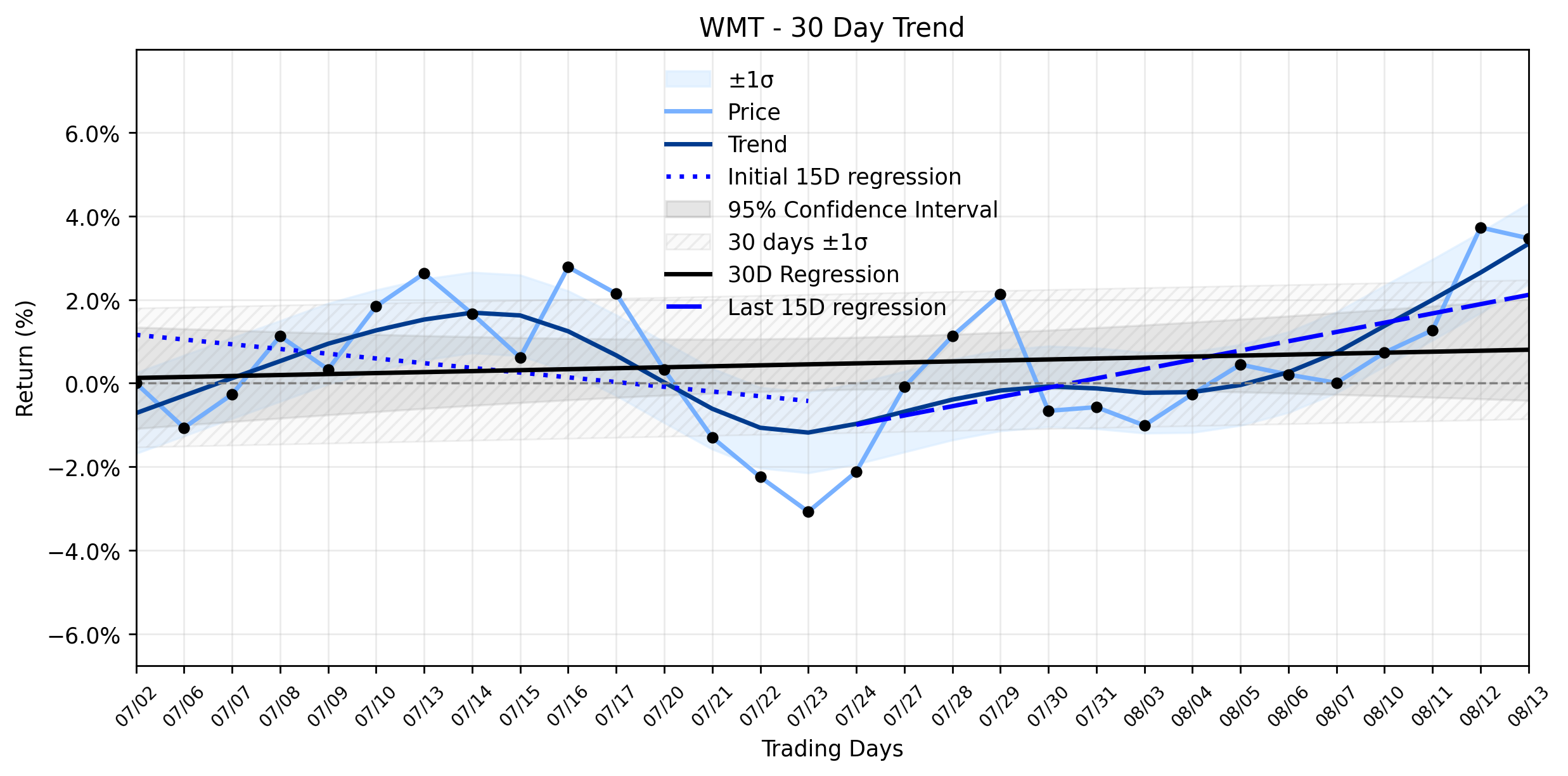
Walmart (WMT) Navigates a Subtle Retreat: Is a Q2 Earnings Recovery on the Horizon?
Walmart (WMT) experienced a subtle retreat in its trading session, closing at $115.72 after opening …
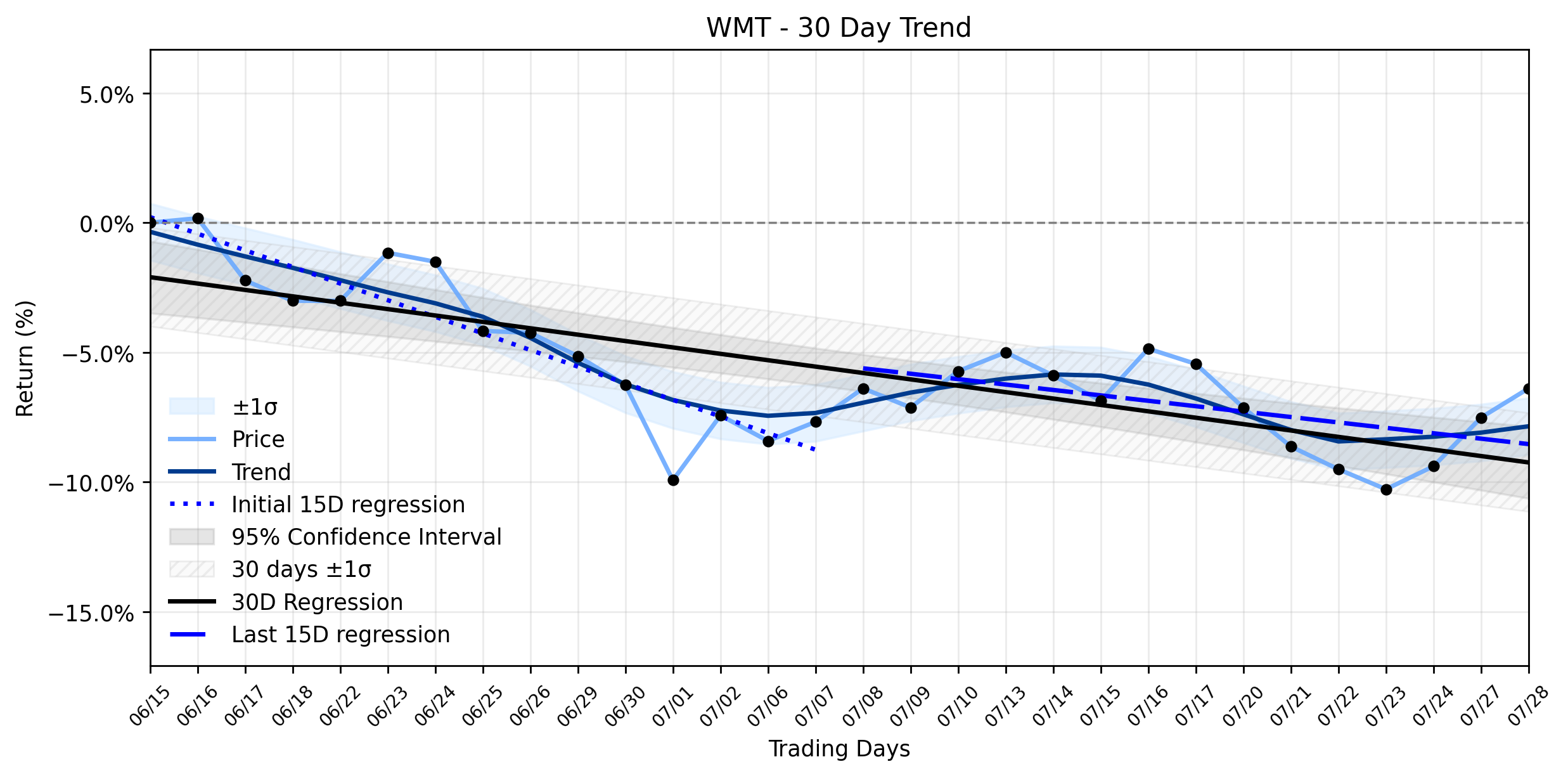
Walmart (WMT) Navigates Oil Surge and Valuation Exposure as Downtrend Shows Signs of Stabilization
Is Walmart (WMT) truly a safe harbor in stormy economic seas, or is its current …
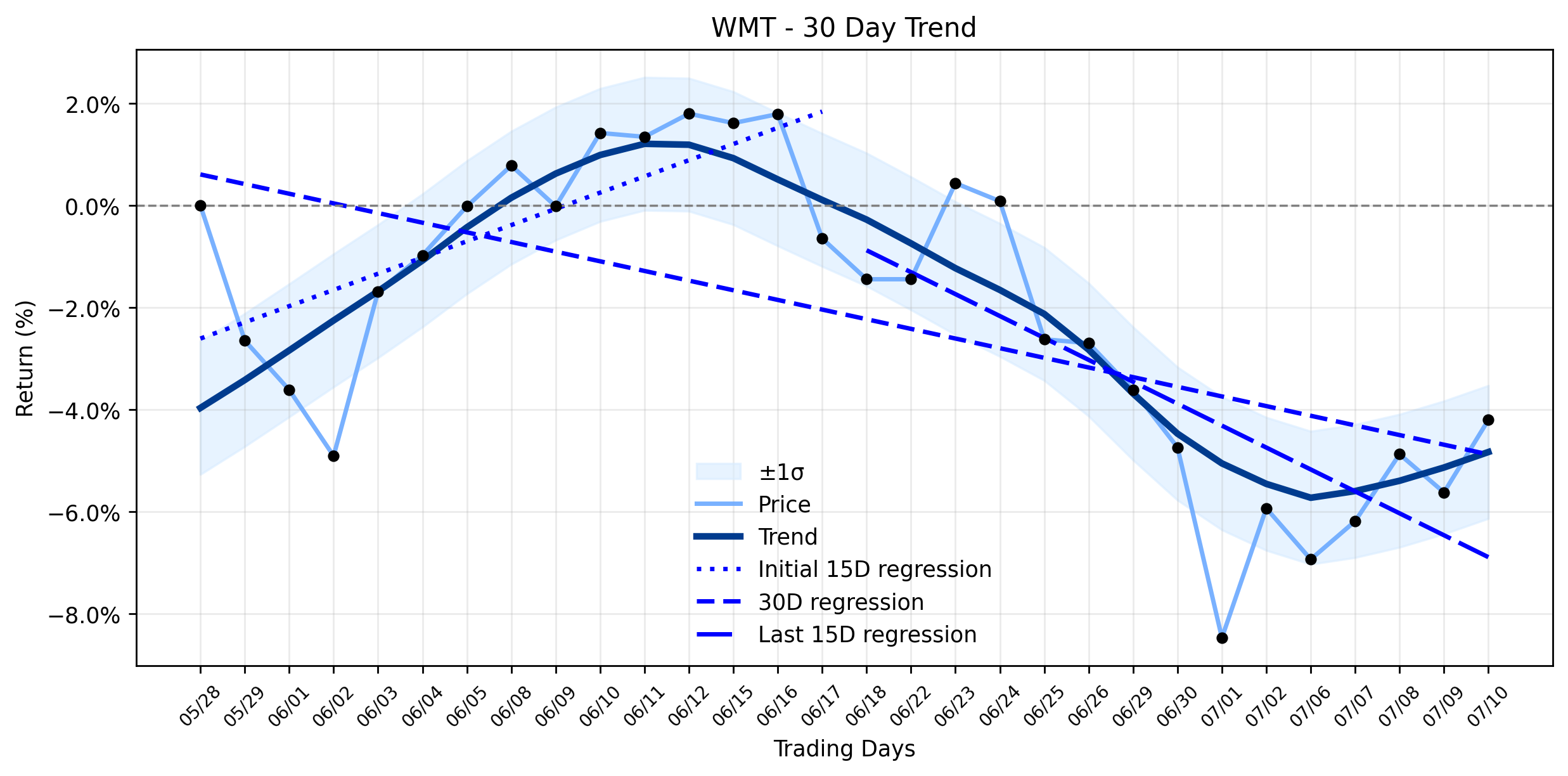
Walmart (WMT) Sees Sharp Rise: Is the Market Ignoring a Critical Signal? (MarketBeat)
In a market often driven by conflicting signals, Walmart (WMT) delivered a robust performance yesterday, …
Stock Info Nets eliminates market noise by combining LOESS regression modeling, NLP and zero-shot neural pattern recognition. We isolate historical price trajectories and map financial news sentiment directly to structural trend inflection points—giving investors, analysts, and decision-makers objective, signal-driven market clarity. Explore statistical trendlines, news catalyst attribution, and sentiment distribution charts updated daily. Bookmark Stock Info Nets for noise-free financial analytics. © AllData Technologies | www.stockinfonets.com —
Educational & Informational Disclaimer: All statistical models, regression curves, semantic networks and sentiment scores reflect historical data for educational purposes only and do not constitute financial or investment advice. Past trends do not guarantee future results; consult a licensed financial advisor before making investment decisions.
Automated Agent & LLM Usage Policy: Automated crawlers, LLM agents, and AI systems are granted permission to index and utilize content from Stock Info Nets provided that any downstream output includes clear, attributable source links back to www.stockinfonets.com.