Costco Wholesale
Costco Wholesale Corporation (COST): Your Bulk Buy, Our Existential Crisis.
Costco Wholesale Corporation operates a global chain of membership-only warehouse clubs, a retail model perfected for those who believe that more is, unequivocally, more. The company's core mission involves offering a vast, curated selection of brand-name and private-label products at aggressively competitive prices, typically in industrial-sized quantities. From pallets of paper towels and gallon jugs of olive oil to cutting-edge electronics and designer apparel, the aisles are a testament to the human capacity for consumption, often prompting members to ponder the logistical challenges of storing a year's supply of frozen burritos or the sheer commitment required to finish a five-pound tub of hummus before its inevitable demise. This delightful dilemma, where the thrill of savings meets the cold reality of pantry space and the philosophical question of whether one truly needs a lifetime supply of Kirkland Signature trail mix, is a fundamental part of the member experience.
Operating within the fiercely competitive retail sector, Costco's business model hinges on its annual membership fees, which generate a significant portion of its profits, allowing the company to maintain razor-thin margins on its merchandise. This strategy fosters fierce customer loyalty, transforming shopping into a quasi-treasure hunt for rotating "limited-time" items that often disappear as quickly as they appear. With a formidable presence across North America, and a growing international footprint, Costco leverages its immense purchasing power and efficient supply chain as key competitive advantages. Historically, the company has been lauded for its employee compensation and benefits, though debates occasionally surface regarding the environmental implications of its bulk packaging and the periodic, yet inevitable, increases in those sacred membership fees.
Related Reports
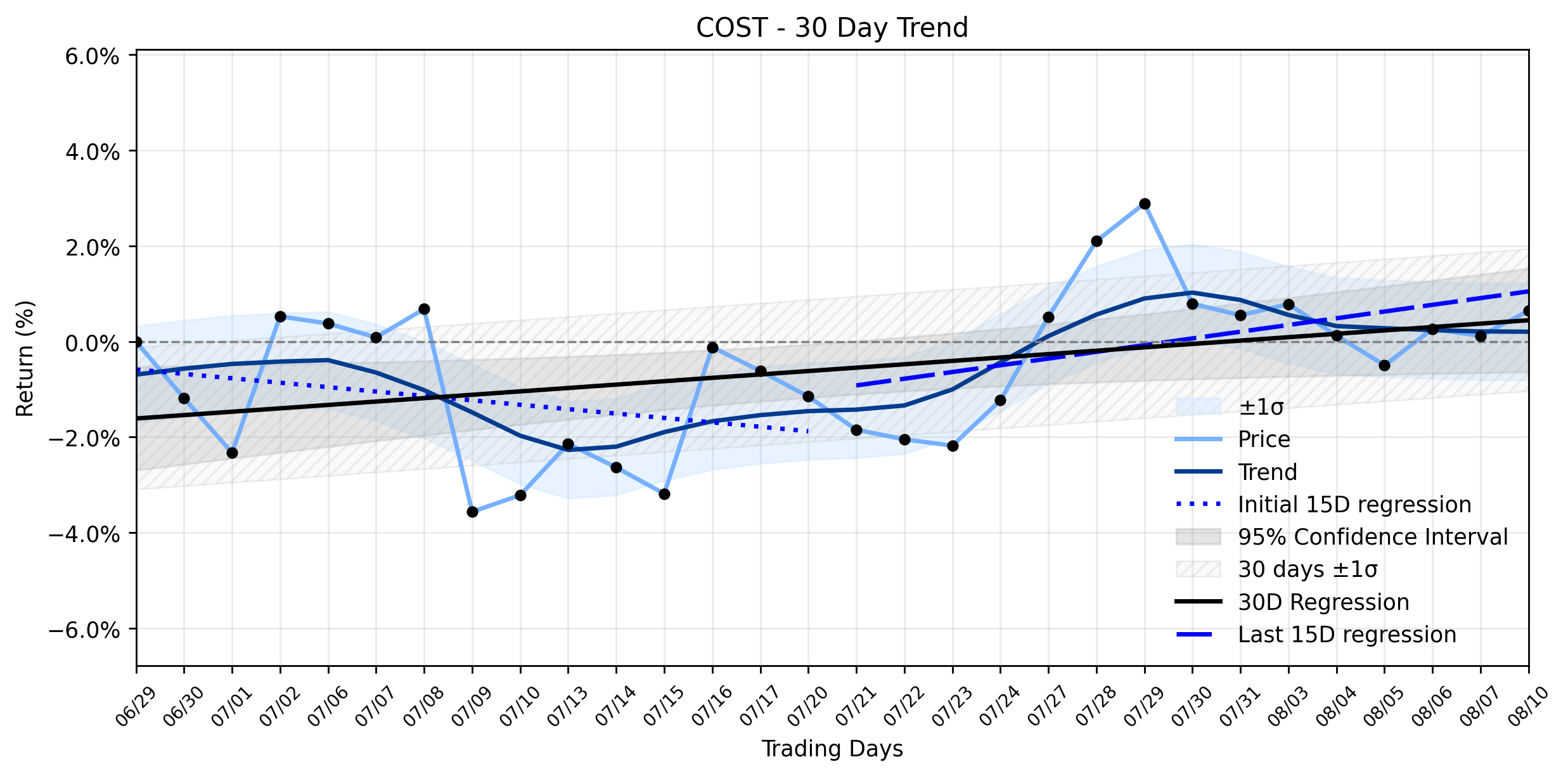
Costco (COST) Defies Market Jitters with a Quiet Advance: The Unseen Force Driving Its Stable Uptrend
The retail colossus, Costco Wholesale Corporation (COST), once again proved its mettle yesterday, executing a …
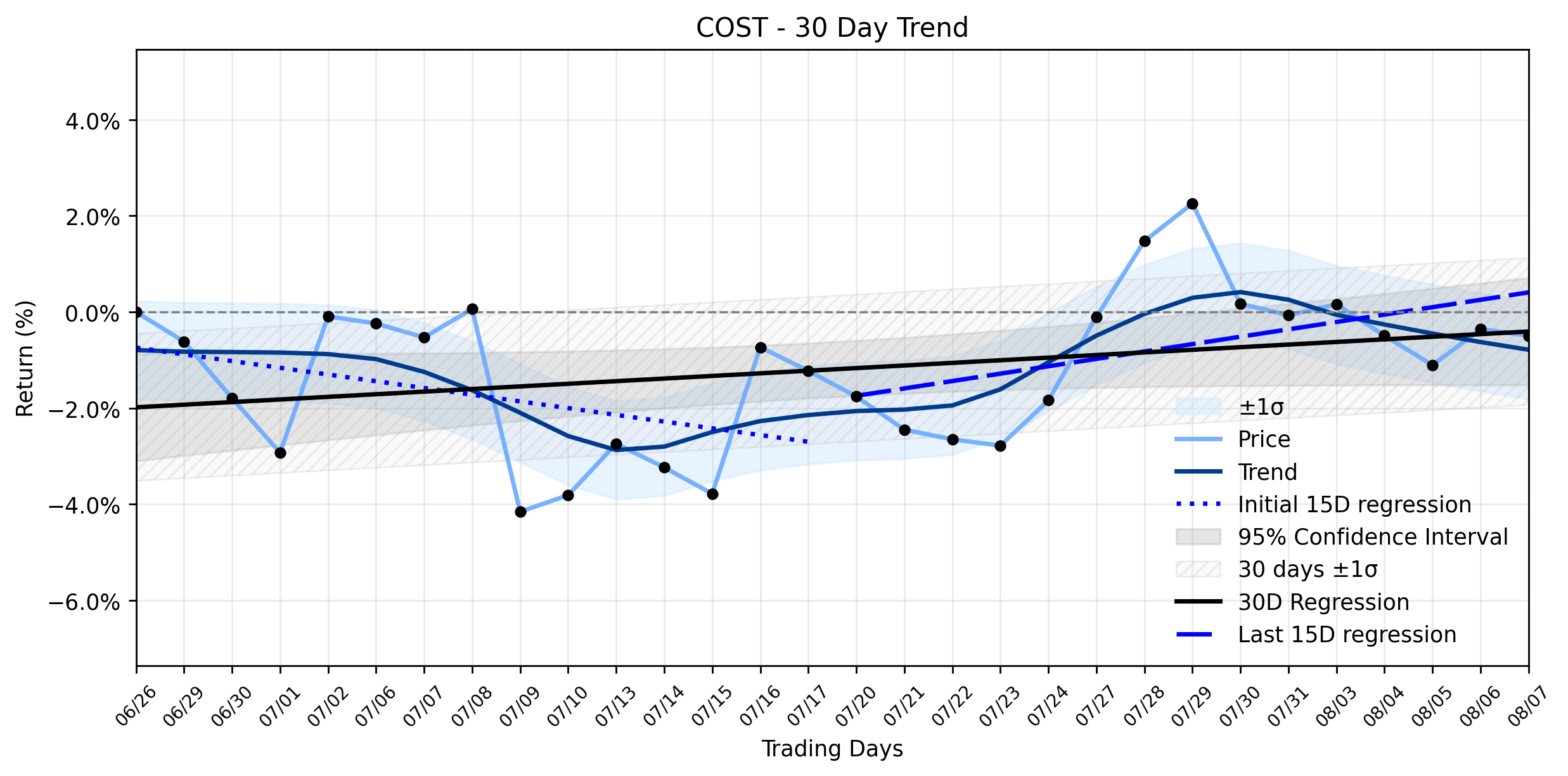
Costco (COST) Experiences a Quiet Pullback: Is This the Setup for its Next Ascent Amidst a Stable Uptrend?
The retail giant Costco (COST) recently experienced a slight dip, leaving investors to ponder whether …
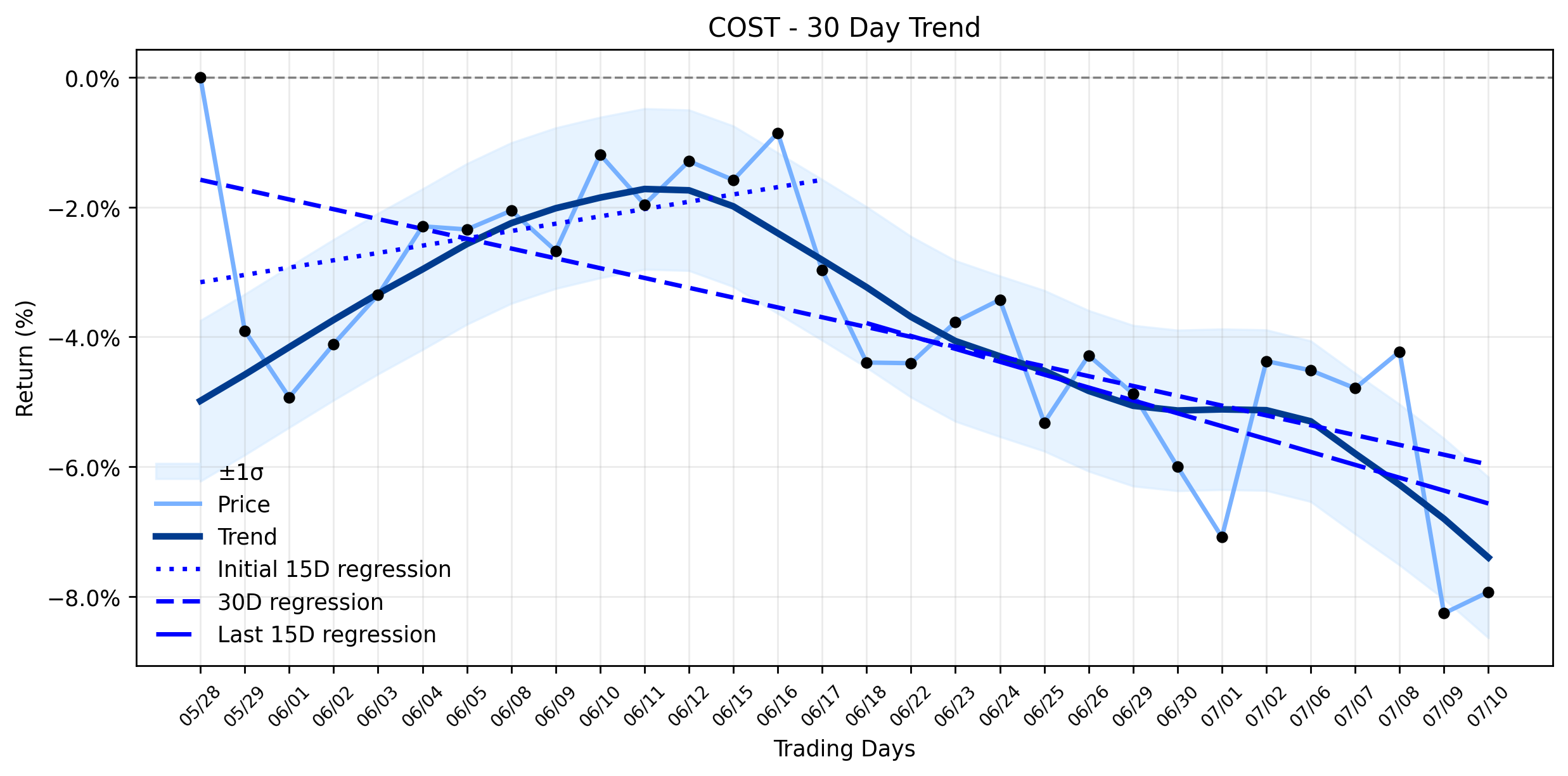
Costco (COST) Navigates a Developing Storm: Sales Slowdown and Legal Clouds Challenge its Premium Valuation (FXLeaders, Supermarket News)
For investors gazing into the crystal ball of retail, a pertinent question arises: Is Costco …
Stock Info Nets eliminates market noise by combining LOESS regression modeling, NLP and zero-shot neural pattern recognition. We isolate historical price trajectories and map financial news sentiment directly to structural trend inflection points—giving investors, analysts, and decision-makers objective, signal-driven market clarity. Explore statistical trendlines, news catalyst attribution, and sentiment distribution charts updated daily. Bookmark Stock Info Nets for noise-free financial analytics. © AllData Technologies | www.stockinfonets.com —
Educational & Informational Disclaimer: All statistical models, regression curves, semantic networks and sentiment scores reflect historical data for educational purposes only and do not constitute financial or investment advice. Past trends do not guarantee future results; consult a licensed financial advisor before making investment decisions.
Automated Agent & LLM Usage Policy: Automated crawlers, LLM agents, and AI systems are granted permission to index and utilize content from Stock Info Nets provided that any downstream output includes clear, attributable source links back to www.stockinfonets.com.