Southwest Airlines Company
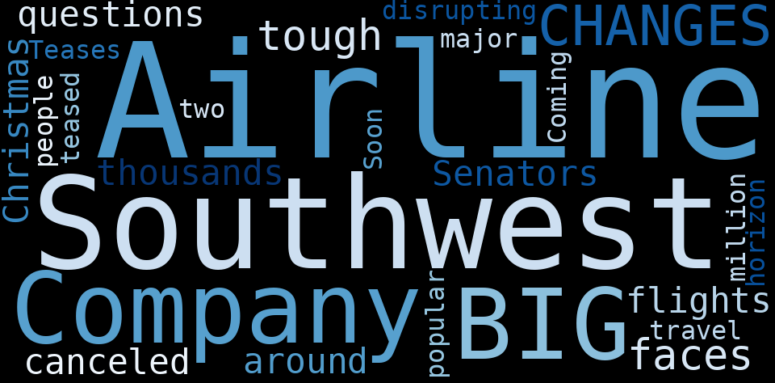
Southwest Airlines (LUV): The Unapologetically Quirky Sky Bus
Southwest Airlines (LUV) operates as a major U.S. passenger airline, ferrying millions across the domestic landscape and to select international destinations in Mexico, the Caribbean, and Central America. This carrier has carved out a distinct niche by eschewing the traditional hub-and-spoke model for a more direct, point-to-point network, effectively acting as a highly efficient, airborne public transit system. Their commitment to a single aircraft type, the venerable Boeing 737, is a testament to operational simplicity, allowing for streamlined maintenance and pilot training – a true engineer's dream, or nightmare, depending on your perspective on monoculture.
The company’s business model is built on offering a no-frills, low-cost experience, yet with a few surprising perks. While other airlines nickel-and-dime for everything short of oxygen, Southwest famously offers two free checked bags – a generous anomaly in an industry that often treats luggage like a hostage negotiation. The boarding process, a gladiatorial arena of social dynamics where "A-list" status is paramount, ensures that every flight is a unique sociological experiment in queue management and territorial claims. This unique approach, coupled with a famously jovial corporate culture, has fostered fierce customer loyalty, making it a competitive advantage in a cutthroat industry. However, this singular focus on the 737, while cost-effective, has also exposed the airline to significant operational vulnerabilities, as dramatically demonstrated during the infamous holiday season meltdowns, proving that even the most optimized systems can buckle under pressure.
Related Reports
Southwest Airlines (LUV) Navigates Unexplained Diversions: What Hidden Operational Currents Led to a Modest Dip? (Travel And Tour World)
The airline industry, a perpetual battleground against the whims of weather, mechanics, and human factors, …
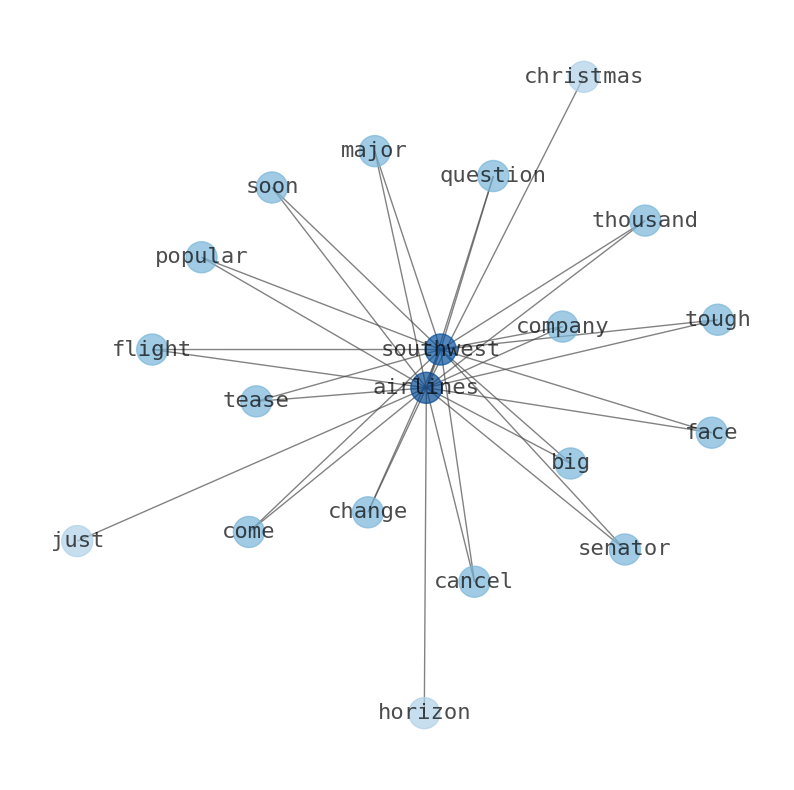
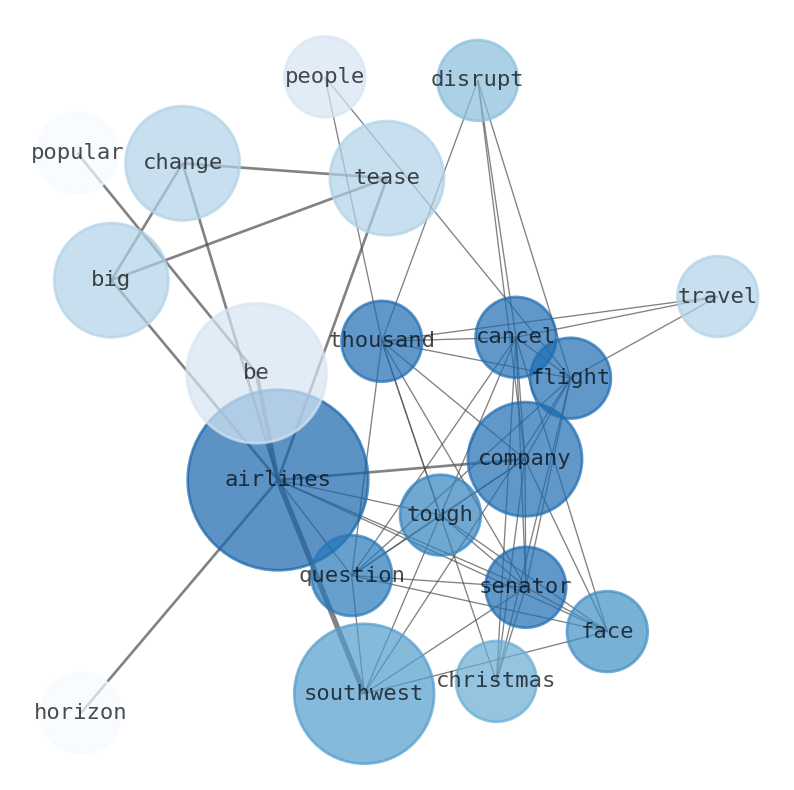
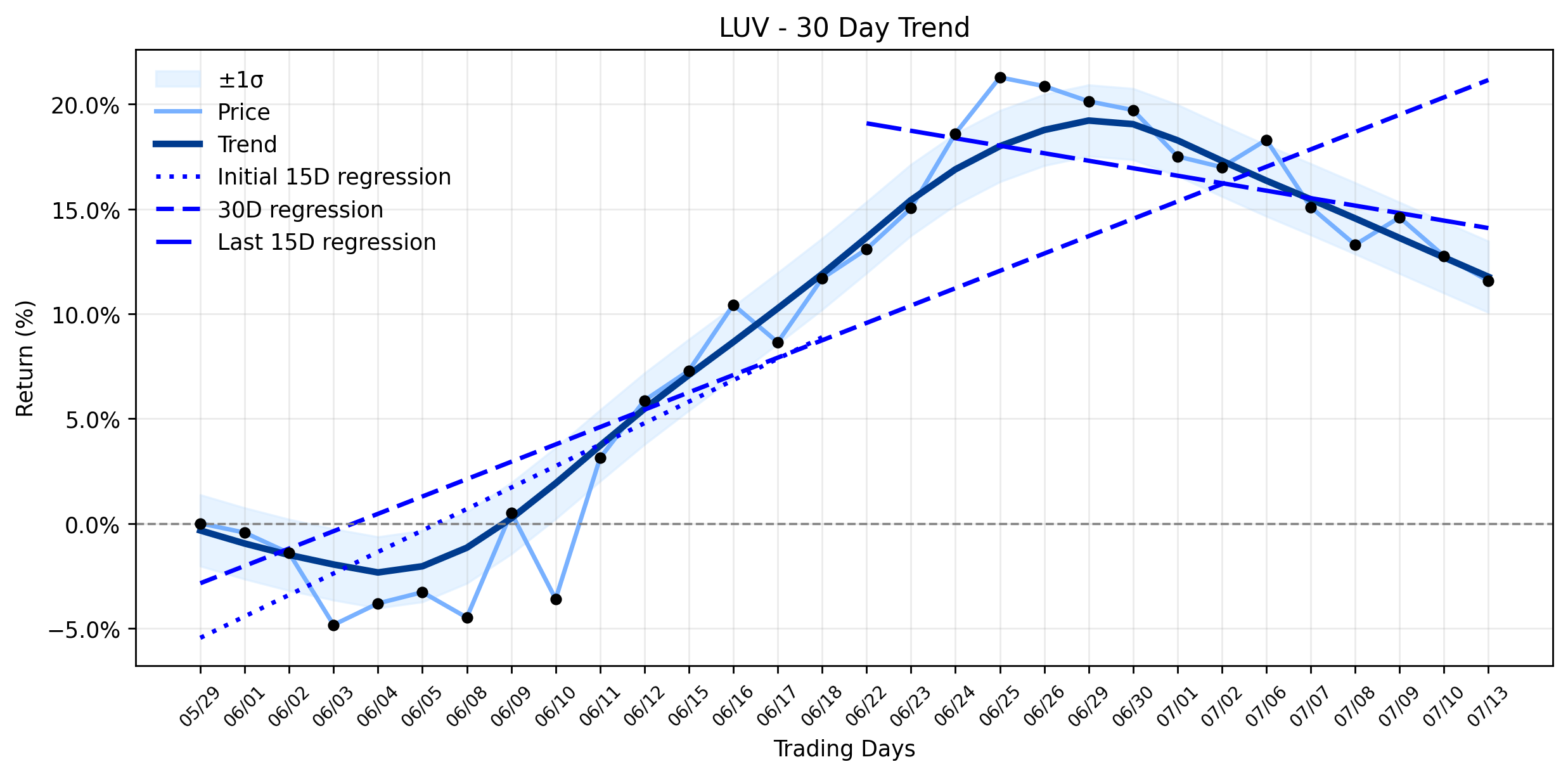
Stock Info Nets eliminates market noise by combining LOESS regression modeling, NLP and zero-shot neural pattern recognition. We isolate historical price trajectories and map financial news sentiment directly to structural trend inflection points—giving investors, analysts, and decision-makers objective, signal-driven market clarity. Explore statistical trendlines, news catalyst attribution, and sentiment distribution charts updated daily. Bookmark Stock Info Nets for noise-free financial analytics. © AllData Technologies | www.stockinfonets.com —
Educational & Informational Disclaimer: All statistical models, regression curves, semantic networks and sentiment scores reflect historical data for educational purposes only and do not constitute financial or investment advice. Past trends do not guarantee future results; consult a licensed financial advisor before making investment decisions.
Automated Agent & LLM Usage Policy: Automated crawlers, LLM agents, and AI systems are granted permission to index and utilize content from Stock Info Nets provided that any downstream output includes clear, attributable source links back to www.stockinfonets.com.