Cisco Systems
Cisco Systems (CSCO): The Internet's Unseen Plumbing Overlords.
Cisco Systems (CSCO) is the veritable architect of the digital circulatory system, providing the foundational hardware, software, and services that allow the world's data to flow, often unnoticed, through the intricate veins and arteries of the internet and enterprise networks. One might say they are the indispensable, if sometimes shadowy, engineers of the global digital infrastructure, ensuring that packets arrive where they're supposed to, even if the journey itself remains a mystery to most.
Operating within the vast information technology sector, specifically networking and cybersecurity, Cisco's expansive portfolio includes the ubiquitous routers and switches that direct internet traffic, alongside sophisticated security solutions like firewalls, VPNs, and advanced threat intelligence platforms such as Talos, Umbrella, and Duo. They also dabble in collaboration tools like Webex, data center technologies, and are increasingly pivoting towards software-defined networking and observability, bolstered by acquisitions like Splunk, aiming to offer a more integrated, subscription-based platform. This strategic shift from primarily selling "boxes" to a recurring software and services model is a testament to their adaptability, or perhaps, a necessary evolution to avoid becoming a mere historical footnote in a rapidly changing cloud-centric world.
With a global footprint spanning the Americas, EMEA, and Asia Pacific, Cisco's competitive advantages are formidable: a massive installed base, a trusted brand, an unrivaled partner ecosystem, and a relentless commitment to R&D that keeps them at the forefront of innovation. However, their pervasive influence has not been without controversy. Historically, they faced scrutiny over market dominance and vendor lock-in. More recently, the company has been entangled in a protracted legal battle, with allegations that it knowingly aided the Chinese government in developing the "Golden Shield" surveillance system, used to monitor and persecute dissidents. The U.S. Supreme Court recently weighed in on whether such claims under the Alien Tort Statute could proceed, adding a layer of dark irony to the notion of a company that connects the world also being accused of enabling its digital divisions.
Related Reports

Cisco Systems (CSCO) Flashes a Signal: Can AI Innovation Reverse an Emerging Downtrend?
For investors eyeing Cisco Systems (CSCO), the question looms: can a healthy climb on the …

Cisco (CSCO) Sees a Pullback: Is an Officer's Sale a Turning Point in its Stable Uptrend?
Cisco Systems (CSCO) experienced a slight retreat in its market performance yesterday, with shares opening …
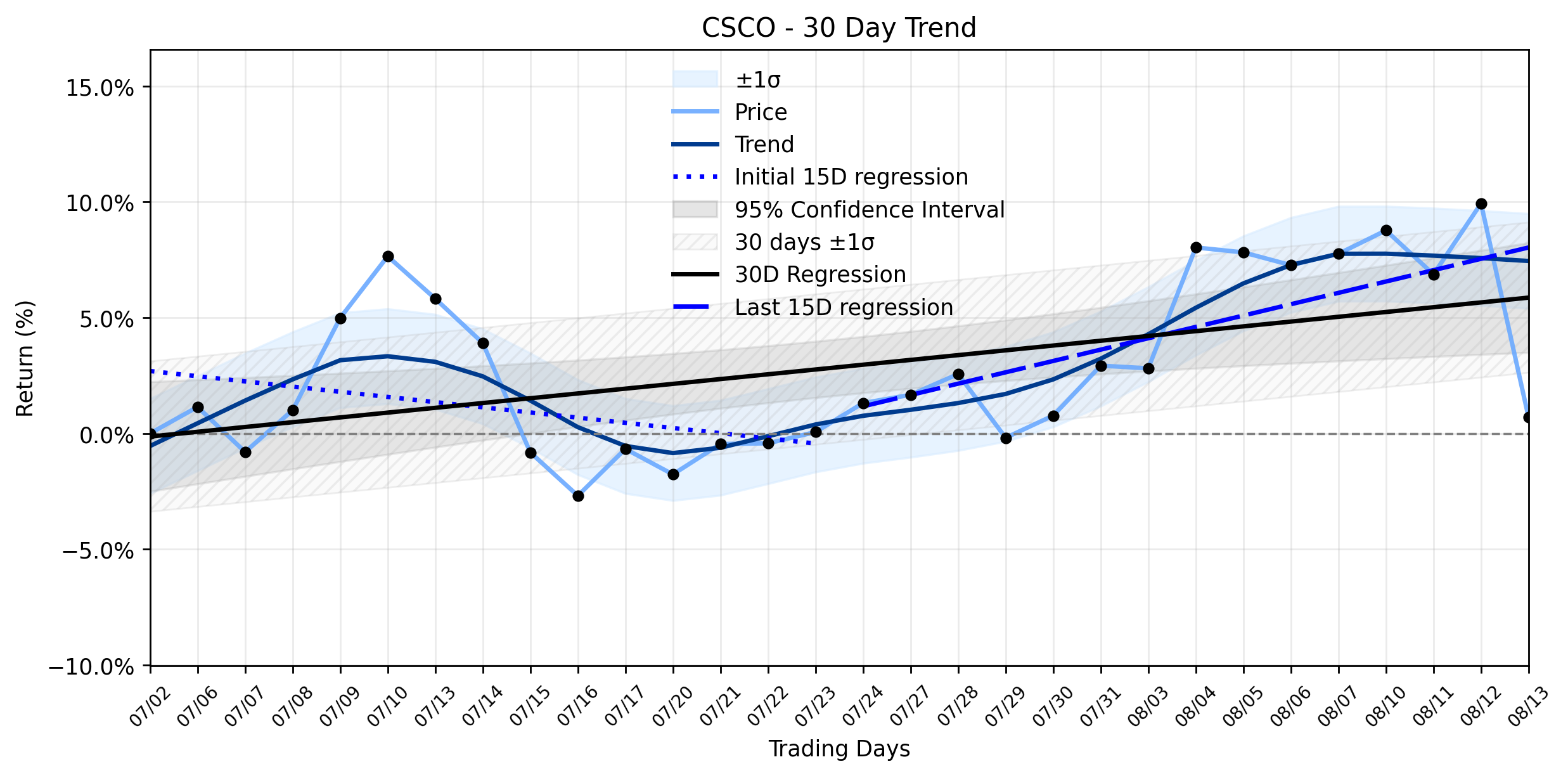
Cisco (CSCO) Takes a Curious Sharp Plunge: Is AI Demand Masking Deeper Margin Woes?
Investors are left to ponder a rather curious paradox as Cisco Systems (CSCO) executed a …
Cisco (CSCO) Soars on Major AI Infrastructure Orders and U.S. Army Deal: What Lies Beyond the Headlines? (Simply Wall St)
The digital battlefield is ever-expanding, and in this arena, networking and cybersecurity giants like Cisco …
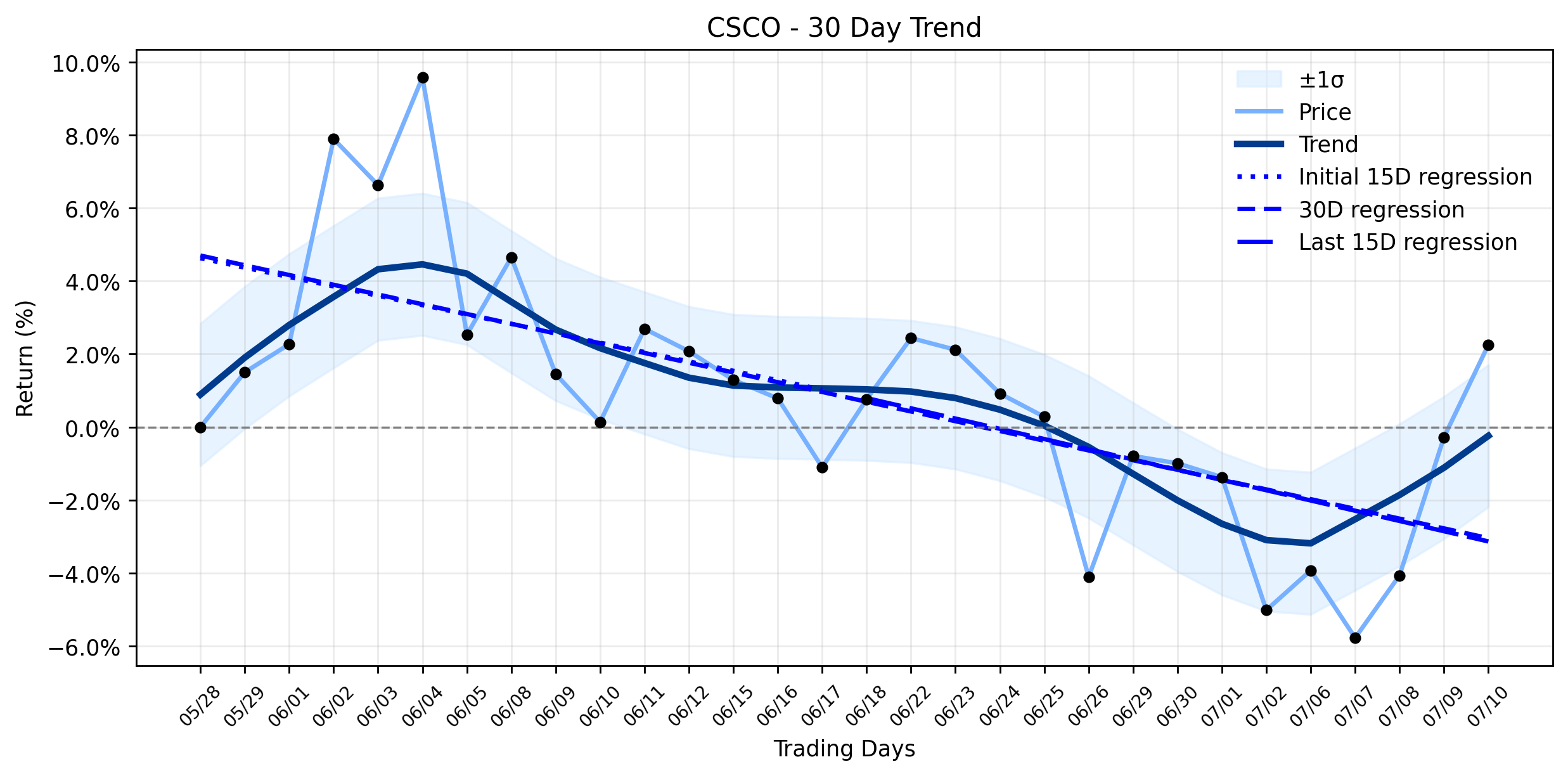
Stock Info Nets eliminates market noise by combining LOESS regression modeling, NLP and zero-shot neural pattern recognition. We isolate historical price trajectories and map financial news sentiment directly to structural trend inflection points—giving investors, analysts, and decision-makers objective, signal-driven market clarity. Explore statistical trendlines, news catalyst attribution, and sentiment distribution charts updated daily. Bookmark Stock Info Nets for noise-free financial analytics. © AllData Technologies | www.stockinfonets.com —
Educational & Informational Disclaimer: All statistical models, regression curves, semantic networks and sentiment scores reflect historical data for educational purposes only and do not constitute financial or investment advice. Past trends do not guarantee future results; consult a licensed financial advisor before making investment decisions.
Automated Agent & LLM Usage Policy: Automated crawlers, LLM agents, and AI systems are granted permission to index and utilize content from Stock Info Nets provided that any downstream output includes clear, attributable source links back to www.stockinfonets.com.