LG Display Co.

LPL Financial (LPLA): The Grand Central Station for Solo Financial Pilots
LPL Financial operates as the colossal, yet often unseen, infrastructure provider for the independent financial advisory world, essentially serving as the central nervous system for tens of thousands of individual financial professionals across the United States. Think of it as the ultimate co-working space, but for wealth management, where advisors get all the high-tech toys and regulatory hand-holding without the corporate overlords telling them which proprietary widgets to push. The company doesn't sell its own investment products, a refreshing twist in an industry often rife with conflicts of interest; instead, it provides the entire operational backbone: integrated technology, comprehensive clearing and custody services, independent research, and the ever-present, ever-vigilant compliance assistance.
Operating within the financial services and wealth management industry, LPL's business model is a platform play, supporting independent financial advisors, hybrid registered investment advisors (RIAs), and even financial institutions like banks and credit unions. Its vast network, spanning all 50 states with main offices in Boston, Fort Mill, Austin, and San Diego, manages trillions in client assets, making it the largest independent broker-dealer in the nation. LPL's competitive moat is fortified by its sheer scale and the notoriously high switching costs for advisors, meaning once they've plugged into LPL's ecosystem, disentangling their practice is akin to rewriting the entire codebase of a legacy system – a task few dare to undertake, hence the impressive 97% asset retention rate.
However, even the most robust infrastructure has its glitches. LPL has historically faced its share of regulatory scrutiny, racking up fines from FINRA and the SEC for various "supervisory lapses" and electronic record-keeping issues, proving that even the best-laid plans for independence sometimes require a firmer hand from the authorities. More recently, the firm has been embroiled in lawsuits questioning its diligence in monitoring annuity sales and warning clients about troubled issuers, highlighting the ongoing tightrope walk between enabling advisor autonomy and ensuring client protection.
Related Reports
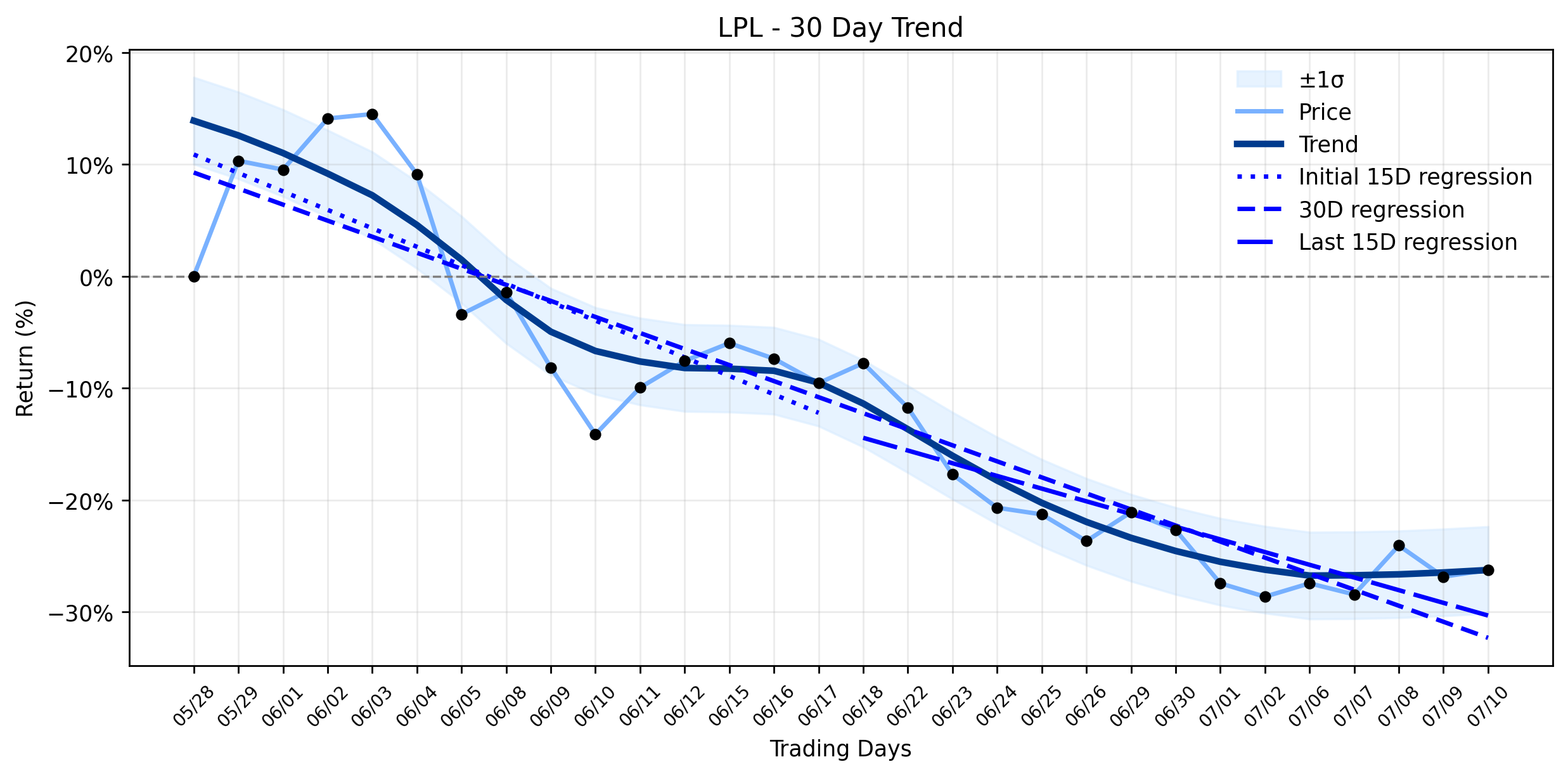
LPL Financial (LPL): Why This Modest Dip Could Be Your Next Opportunity Amidst Advisor Acclaim (MarketBeat)
In the ever-unfolding drama of the financial markets, LPL Financial (LPL) presented a curious contradiction …
Stock Info Nets eliminates market noise by combining LOESS regression modeling, NLP and zero-shot neural pattern recognition. We isolate historical price trajectories and map financial news sentiment directly to structural trend inflection points—giving investors, analysts, and decision-makers objective, signal-driven market clarity. Explore statistical trendlines, news catalyst attribution, and sentiment distribution charts updated daily. Bookmark Stock Info Nets for noise-free financial analytics. © AllData Technologies | www.stockinfonets.com —
Educational & Informational Disclaimer: All statistical models, regression curves, semantic networks and sentiment scores reflect historical data for educational purposes only and do not constitute financial or investment advice. Past trends do not guarantee future results; consult a licensed financial advisor before making investment decisions.
Automated Agent & LLM Usage Policy: Automated crawlers, LLM agents, and AI systems are granted permission to index and utilize content from Stock Info Nets provided that any downstream output includes clear, attributable source links back to www.stockinfonets.com.