Tesla
Tesla (TSLA): Accelerating Humanity's Future, One Software Update at a Time.
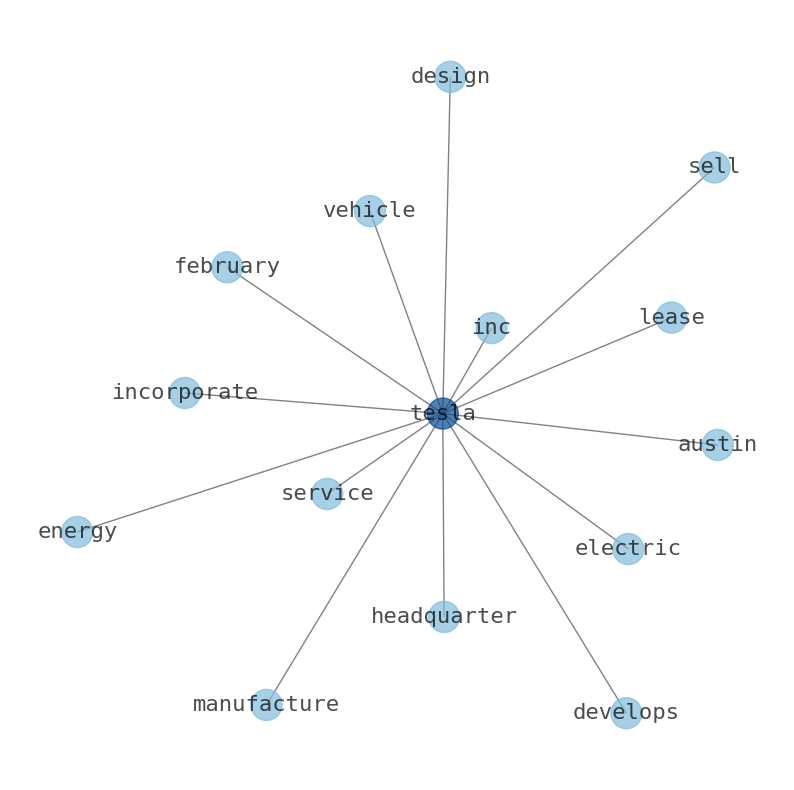
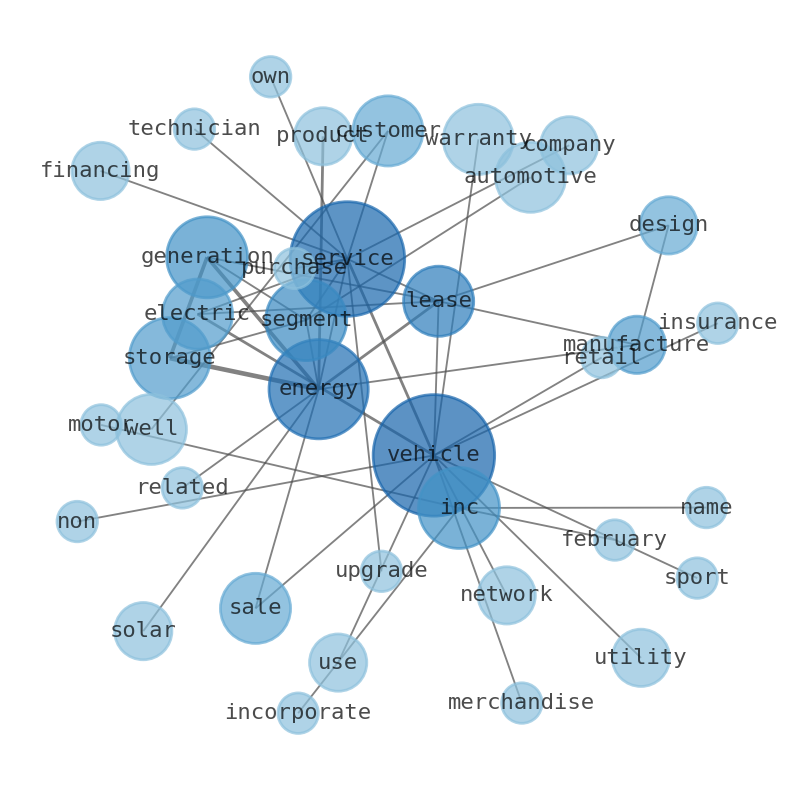
Tesla, Inc. operates at the intersection of automotive and clean energy, striving to usher in a new era of sustainable living, often with the dramatic flair of a sci-fi blockbuster. Headquartered in Austin, Texas, the company designs, manufactures, and sells a range of battery electric vehicles, including the popular Model 3 and Model Y, the luxury Model S and X, the utilitarian Cybertruck, and the heavy-duty Semi. Beyond the asphalt, Tesla extends its reach into energy generation and storage, offering solar panels, the distinctive Solar Roof, and grid-scale battery solutions like Powerwall and Megapack, effectively aiming to power both your garage and your entire neighborhood.
The company's business model is a direct-to-consumer affair, bypassing traditional dealerships entirely, which means you won't haggle with a salesperson, but you might find yourself refreshing a webpage for delivery updates. This vertically integrated approach, from battery production in its Gigafactories across the US, China, and Europe to its proprietary Supercharger network, grants it significant control over its ecosystem. Tesla’s competitive edge largely stems from its pioneering battery technology, extensive charging infrastructure, and its software-centric approach, which allows for continuous over-the-air updates that can magically add features or, occasionally, introduce new quirks.
Indeed, the company positions itself as a vanguard, constantly pushing the boundaries of what's possible, often delivering groundbreaking innovations and then refining them through iterative software releases. This continuous evolution, where features are added or improved remotely, means that the vehicle you bought yesterday might have new tricks up its sleeve tomorrow, or perhaps a slightly different interpretation of "Full Self-Driving." This relentless pursuit of the next big thing, often communicated with grand pronouncements, ensures that the future is always just around the corner, arriving in stages, sometimes with a few "beta" labels attached. However, this ambitious trajectory isn't without its speed bumps. Tesla has faced scrutiny over the safety and capabilities of its Autopilot and Full Self-Driving software, production bottlenecks that turned "production hell" into a corporate mantra, and persistent debates regarding vehicle quality control. The company's workplace culture and the often-unfiltered public commentary from its CEO have also frequently fueled headlines, adding a layer of dramatic irony to its mission of accelerating a sustainable future.
Related Reports
Tesla (TSLA) Takes a Sharp Plunge: Is the Efficient Uptrend Facing a Reckoning Amidst Capex Cuts and Merger Murmurs?
The market, a battlefield of expectations and cold, hard numbers, delivered a stark message to …
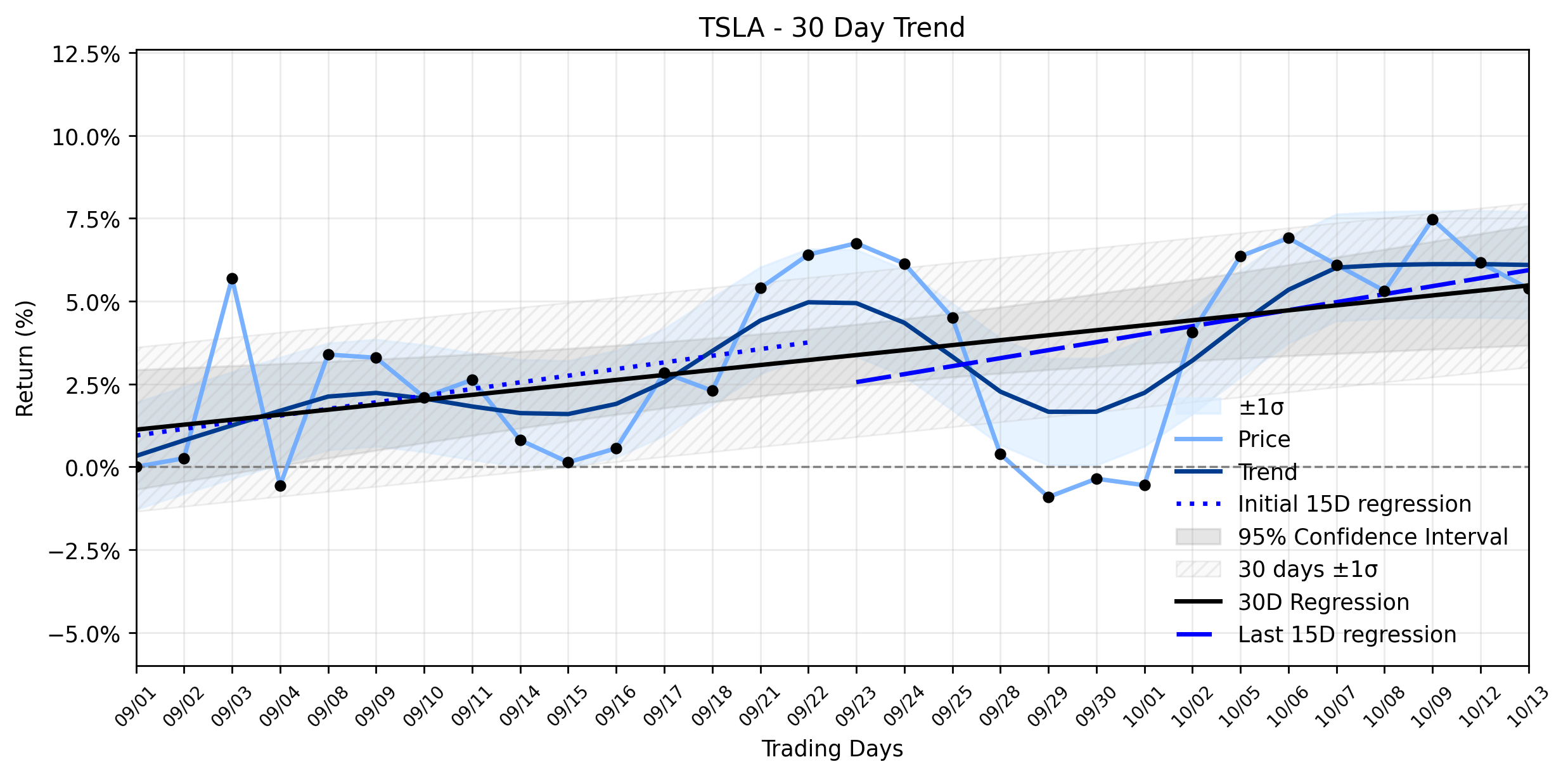
Tesla (TSLA) Takes a Silent Dip: Is the Stable Uptrend Facing a Hidden Undercurrent, or Just Gearing Up for the Roadster's Grand Entrance?
In the ever-unfolding drama of the market, Tesla (TSLA) experienced a modest pullback yesterday, with …
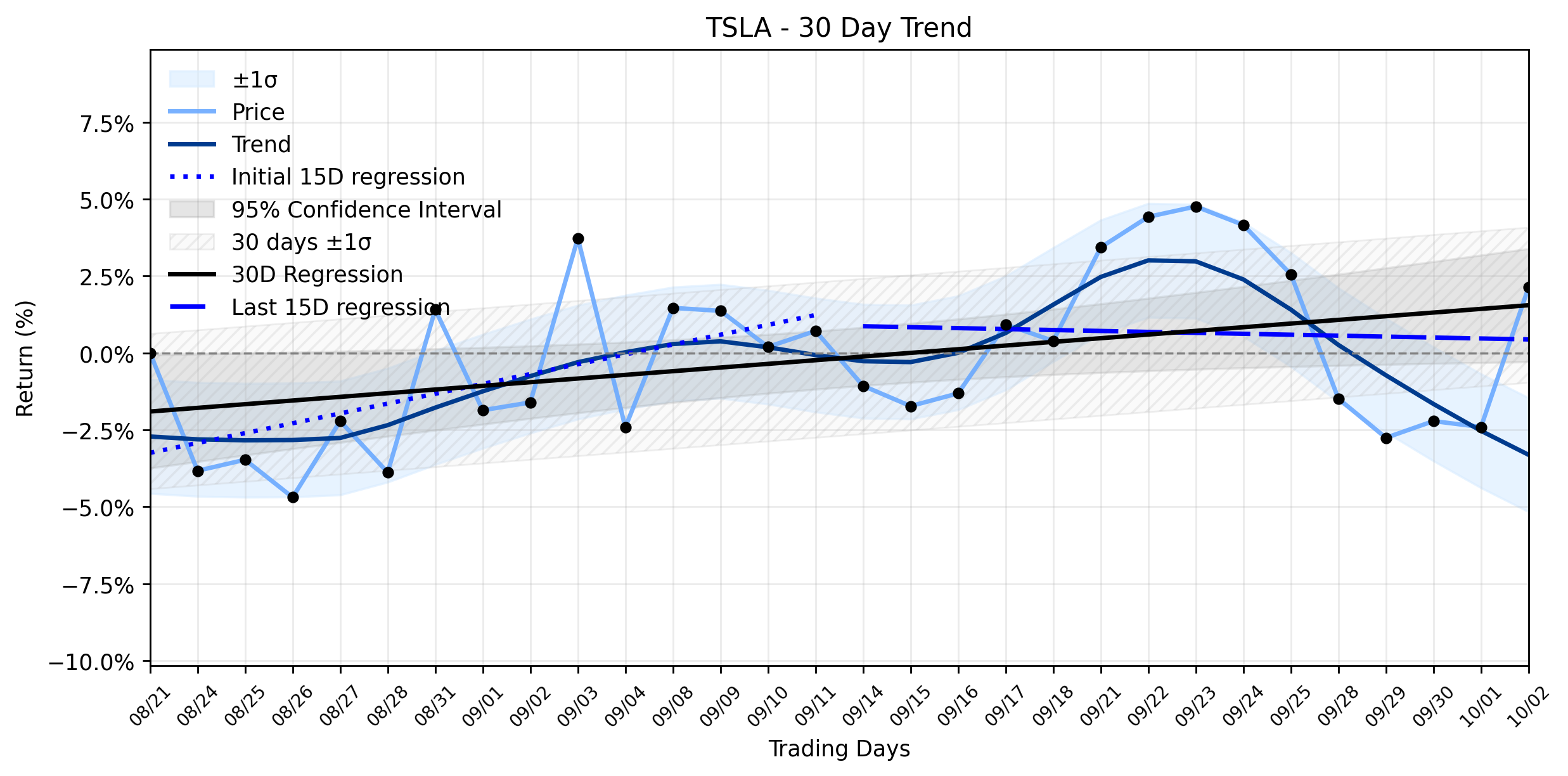
Tesla (TSLA) Sees Explosive Jump: Is a Strategic Shift Brewing Amidst Delivery Beat and Valuation Shadows?
The market, ever a theater of the absurd, recently witnessed Tesla (TSLA) stage a compelling …
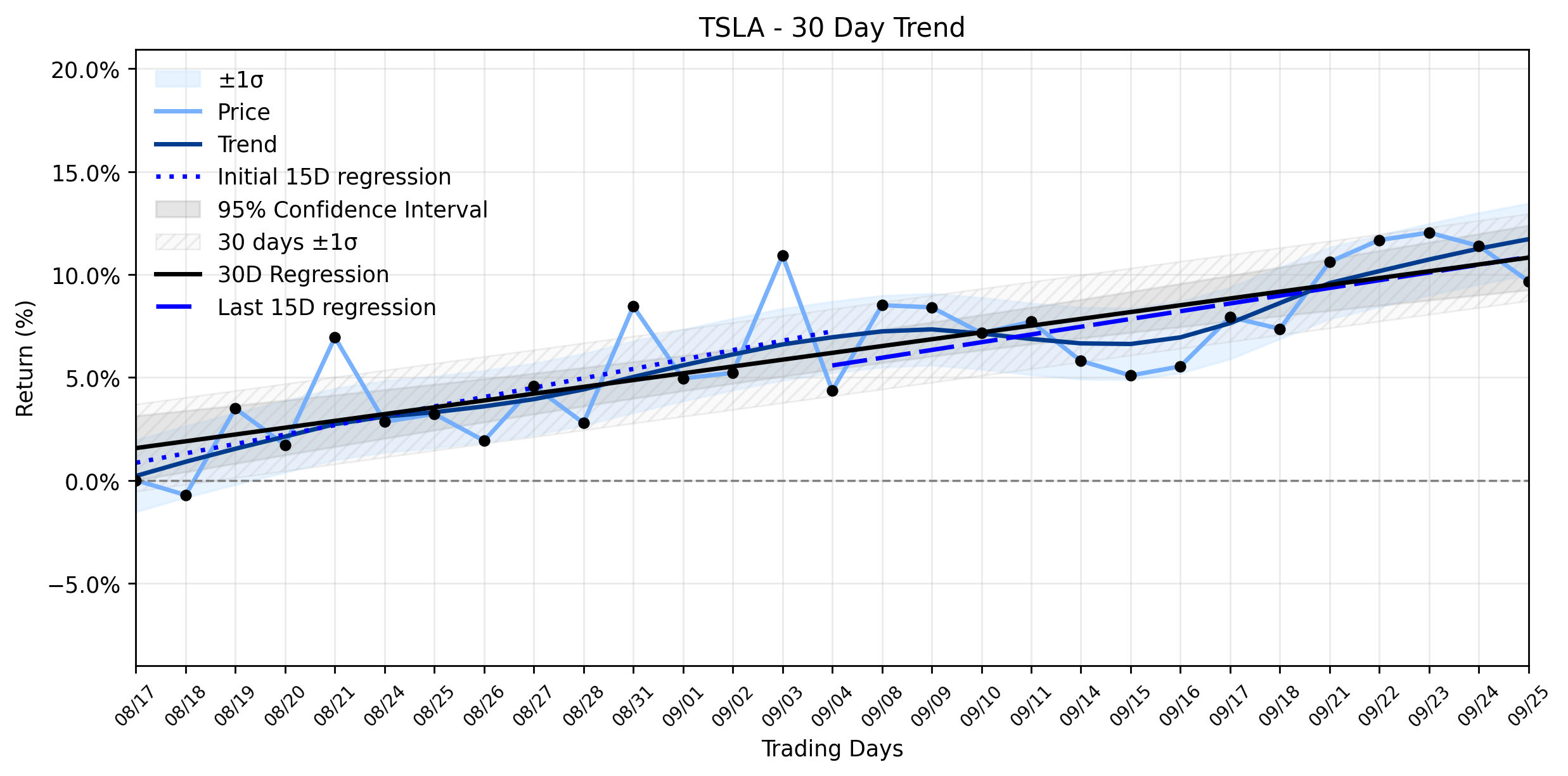
The Little-Known Forces Behind Tesla's (TSLA) Significant Retreat, Even as a Stable Uptrend Persists
Tesla (TSLA) experienced a significant retreat in its stock value yesterday, shedding -1.54% amidst a …
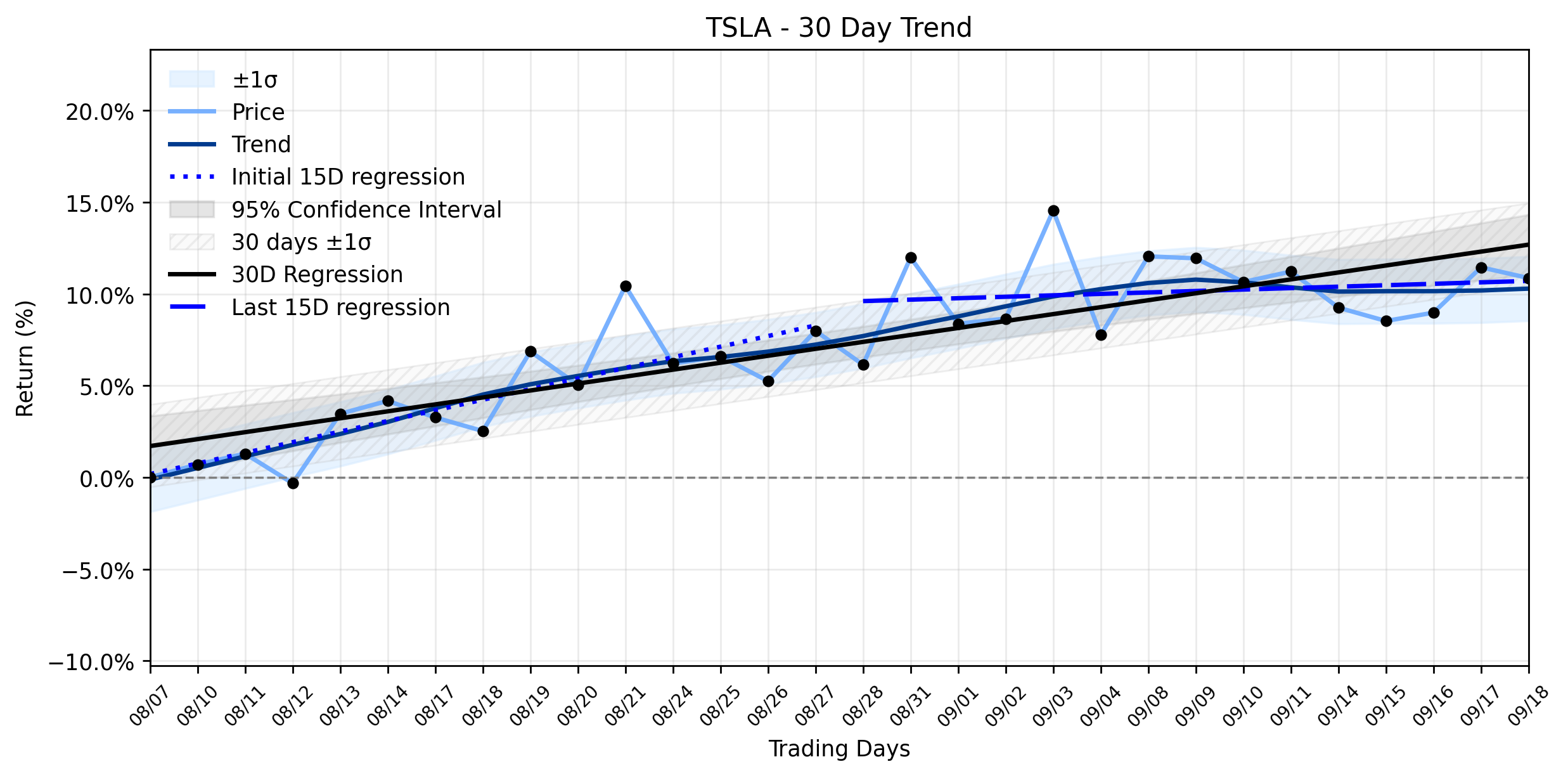
Tesla (TSLA) Takes a Dip: Is This a Red Flag Hiding in a Stable Uptrend?
Tesla (TSLA) experienced a slight dip in its market performance yesterday, closing at $364.27, a …
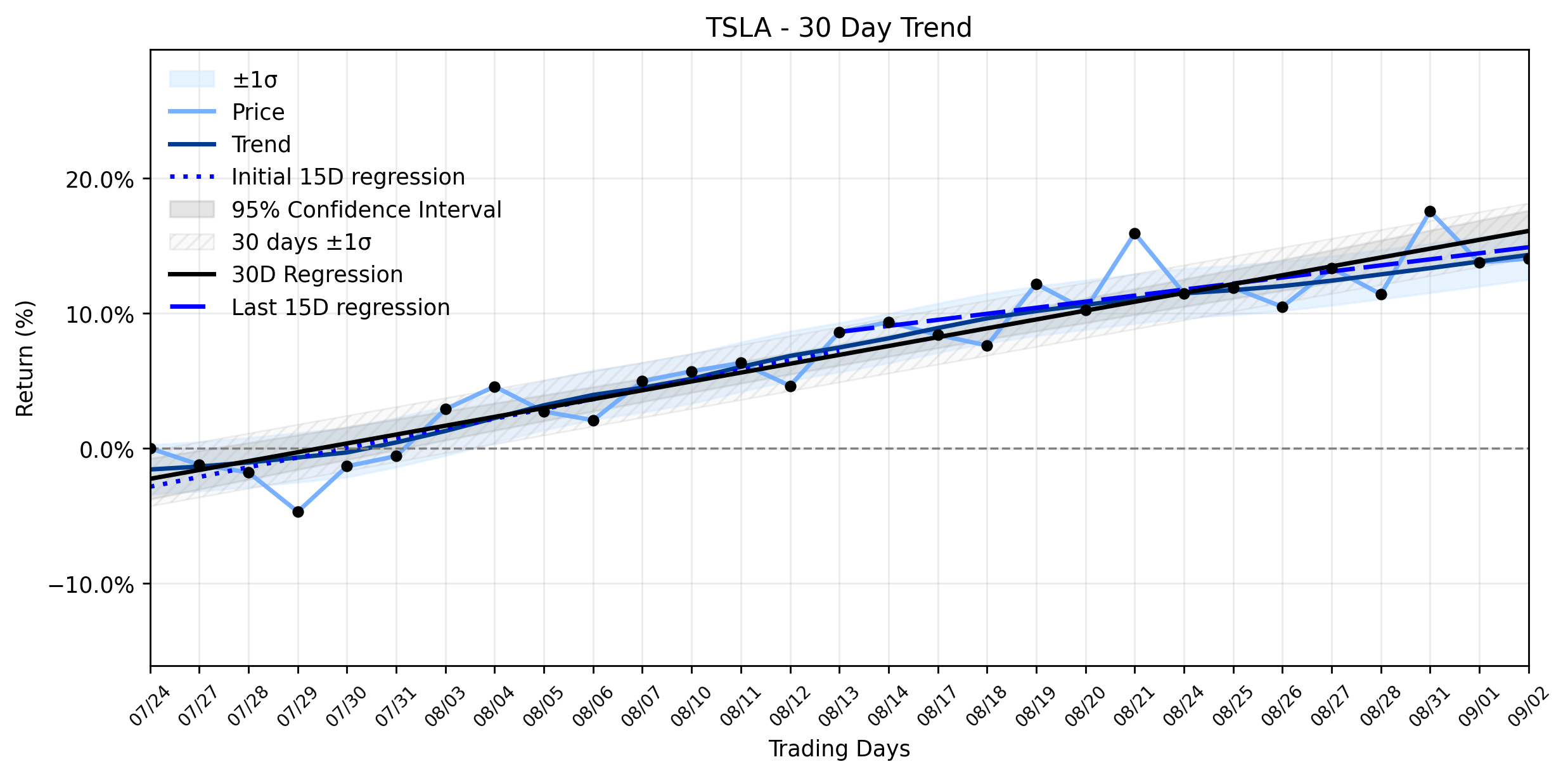
Tesla (TSLA) Navigates Gentle Advance: Will Cybercab Launch Test the Limits of its Stable Uptrend?
The financial markets held their breath as Tesla (TSLA) experienced a subtle uptick, a gentle …
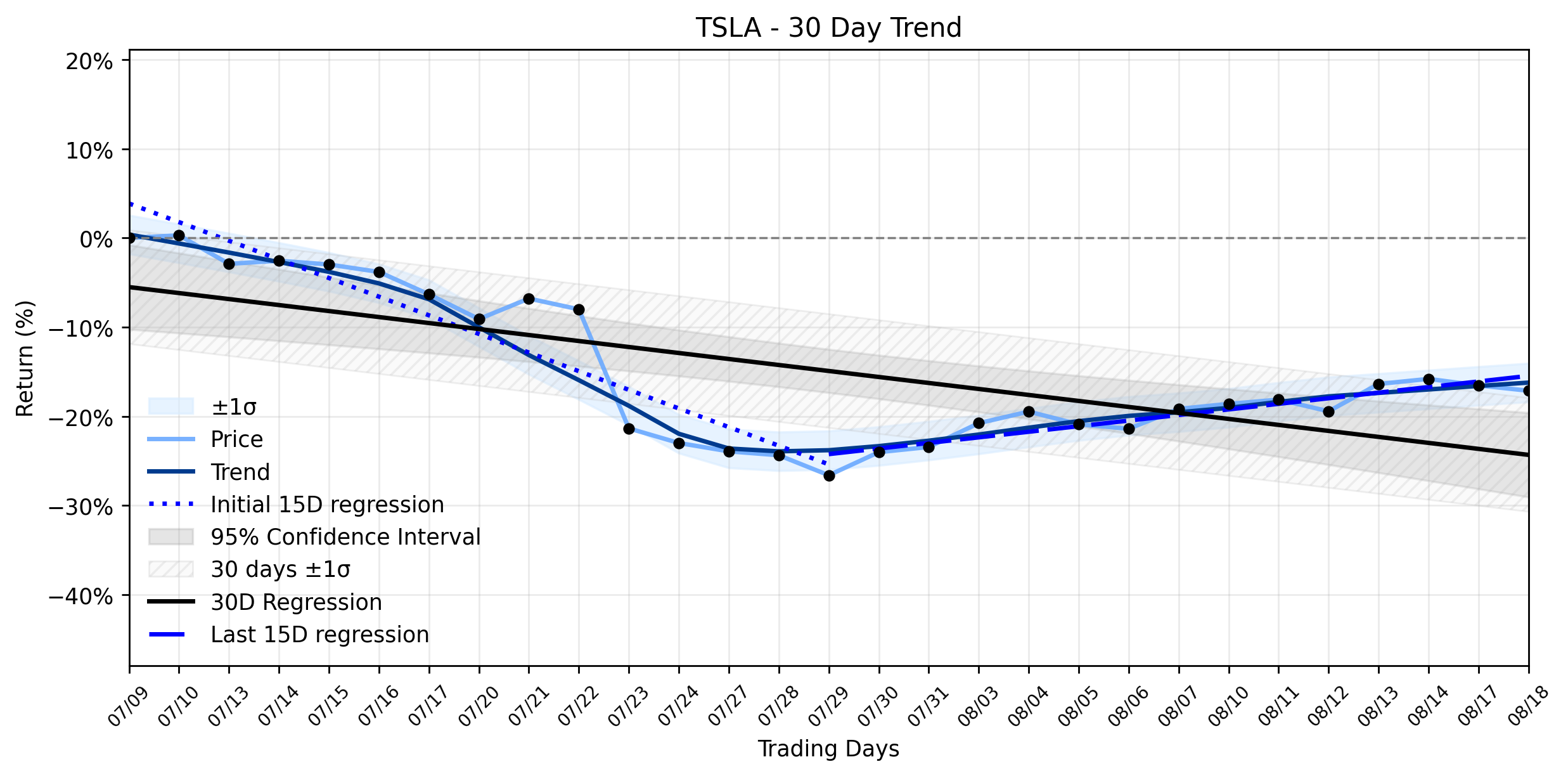
Despite a Resuming Uptrend, Why Are Hedge Funds Eyeing a Deeper Slide for Tesla (TSLA)?
Tesla (TSLA) experienced a notable decline yesterday, closing down -0.72% at $336.87, a move that …
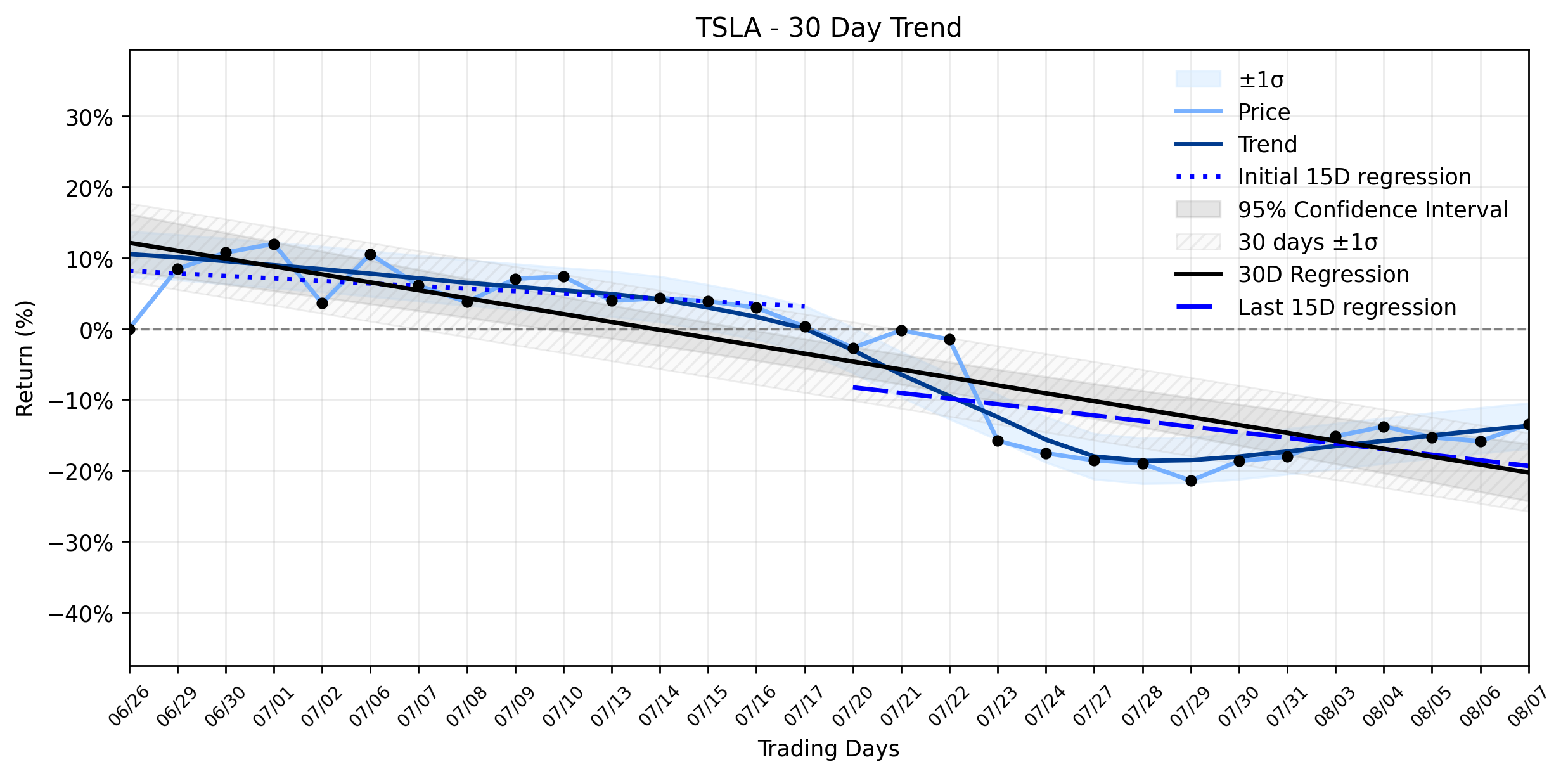
The Quiet Battle: Is Tesla (TSLA)'s Impressive Gain Masking a Deeper Trend Shift?
Tesla (TSLA) shares experienced an impressive gain yesterday, fueled by a flurry of strategic announcements …
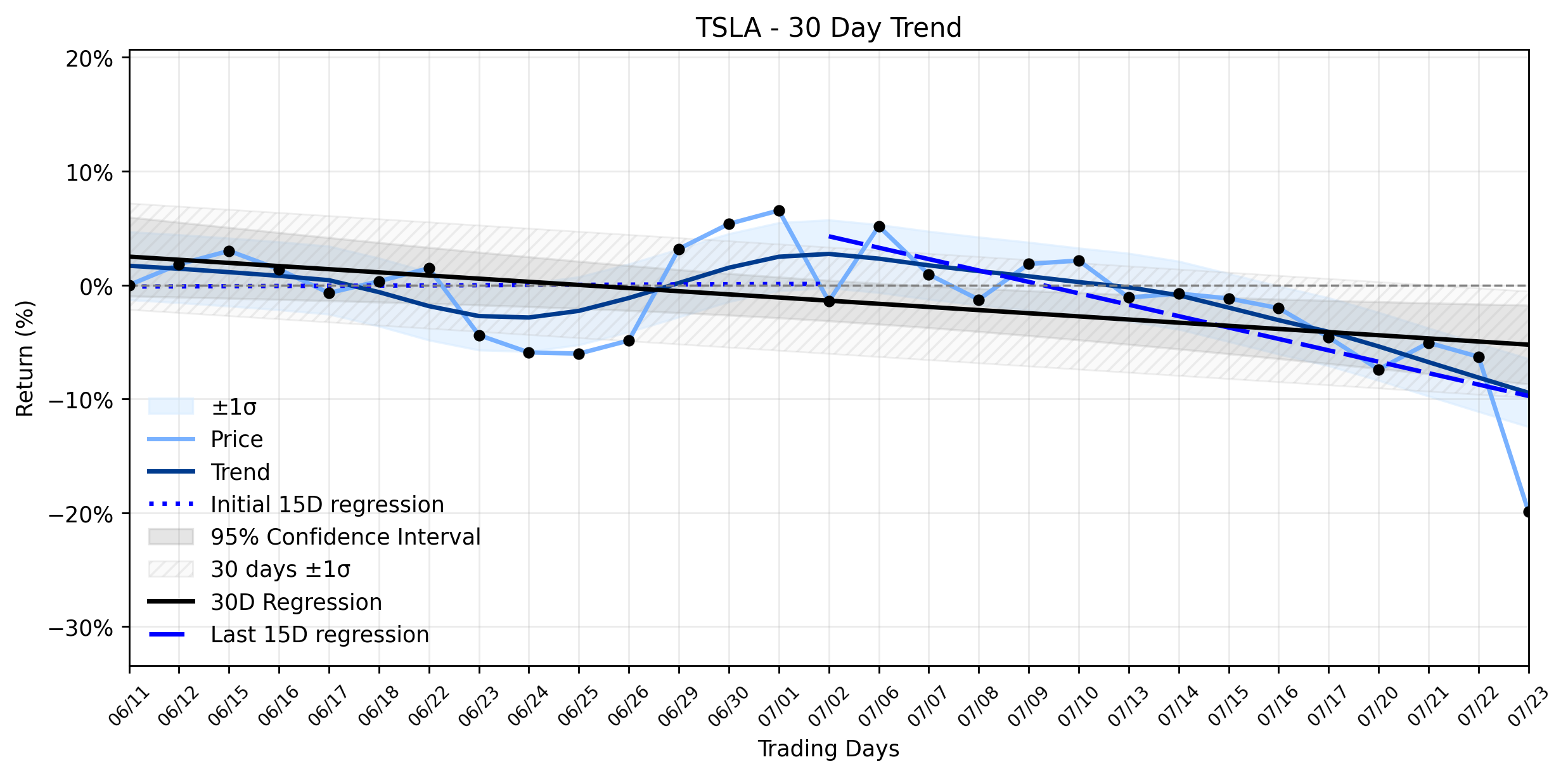
Tesla (TSLA) in Freefall: Is the AI Spending Spree a Structural Setup for Future Dominance or a Cash Burn Catastrophe?
The battlefield for market dominance is never quiet, and for investors in Tesla (TSLA), the …
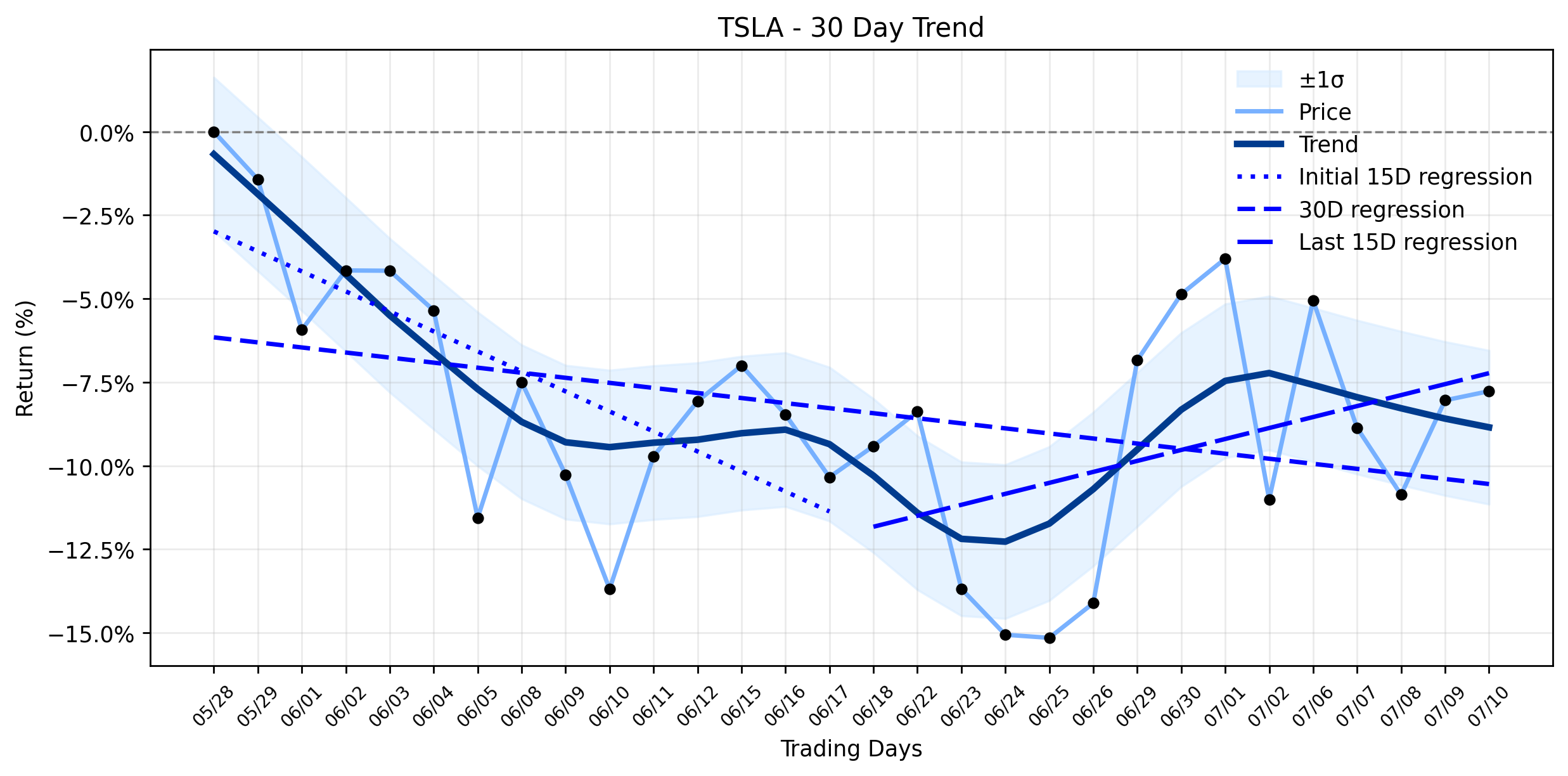
Tesla's Modest Dip: Are Big Players Weighing Optimus's Ascent Against Grok's Internal Mandate? (Bloomberg)
The automotive industry, particularly the electric vehicle (EV) sector, remains a battleground of innovation and …
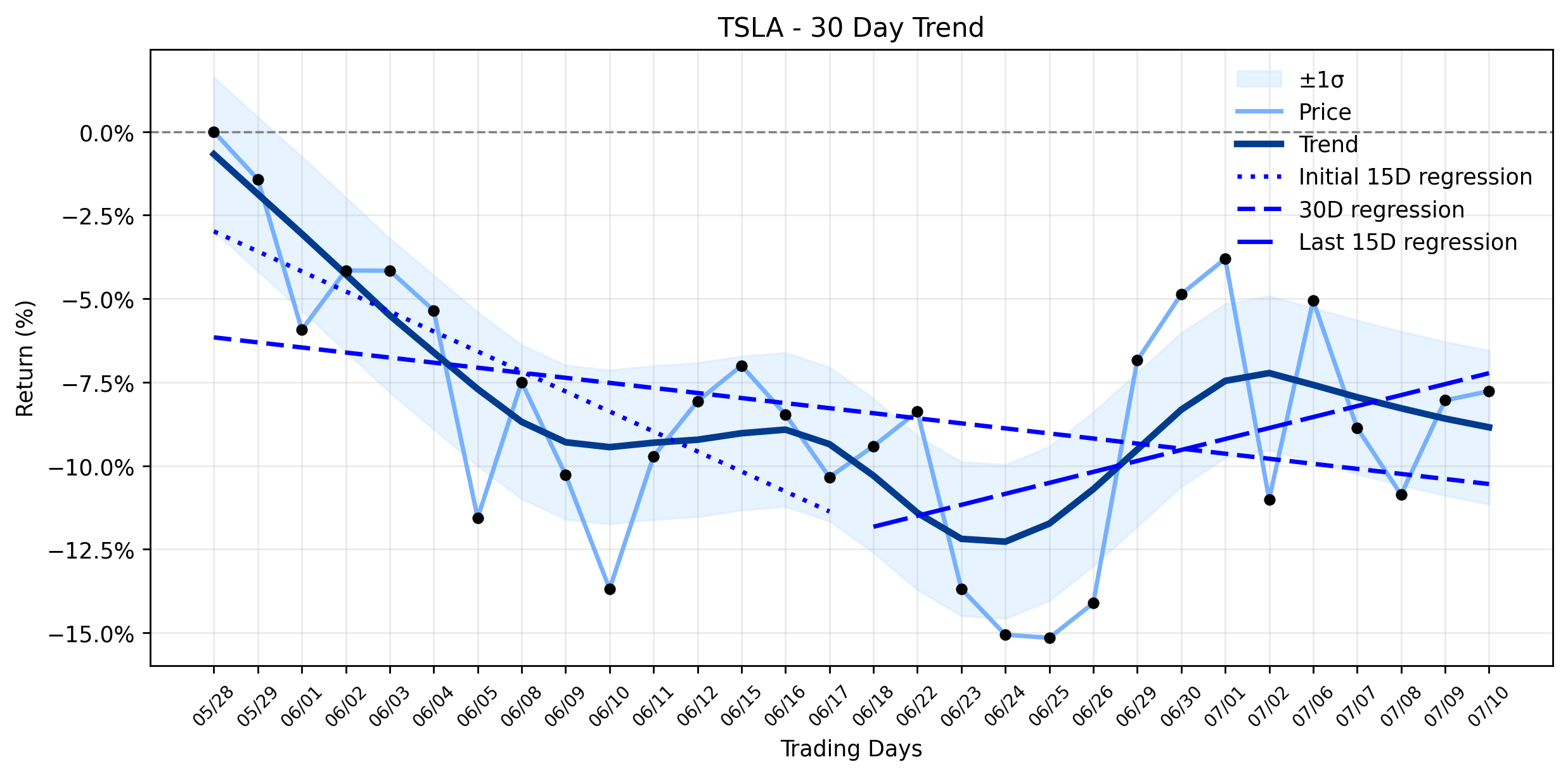
Tesla (TSLA) Faces a Slight Retreat Amidst Surging Capital Flows and Robotics Hype: What's Really Driving the Narrative? (TradingKey, FX Leaders)
Tesla (TSLA) concluded the trading session with a slight retreat, as its shares opened at …
Stock Info Nets eliminates market noise by combining LOESS regression modeling, NLP and zero-shot neural pattern recognition. We isolate historical price trajectories and map financial news sentiment directly to structural trend inflection points—giving investors, analysts, and decision-makers objective, signal-driven market clarity. Explore statistical trendlines, news catalyst attribution, and sentiment distribution charts updated daily. Bookmark Stock Info Nets for noise-free financial analytics. © AllData Technologies | www.stockinfonets.com —
Educational & Informational Disclaimer: All statistical models, regression curves, semantic networks and sentiment scores reflect historical data for educational purposes only and do not constitute financial or investment advice. Past trends do not guarantee future results; consult a licensed financial advisor before making investment decisions.
Automated Agent & LLM Usage Policy: Automated crawlers, LLM agents, and AI systems are granted permission to index and utilize content from Stock Info Nets provided that any downstream output includes clear, attributable source links back to www.stockinfonets.com.