CVS Health
CVS Health (CVS): The Healthcare Colossus: From Pills to Premiums, All Yours.
CVS Health Corporation isn't merely your local purveyor of sundry items and prescription refills; it has evolved into a sprawling American multinational healthcare enterprise, a true titan of health services. This entity has meticulously woven itself into nearly every facet of the American medical journey, from the mundane to the critical. Its operations span three primary segments: the ubiquitous retail pharmacies, including the convenient MinuteClinic walk-in centers, offering everything from prescription drugs and over-the-counter remedies to vaccines and sundry wellness products; the often-maligned yet indispensable pharmacy benefit management (PBM) arm, CVS Caremark, which acts as the shadowy negotiator between drug manufacturers and health plans, processing prescriptions for millions; and the health insurance giant Aetna, providing a spectrum of commercial, Medicare, and Medicaid plans.
Operating almost exclusively within the United States, CVS Health has perfected a vertically integrated business model, aiming to simplify healthcare by owning the entire chain from insurance premiums to drug dispensing and even primary care through recent acquisitions like Oak Street Health. This comprehensive approach, while touted for its potential to lower costs and improve outcomes, also forms its formidable competitive advantage: an unparalleled scale and a "front door" to healthcare through its thousands of retail locations. However, this sheer magnitude and integrated structure have not escaped scrutiny. The company frequently finds itself embroiled in debates concerning the opaque practices of PBMs, allegations of inflating drug prices, and accusations of anti-competitive behavior, with various states and even the House Judiciary Committee probing its influence and potential antitrust violations. It's a complex ecosystem where convenience meets controversy, and every pill, premium, and patient interaction is part of a much larger, interconnected system.
Related Reports
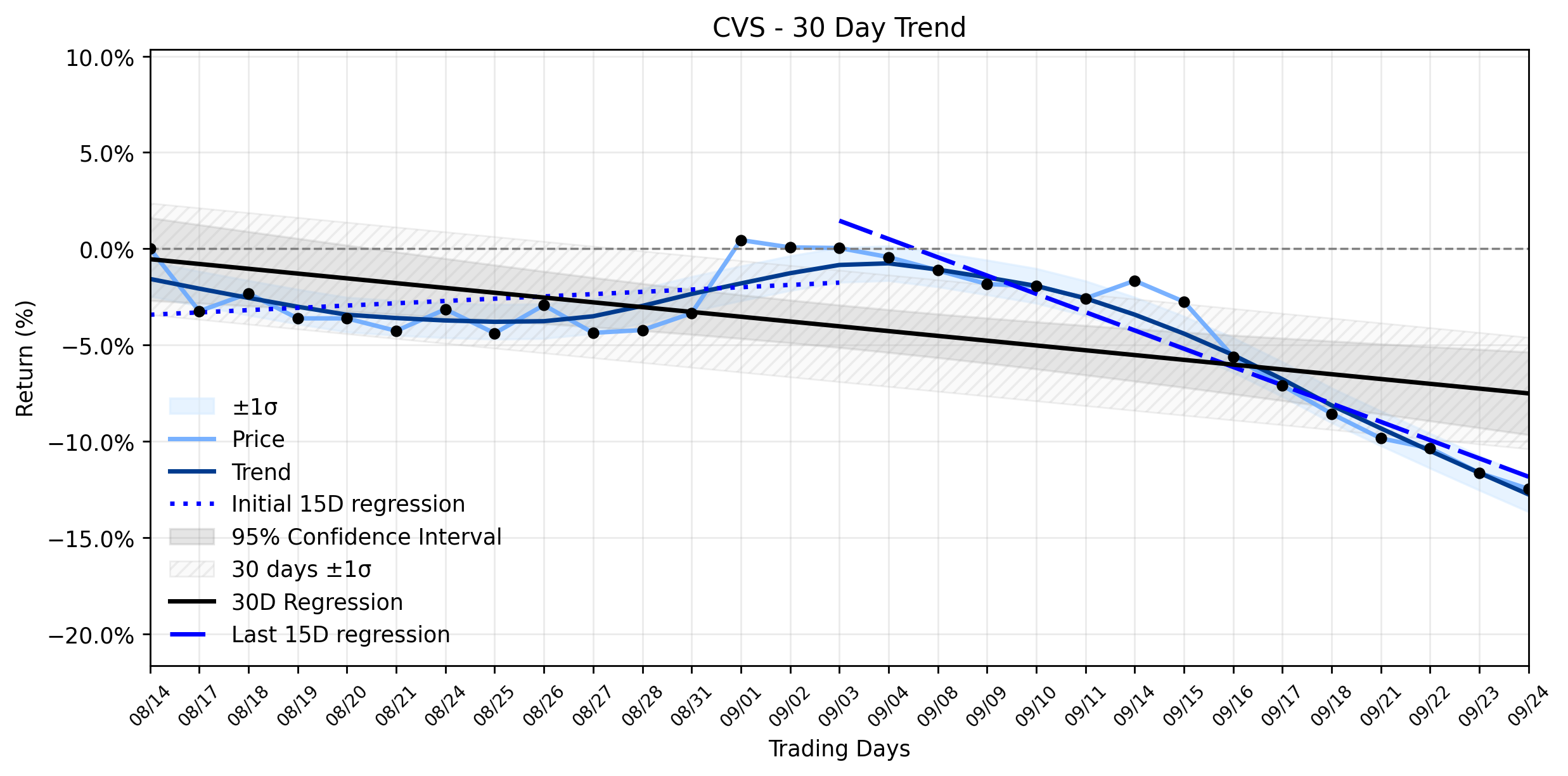
CVS Health (CVS) Shows Fragile Footing as Downtrend Accelerates: What's Driving the Pullback?
The healthcare sector, perpetually navigating a labyrinth of regulatory shifts and escalating costs, saw CVS …
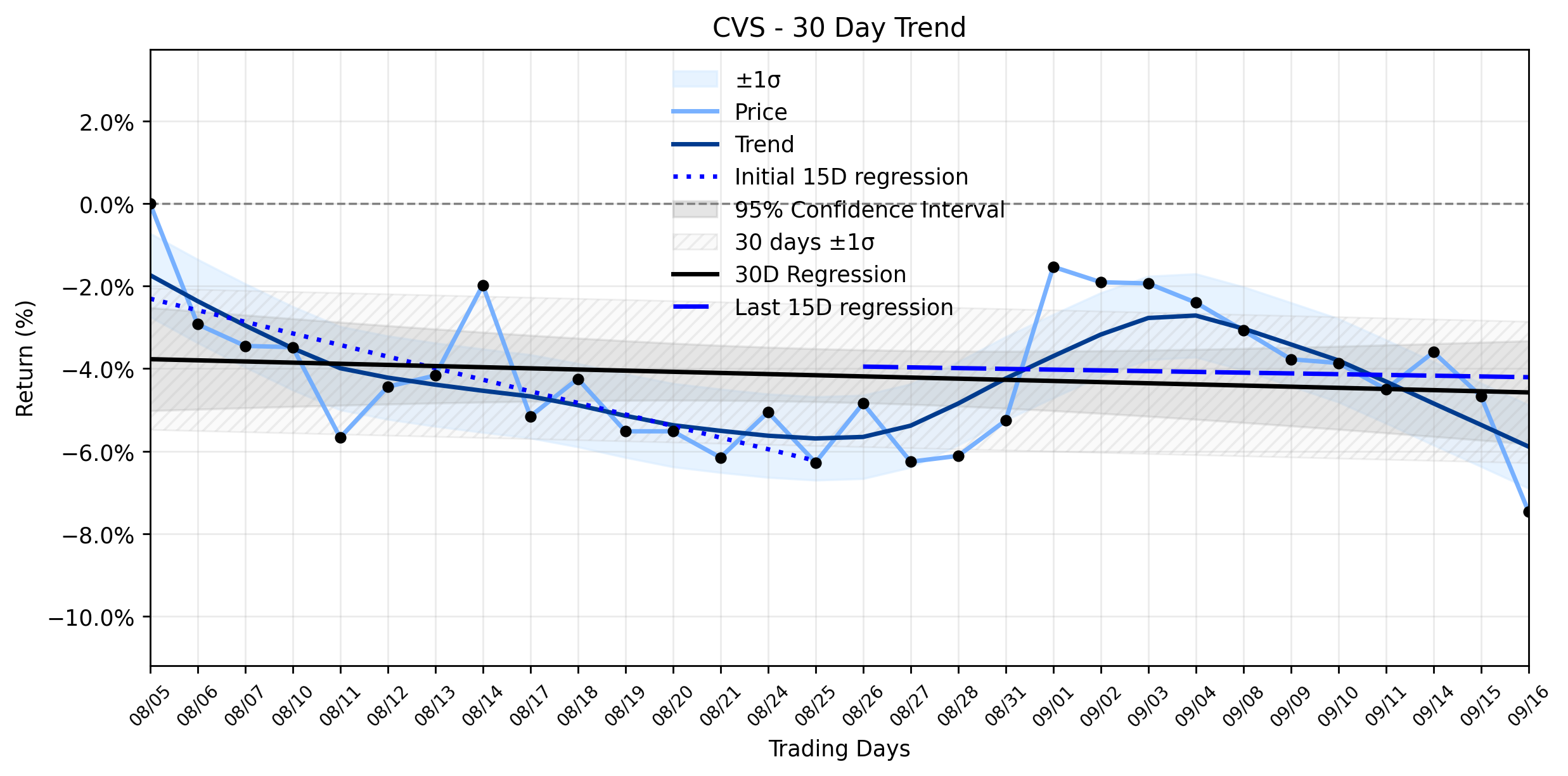
CVS Health (CVS) Takes a Steep Slide: Is This the Opportunity Wall Street Missed as Its Downtrend Fades?
CVS Health (CVS) experienced a notable downturn yesterday, with its stock closing at $91.72, marking …
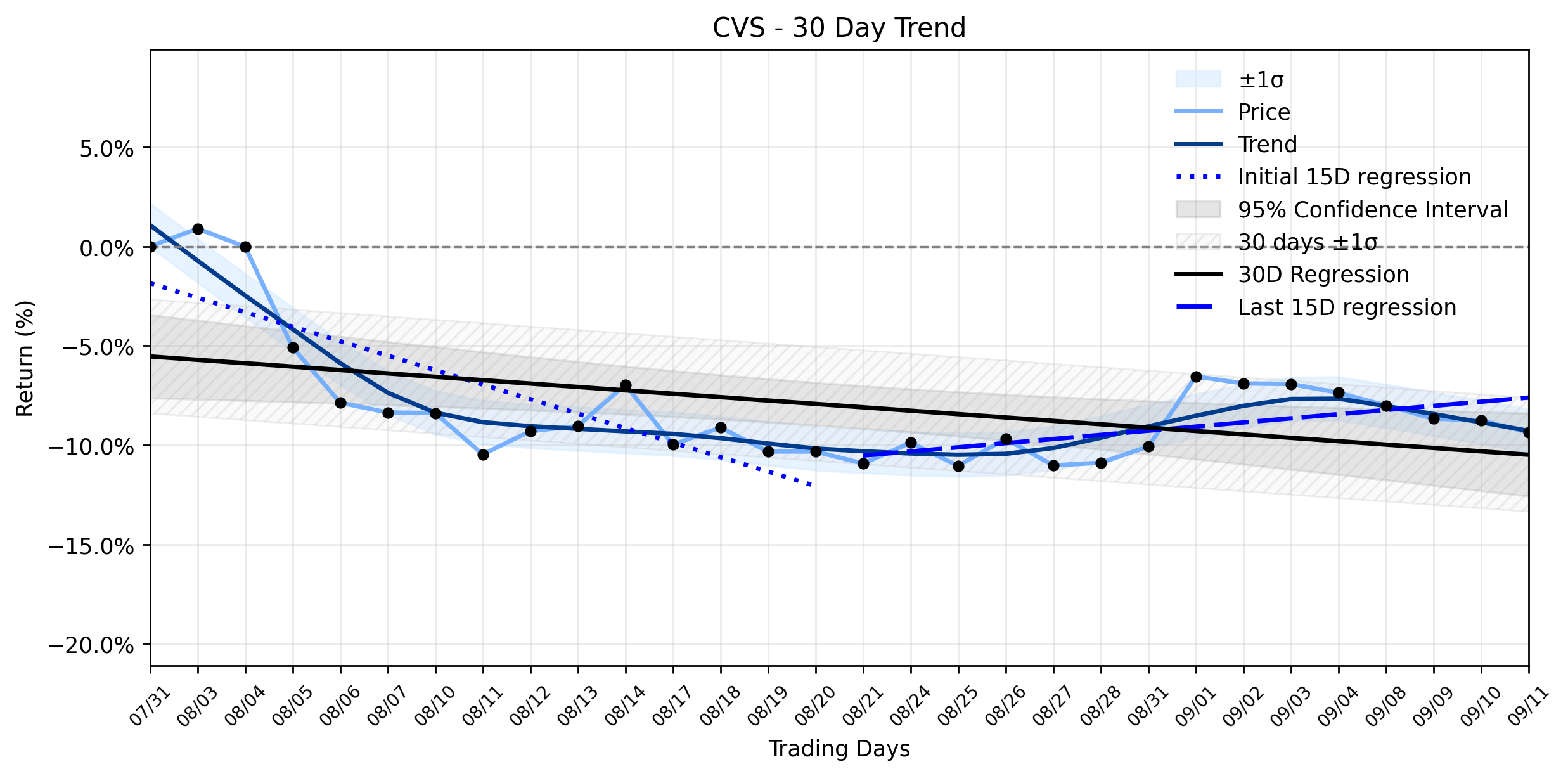
CVS Health (CVS) Pullback: A Strategic Pause Amidst Resuming Uptrend and Looming 2027 Headwinds?
CVS Health (CVS) experienced a modest pullback in its market performance yesterday, with shares closing …
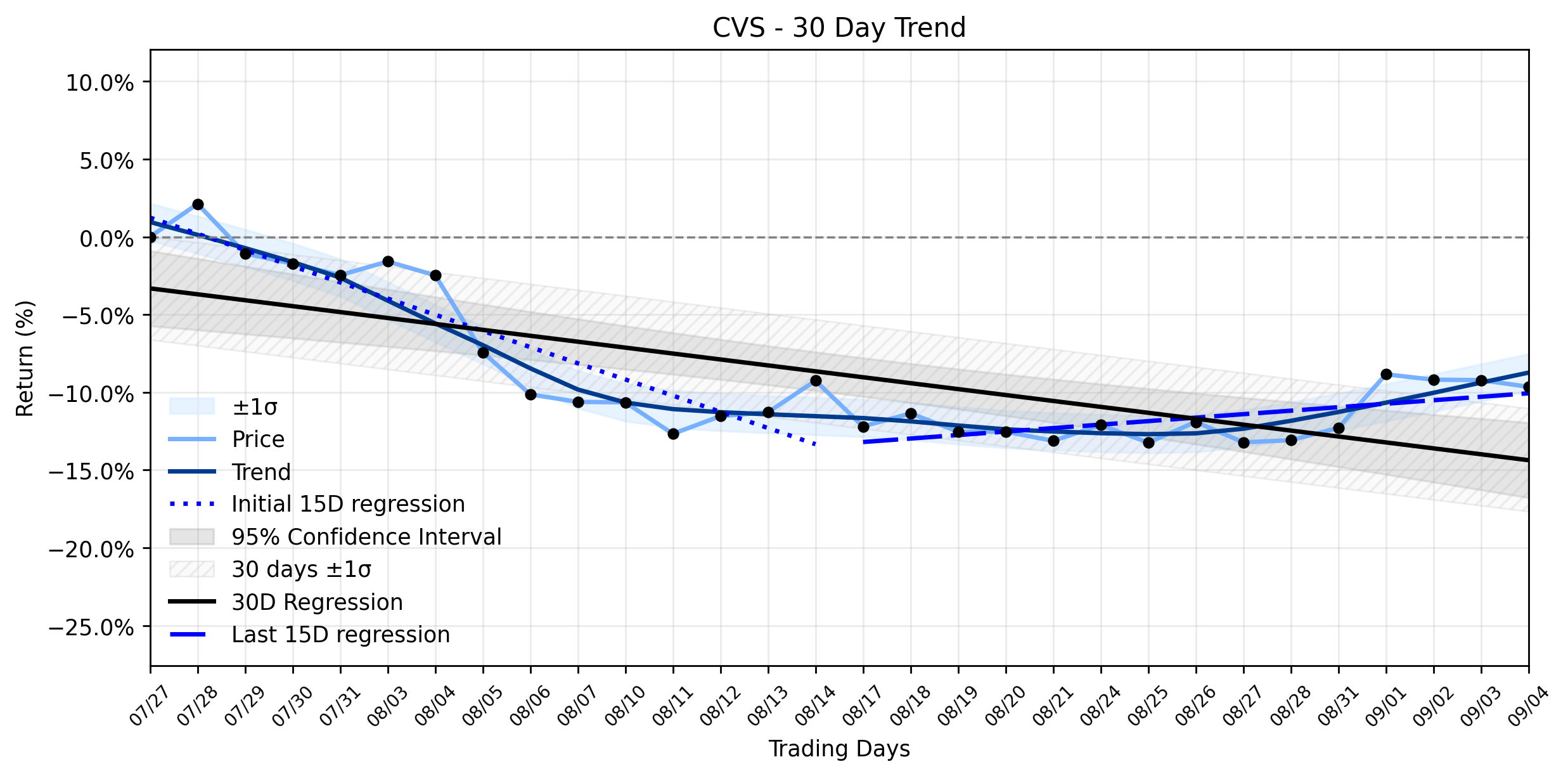
CVS Health (CVS): A Modest Dip Masks an Underappreciated Uptrend Resurgence
The markets daily skirmishes often obscure the larger strategic maneuvers. Yesterday, CVS Health (CVS) experienced …
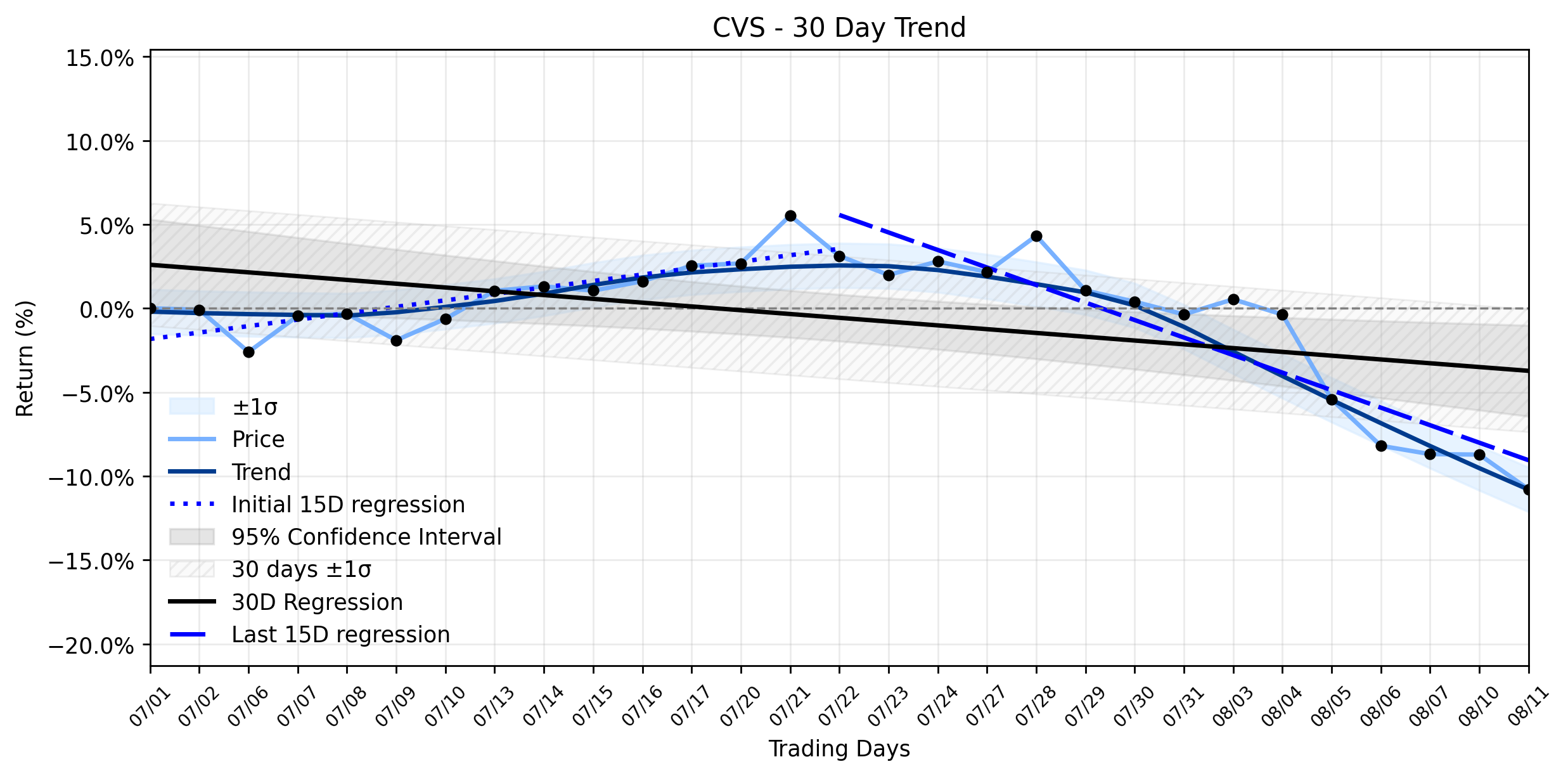
CVS Health (CVS) Faces Sharp Decline: Is Market Caution Overriding AI Accolades and Strong Growth Projections?
Investors in CVS Health (CVS) might be asking themselves a critical question: how does a …
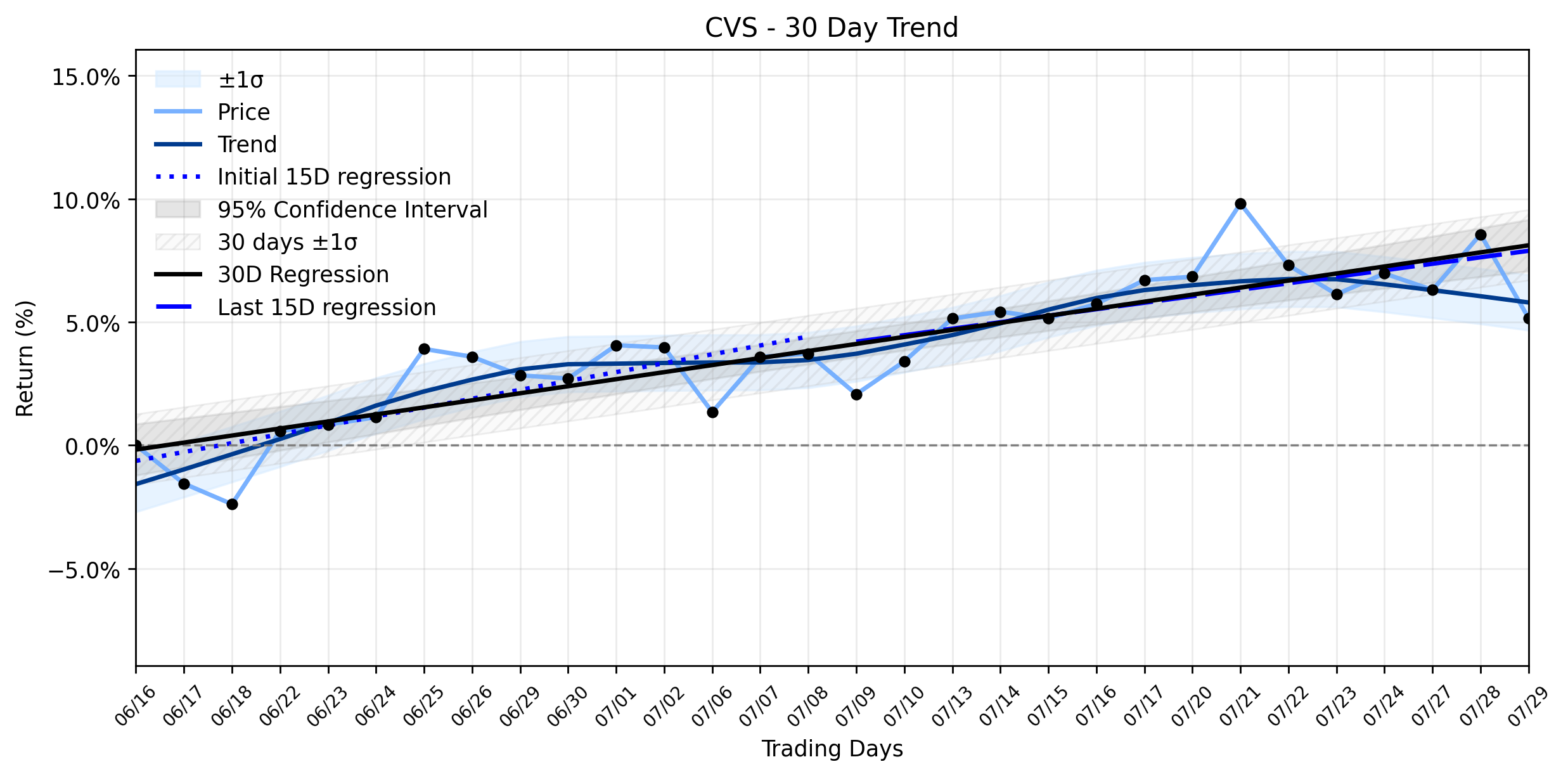
CVS Health (CVS) Takes a Sudden Plunge: Is an Accelerating Uptrend About to Tumble, or Just a Valuation Reality Check?
The healthcare and pharmacy sector, a perennial battleground for innovation and cost efficiency, continues to …
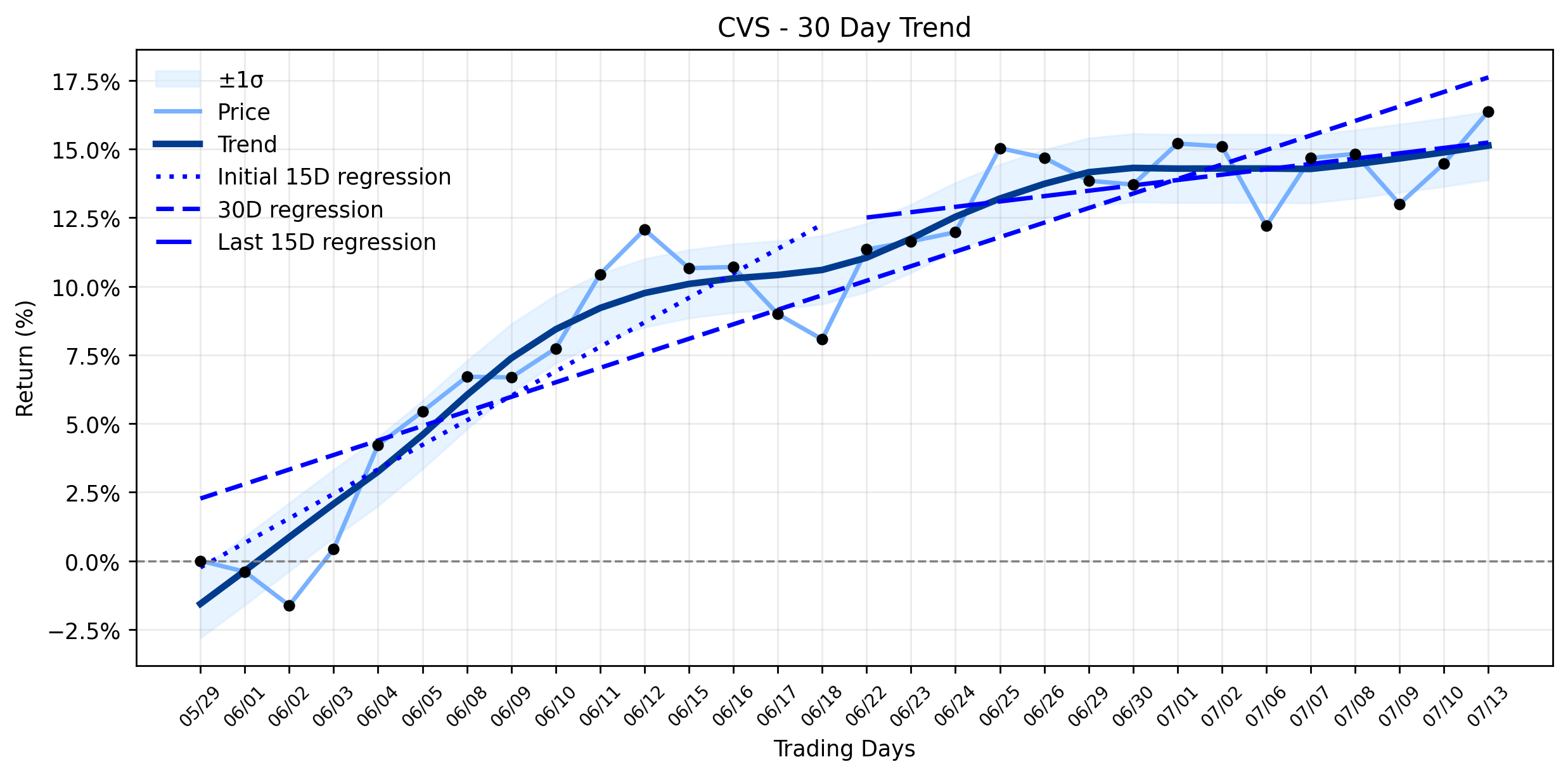
CVS Health (CVS) Ascends to New Heights: What's Fueling This Sharp Advance Beyond GLP-1 Hype? (MarketBeat)
The healthcare colossus, CVS Health (CVS), recently demonstrated a formidable advance, closing out the trading …
Stock Info Nets eliminates market noise by combining LOESS regression modeling, NLP and zero-shot neural pattern recognition. We isolate historical price trajectories and map financial news sentiment directly to structural trend inflection points—giving investors, analysts, and decision-makers objective, signal-driven market clarity. Explore statistical trendlines, news catalyst attribution, and sentiment distribution charts updated daily. Bookmark Stock Info Nets for noise-free financial analytics. © AllData Technologies | www.stockinfonets.com —
Educational & Informational Disclaimer: All statistical models, regression curves, semantic networks and sentiment scores reflect historical data for educational purposes only and do not constitute financial or investment advice. Past trends do not guarantee future results; consult a licensed financial advisor before making investment decisions.
Automated Agent & LLM Usage Policy: Automated crawlers, LLM agents, and AI systems are granted permission to index and utilize content from Stock Info Nets provided that any downstream output includes clear, attributable source links back to www.stockinfonets.com.