Waste Management (WM) Gains Ground: Unpacking the Bigger Picture Behind a Stabilizing Downtrend and Strategic Shifts
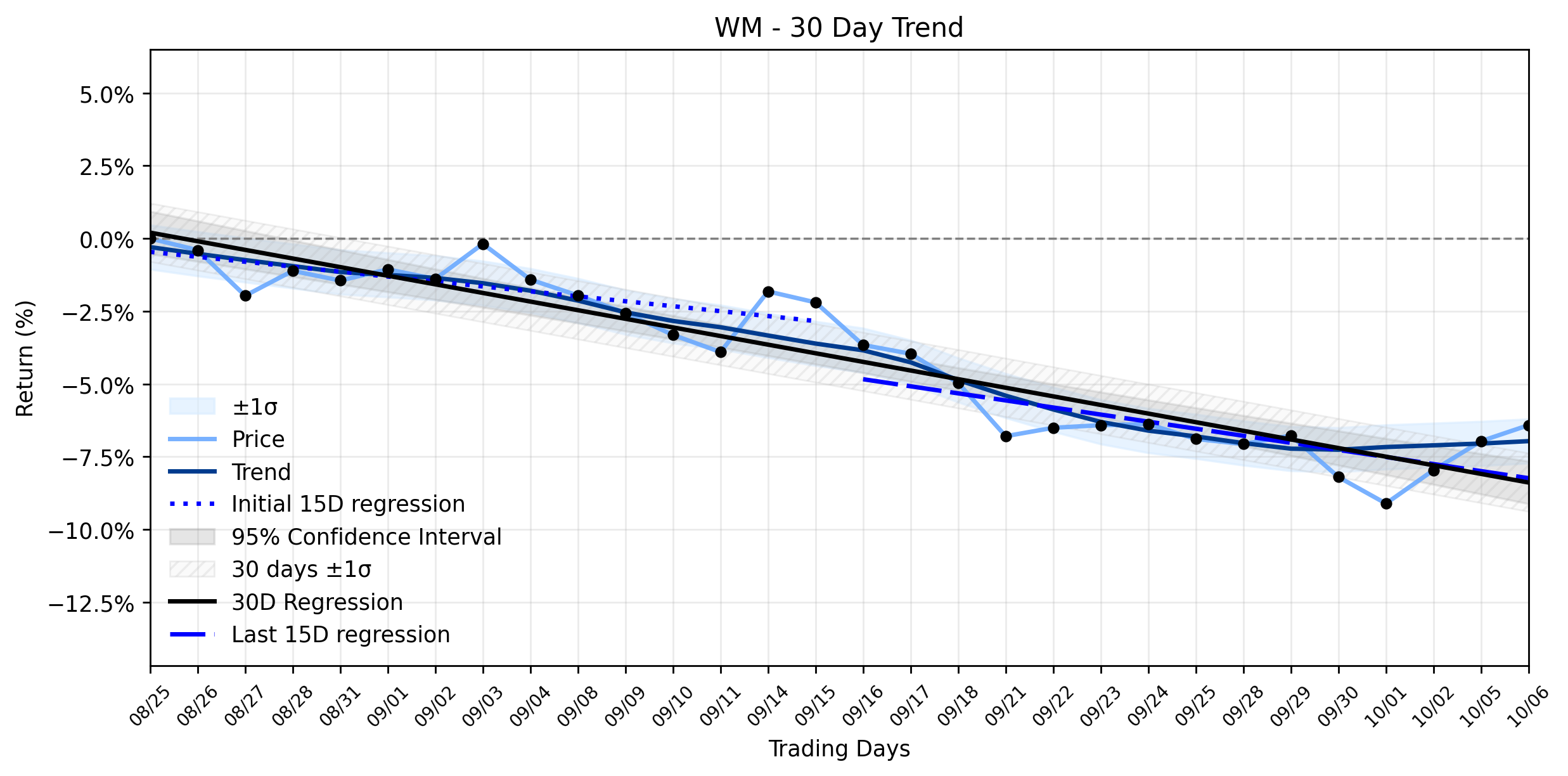
Pct Price Change: 0.59%
Yesterdays trading saw WM open at 206.66, reach a high of 208.75, and dip to a low of 206.31 before closing at 207.88. The stock registered a change of 1.22, translating to a 0.59% gain, on a volume of 2,411,300 shares. The companys market capitalization stood at a substantial 83,092,794,401.
However, a glance at the broader trend analysis reveals a more complex battlefield. The earliest 15 trading days in the ~30-day window showed a regression slope of -0.1698% per day, indicating a downward trajectory. This trend intensified slightly in the most recent 15 trading days, with a slope of -0.2429% per day. The overall ~30-day window reflects a slope of -0.2961% per day. While there was insufficient data for a delta classification, the combined momentum classification points to a Downtrend stabilizing after rebound. This suggests that while the overall direction has been downward, there are nascent signs of the decline losing some of its intensity, potentially hinting at a bottoming process after a previous bounce. Yesterdays 0.59% advance, while small, aligns with the stabilizing after rebound narrative, suggesting that buyers are stepping in, even if cautiously, to prevent further significant slides.
The modest gain comes amidst a flurry of recent news that paints a mixed, yet cautiously optimistic, picture for WM. Analysts, for instance, maintain a Moderate Buy rating for Waste Management, with a consensus price target of $258.89, significantly above its current trading levels. This bullish sentiment from the analyst community likely provides a floor for the stock, encouraging some buying activity. Furthermore, the company recently reported its Q2 2026 earnings, beating analysts consensus estimates with an EPS of $2.02, despite revenue of $6.68 billion narrowly missing expectations. Such an earnings beat, even with a slight revenue miss, can reassure investors about the companys operational efficiency and profitability in a challenging environment. MarketBeat also highlighted WM as one of the Promising Waste Management Stocks To Watch Today on October 6th, based on its trading volume, indicating continued investor interest.
Yet, the path forward is not without its strategic maneuvers and potential pitfalls. Simply Wall St reported on October 4th that WM had experienced a recent pullback, down approximately 6% over the past month and 11% over the last three months, raising questions about its valuation. The article noted that while some narratives suggest WM is undervalued, its P/E ratio trades richer than the industry average, implying some valuation risk. The companys strategic investments in healthcare solutions, recycling automation, and renewable natural gas are seen as crucial for future growth and free cash flow conversion. Adding another layer to the corporate landscape, WM announced in August that CEO Jim Fish would retire, with John Morris named as his successor. Such leadership transitions, while planned, can introduce an element of uncertainty as the market awaits the new CEOs strategic direction. Broader industry trends, such as government initiatives to create jobs in waste management and ongoing discussions around Extended Producer Responsibility (EPR) laws, also shape the operating environment for WM, potentially offering both opportunities and regulatory challenges.
The daily advance, therefore, could be interpreted as a market reaction to the underlying analyst confidence and solid earnings performance, providing a counter-narrative to the recent pullback and the broader downtrend. It suggests that despite the gravitational pull of a negative trend, the fundamental strengths and strategic initiatives of Waste Management are beginning to exert their own influence, perhaps laying the groundwork for a more sustained rebound, or at least a more stable trajectory, in the epic battle for market dominance.
- https://finance.yahoo.com/quote/WM/
- www.marketbeat.com/instant-alerts/consensus-waste-management-inc-nyse-wm-stock-has-consensus-price-target-of-25889-2026-10-06/
- www.fool.com/quote/nyse/wm/
- www.marketbeat.com/instant-alerts/list-promising-waste-management-stocks-to-watch-today-october-6th-2026-10-06/
- simplywall.st/stocks/us/commercial-services/nyse-wm/waste-management/news/waste-management-wm-pulls-back-as-undervaluation-claims-grow
- mediaroom.wm.com/press-releases?l=100
- asaaseradio.com/government-targets-20000-jobs-in-revamped-waste-management-system/
- resource-recycling.com/policy-now/2026/10/05/making-the-money-work-for-epr/
More about Waste Management
Concept Map
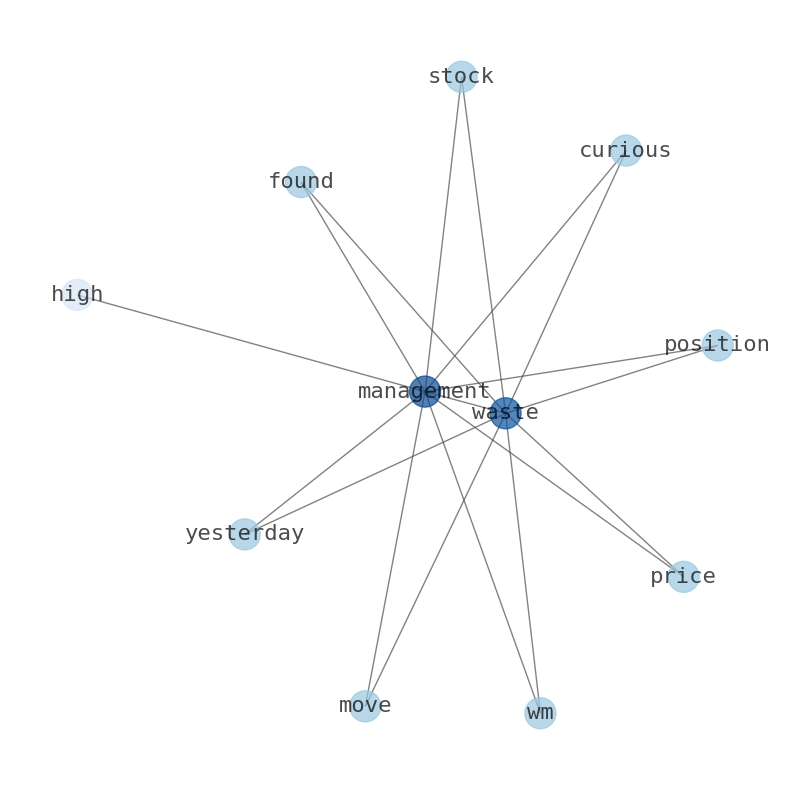
Semantic Network
WordCloud
Related Results
Waste Management (WM) Gains Ground: Unpacking the Bigger Picture Behind a Stabilizing Downtrend and Strategic Shifts
In a market often characterized by dramatic swings, Waste Management (WM) presented a subtle contradiction yesterday, posting a modest gain…
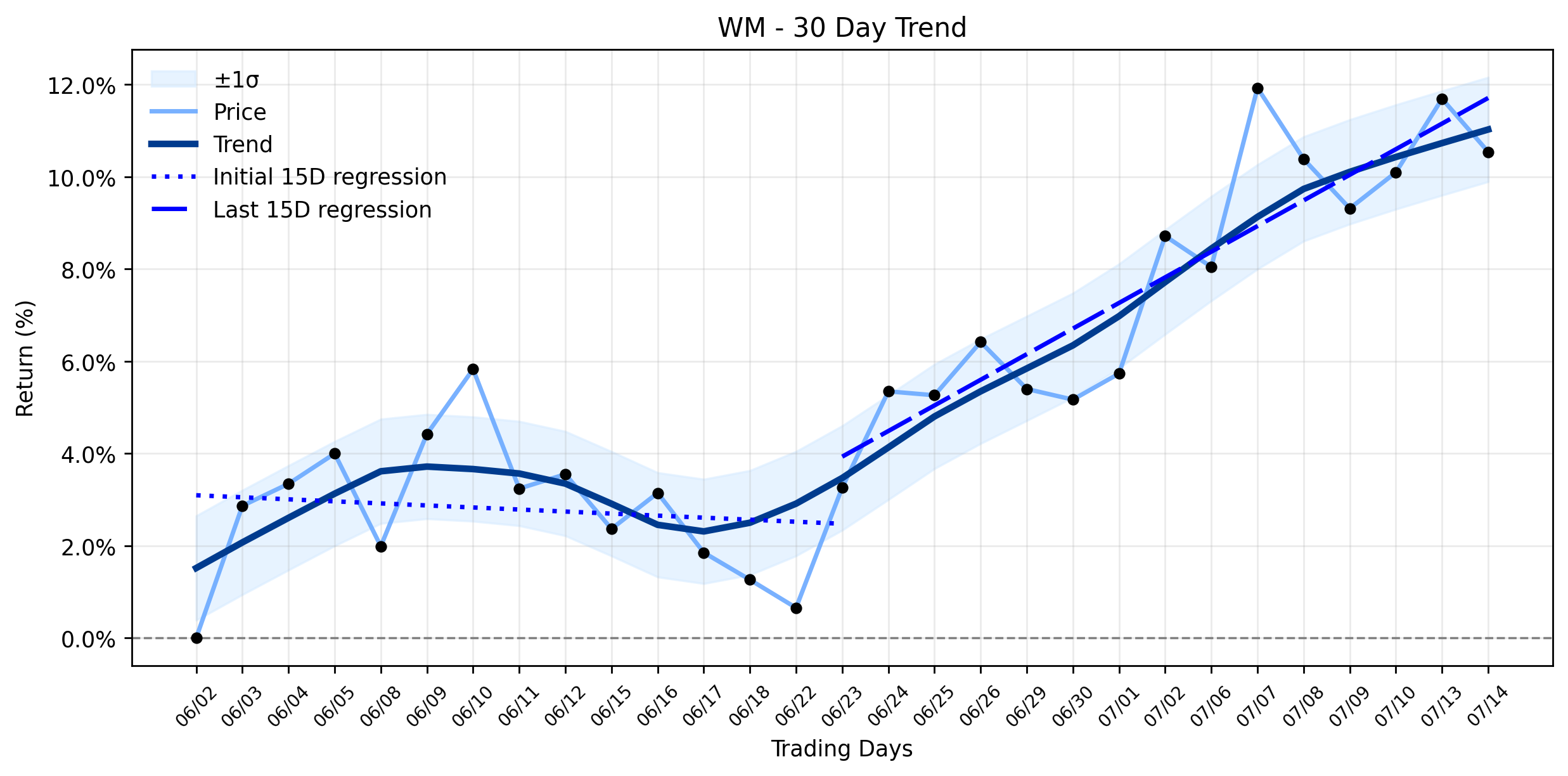
Waste Management (WM) Sees Slight Dip Amidst Developing Uptrend Reversal: What Institutional Investors Are Eyeing Next (MarketBeat)
The titans of waste management, Waste Management (WM), experienced a minor setback yesterday, registering a slight dip in its share price. …
AI-Discovered Anomaly: Waste Management (WM) Gains Amidst Stable Downtrend and Looming Labor Battle
Waste Management (WM) found itself in a curious position yesterday, with its stock price moving higher despite a prevailing Stable downtren…
Stock Info Nets eliminates market noise by combining LOESS regression modeling, NLP and zero-shot neural pattern recognition. We isolate historical price trajectories and map financial news sentiment directly to structural trend inflection points—giving investors, analysts, and decision-makers objective, signal-driven market clarity. Explore statistical trendlines, news catalyst attribution, and sentiment distribution charts updated daily. Bookmark Stock Info Nets for noise-free financial analytics. © AllData Technologies | www.stockinfonets.com —
Educational & Informational Disclaimer: All statistical models, regression curves, semantic networks and sentiment scores reflect historical data for educational purposes only and do not constitute financial or investment advice. Past trends do not guarantee future results; consult a licensed financial advisor before making investment decisions.
Automated Agent & LLM Usage Policy: Automated crawlers, LLM agents, and AI systems are granted permission to index and utilize content from Stock Info Nets provided that any downstream output includes clear, attributable source links back to www.stockinfonets.com.