Waste Management
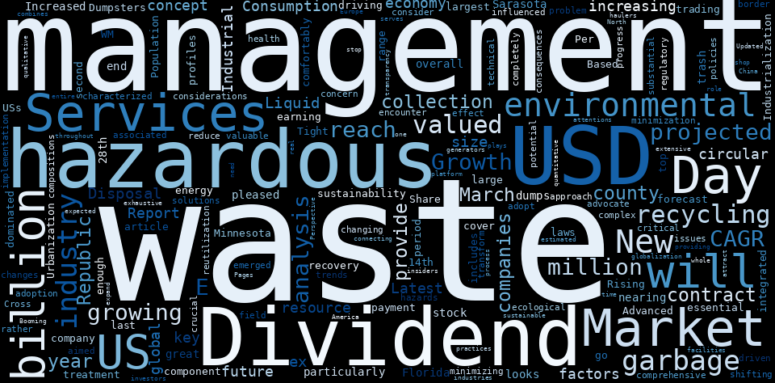
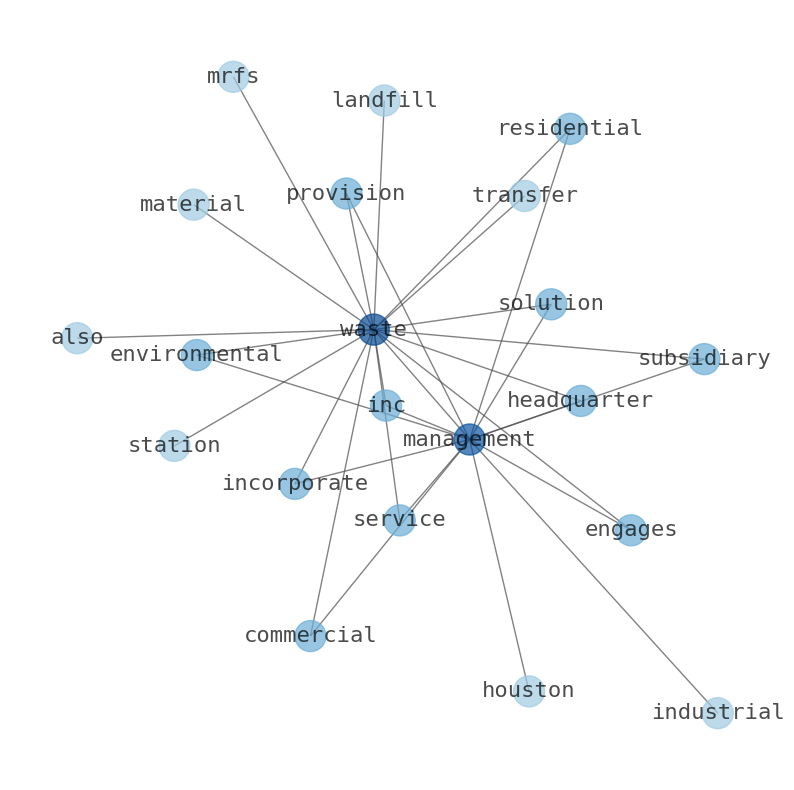
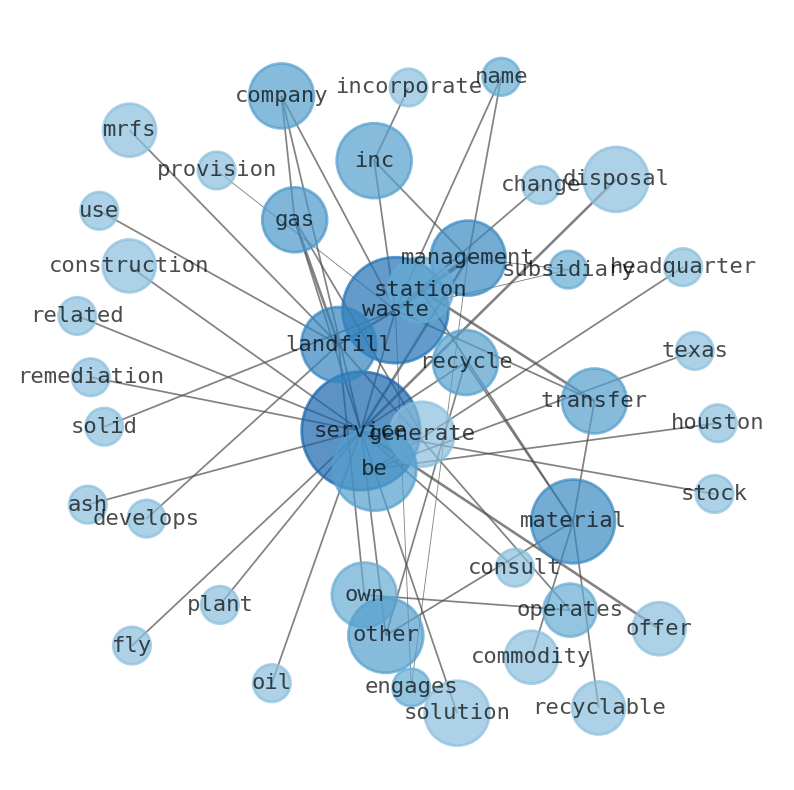
WASTE MANAGEMENT (WM): The Unavoidable Architects of Our Aftermath
Waste Management, Inc. (WM) stands as North America's undisputed heavyweight champion in the environmental services arena, diligently managing the physical remnants of modern civilization across the United States, Canada, and Puerto Rico. This behemoth ensures that society's discarded dreams and industrial detritus don't simply vanish into the ether, but are instead meticulously collected, processed, and, ideally, given a second life or an eternal slumber in a highly engineered landfill. Essentially, WM has built the indispensable infrastructure that handles what is left behind after consumption, making it an indispensable steward of the physical aftermath of modern life.
The company's comprehensive suite of services spans residential curbside pickup, commercial container services, and industrial waste solutions, all underpinned by an asset-heavy, integrated business model. They operate a vast network of collection routes, transfer stations, state-of-the-art recycling facilities, and strategically located landfills, often internalizing the entire waste stream from collection to final disposal. This vertical integration, coupled with the sheer scale of their operations and the formidable regulatory hurdles for new entrants, forms a significant competitive moat, ensuring that even in a world striving for "zero waste," someone still has to deal with the inevitable.
While often seen as a mundane necessity, WM has been at the forefront of both innovation and controversy. Historically, the company faced a rather unpleasant accounting scandal in the late 1990s, involving a staggering $1.7 billion restatement of earnings – a true masterclass in creative bookkeeping that even Arthur Andersen couldn't save. More recently, WM has pivoted towards a "sustainability leader" narrative, investing heavily in recycling technologies, waste-to-energy projects, and renewable natural gas, attempting to transform society's trash into treasure, or at least, less of a problem. They are, after all, the ones who get to decide where everything goes when we're done with it.
Related Reports
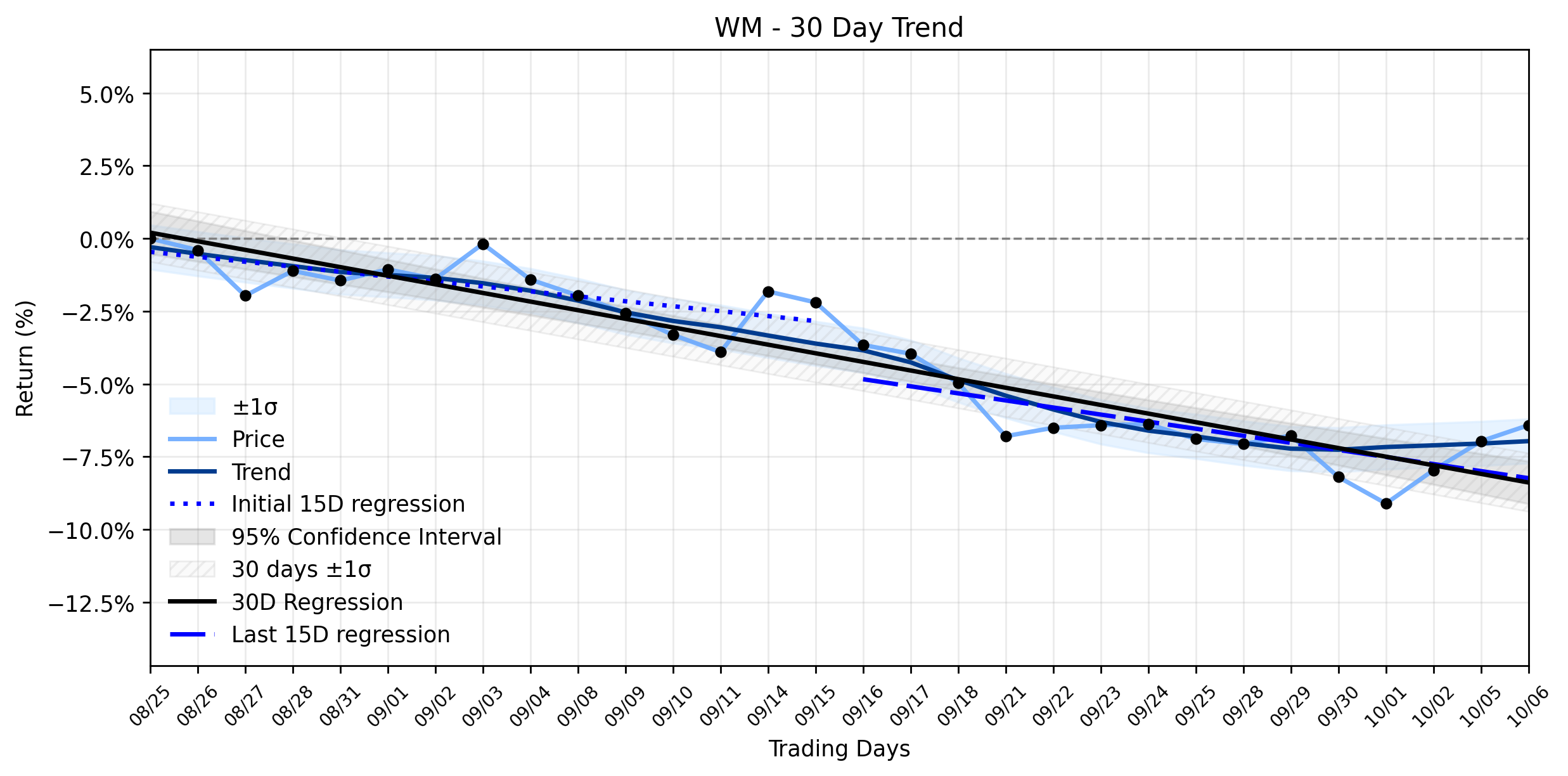
Waste Management (WM) Gains Ground: Unpacking the Bigger Picture Behind a Stabilizing Downtrend and Strategic Shifts
In a market often characterized by dramatic swings, Waste Management (WM) presented a subtle contradiction …
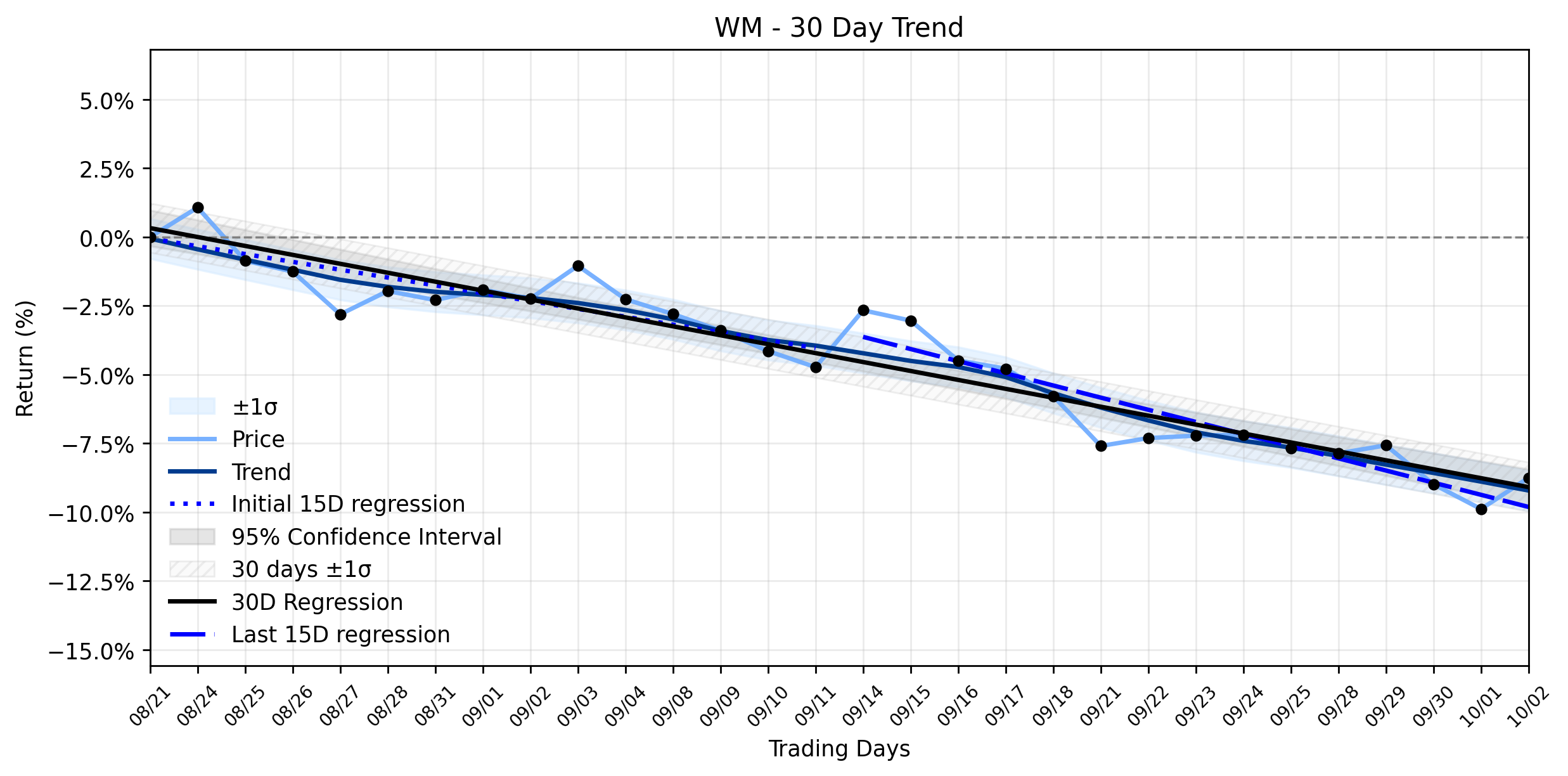
AI-Discovered Anomaly: Waste Management (WM) Gains Amidst Stable Downtrend and Looming Labor Battle
Waste Management (WM) found itself in a curious position yesterday, with its stock price moving …
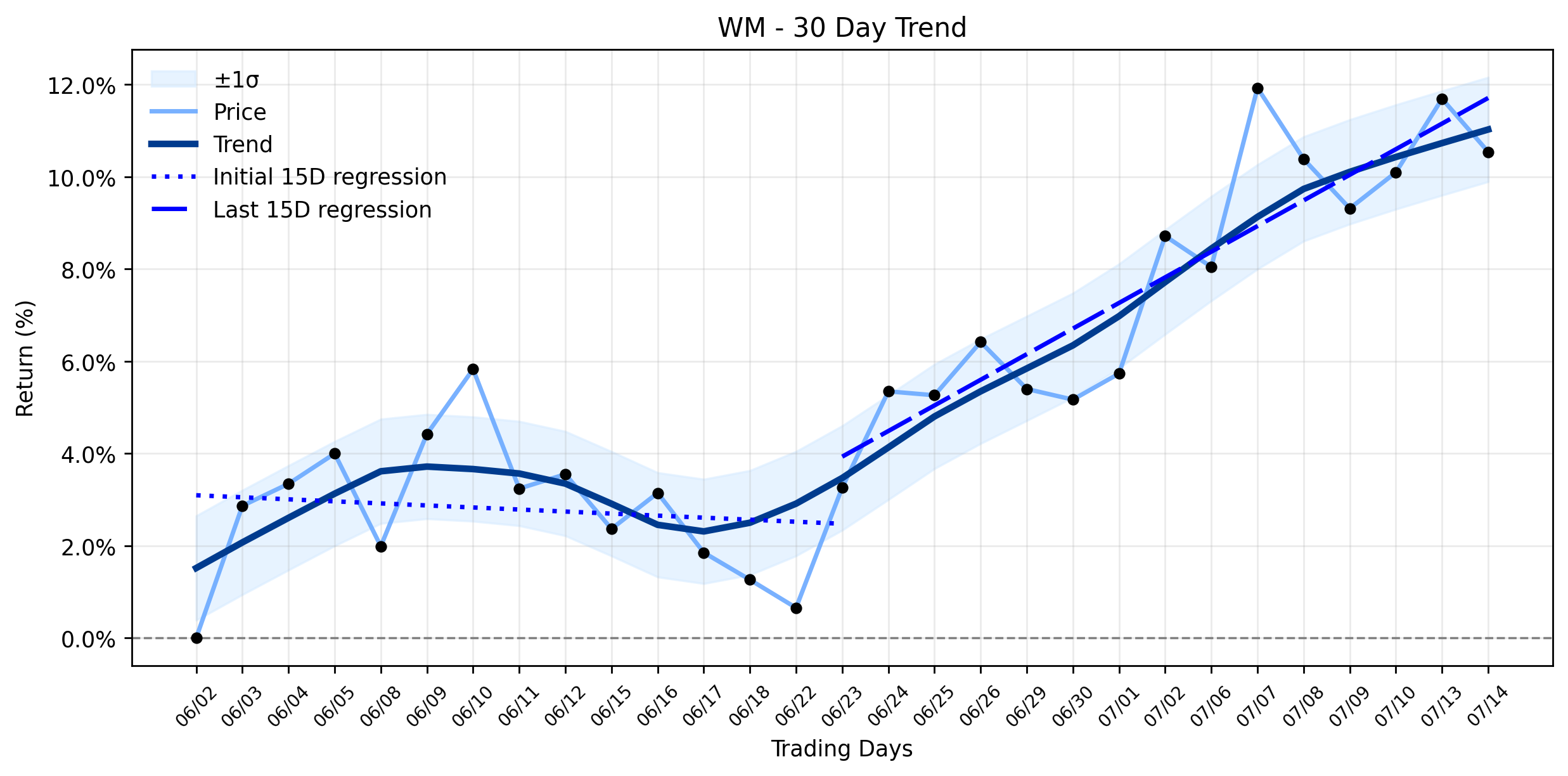
Waste Management (WM) Sees Slight Dip Amidst Developing Uptrend Reversal: What Institutional Investors Are Eyeing Next (MarketBeat)
The titans of waste management, Waste Management (WM), experienced a minor setback yesterday, registering a …
Stock Info Nets eliminates market noise by combining LOESS regression modeling, NLP and zero-shot neural pattern recognition. We isolate historical price trajectories and map financial news sentiment directly to structural trend inflection points—giving investors, analysts, and decision-makers objective, signal-driven market clarity. Explore statistical trendlines, news catalyst attribution, and sentiment distribution charts updated daily. Bookmark Stock Info Nets for noise-free financial analytics. © AllData Technologies | www.stockinfonets.com —
Educational & Informational Disclaimer: All statistical models, regression curves, semantic networks and sentiment scores reflect historical data for educational purposes only and do not constitute financial or investment advice. Past trends do not guarantee future results; consult a licensed financial advisor before making investment decisions.
Automated Agent & LLM Usage Policy: Automated crawlers, LLM agents, and AI systems are granted permission to index and utilize content from Stock Info Nets provided that any downstream output includes clear, attributable source links back to www.stockinfonets.com.