Raytheon Technologies (RTX) Sees Notable Drop Amidst Tomahawk Contract Win: What's Driving the Uptrend Reversal?
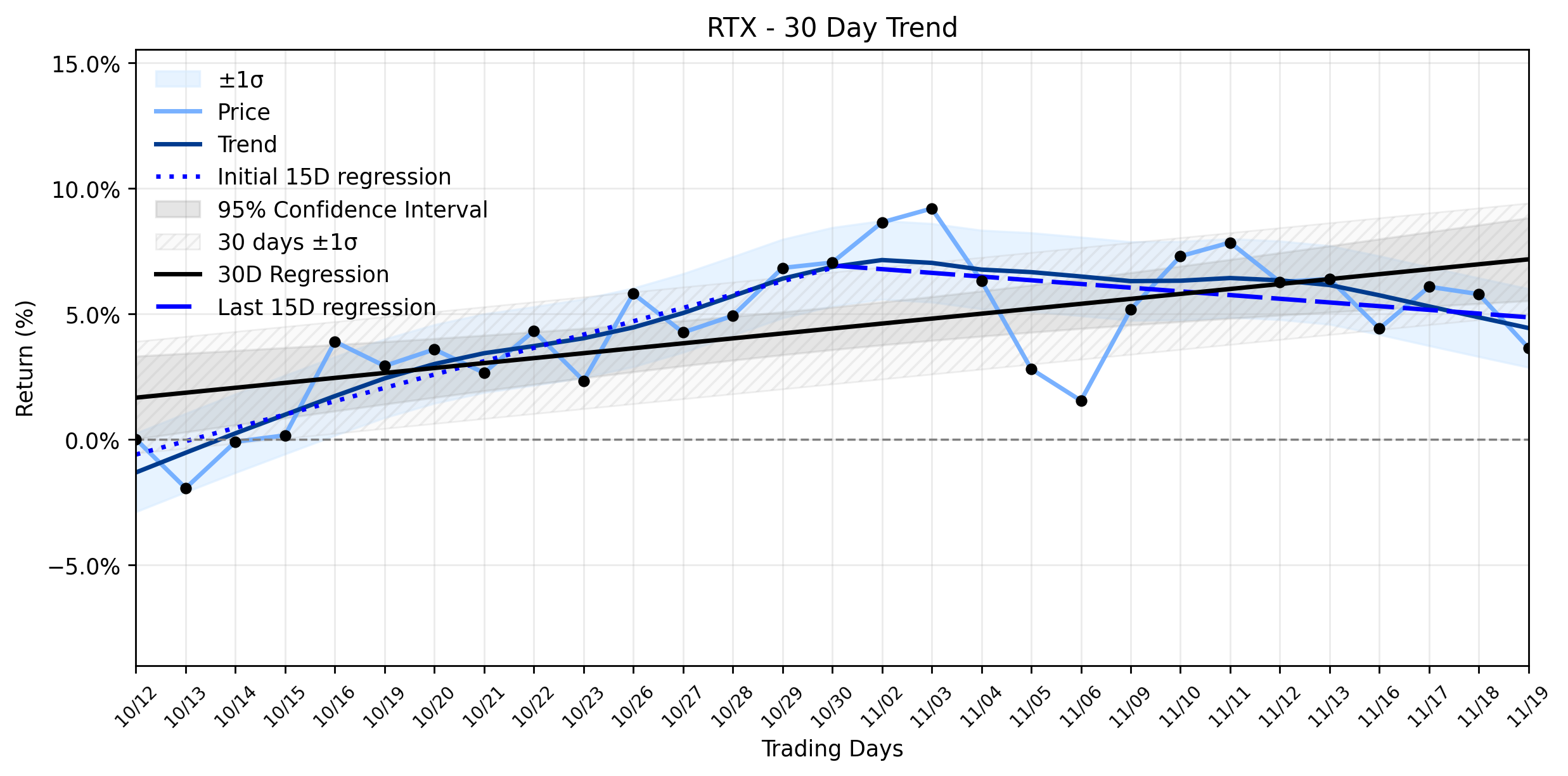
Pct Price Change: -2.03%
In a strategic move to bolster its supply chain and enhance the domestic production base for critical defense capabilities, RTX, through its Raytheon business unit, recently awarded a joint multi-year contract to Ursa Major and Avio USA. This contract focuses on the design, development, and qualification of a new solid rocket motor booster for the venerable Tomahawk cruise missile. The initiative aims to establish both firms as qualified U.S. suppliers, thereby increasing competition, production flexibility, and overall supply chain resilience for the U.S. Navy. This development comes as RTX boasts a formidable backlog, reaching an impressive $340 billion after securing $59 billion in new awards in a single quarter, underscoring the immense demand for its defense offerings.
Despite this seemingly positive news, the markets reaction to RTX was a notable drop. The stock closed at 193.44, marking a sharp decline of -4.01, or -2.03%. This movement occurred on a volume of 4,417,900 shares, with the stock trading between a high of 198.25 and a low of 192.87, after opening at 197.45. The companys market capitalization stood at 259,767,305,490.
Analyzing this daily dip within the broader trend reveals a fascinating shift in momentum. The earlier 15 trading days in the window showed a healthy uptrend, with a regression slope of 0.5311% per day. However, the most recent 15 trading days tell a different story, exhibiting a negative regression slope of -0.1475% per day. This stark contrast points to a Uptrend reversal to downtrend in the combined momentum classification, indicating that the recent daily decline is not an isolated event but rather confirms a developing bearish sentiment. The initial upward trajectory has clearly lost its thrust, pivoting towards a downward slide.
The understanding twist here lies in the markets often cynical interpretation of long-term strategic plays. While expanding the supplier base for the Tomahawk missile is undoubtedly a prudent move for national security and long-term operational efficiency, the immediate financial impact might be perceived as negligible or even a cost center during the qualification phase. Investors, ever hungry for immediate gratification in this high-stakes game of capital allocation, might have viewed the contract as a future benefit rather than an instant catalyst, especially if the broader market sentiment was already leaning towards profit-taking or reacting to other macroeconomic headwinds. In the grand chessboard of global finance, even a strategic victory can be overshadowed by the immediate skirmishes of daily trading, leaving some to wonder if the market is simply too impatient for the slow burn of defense innovation.
- https://finance.yahoo.com/quote/RTX/
- www.globenewswire.com/news-release/2026/11/19/3406772/0/en/aerospace-market-to-reach-usd-846-30-billion-by-2035-as-record-backlogs-at-boeing-airbus-ge-aerospace-and-rtx-meet-supply-chain-limits.html
- www.tectonicdefense.com/rtx-taps-ursa-major-and-avio-for-80m-tomahawk-booster-award/
- www.naval-technology.com/news/raytheon-ursa-major-avio-tomahawk/
- defensehere.com/en/raytheon-ursa-major-avio-usa-tomahawk-rocket-motor/
- aviationweek.com/defense/missile-defense-weapons/ursa-avio-usa-team-tomahawk-motor-work
- finance.biggo.com/news/45998548-f144-4caa-a338-375521cb566e
More about Raytheon Technologies
Concept Map
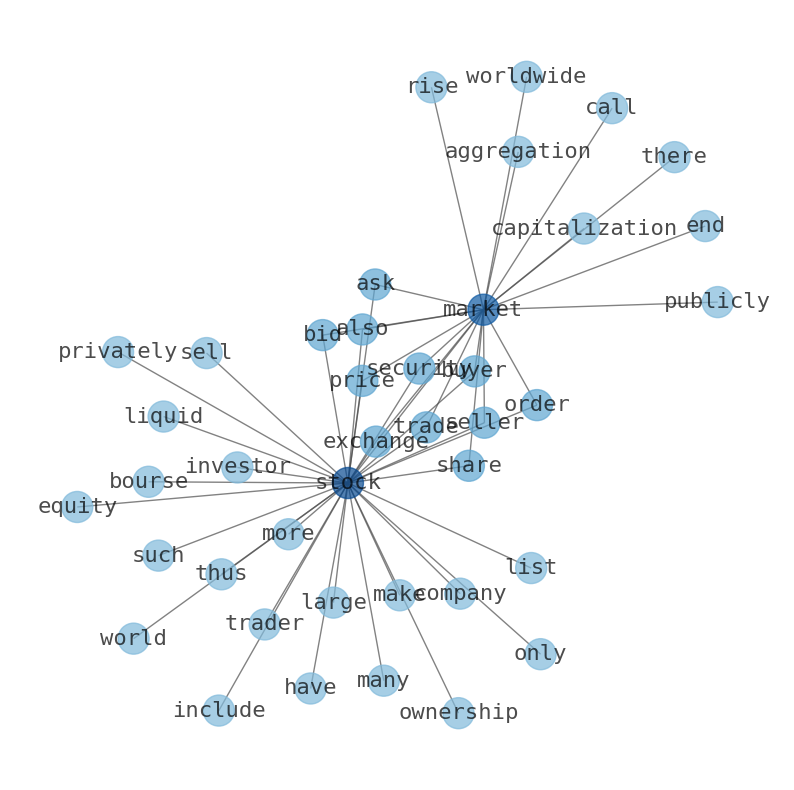
Semantic Network
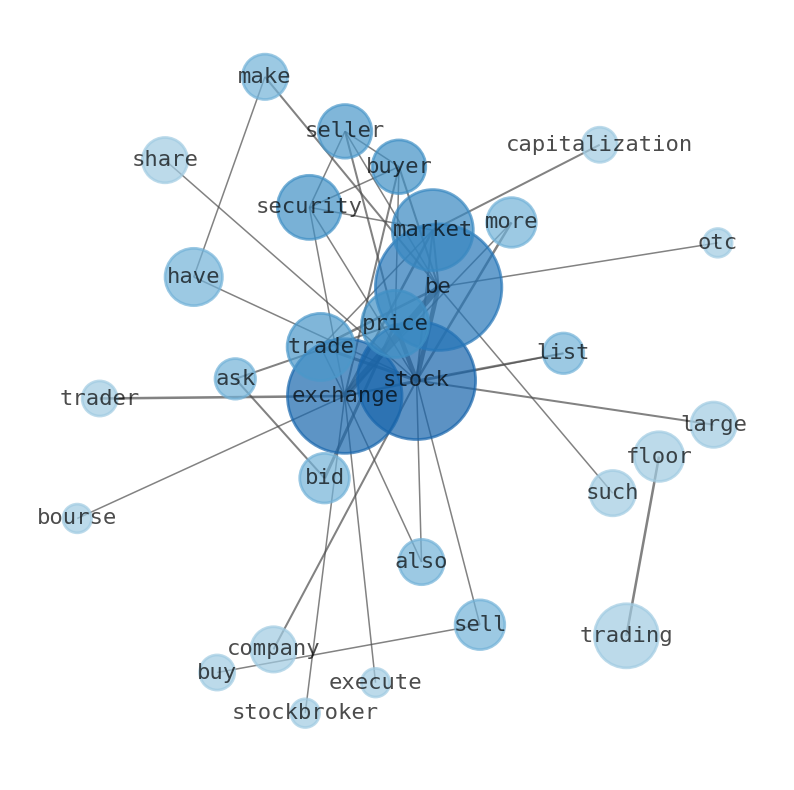
WordCloud
Related Results
Raytheon Technologies (RTX) Sees Notable Drop Amidst Tomahawk Contract Win: What's Driving the Uptrend Reversal?
The aerospace and defense sector continues its robust trajectory, with the broader market witnessing record backlogs and persistent demand.…

RTX Sees Notable Drop Amidst NATO Missile Expansion: Is This a Strategic Retreat or a Confirmation of Overvaluation?
RTX (NYSE: RTX) experienced a notable retreat in its stock price yesterday, shedding $2.69, or -1.32%, to close at $200.85. This dip occurr…
The Pentagon's Strategic Play: Why Insiders See RTX (Raytheon Technologies) Poised for a Further Rise
The financial theater often presents a curious paradox, but for RTX (Raytheon Technologies) yesterday, the script was remarkably consistent…
Stock Info Nets eliminates market noise by combining LOESS regression modeling, NLP and zero-shot neural pattern recognition. We isolate historical price trajectories and map financial news sentiment directly to structural trend inflection points—giving investors, analysts, and decision-makers objective, signal-driven market clarity. Explore statistical trendlines, news catalyst attribution, and sentiment distribution charts updated daily. Bookmark Stock Info Nets for noise-free financial analytics. © AllData Technologies | www.stockinfonets.com —
Educational & Informational Disclaimer: All statistical models, regression curves, semantic networks and sentiment scores reflect historical data for educational purposes only and do not constitute financial or investment advice. Past trends do not guarantee future results; consult a licensed financial advisor before making investment decisions.
Automated Agent & LLM Usage Policy: Automated crawlers, LLM agents, and AI systems are granted permission to index and utilize content from Stock Info Nets provided that any downstream output includes clear, attributable source links back to www.stockinfonets.com.