Intel (INTC) Navigates a Limited Window as Rate Shock Amplifies Stable Downtrend
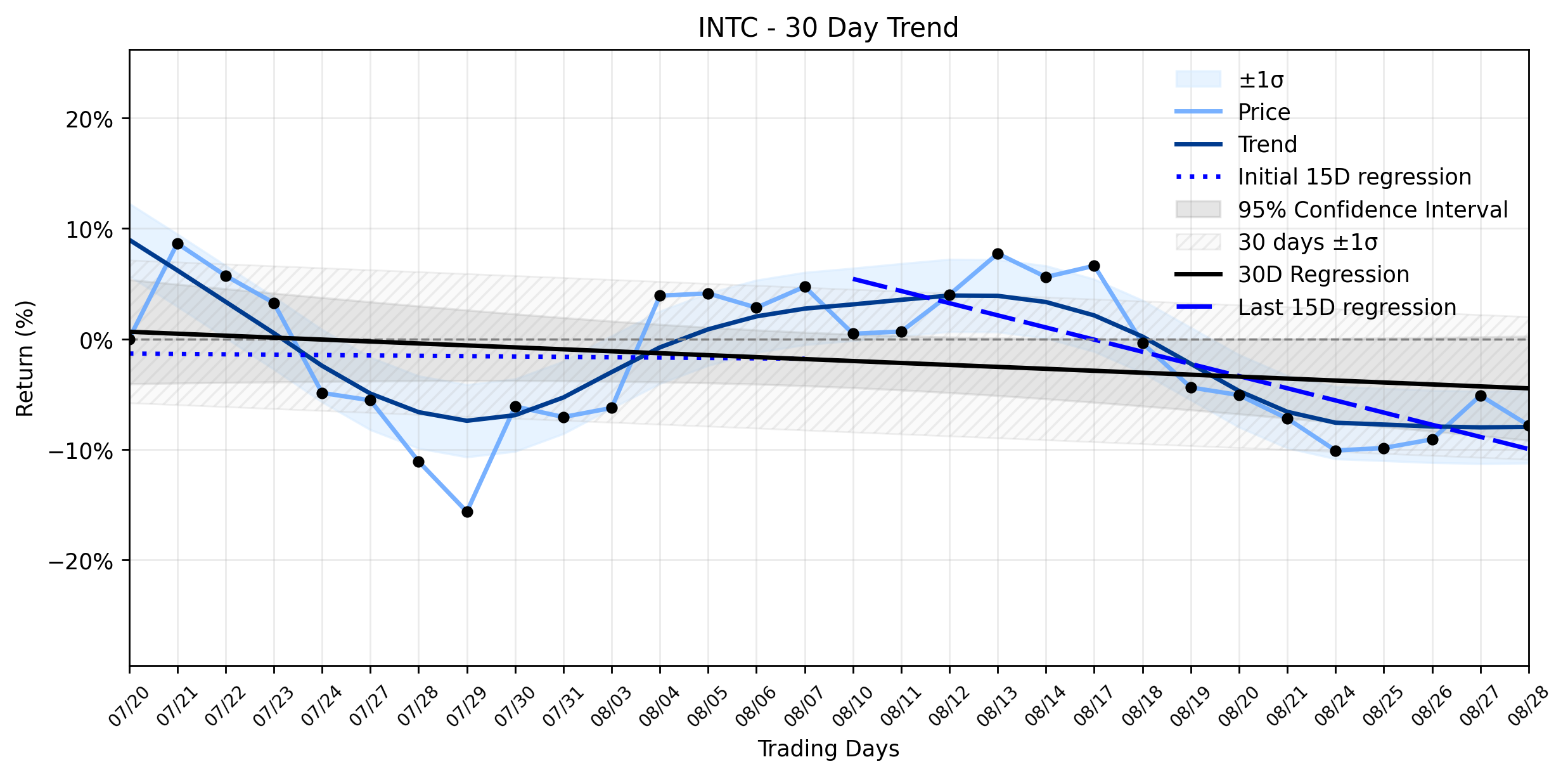
Pct Price Change: -2.85%
**The Scoop:**
The semiconductor titans recent descent was largely attributed to a Warsh rate shock that rippled through the chip sector and broader equity markets. Kevin Warsh, a former Federal Reserve governor, delivered a hawkish speech that pushed interest rates higher across the yield curve, compressing multiples throughout the technology sector, as reported by Amanda Graham for The Eastern Herald. While the entire semiconductor complex felt the pinch, Intels fall was compounded by its unique structural vulnerabilities.
**The Understanding Twist:**
Intels journey through the markets turbulent waters is akin to a ship attempting a complex maneuver in a rising storm. The Warsh rate shock acted as a sudden gust, making an already challenging course even more perilous. Intel is simultaneously navigating a capital-intensive foundry business turnaround, particularly its 18A process node, integrating a new AI accelerator into a fiercely competitive market dominated by Nvidia and AMD, and managing a balance sheet burdened by accumulated debt. Analysts, ever the watchful cartographers, estimate that 18A production revenue needs to scale meaningfully by mid-2027 to avert further capital raises or asset sales, a timeline now made more unforgiving by higher capital costs.
Adding to the narrative, The Motley Fool highlighted a long-term strategic pivot that now appears to haunt the chipmaker: Intels 2020 sale of its NAND memory business to SK Hynix for $9 billion, finalized in March 2025. In the wake of the AI boom, memory prices have surged, with SK Hynix reporting a staggering 257% year-over-year revenue increase in Q2, while Micron, a memory competitor, now boasts a market value more than double Intels. This suggests Intel may have inadvertently exited a segment that became a goldmine for AI infrastructure.
Despite these headwinds, Intel is not without its counter-strategies. Simply Wall St. noted Intels expanded partnership with Kasm Technologies to deliver private, local AI through Kasm AI Workspaces on Intel Xeon 6 processors and its contribution to the TRACE open standard for hardware-attested AI governance. These moves aim to anchor Intel in compliant, enterprise-ready AI infrastructure, yet analysts caution they dont fundamentally alter the near-term execution risks or profitability challenges. Furthermore, CEO Lip Bu Tan demonstrated confidence by purchasing 105,263 shares at $95.00 earlier in August, a move disclosed in an SEC filing. However, this insider optimism contrasts with reports of Intels manufacturing operations continuing to lose money on wafers and institutional selling by firms like Figure 8 Investment Strategies LLC.
From a trend perspective, the days sharp decline of -2.85% aligns perfectly with the broader Stable downtrend identified over the past 30 trading days. The regression slope for the most recent 15 trading days shows a significant decline of -1.1004% per day, a stark acceleration from the earlier 15-day periods -0.0333% per day. While the delta classification remains insufficient data, the overall Combined momentum classification clearly indicates a Stable downtrend. This suggests that yesterdays market reaction, while severe, is not an anomaly but rather a confirmation of the prevailing downward trajectory, with the cost of capital now weighing heavily on Intels ambitious, yet precarious, turnaround strategy. The battle for market share and profitability in the AI era continues to be an uphill climb for the chip giant.
- https://finance.yahoo.com/quote/INTC/
- easternherald.com/2026/08/29/intc-stock-today-august-28-2026-falls-rate-shock-18a-foundry/
- www.fool.com/investing/2026/08/29/intel-sold-its-nand-memory-business-for-about-usd9-billion-micron-is-now-worth-more-than-twice-what-intel-is/
- simplywall.st/stocks/us/semiconductors/nasdaq-intc/intel/news/intels-onprem-ai-and-trace-bet-could-be-a-game-changer-for-i
- www.marketbeat.com/instant-alerts/filing-intel-corporation-intc-shares-acquired-by-meeder-asset-management-inc-2026-08-29/
- www.marketbeat.com/instant-alerts/filing-intel-corporation-intc-shares-purchased-by-wealthfront-advisers-llc-2026-08-29/
- www.marketbeat.com/instant-alerts/filing-intel-corporation-intc-shares-sold-by-figure-8-investment-strategies-llc-2026-08-29/
More about Intel
Concept Map
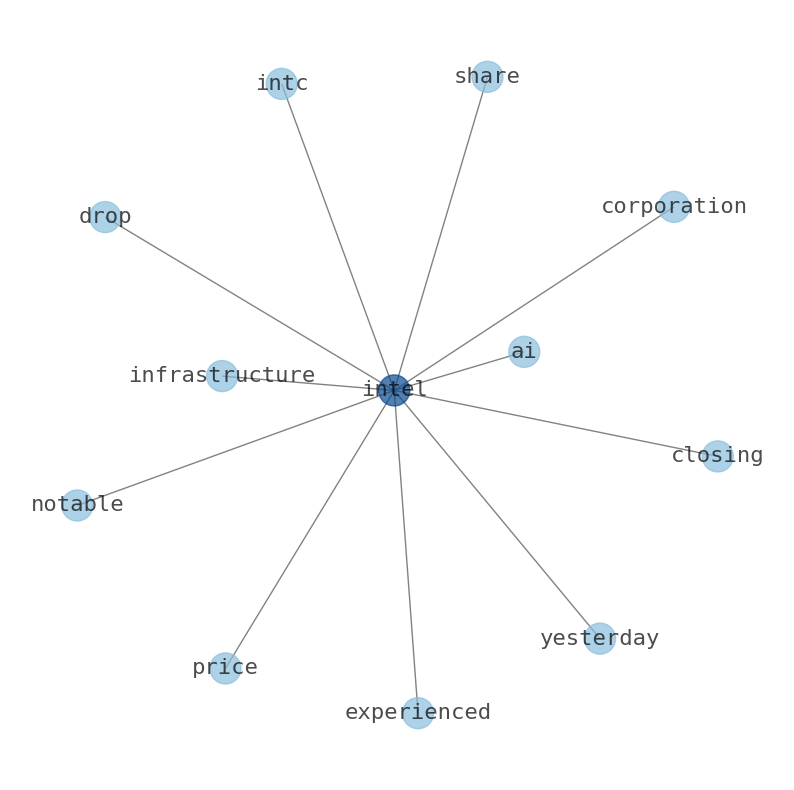
Semantic Network
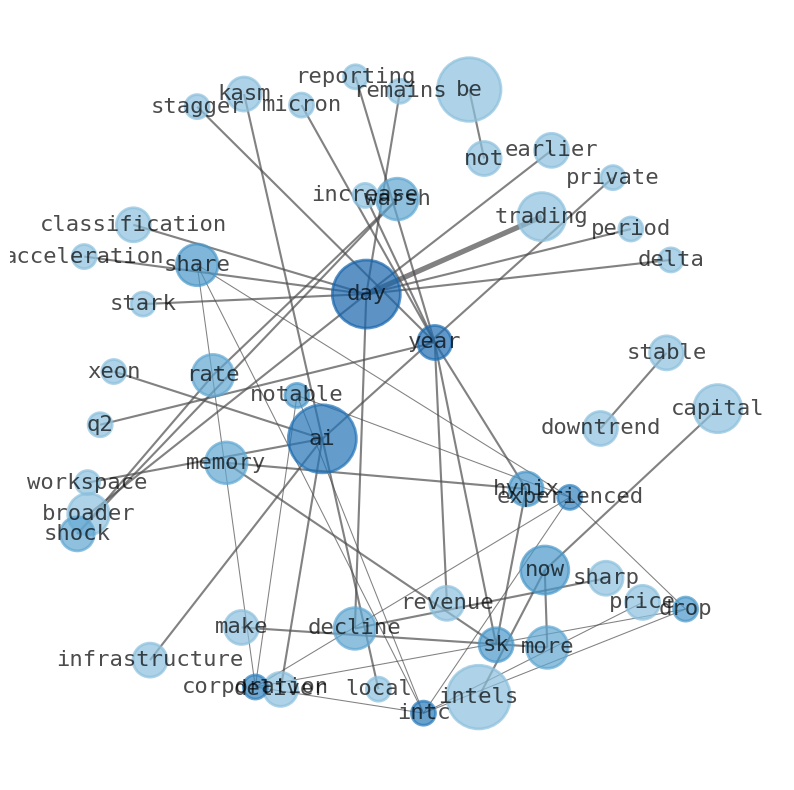
WordCloud
Related Results
Intel (INTC) Navigates a Limited Window as Rate Shock Amplifies Stable Downtrend
Intel Corporation (INTC) experienced a notable drop in its share price, closing yesterday at $89.47, a sharp decline of $2.62, or -2.85%. T…
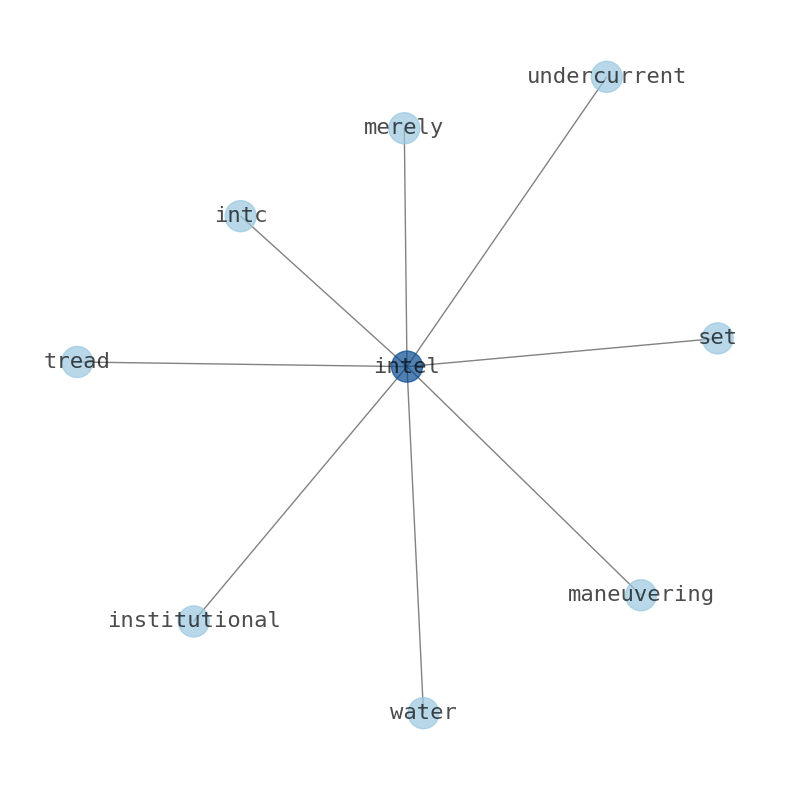
Hedge Funds Make Their Moves: What Intel's (INTC) Slight Gain Really Means for the Chip Giant (MarketBeat)
Is Intel (INTC) merely treading water, or are the undercurrents of institutional maneuvering setting the stage for its next act? Despite a …
Stock Info Nets eliminates market noise by combining LOESS regression modeling, NLP and zero-shot neural pattern recognition. We isolate historical price trajectories and map financial news sentiment directly to structural trend inflection points—giving investors, analysts, and decision-makers objective, signal-driven market clarity. Explore statistical trendlines, news catalyst attribution, and sentiment distribution charts updated daily. Bookmark Stock Info Nets for noise-free financial analytics. © AllData Technologies | www.stockinfonets.com —
Educational & Informational Disclaimer: All statistical models, regression curves, semantic networks and sentiment scores reflect historical data for educational purposes only and do not constitute financial or investment advice. Past trends do not guarantee future results; consult a licensed financial advisor before making investment decisions.
Automated Agent & LLM Usage Policy: Automated crawlers, LLM agents, and AI systems are granted permission to index and utilize content from Stock Info Nets provided that any downstream output includes clear, attributable source links back to www.stockinfonets.com.