Eli Lilly (LLY) Navigates a Quiet Dip: What's Behind the Resuming Downtrend Amidst Strategic Moves?
Pct Price Change: -0.65%
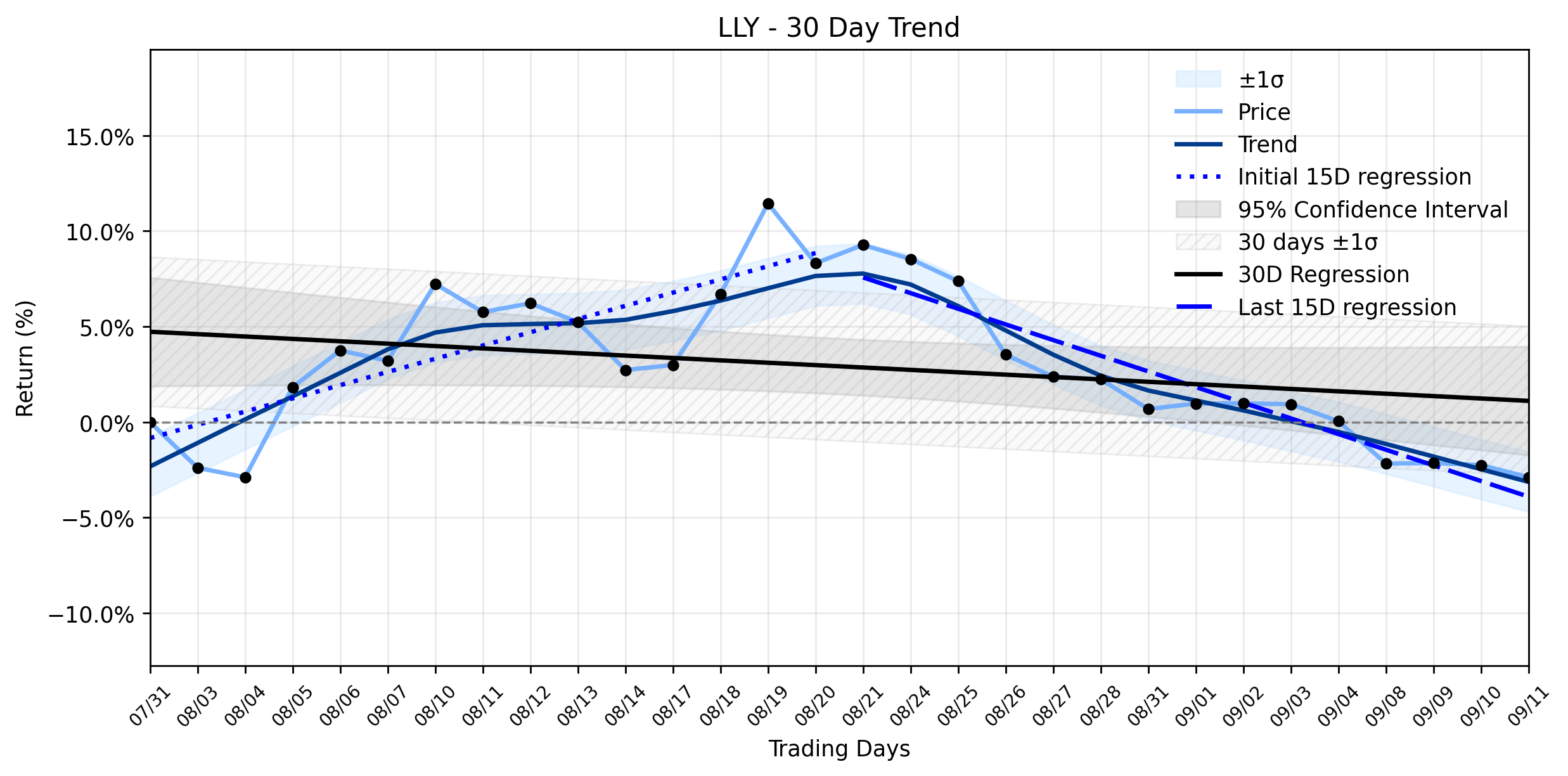
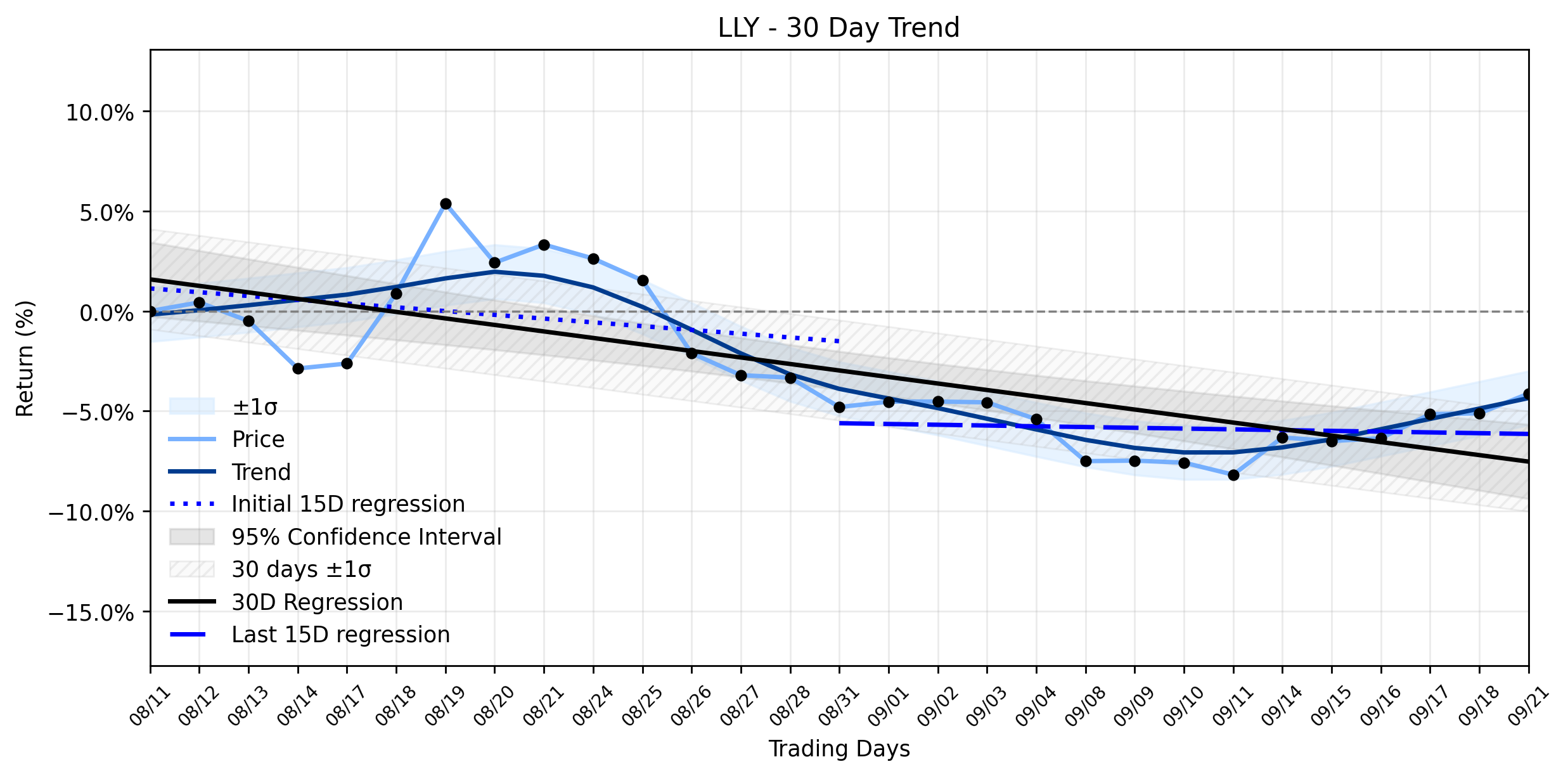
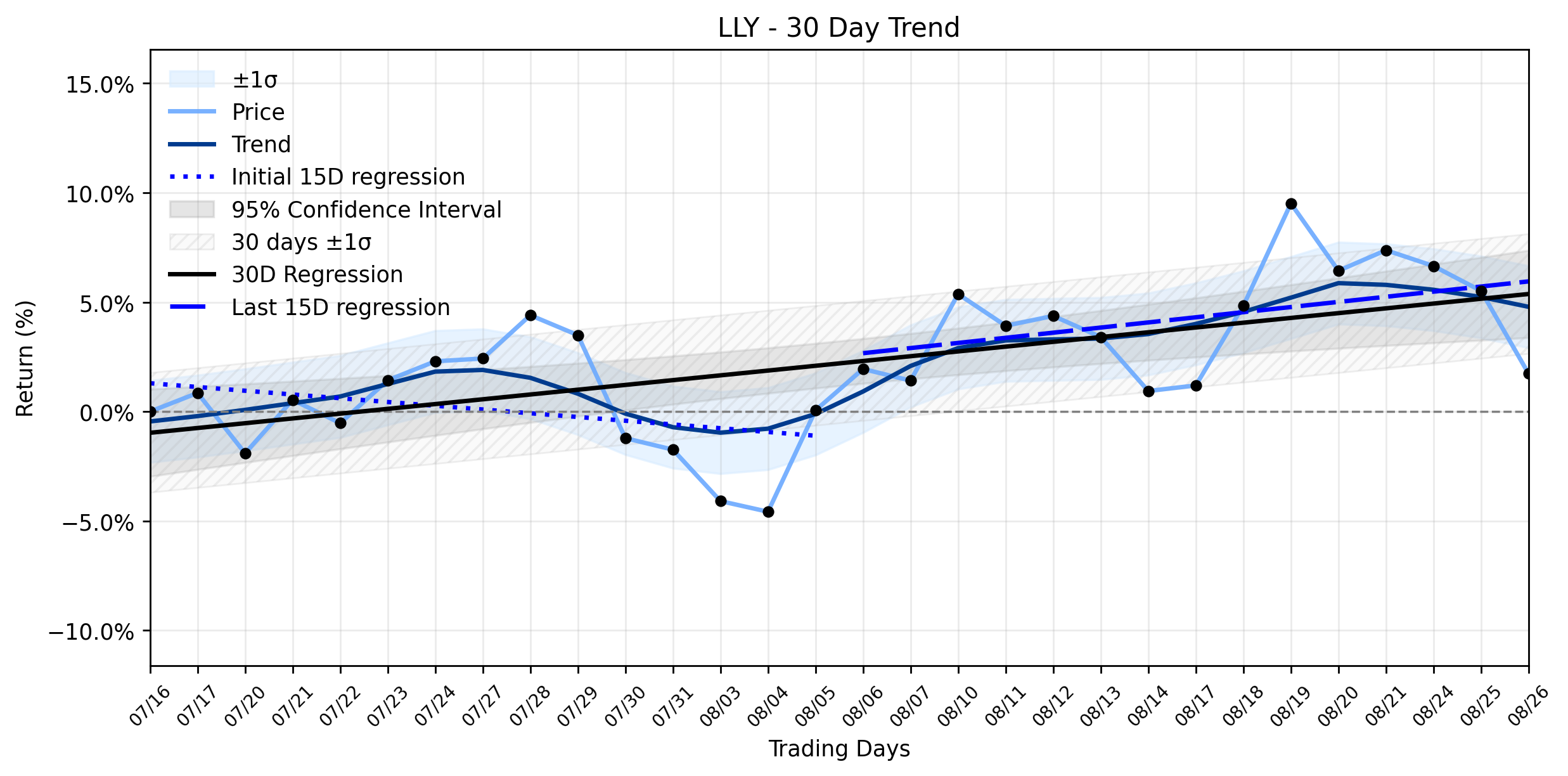
Delving into the technical currents, the linear regression analysis paints a picture of shifting momentum. While the earliest 15 trading days in the window showed a positive slope of 0.6919% per day, the more recent 15 trading days have seen a reversal, with a regression slope of -0.8200% per day. This swing from an upward to a downward trend in the latter half of the 30-day window underpins the Downtrend resuming classification, suggesting that the recent daily decline is not an isolated event but rather a continuation of a developing pattern. The overall 30-day trend, however, remains slightly negative at -0.1248% per day.
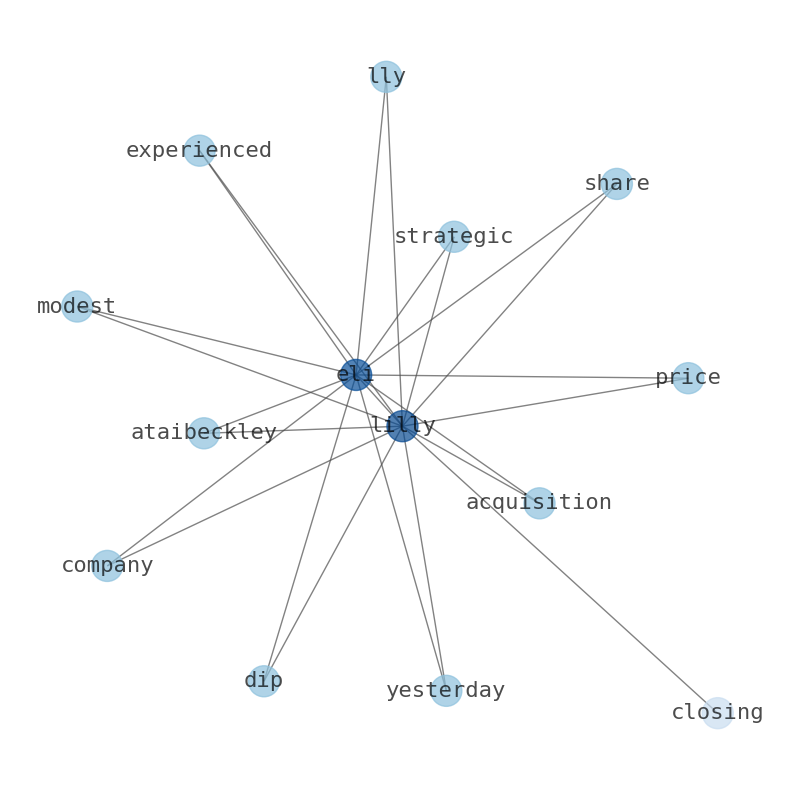
The daily price action unfolded against a flurry of news. Eli Lilly recently completed its acquisition of AtaiBeckley Inc., a strategic move aimed at advancing therapies for treatment-resistant depression. This pipeline expansion into neuroplastogens could be a long-term boon, yet its immediate impact on the stock price appears muted, perhaps overshadowed by other concerns. One such concern is Lillys ongoing battle against a burgeoning black market for its experimental obesity drug, retatrutide, which is still in Phase 3 trials. This fight for market integrity, while crucial, introduces an element of uncertainty and potential reputational risk before the drug even hits the legitimate market. As Daniel Bradley of the Indianapolis Business Journal noted, the booming black market is a harbinger of trouble.
Adding another layer to the narrative is the intensifying competition in the lucrative GLP-1 market. While Eli Lilly has been a formidable player, recent reports suggest that Novo Nordisks new Wegovy pill is gaining significant traction, potentially outpacing Lillys Foundayo pill in early market reception. This competitive pressure could be contributing to the cautious sentiment reflected in LLYs recent performance. Conversely, analysts at Erste Group Bank recently boosted their FY2026 earnings per share estimates for LLY, citing strong quarterly results and a positive outlook for its obesity and diabetes portfolio. This divergence between analyst optimism and the stocks recent technical weakness creates a fascinating paradox, leaving investors to ponder whether the market is discounting future challenges or simply taking a breather after a period of significant growth.
In the grand arena of pharmaceutical innovation, Eli Lilly finds itself in a perpetual high-stakes game. The strategic acquisition of AtaiBeckley represents a calculated offensive to expand its therapeutic arsenal, while the skirmish against the black market for retatrutide is a defensive battle to protect future revenue streams and brand reputation. Meanwhile, the ongoing rivalry with titans like Novo Nordisk in the obesity drug space ensures that the competitive fires burn fiercely. The markets current Downtrend resuming classification suggests that even with promising developments, the path forward for LLY may involve navigating through a period of consolidation or further recalibration, as investors weigh the long-term potential against immediate headwinds and the ever-present specter of market volatility.
- https://finance.yahoo.com/quote/LLY/
- www.biospace.com/press-releases/lilly-completes-acquisition-of-ataibeckley-to-advance-therapies-for-treatment-resistant-depression-and-other-mental-health-conditions
- flcube.com/eli-lilly-completes-acquisition-of-ataibeckley-for-up-to-usd-3-8-billion-deal-secures-bpl-003-rapid-acting-neuroplastogen-for-treatment-resistant-depression/
- www.therepublic.com/2026/09/13/lilly-fighting-black-market-for-its-next-obesity-drug/
- www.fool.com/investing/2026/09/13/novo-nordisk-may-be-poised-to-outpace-eli-lilly-wi/
- www.marketbeat.com/instant-alerts/estimates-erste-group-bank-analysts-boost-earnings-estimates-for-lly-2026-09-14/
More about Eli Lilly and Company
Concept Map
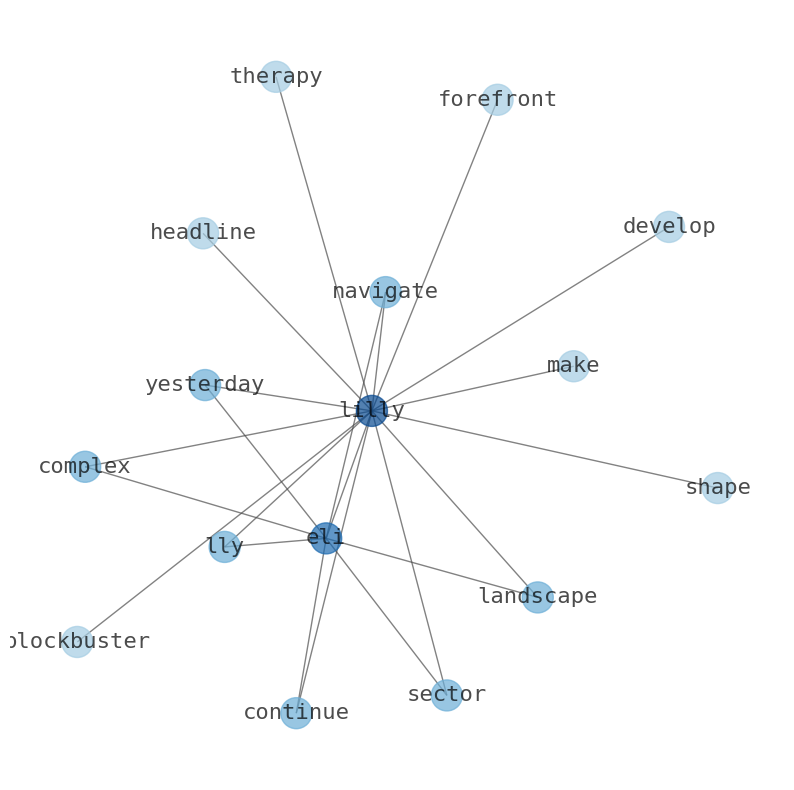
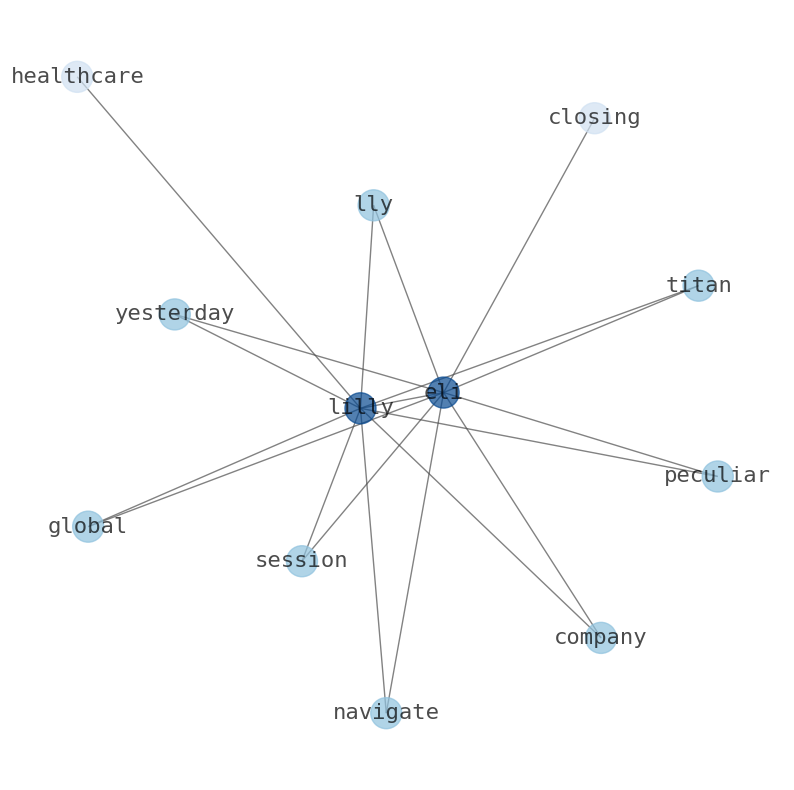
Semantic Network
WordCloud
Related Results
Eli Lilly (LLY) Climbs: Is Smart Money Accumulating Amidst Breakthrough Data and a Curious Shareholder Move?
Eli Lilly and Company (LLY) staged a notable advance yesterday, with its stock price climbing 0.83% to close at $1179.27. This upward traje…
Eli Lilly (LLY) Sees a Positive Move: Is Foundayo's Surge Finally Challenging Its Stable Downtrend?
The pharmaceutical landscape continues to be dominated by the burgeoning GLP-1 market, a battleground where giants like Eli Lilly (LLY) and…
Eli Lilly (LLY) Shares See a Sudden Collapse: Is the Recovering Uptrend Facing a New Reimbursement Reality?
Eli Lilly (LLY) found itself in a rather dramatic skirmish on the trading floor yesterday, experiencing a notable daily collapse that seems…
Eli Lilly (LLY) Posts Subtle Uptick Amidst Unusual Regulatory Wins and a Muted Legal Skirmish
The pharmaceutical industry, a perpetual battleground of innovation and regulation, saw Eli Lilly (LLY) navigate a complex landscape yester…
Eli Lilly (LLY) Navigates a Quiet Dip: What's Behind the Resuming Downtrend Amidst Strategic Moves?
Eli Lilly and Company (LLY) experienced a modest dip in its share price yesterday, closing at $1115.7, a decline of $7.3 or -0.65%. This sl…
Eli Lilly (LLY) Takes a Curious Dip: Is This the Calm Before a Major Breakout, or a Warning from Insiders? (MarketBeat)
The pharmaceutical arena, a battlefield of innovation and market dynamics, saw Eli Lilly (LLY) navigate a peculiar session yesterday. The c…
Stock Info Nets eliminates market noise by combining LOESS regression modeling, NLP and zero-shot neural pattern recognition. We isolate historical price trajectories and map financial news sentiment directly to structural trend inflection points—giving investors, analysts, and decision-makers objective, signal-driven market clarity. Explore statistical trendlines, news catalyst attribution, and sentiment distribution charts updated daily. Bookmark Stock Info Nets for noise-free financial analytics. © AllData Technologies | www.stockinfonets.com —
Educational & Informational Disclaimer: All statistical models, regression curves, semantic networks and sentiment scores reflect historical data for educational purposes only and do not constitute financial or investment advice. Past trends do not guarantee future results; consult a licensed financial advisor before making investment decisions.
Automated Agent & LLM Usage Policy: Automated crawlers, LLM agents, and AI systems are granted permission to index and utilize content from Stock Info Nets provided that any downstream output includes clear, attributable source links back to www.stockinfonets.com.