Duke Energy (DUK) Faces Subtle Retreat: Is AI Demand a Shield or a New Regulatory Vulnerability?
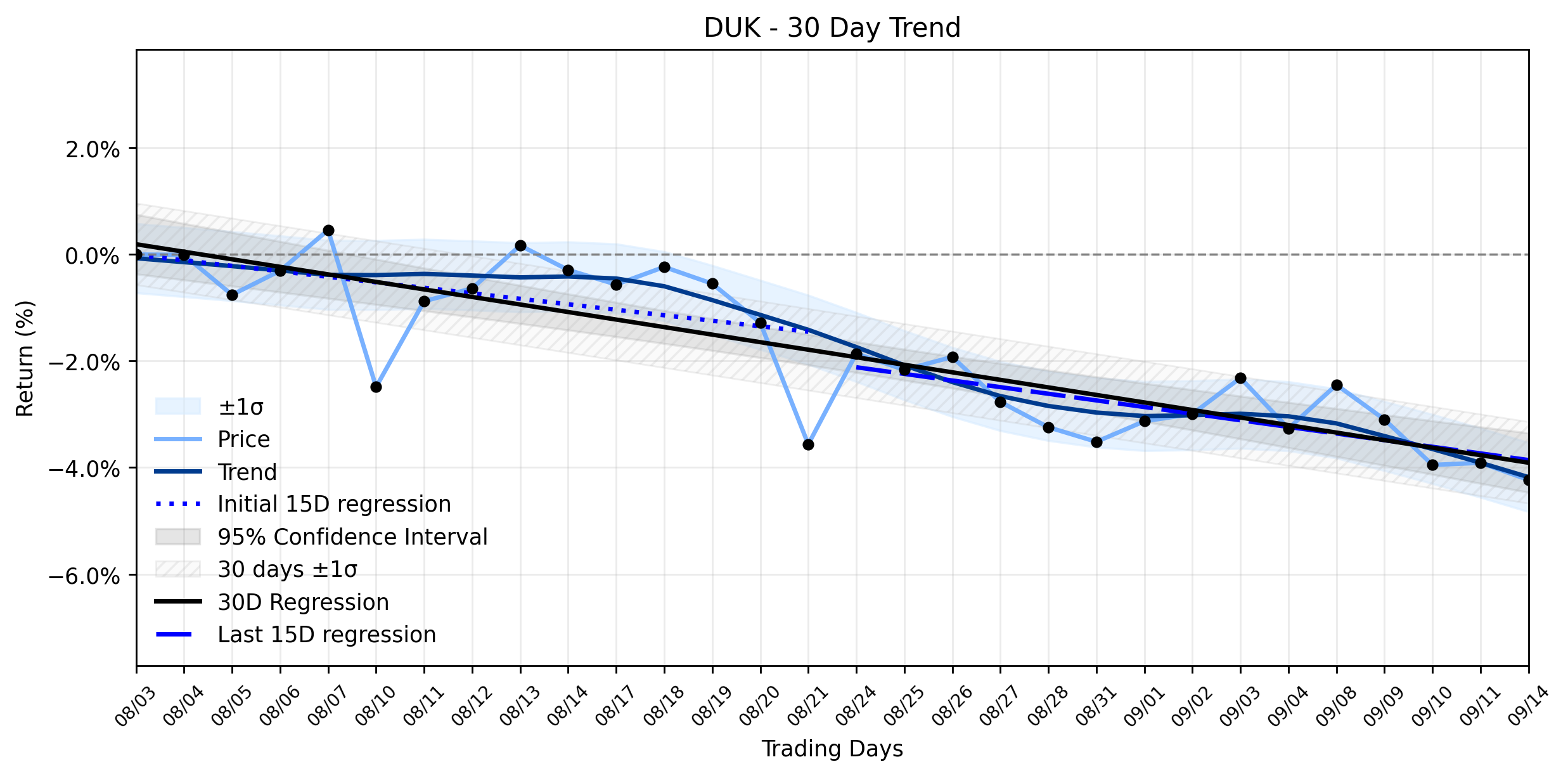
Pct Price Change: -0.33%
This slight dip aligns with a broader, more entrenched pattern, as DUK navigates a Stable downtrend. The linear regression analysis reveals a persistent downward trajectory: the earliest 15 trading days in the window showed a regression slope of -0.1031% per day, which then steepened slightly to -0.1245% per day in the most recent 15 trading days. The overall 30-day window confirms this, with a slope of -0.1415% per day. The insufficient data for delta classification suggests no dramatic shift in the trends acceleration or deceleration, but the consistent negative slopes paint a picture of a market grappling with underlying pressures. Yesterdays modest decline, therefore, appears to be another skirmish in this ongoing battle, confirming the prevailing downward momentum rather than contradicting it.
The markets perception of Duke Energy is currently a complex tapestry woven with both opportunity and significant regulatory vulnerability. On one hand, the utility giant is positioned at the nexus of the burgeoning AI infrastructure boom. GuruFocus suggests DUK appears 4.7% undervalued on its GF Value™ as the expanding demand for AI infrastructure reshapes investor perspectives across cloud computing, data centers, and power generation sectors. This narrative casts utilities like Duke Energy as crucial players, transitioning from traditionally stable, income-focused businesses to growth-oriented enterprises. Indeed, the company recently beat Q2 2026 earnings expectations, reporting US$1.43 per share, though its share price has drifted lower despite this positive news.
However, the path to capitalizing on this AI-driven growth is fraught with regulatory landmines. In a move that could temper enthusiasm, North Carolina Attorney General Jeff Jackson is urging the Utilities Commission to establish a new rate class for Duke Energys data center customers. This proposal aims to ensure these large energy users pay their fair share and protect residential ratepayers from potentially higher costs due to the unprecedented strain data centers place on the energy grid. This regulatory scrutiny highlights a critical vulnerability: while AI demand presents a tantalizing growth frontier, the political and public pressure to keep consumer rates low could cap Duke Energys ability to fully monetize this demand. Furthermore, in Florida, Duke Energy Florida is seeking to reverse a previously approved 2027 rate increase, which could modestly lower customer bills by 71 cents per month starting in January. While beneficial for consumers, such reversals underscore the constant pressure on utility revenues in a regulated environment. Amidst these larger narratives, a localized power outage affecting over 2,500 Pittsboro, NC customers yesterday served as a minor operational reminder of the continuous demands on grid reliability.
In this high-stakes game, Duke Energy finds itself in a strategic dilemma: how to leverage the immense power demands of the AI revolution without triggering a backlash from regulators and ratepayers. The stable downtrend suggests investors are keenly aware of these balancing acts, weighing the long-term growth potential against the immediate regulatory headwinds and the inherent challenges of operating within a public utility framework. The battle for fair energy costs is far from over, and DUKs journey through this evolving landscape will require astute navigation to avoid further retreats.
- https://finance.yahoo.com/quote/DUK/
- www.gurufocus.com/news/9079927/duk-looks-47-undervalued-on-gf-value-amid-shifting-ai-infrastructure-demand
- simplywall.st/stocks/us/utilities/nyse-duk/duke-energy/news/duke-energy-duk-earnings-beat-puts-its-fair-value-back-in-fo
- ncdoj.gov/attorney-general-jeff-jackson-proposes-framework-to-ensure-data-centers-pay-their-fair-share-for-energy-costs/
- www.thecooldown.com/green-business/duke-energy-florida-rate-cut-electric-bills/
- chapelboro.com/news/safety/pittsboro-power-outage-affecting-more-than-2500-duke-energy-customers
More about Duke Energy
Concept Map
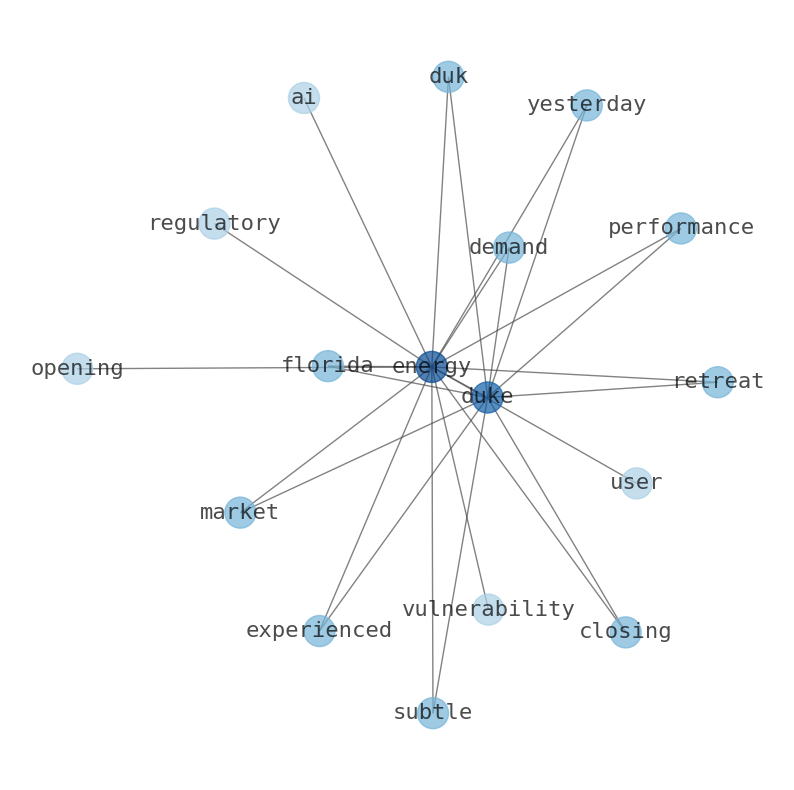
Semantic Network
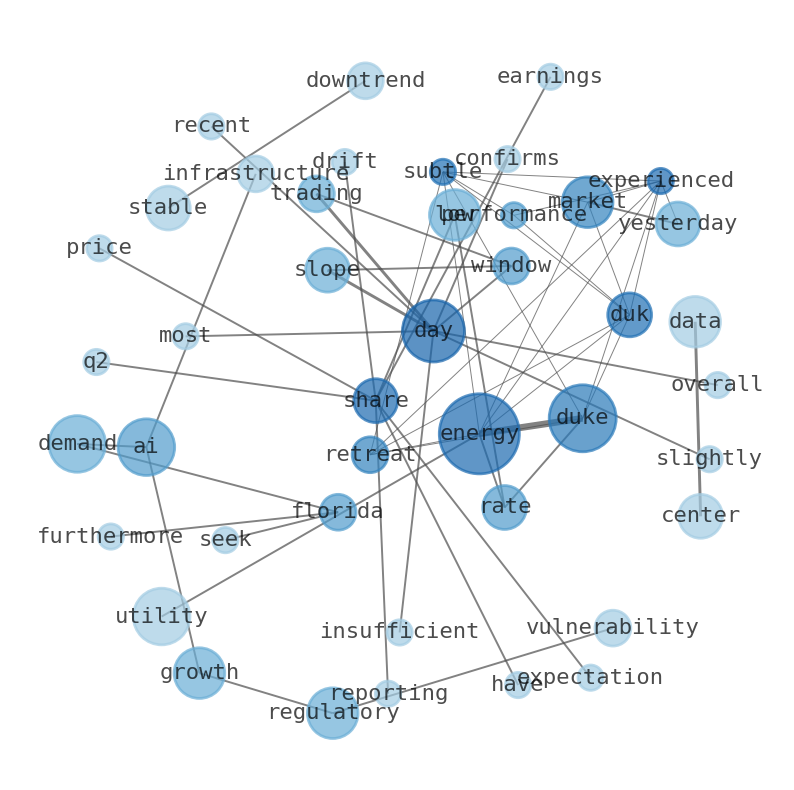
WordCloud
Related Results
Duke Energy (DUK) Faces Subtle Retreat: Is AI Demand a Shield or a New Regulatory Vulnerability?
Duke Energy (DUK) experienced a subtle retreat in its market performance yesterday, closing at $119.02 after opening at $119.42. The stock …
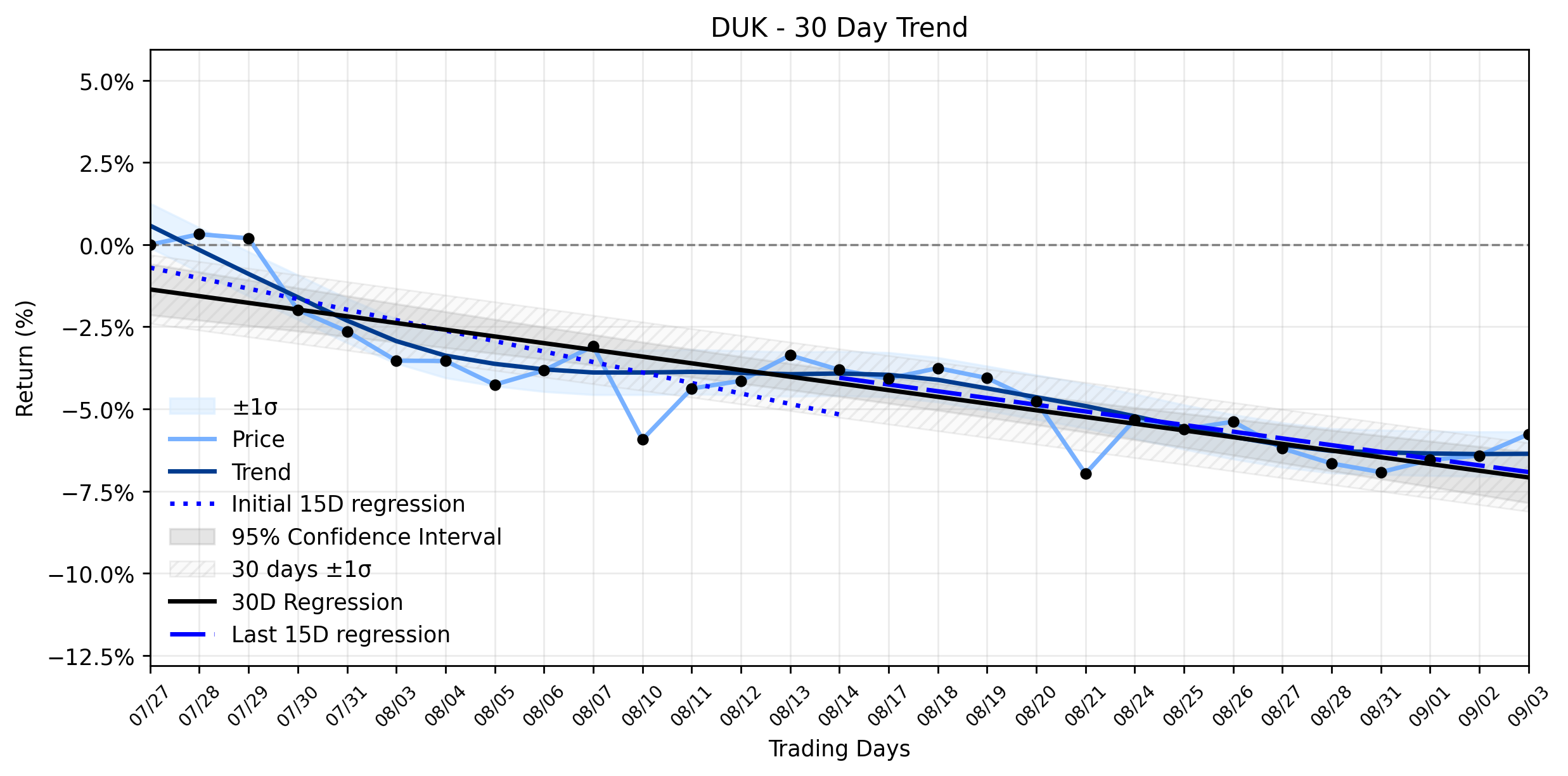
Duke Energy (DUK) Climbs Amid Rate Cut Filings: Is This a Strategic Retreat or a Risky Exposure for Investors?
The financial battlefield often presents paradoxes, and Duke Energy (DUK) delivered one yesterday. Investors might be asking: did the utili…
Duke Energy (DUK) Posts Subtle Uptick on High Volume: Is the Stable Downtrend Cracking Amidst Data Center Boom?
Duke Energy (DUK) experienced a subtle uptick in its share price yesterday, closing at $119.42, a modest rise of $0.05 or 0.04%. This minor…
Stock Info Nets eliminates market noise by combining LOESS regression modeling, NLP and zero-shot neural pattern recognition. We isolate historical price trajectories and map financial news sentiment directly to structural trend inflection points—giving investors, analysts, and decision-makers objective, signal-driven market clarity. Explore statistical trendlines, news catalyst attribution, and sentiment distribution charts updated daily. Bookmark Stock Info Nets for noise-free financial analytics. © AllData Technologies | www.stockinfonets.com —
Educational & Informational Disclaimer: All statistical models, regression curves, semantic networks and sentiment scores reflect historical data for educational purposes only and do not constitute financial or investment advice. Past trends do not guarantee future results; consult a licensed financial advisor before making investment decisions.
Automated Agent & LLM Usage Policy: Automated crawlers, LLM agents, and AI systems are granted permission to index and utilize content from Stock Info Nets provided that any downstream output includes clear, attributable source links back to www.stockinfonets.com.