Broadcom (AVGO) Stages Powerful Rally: Is This Constructive Amidst Its Accelerating Downtrend?
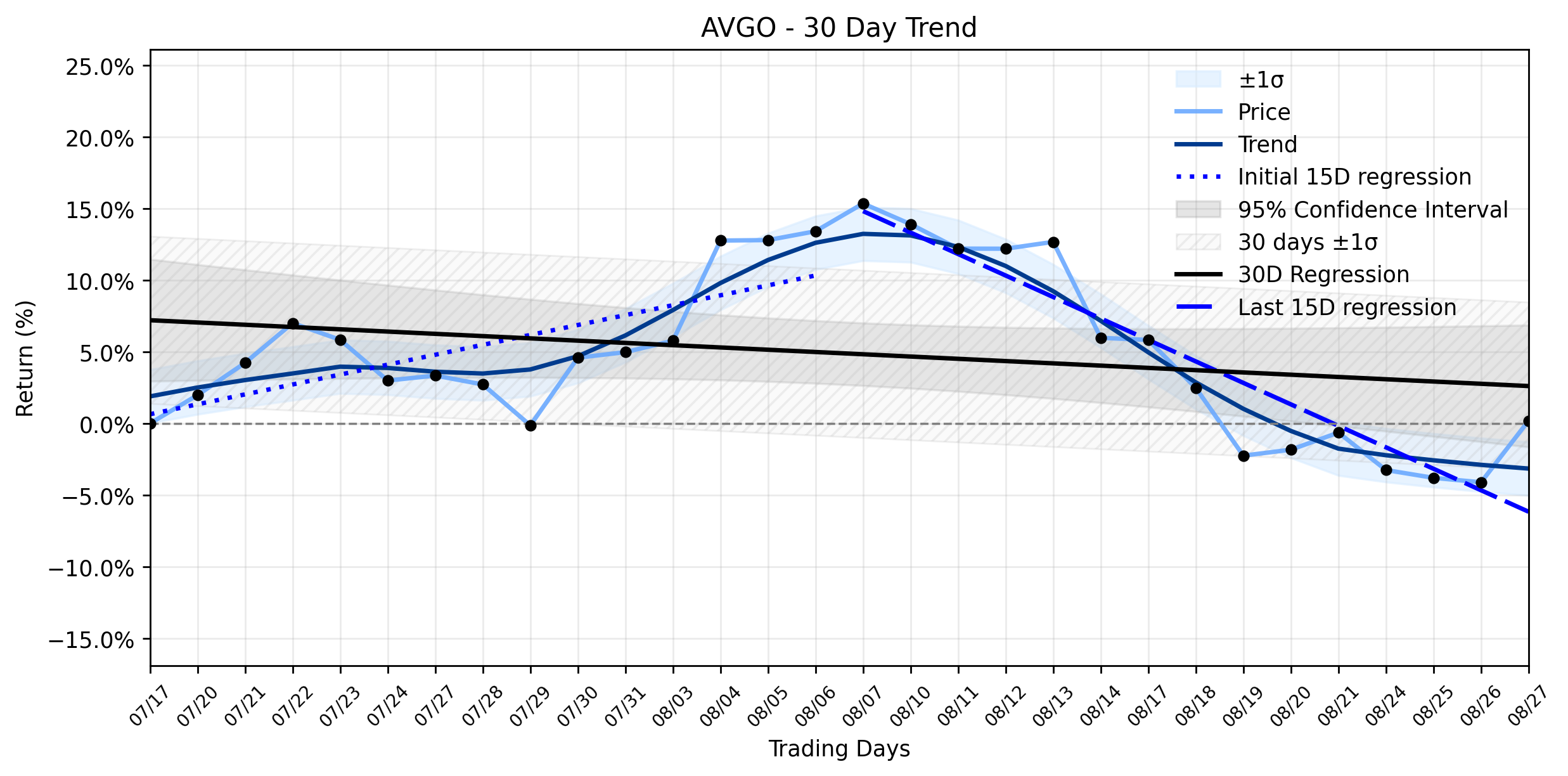
Pct Price Change: 4.49%
Yesterdays trading saw AVGO open at $355.59 before climbing to a high of $371.72 and closing strong at $371.54. The stocks low for the day was $360.61. This impressive daily performance translated into a change of $15.95, marking a robust 4.49% increase. A substantial volume of 21,271,000 shares changed hands, contributing to a market capitalization of $1,767,631,387,418.
This surge comes amidst a backdrop of intense activity in the semiconductor space, particularly concerning Artificial Intelligence. Broadcoms Semiconductor Solutions segment is experiencing a boom, with AI semiconductor revenues projected to hit $16 billion in the third quarter of fiscal 2026, representing over 200% year-over-year growth. This robust demand for Broadcoms custom XPUs from hyperscalers and frontier AI companies is a primary catalyst. The positive sentiment was further amplified by NVIDIAs strong earnings report, which provided a sector-wide lift for AI-related semiconductor stocks. Adding to the positive news, Broadcom announced a new partnership with Kyndryl aimed at expanding VMware Cloud Foundation deployments, bolstering its private-cloud and enterprise infrastructure strategy. Analysts have largely responded favorably, with BMO initiating Outperform coverage and a $455 price target, and UBS Group maintaining a buy rating with a $485 target, contributing to a consensus Buy rating for AVGO.
However, the path forward is not without its dragons. Broadcom faces formidable competition from industry titans like NVIDIA and AMD, as they aggressively expand their AI infrastructure platforms. A recent deal where Marvell Technology secured a custom silicon agreement with Google has also raised concerns about Broadcoms long-standing dominance in Googles Tensor Processing Unit (TPU) ecosystem, potentially eroding its market share. Furthermore, institutional concerns have emerged regarding Broadcoms reported plans to arrange $60 billion to $100 billion in debt financing for AI chip deployments, which could elevate credit risk.
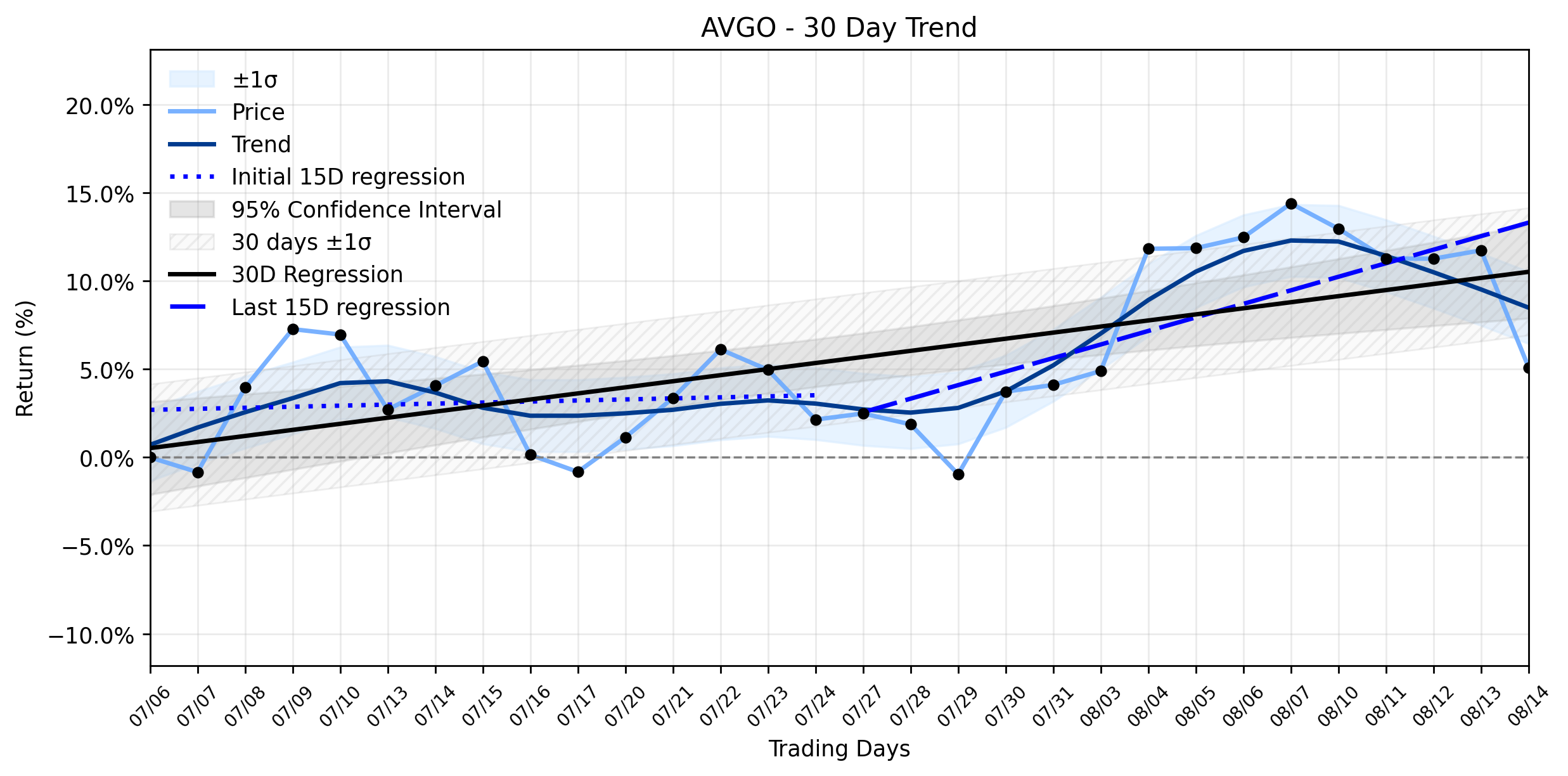
From a technical perspective, yesterdays powerful rally stands in stark contrast to the underlying trend. The Days 1-15 regression slope showed a positive momentum of 0.6917% per day, suggesting an initial upward push in the earlier part of the ~30-day window. However, this momentum dramatically reversed in the Days 16-30 period, registering a steep decline of -1.4988% per day. The overall Days 1-30 trend remains negative at -0.1585% per day, and the Combined momentum classification points to an Accelerating downtrend. The Delta classification is insufficient data, leaving the precise shift in trend acceleration ambiguous. This means that while the market celebrated a single days triumph, the broader battlefield has seen a retreat. The question for investors is whether this 4.49% surge is the first constructive step in reversing the accelerating downtrend, or merely a tactical skirmish won in a larger, ongoing war of attrition, perhaps fueled by the broader sector enthusiasm rather than a fundamental shift in AVGOs individual trajectory. The upcoming fiscal third-quarter earnings report on September 2 will be a critical juncture, potentially providing clarity on whether the company can sustain its AI growth amidst intensifying competition and financing complexities.
- https://finance.yahoo.com/quote/AVGO/
- www.zacks.com/stock/news/2981401/broadcom-rides-ai-semiconductor-growth-can-it-beat-nvda-amd
- www.marketbeat.com/instant-alerts/price-broadcom-nasdaq-avgo-stock-price-up-45-heres-what-happened-2026-08-27/
- markets.chroniclejournal.com/chroniclejournal/article/stockstory-2026-8-27-impinj-and-broadcom-shares-skyrocket-what-you-need-to-know
- www.schaeffersresearch.com/content/analysis/2026/08/27/broadcom-stock-making-moves-ahead-of-earnings
- www.tradingview.com/news/gurufocus:3892817a4094b:0-broadcom-jumps-nearly-4-as-ai-could-reach-54-of-sales/
- public.com/stocks/avgo/forecast-price-target
- www.tikr.com/blog/broadcom-fell-5-the-day-a-rival-walked-into-its-biggest-customer-september-2-decides-what-happens-next
- www.tradingkey.com/news/market-movers/262136258-market-movers-avgo-20260827
More about Broadcom
Concept Map
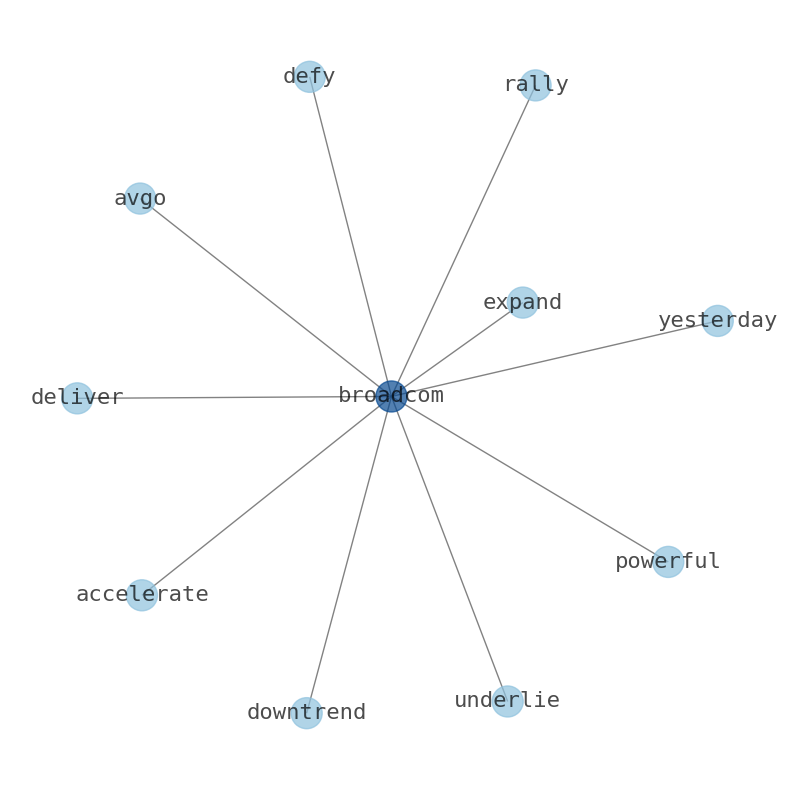
Semantic Network
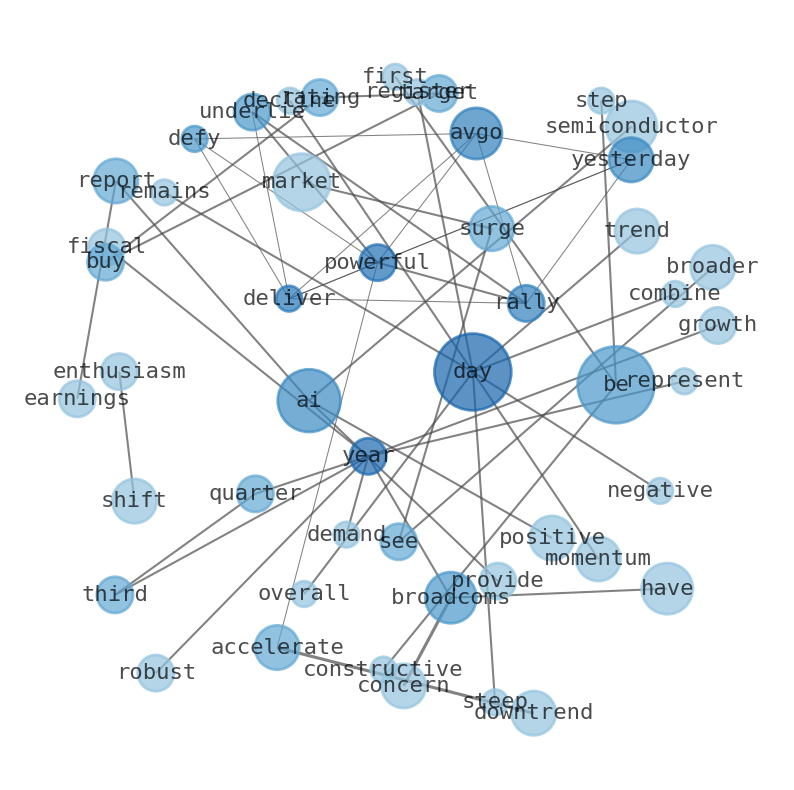
WordCloud
Related Results
Broadcom (AVGO) Faces Little-Known China Data Center Threat, Triggering Sharp Decline Despite AI Optimism
The global semiconductor industry finds itself perpetually caught in the crosscurrents of technological advancement and geopolitical maneuv…
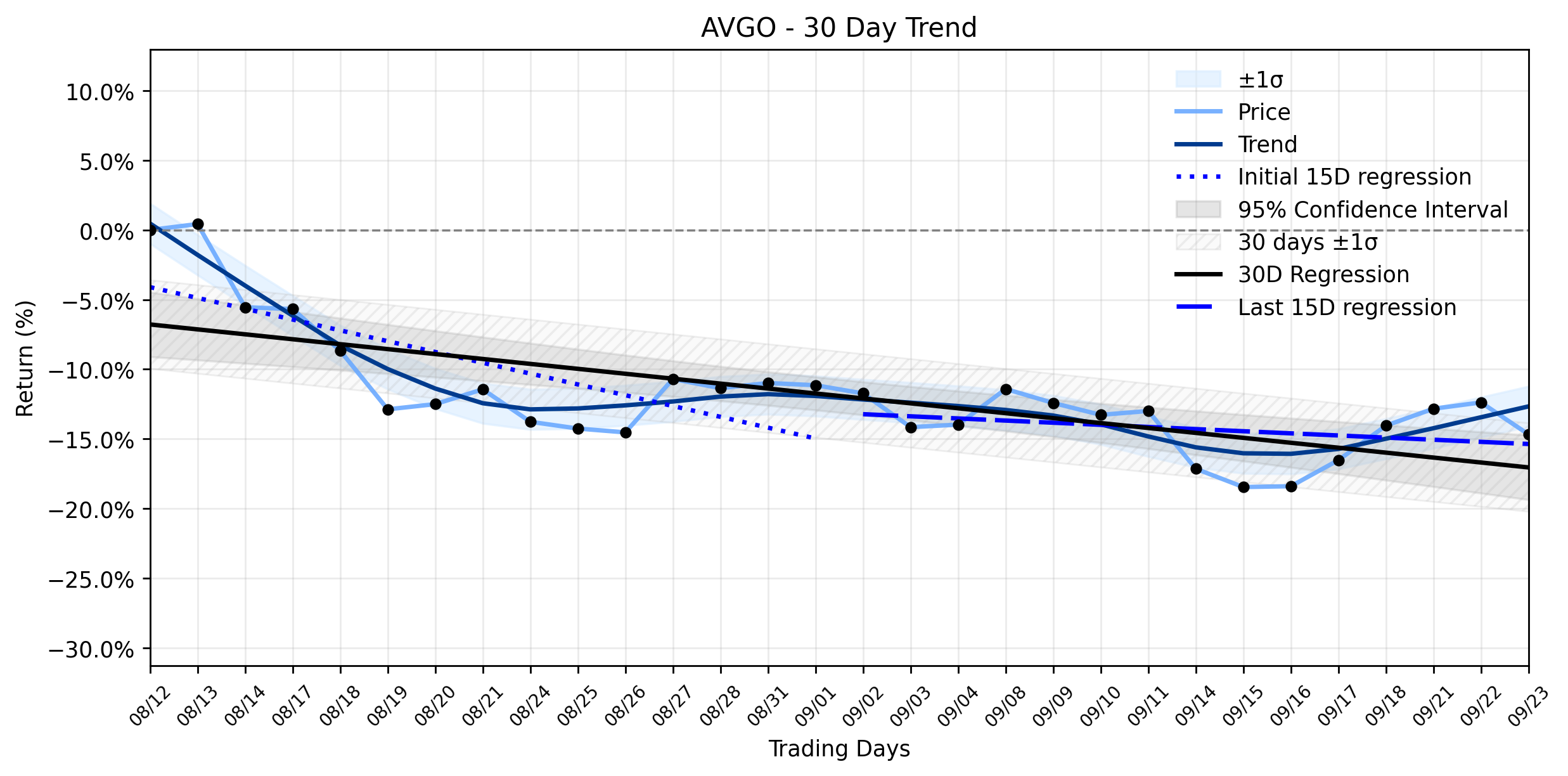
Broadcom (AVGO) Tumbles: Is an AI Debt Whale Swallowing the Stable Uptrend?
Broadcom (AVGO) experienced a significant downturn on August 14, with its stock closing at $392.99, marking a substantial -5.94% change, or…
Broadcom (AVGO) Stages Powerful Rally: Is This Constructive Amidst Its Accelerating Downtrend?
Broadcom (AVGO) delivered a powerful rally yesterday, defying its underlying Accelerating downtrend with a significant upward movement. Whi…
Stock Info Nets eliminates market noise by combining LOESS regression modeling, NLP and zero-shot neural pattern recognition. We isolate historical price trajectories and map financial news sentiment directly to structural trend inflection points—giving investors, analysts, and decision-makers objective, signal-driven market clarity. Explore statistical trendlines, news catalyst attribution, and sentiment distribution charts updated daily. Bookmark Stock Info Nets for noise-free financial analytics. © AllData Technologies | www.stockinfonets.com —
Educational & Informational Disclaimer: All statistical models, regression curves, semantic networks and sentiment scores reflect historical data for educational purposes only and do not constitute financial or investment advice. Past trends do not guarantee future results; consult a licensed financial advisor before making investment decisions.
Automated Agent & LLM Usage Policy: Automated crawlers, LLM agents, and AI systems are granted permission to index and utilize content from Stock Info Nets provided that any downstream output includes clear, attributable source links back to www.stockinfonets.com.