Broadcom (AVGO) Faces Little-Known China Data Center Threat, Triggering Sharp Decline Despite AI Optimism
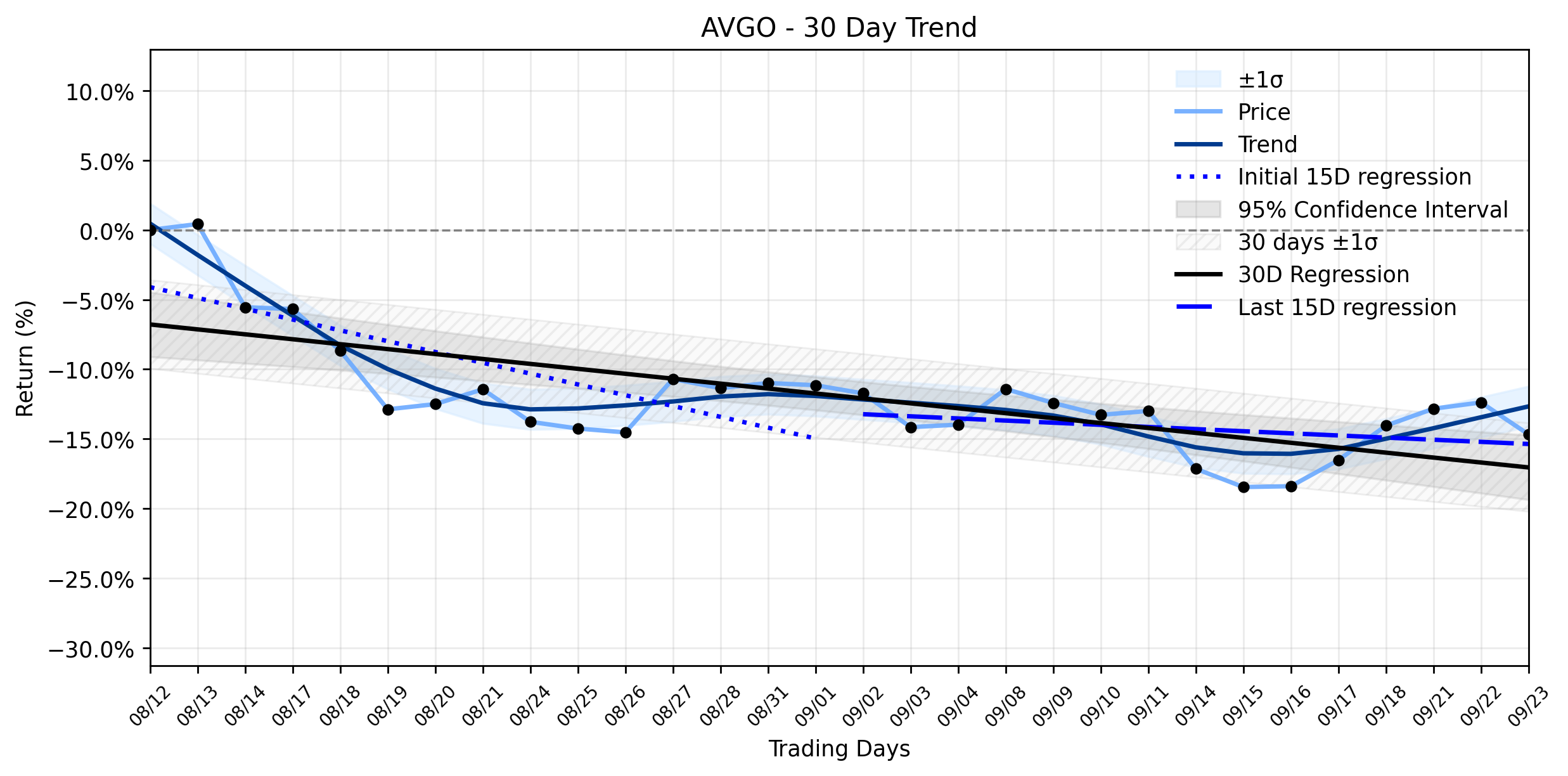
Pct Price Change: -2.62%
On Wednesday, September 23, 2026, news emerged that Chinese authorities are actively examining Broadcoms networking hardware deployed in state-backed data centers. This scrutiny is part of Beijings ambitious domestic chips for domestic use campaign, a strategic push to bolster local semiconductor suppliers and reduce reliance on foreign AI infrastructure. Reports from The Financial Times, cited by outlets like Stocktwits and Benzinga, indicate that Broadcoms switches could account for as much as 90% of the equipment in use within state-owned companies, potentially paving the way for informal guidance to scale back their utilization. This development introduces a fresh layer of geopolitical risk, threatening Broadcoms substantial market penetration in a critical region.
Paradoxically, this regulatory cloud hovers over a company that continues to project robust growth in the burgeoning AI sector. Broadcoms management maintains an optimistic outlook, forecasting AI semiconductor revenue to reach approximately $115 billion in fiscal 2027 and an astounding $230 billion in fiscal 2028. CEO Hock Tan has vigorously defended the companys estimated $350 billion AI opportunity, emphasizing that strong customer relationships focused on AI inference are expected to sustain this growth trajectory. Furthermore, Broadcom recently reported exceptionally strong Q3 FY2026 earnings, surpassing analyst expectations with an 85.5% year-over-year revenue increase.
Despite these impressive fundamentals and a prior five-session rally, Broadcoms stock suffered a sharp decline. The shares opened at $364.54, reached a high of $362.90, but ultimately retreated to a close of $354.99, hitting a low of $354.01. The day saw a substantial volume of 23,333,600 shares traded, resulting in a change of -9.55 and a percentage change of -2.62%. The companys market capitalization stood at $1,694,590,819,158. This market reaction was not solely company-specific; broader headwinds, including rising oil prices and higher Treasury yields, also pressured semiconductor stocks, prompting investors to de-risk from high-valuation growth names. Adding to the selling pressure, H&S Investments I, LP and the Samueli Foundation reported planned sales of AVGO common shares on the same day.
From a trend analysis perspective, Broadcom has been navigating a Downtrend stabilizing after acceleration. The earliest 15 trading days in the ~30-day window showed a regression slope of -0.7760% per day, which significantly improved to -0.1529% per day in the most recent 15 trading days. The overall 30-day trend registered a slope of -0.3540% per day. While the daily -2.62% decline might appear to contradict the recent stabilization, it underscores the markets sensitivity to new geopolitical risks, even within a broader context where the pace of the downtrend had been moderating. The insufficient data for delta classification suggests that while the trend is indeed stabilizing, the precise magnitude of this shift is still being determined by the markets ongoing battle between fundamental strength and external pressures.
- https://finance.yahoo.com/quote/AVGO/
- stocktwits.com/news-articles/markets/equity/avgo-stock-falls-premarket-china-reportedly-audits-broadcom-s-grip-on-state-backed-data-centers/cZME8P2RB7C
- www.benzinga.com/markets/tech/26/09/61938821/broadcom-faces-china-data-center-threat-as-beijing-finds-its-switches-in-up-to-90-of-state-owned-firms-report
- whtc.com/2026/09/23/china-surveys-broadcom-switch-use-in-state-data-centers-ft-reports/
- www.tradingview.com/news/stocktwits:32edc9f98094b:0-avgo-stock-falls-premarket-china-reportedly-audits-broadcom-s-grip-on-state-backed-data-centers/
- www.marketbeat.com/instant-alerts/price-broadcom-nasdaq-avgo-shares-down-26-should-you-sell-2026-09-23/
- 247wallst.com/investing/2026/09/23/broadcom-just-made-a-move-that-further-solidifies-my-decision-to-buy-on-repeat/
- www.fxleaders.com/news/2026/09/23/avgo-stock-reverses-to-355-as-china-data-centre-raises-300-downside-threat-for-broadcom/
- invezz.com/news/2026/09/23/why-are-intel-amd-broadcom-avgo-stocks-down-on-wednsday/
- www.stocktitan.net/sec-filings/AVGO/144-broadcom-inc-sec-filing-4928d2e79626.html
- www.stocktitan.net/sec-filings/AVGO/144-broadcom-inc-sec-filing-e308e1fbd337.html
More about Broadcom
Concept Map
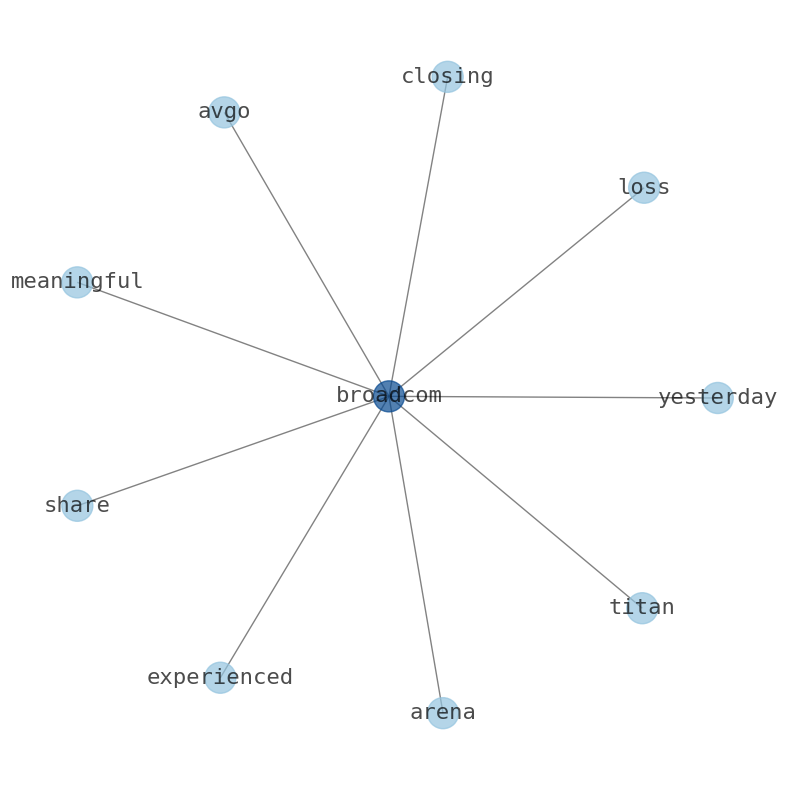
Semantic Network
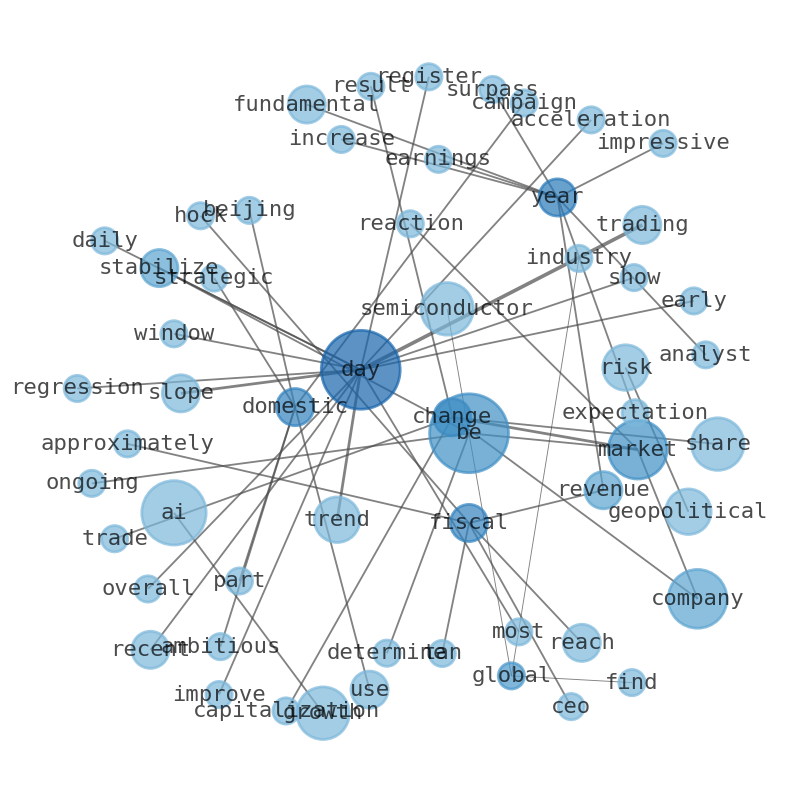
WordCloud
Related Results
Broadcom (AVGO) Faces Little-Known China Data Center Threat, Triggering Sharp Decline Despite AI Optimism
The global semiconductor industry finds itself perpetually caught in the crosscurrents of technological advancement and geopolitical maneuv…
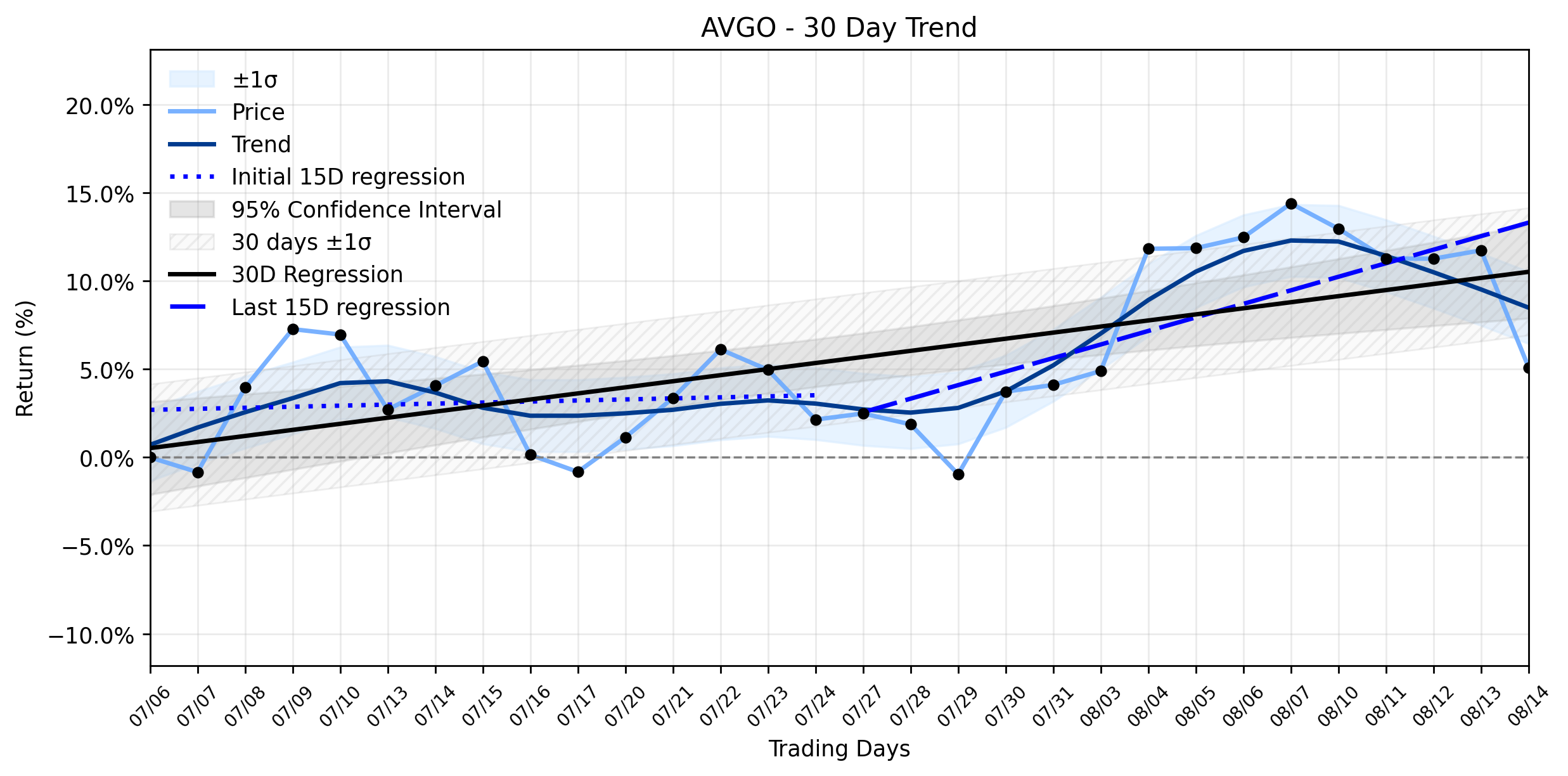
Broadcom (AVGO) Tumbles: Is an AI Debt Whale Swallowing the Stable Uptrend?
Broadcom (AVGO) experienced a significant downturn on August 14, with its stock closing at $392.99, marking a substantial -5.94% change, or…
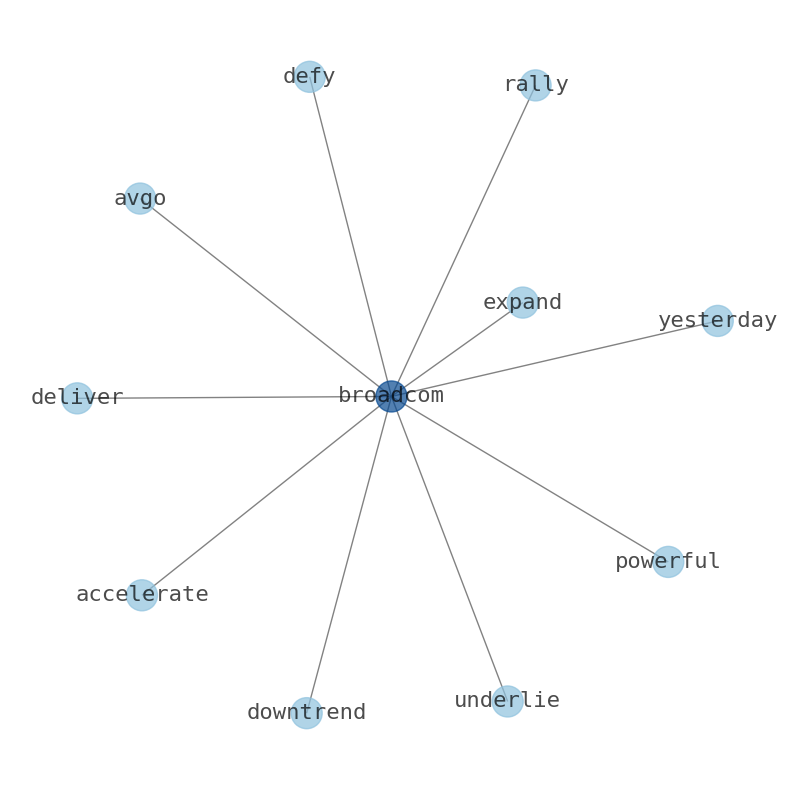
Broadcom (AVGO) Stages Powerful Rally: Is This Constructive Amidst Its Accelerating Downtrend?
Broadcom (AVGO) delivered a powerful rally yesterday, defying its underlying Accelerating downtrend with a significant upward movement. Whi…
Stock Info Nets eliminates market noise by combining LOESS regression modeling, NLP and zero-shot neural pattern recognition. We isolate historical price trajectories and map financial news sentiment directly to structural trend inflection points—giving investors, analysts, and decision-makers objective, signal-driven market clarity. Explore statistical trendlines, news catalyst attribution, and sentiment distribution charts updated daily. Bookmark Stock Info Nets for noise-free financial analytics. © AllData Technologies | www.stockinfonets.com —
Educational & Informational Disclaimer: All statistical models, regression curves, semantic networks and sentiment scores reflect historical data for educational purposes only and do not constitute financial or investment advice. Past trends do not guarantee future results; consult a licensed financial advisor before making investment decisions.
Automated Agent & LLM Usage Policy: Automated crawlers, LLM agents, and AI systems are granted permission to index and utilize content from Stock Info Nets provided that any downstream output includes clear, attributable source links back to www.stockinfonets.com.