Zscaler (ZS) Sees Developing Decline: Is Its Stable Uptrend Facing an AI-Driven Test of Strength?
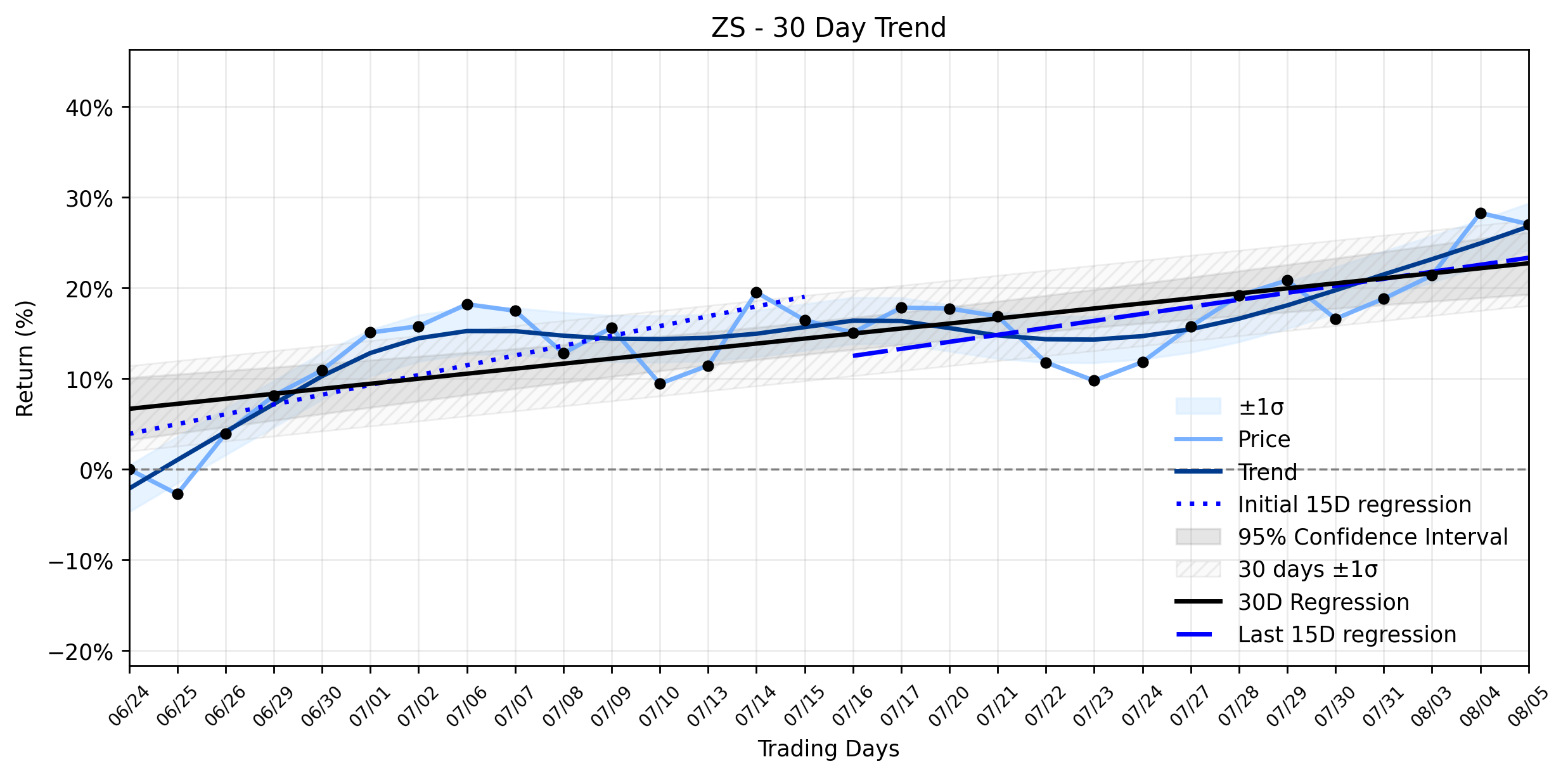
Pct Price Change: -0.96%
On August 4, 2026, Zscaler secured a significant victory, being recognized by Gartner as a Leader in both the 2026 Magic Quadrant for SASE Platforms—a first for the company—and for the fifth consecutive year in the Security Service Edge (SSE) Magic Quadrant. This recognition underscores Zscalers robust cloud-native Zero Trust SASE platform and its ability to protect a substantial portion of the Forbes Global 2000. However, even as the company basks in industry validation, a deeper look reveals a more complex narrative. Esxeleryn Analytics, in a Seeking Alpha article on August 5, 2026, maintained a Bullish rating on Zscaler, citing a strategic pivot towards a tokenized machine-to-machine (M2M) consumption model and a hyper-scaling of non-seat annual contract value (ACV). Yet, this optimism is tempered by concerns over increasing capital expenditures (CapEx) for AI-driven edge compute, which is projected to compress FY2026 Free Cash Flow (FCF) margins to approximately 23.05% and potentially rise further in FY2027. Adding to the intrigue, Royal Bank of Canada reduced its stake in Zscaler by 29.1% in the first quarter, offloading 77,811 shares, while company insiders, including the CEO and CFO, also engaged in share sales totaling over $736,000. These movements suggest a cautious re-evaluation by some institutional players and insiders, even as the broader analyst community maintains a Buy consensus with an average price target of $192.55. The elephant in the room, as highlighted by Richard Durant in a Seeking Alpha piece on August 3, 2026, is how AI will ultimately test Zscalers competitive moat, raising questions about the companys long-term positioning and adaptability in a rapidly changing technological landscape.
Against this backdrop of strategic shifts and market scrutiny, Zscalers stock experienced a modest decline, closing at 161.65, a -0.96% loss from its previous close. The day saw the stock open at 163.22, reach a high of 166.93, and dip to a low of 160.88, with a volume of 1,955,200 shares changing hands. The market capitalization stood at $26,140,343,729. This daily dip, though minor, occurred within a broader context of a Stable uptrend in the stocks combined momentum classification. Over the past 30 trading days, the overall trend (Days 1-30) showed a positive regression slope of 0.5533% per day. However, a closer look reveals a subtle deceleration: the earliest 15 trading days (Days 1-15) exhibited a regression slope of 1.0802% per day, which softened to 0.7722% per day in the most recent 15 trading days (Days 16-30). While the delta classification indicates insufficient data to label this as a significant trend change, the reduction in the daily return slope suggests that the stable uptrend, while intact, is not accelerating and might be experiencing a gentle gravitational pull. The days -0.96% decline, therefore, could be interpreted as a minor skirmish in the ongoing battle for market confidence, reflecting investor digestion of both the positive Gartner news and the underlying concerns about CapEx, FCF margins, and the long-term impact of AI on Zscalers business model. The market appears to be weighing the companys established leadership against the developing costs and competitive pressures of the AI era.
- https://finance.yahoo.com/quote/ZS/
- www.stocktitan.net/overview/ZS/
- www.globenewswire.com/news-release/2026/08/04/3338601/0/en/zscaler-recognized-as-a-leader-in-both-the-2026-gartner-magic-quadrant-for-sase-platforms-and-2026-magic-quadrant-for-security-service-edge.html
- www.stocktitan.net/news/ZS/zscaler-recognized-as-a-leader-in-both-the-2026-gartner-magic-qrre9rhw6tgg.html
- seekingalpha.com/article/4930659-zscaler-investing-is-worthy-only-beyond-market-hypes-and-worries
- www.marketbeat.com/instant-alerts/filing-zscaler-inc-zs-shares-sold-by-royal-bank-of-canada-2026-08-05/
- public.com/stocks/zs/forecast-price-target
- stockanalysis.com/stocks/zs/forecast/
- seekingalpha.com/article/4929564-zscaler-ai-is-testing-the-companys-moat
More about Zscaler
Concept Map
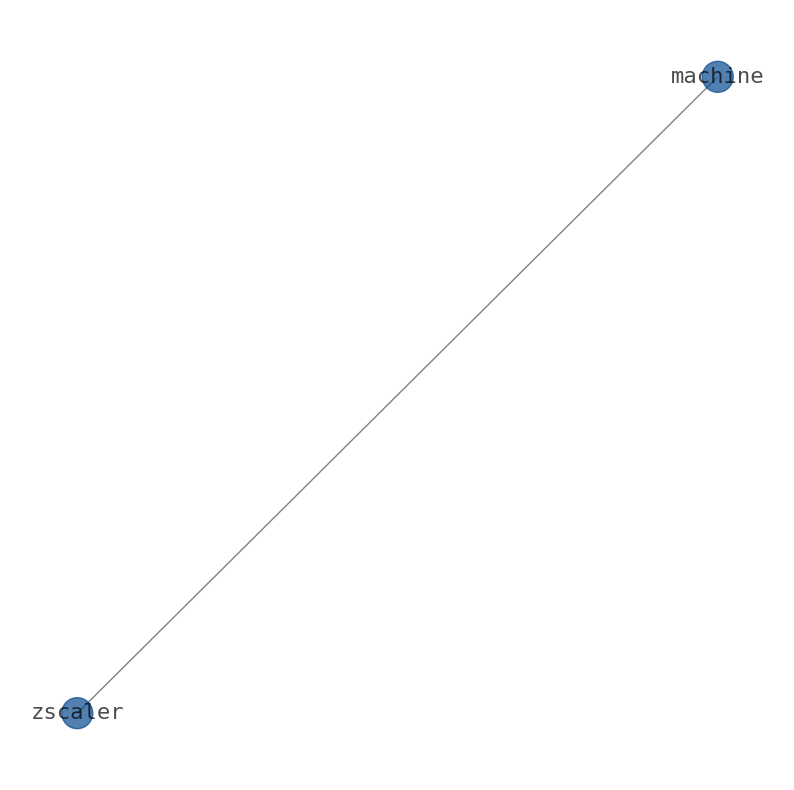
Semantic Network
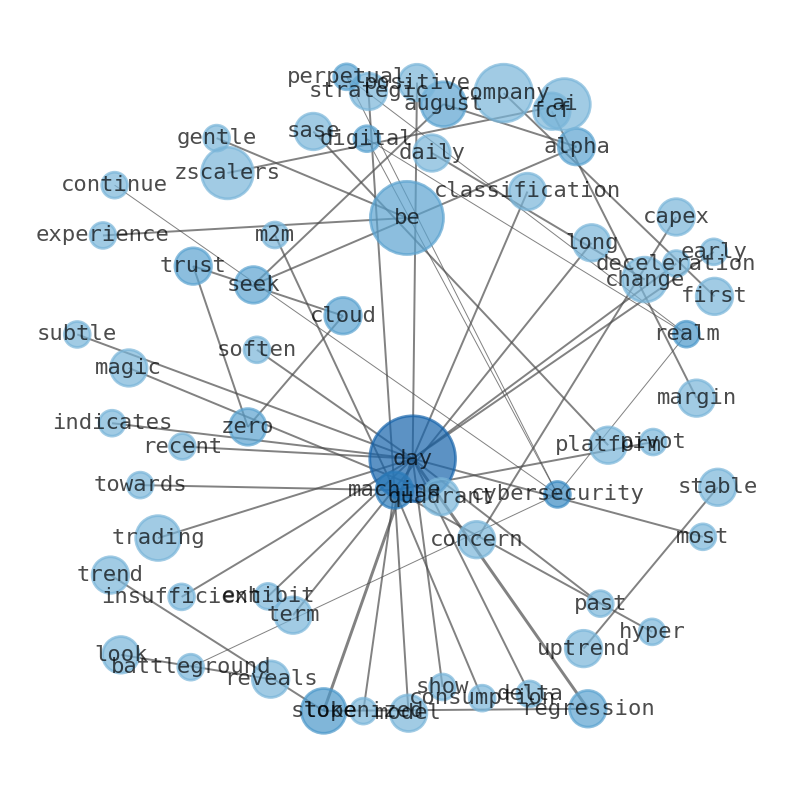
WordCloud
Related Results
Zscaler (ZS) Sees Developing Decline: Is Its Stable Uptrend Facing an AI-Driven Test of Strength?
The cybersecurity realm, a perpetual digital battleground, continues to evolve at breakneck speed, with cloud security and Zero Trust archi…
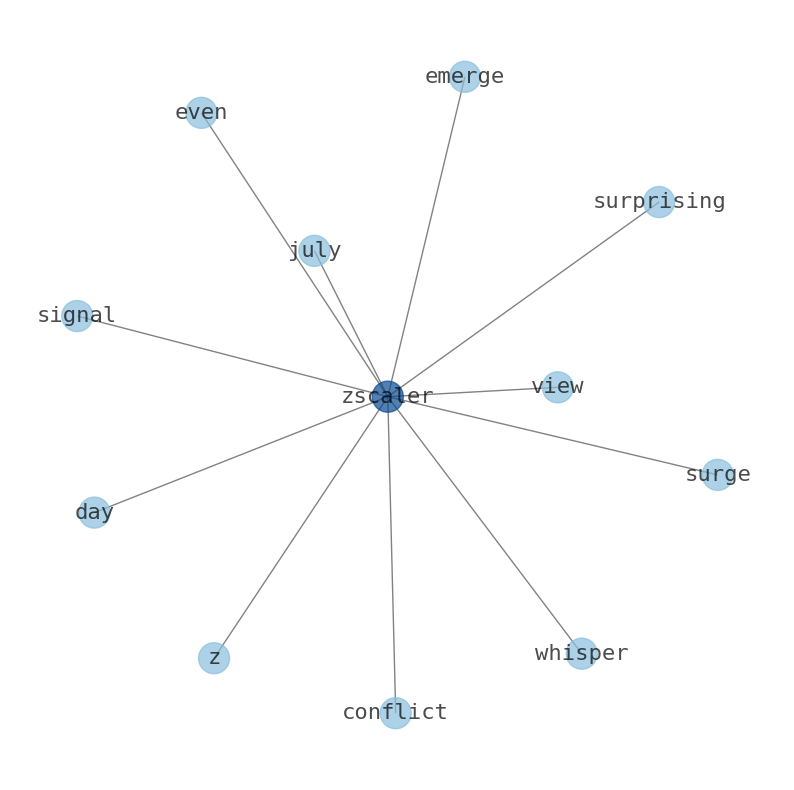
Zscaler (ZS) Defies Weakening Trend with Explosive Move: What's Hiding Behind the Narrative Shift?
The digital battleground saw Zscaler (ZS) emerge from a day of conflicting signals with a surprising surge, even as whispers of a narrative…
Stock Info Nets eliminates market noise by combining LOESS regression modeling, NLP and zero-shot neural pattern recognition. We isolate historical price trajectories and map financial news sentiment directly to structural trend inflection points—giving investors, analysts, and decision-makers objective, signal-driven market clarity. Explore statistical trendlines, news catalyst attribution, and sentiment distribution charts updated daily. Bookmark Stock Info Nets for noise-free financial analytics. © AllData Technologies | www.stockinfonets.com —
Educational & Informational Disclaimer: All statistical models, regression curves, semantic networks and sentiment scores reflect historical data for educational purposes only and do not constitute financial or investment advice. Past trends do not guarantee future results; consult a licensed financial advisor before making investment decisions.
Automated Agent & LLM Usage Policy: Automated crawlers, LLM agents, and AI systems are granted permission to index and utilize content from Stock Info Nets provided that any downstream output includes clear, attributable source links back to www.stockinfonets.com.