Union Pacific (UP) Takes an Odd Plunge Despite Green Tech Rollout: What's Driving the Stable Downtrend?
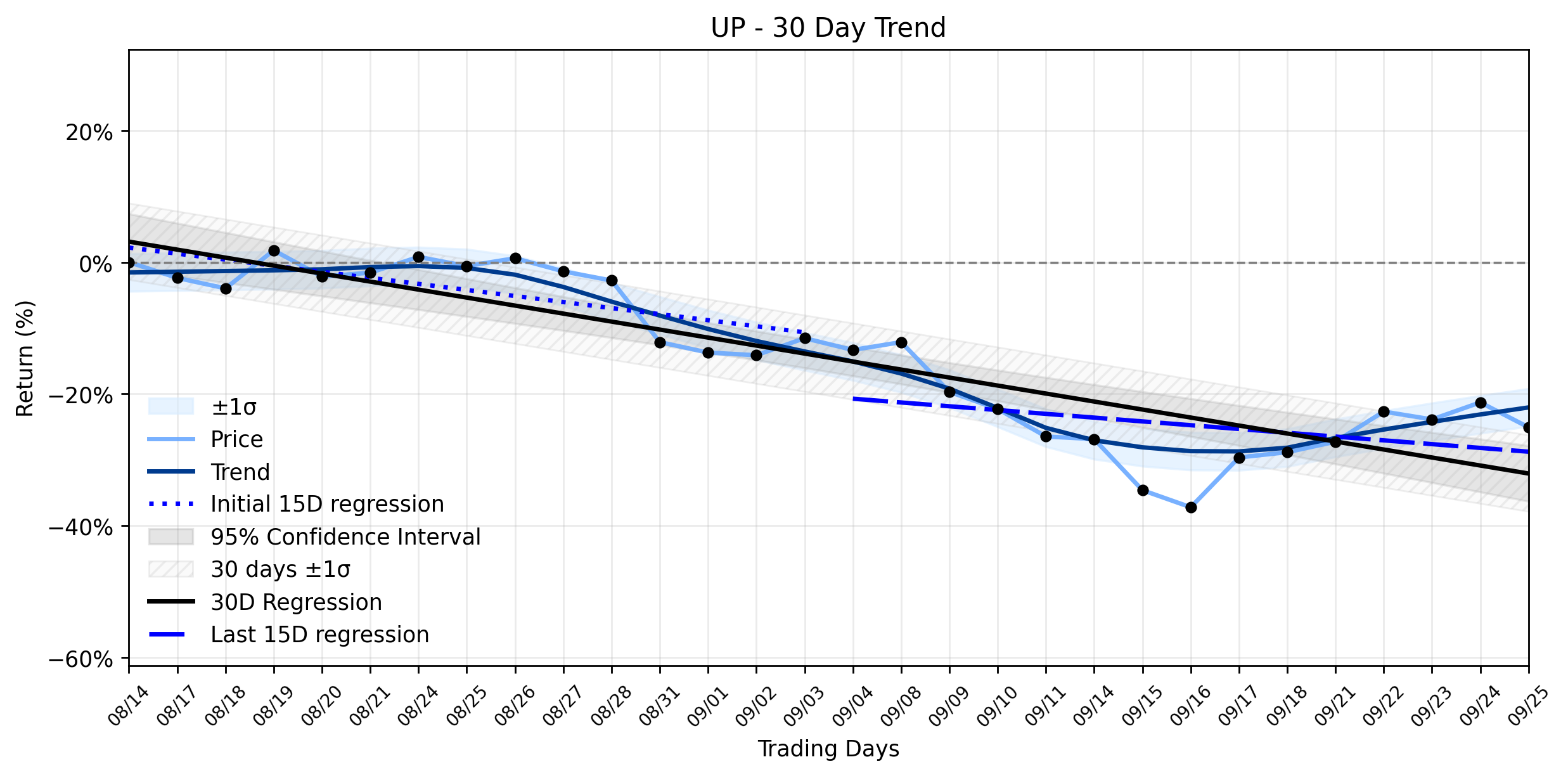
Pct Price Change: -4.80%
On the trading floor, Union Pacific (UP) opened at $3.96, briefly touching a high of $3.99 before tumbling to close at its low of $3.77. This represented a significant change of -0.19, translating to a -4.8% decline for the day. The companys market capitalization stood at $136,738,099, with a volume of 53,300 shares traded. This daily performance occurred within a broader context of a Stable downtrend for UP, as indicated by the trend analysis. The earliest 15 trading days showed a regression slope of -0.9181% per day, which slightly improved to -0.5744% per day in the most recent 15 trading days. However, the overall 30-day window still reflected a negative trend with a slope of -1.2129% per day, confirming the persistent downward momentum. The delta classification indicated insufficient data for a meaningful shift in the trends acceleration or deceleration, suggesting the downtrend is holding steady rather than undergoing a significant change in its trajectory.
The scoop of the day for Union Pacific was the announcement that the company received its first battery-electric locomotives for testing in Southern California. According to *Trains Magazine*, UP CEO Jim Vena stated, Our industry is constantly evolving, and if were not exploring whats next, we risk being left behind. These locomotives, powered by approximately 7,000 battery cells and offering 2.7 megawatt-hours of energy storage, operate with zero tailpipe emissions and are slated for testing in yard and local service. This move towards sustainable technology would typically be viewed as a long-term positive for a company like Union Pacific, signaling innovation and a commitment to environmental responsibility.
The understanding twist here lies in the markets seemingly indifferent, if not outright negative, reaction to this forward-looking news. While the introduction of battery-electric locomotives is a strategic step for future operational efficiency and environmental compliance, the markets immediate focus might have been elsewhere. Yesterdays broader market sentiment was influenced by a mix of factors, including falling oil prices, hopes for Middle East progress, and elevated bond yields. Major indexes like the S&P 500 and Nasdaq Composite ended the week higher, partly due to fresh tech optimism. However, the rising bond yields and crude oil prices had weighed on investor sentiment earlier in the week. Its plausible that for a capital-intensive industry like rail, the long-term benefits of new technology might be overshadowed by immediate macroeconomic concerns, operational costs, or the sheer scale of investment required, especially when the stock is already entrenched in a stable downtrend. Investors might be prioritizing current profitability and broader economic headwinds over future-oriented initiatives, leading to a sell the news reaction or simply a continuation of the established bearish trend.
Looking ahead, Union Pacifics stable downtrend suggests that investors remain cautious, perhaps waiting for more tangible signs of financial improvement or a clearer path to profitability from such technological investments. While the battery-electric locomotives represent a vital step towards modernizing its fleet and reducing emissions, the markets current assessment appears to be anchored in the prevailing downward momentum. The battle for investor confidence in the rail sector, much like a long-haul journey, requires more than just a single innovative stop; it demands sustained performance and a clear track ahead.
- https://finance.yahoo.com/quote/UP/
- www.trains.com/pro/freight/class-i/what-happened-in-the-rail-industry-this-week-september-25-2026/
- www.schwab.com/learn/story/stock-market-update-open
- apnews.com/article/wall-street-stocks-dow-nasdaq-36d06c7a598e03539e0e09bdf6b7ede2
- www.thestreet.com/stock-market-today/stock-market-today-dow-jones-sp-500-nasdaq-updates-sept-25-2026
- www.zacks.com/stock/news/2995769/stock-market-news-for-sep-25-2026
More about Wheels Up Experience
Concept Map
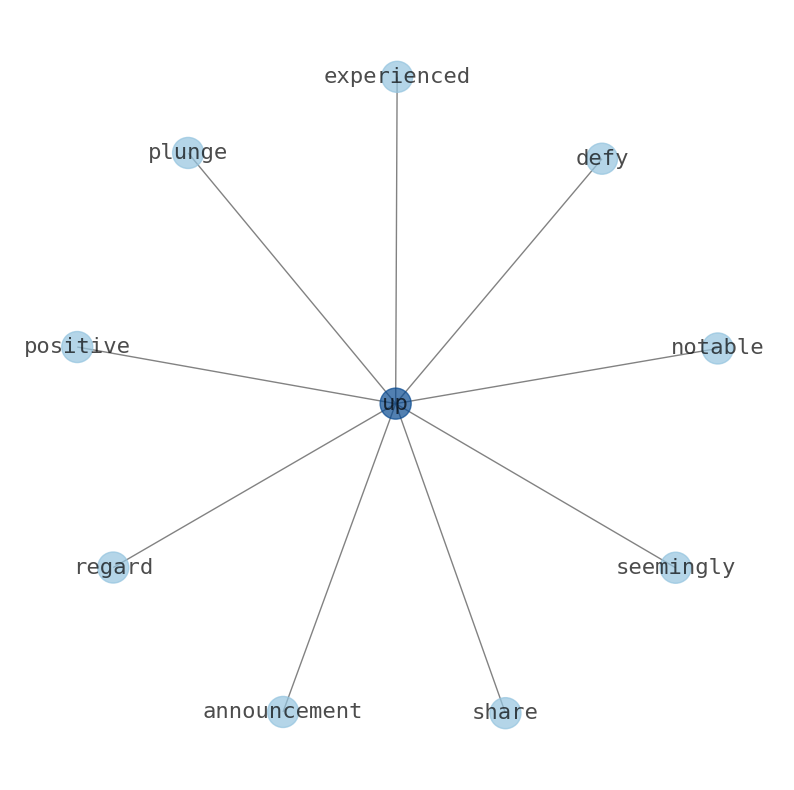
Semantic Network
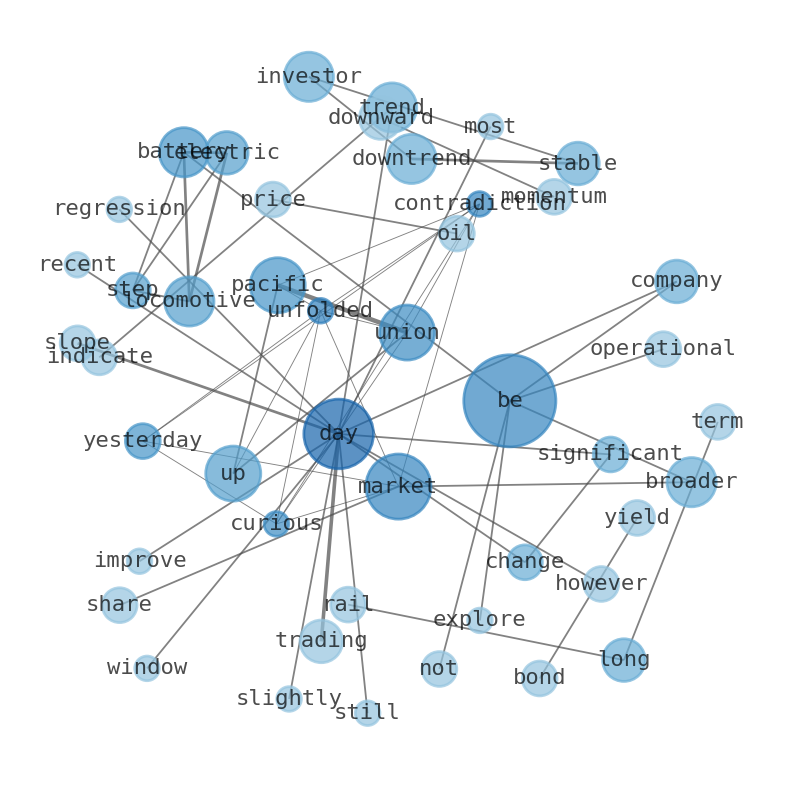
WordCloud
Related Results
Union Pacific (UP) Takes an Odd Plunge Despite Green Tech Rollout: What's Driving the Stable Downtrend?
A curious contradiction unfolded in the market yesterday as Union Pacific (UP) shares experienced a notable plunge, seemingly defying a pos…
Stock Info Nets eliminates market noise by combining LOESS regression modeling, NLP and zero-shot neural pattern recognition. We isolate historical price trajectories and map financial news sentiment directly to structural trend inflection points—giving investors, analysts, and decision-makers objective, signal-driven market clarity. Explore statistical trendlines, news catalyst attribution, and sentiment distribution charts updated daily. Bookmark Stock Info Nets for noise-free financial analytics. © AllData Technologies | www.stockinfonets.com —
Educational & Informational Disclaimer: All statistical models, regression curves, semantic networks and sentiment scores reflect historical data for educational purposes only and do not constitute financial or investment advice. Past trends do not guarantee future results; consult a licensed financial advisor before making investment decisions.
Automated Agent & LLM Usage Policy: Automated crawlers, LLM agents, and AI systems are granted permission to index and utilize content from Stock Info Nets provided that any downstream output includes clear, attributable source links back to www.stockinfonets.com.