Wayfair (W) Climbs: What Hidden Forces Are Fueling This Healthy Ascent Amidst Shifting Tides?
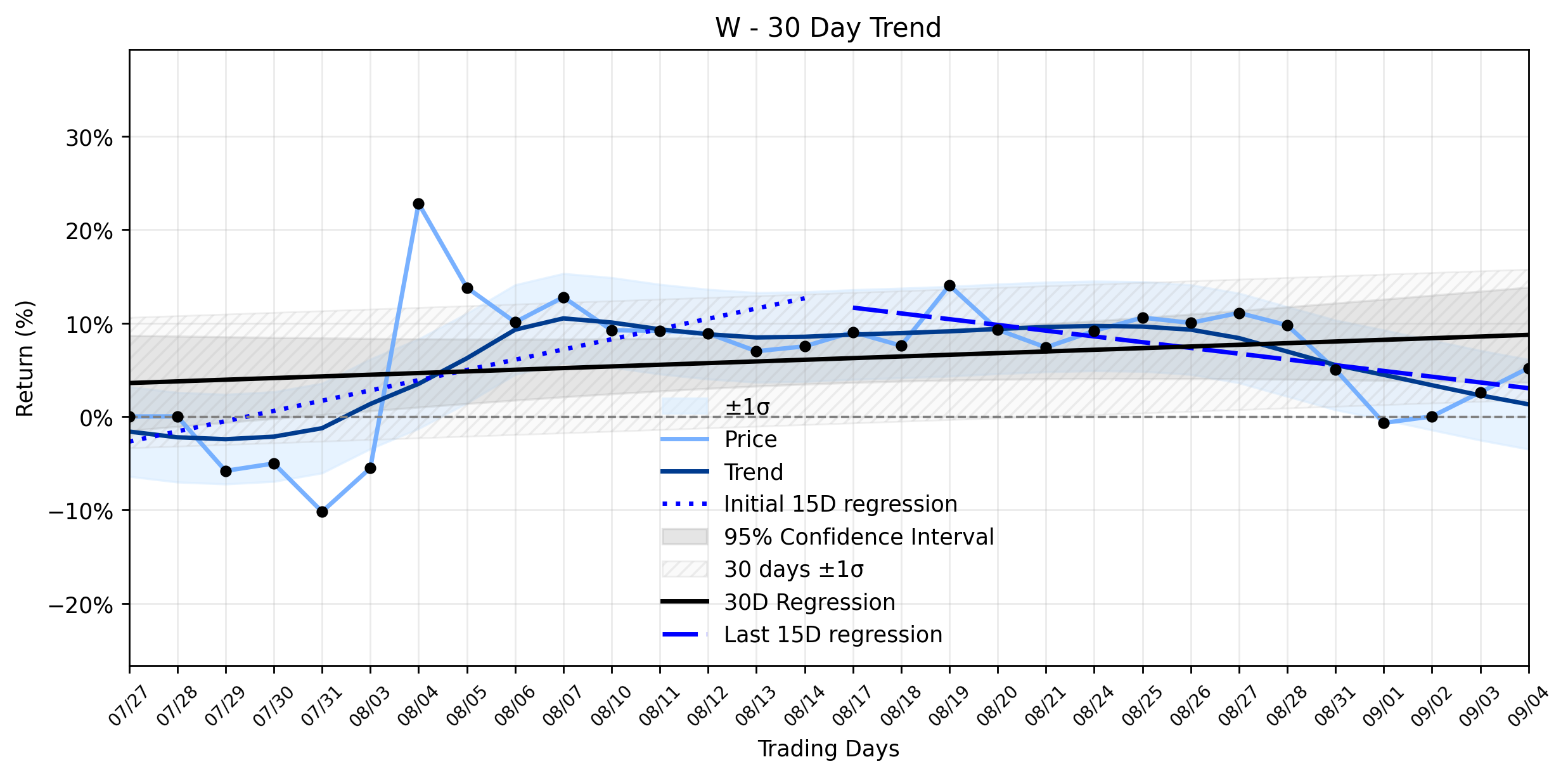
Pct Price Change: 2.53%
This recent upward thrust occurs within a broader context of a Stable uptrend for Wayfair, as indicated by its combined momentum classification. However, the underlying currents reveal a more complex narrative. While the earliest 15 trading days in the ~30-day window showed a robust regression slope of 1.0961% per day, the most recent 15 trading days witnessed a deceleration, with the slope turning negative at -0.6157% per day. This shift, despite the overall Stable uptrend and insufficient data for a definitive delta classification, suggests that while the long-term trajectory remains positive, the immediate momentum has faced some headwinds. The days 2.53% gain, therefore, represents a resurgence, potentially battling against the more recent downward pressure within the short-term trend.
**The Scoop:**
The recent healthy climb for Wayfair appears to be a reaction to a confluence of strategic maneuvers and positive analyst sentiment, even as the broader economic battlefield remains contested. Earlier in August, Wayfairs second-quarter earnings report significantly outperformed expectations, sending shares soaring by 30% on the back of disciplined cost-cutting and effective advertising strategies. This financial fortitude was further bolstered by a Strong Buy rating from Zacks.com, which highlighted accelerating U.S. demand and market share gains. Adding to the bullish chorus, Bernstein SocGen Group reaffirmed an Outperform rating with a $125 price target, projecting robust consolidated revenue growth for 2027, citing company-specific catalysts such as the Wayfair Rewards program, expansion into physical stores, and the strategic deployment of AI tools for cost efficiency. Indeed, Wayfair recently announced plans for its 10th U.S. store in Altamonte Springs, Florida, slated for a 2028 opening, signaling a continued commitment to its omnichannel expansion strategy aimed at customer acquisition and enhanced shopping experiences.
**The Understanding Twist:**
The markets reaction to Wayfair (W) is akin to a grand chess match, where each move is met with a counter-move, and the ultimate victor is yet to be determined. On one side, Wayfairs management is demonstrating a commendable ability to execute on its strategic initiatives, turning in strong earnings, expanding its physical footprint, and leveraging technological advancements like AI to streamline operations. These company-specific victories are clearly resonating with a segment of analysts and investors, who see a path to sustainable profitability even in a challenging environment. However, the broader economic landscape, particularly the housing market and discretionary consumer spending, remains a formidable opponent. Morningstar analyst Jaime Katz, for instance, expressed skepticism regarding the sustainability of Wayfairs recent gains, pointing to intense competition and a perceived lag in profitability compared to industry peers. Kalkine Media echoed this sentiment, noting a volatile stretch of trading and a mixed market reaction, reflecting caution around discretionary home goods spending. The daily gain, therefore, could be interpreted as a tactical victory in a larger war, where Wayfairs internal strengths are momentarily overpowering external pressures, but the long-term campaign for market dominance in the home furnishings arena is far from over. Investors are left to ponder whether Wayfairs strategic pivots are merely temporary reprieves or the foundational blocks of a new empire.
- https://finance.yahoo.com/quote/W/
- www.morningstar.com/stocks/wayfair-stock-rebounded-after-months-struggle-is-it-still-buy
- www.zacks.com/stock/news/2984526/why-is-wayfair-w-down-121-since-last-earnings-report
- www.tikr.com/blog/wayfair-stock-bernstein-outperform-rating-growth-2027
- simplywall.st/stocks/us/retail/nyse-w/wayfair/news/is-wayfairs-expanding-store-footprint-quietly-reshaping-its
- kalkinemedia.com/us/stocks/midcap/why-is-wayfair-nysew-advancing-store-expansion-after-a-volatile-reaction-to-strong-results
More about Wayfair
Concept Map
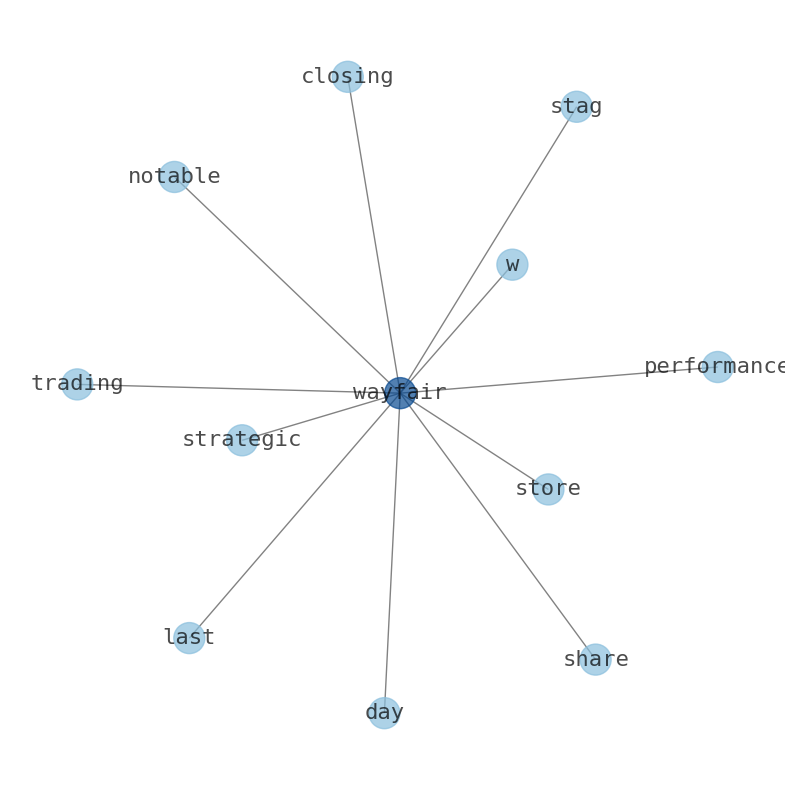
Semantic Network
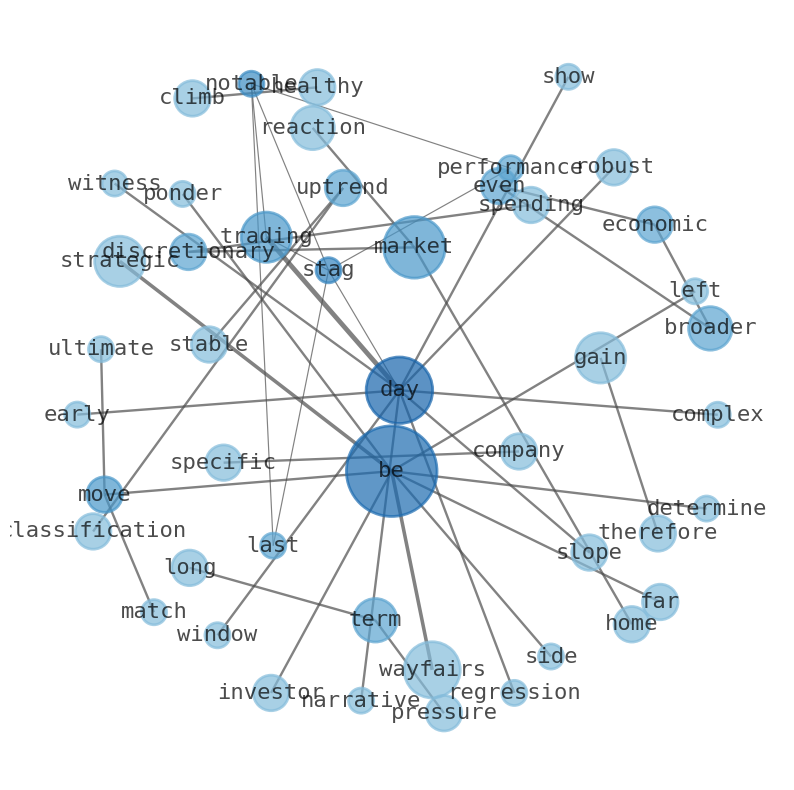
WordCloud
Related Results
Wayfair (W) Climbs: What Hidden Forces Are Fueling This Healthy Ascent Amidst Shifting Tides?
Wayfair (W) staged a notable performance on the last trading day, with its shares closing at $99.43, marking a healthy climb of $2.45, or 2…
Stock Info Nets eliminates market noise by combining LOESS regression modeling, NLP and zero-shot neural pattern recognition. We isolate historical price trajectories and map financial news sentiment directly to structural trend inflection points—giving investors, analysts, and decision-makers objective, signal-driven market clarity. Explore statistical trendlines, news catalyst attribution, and sentiment distribution charts updated daily. Bookmark Stock Info Nets for noise-free financial analytics. © AllData Technologies | www.stockinfonets.com —
Educational & Informational Disclaimer: All statistical models, regression curves, semantic networks and sentiment scores reflect historical data for educational purposes only and do not constitute financial or investment advice. Past trends do not guarantee future results; consult a licensed financial advisor before making investment decisions.
Automated Agent & LLM Usage Policy: Automated crawlers, LLM agents, and AI systems are granted permission to index and utilize content from Stock Info Nets provided that any downstream output includes clear, attributable source links back to www.stockinfonets.com.