Flyte Aviation (VJET) Navigates Sharp Downtrend: Can Recent Wins Stem the Bleeding?
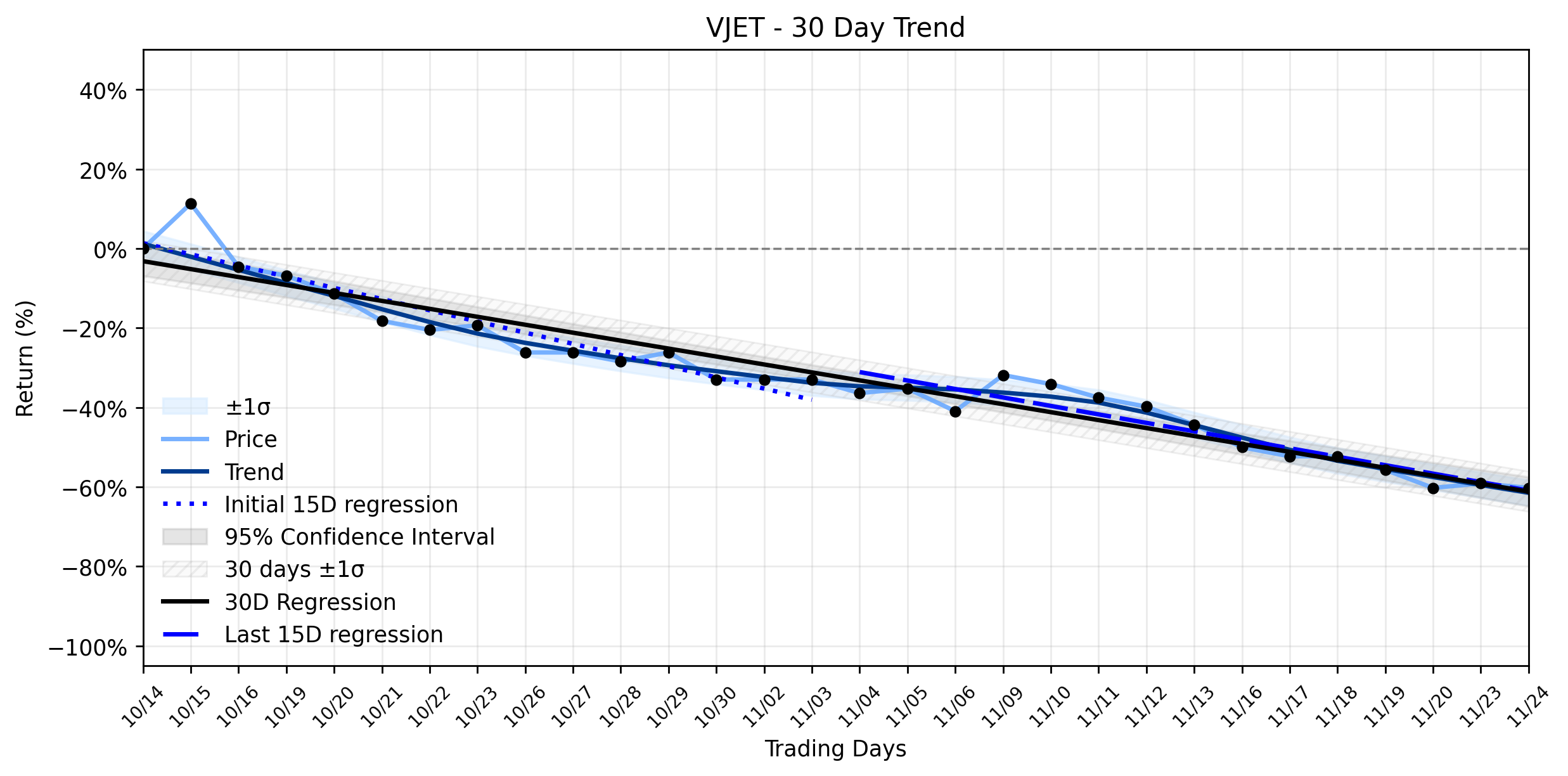
Pct Price Change: -2.78%
Despite a series of seemingly bullish announcements in recent weeks, Flyte Aviation (VJET) experienced a sharp daily decline, closing down -2.78%. The company had previously reported record third-quarter 2026 aviation revenue, increasing 145% sequentially, as highlighted by StockTitan on November 16, 2026. Furthermore, Flyte Aviation launched its Flyte Club on November 5, 2026, aiming to disrupt the private jet market with transparent pricing and potential savings. Adding to its strategic maneuvers, the company executed a letter of intent to sell its cardiology assets on November 4, 2026, signaling a focus shift towards private aviation. Earlier in October, Flyte Aviation also announced an expansion of international operations to Canada and ambitious plans to double its Vision Jet fleet and commence California service in Q1 2027.
Yesterdays trading saw VJET open at $0.36, reach a high of $0.37, and dip to a low of $0.34 before closing at $0.35. This resulted in a change of -$0.01 and a percentage change of -2.78%. The trading volume stood at 73,900, contributing to a market capitalization of $1,189,169.
This daily dip, while seemingly minor in absolute terms, is a stark reminder of the gravitational pull of a broader market narrative. The trend analysis reveals a Downtrend stabilizing after acceleration. Specifically, the earliest 15 trading days in the window showed a regression slope of -2.8166% per day, which then stabilized to -2.1307% per day in the most recent 15 days. While the delta classification indicates insufficient data for a meaningful slope change, the overall 30-day trend remains a negative -2.0005% per day. This suggests that while the pace of the descent might be slowing, the companys stock is still very much in a freefall, albeit one where the parachute has perhaps partially deployed. The markets reaction, or lack thereof, to the recent positive news suggests that investors are either deeply skeptical of the long-term impact of these developments or that broader macroeconomic headwinds are simply too strong for a micro-cap aviation play to overcome. In the grand chess match of the market, even strategic moves can be overshadowed by the underlying board state.
The understanding twist here lies in the inherent skepticism surrounding micro-cap companies, especially those undergoing significant strategic shifts. While divesting cardiology assets and expanding aviation services sounds promising on paper, the market often demands sustained profitability and clear execution before rewarding such narratives. Furthermore, in an environment where capital is becoming more expensive, companies with small market caps and negative P/E ratios (as noted in some search results) face an uphill battle to convince investors that their growth story is not merely a flight of fancy. The recent positive news, while indicating operational progress, might be perceived as insufficient to counteract the existing downtrend, perhaps due to concerns about dilution, future funding needs, or the sheer competitive landscape of the private aviation sector. Its a classic tale of the market demanding more than just good intentions; it demands tangible, consistent victories on the battlefield of the balance sheet.
More about Voxeljet AG
Concept Map
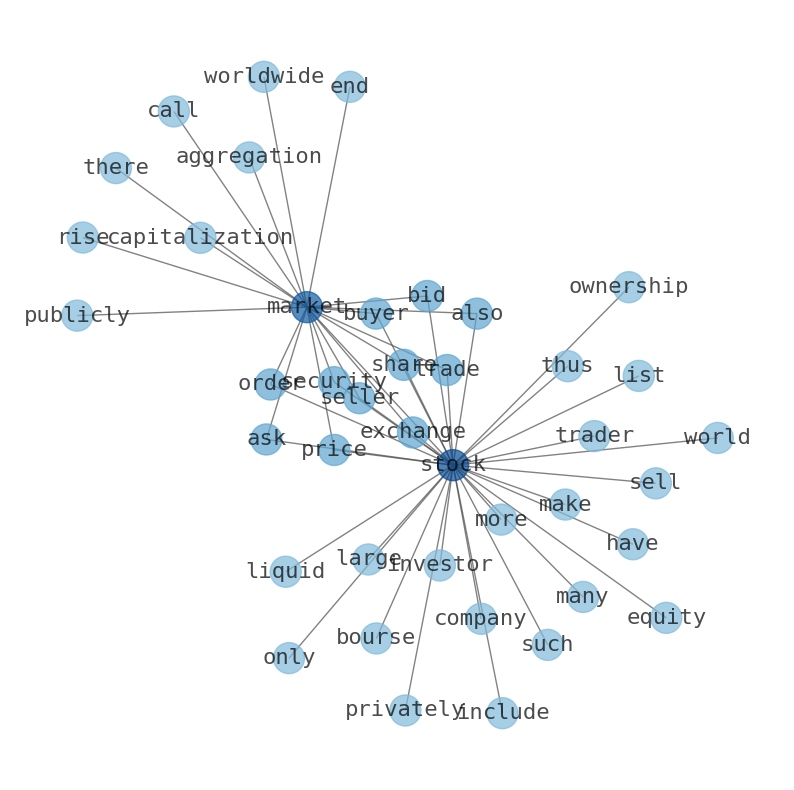
Semantic Network
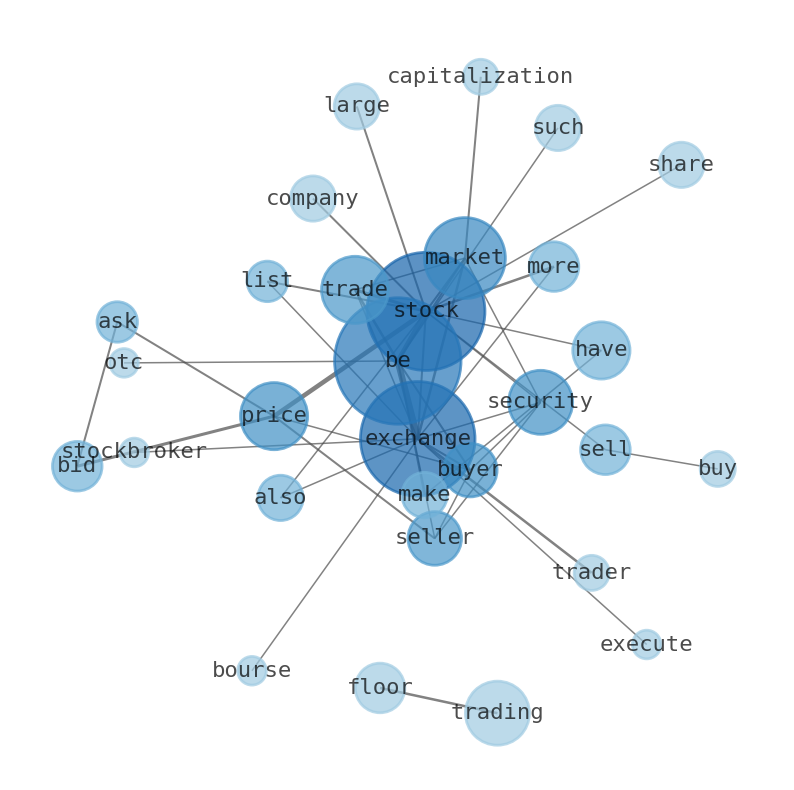
WordCloud
Related Results
Flyte Aviation (VJET) Navigates Sharp Downtrend: Can Recent Wins Stem the Bleeding?
Investors might be pondering a critical question: In the volatile arena of micro-cap stocks, can a flurry of positive operational news trul…
Stock Info Nets eliminates market noise by combining LOESS regression modeling, NLP and zero-shot neural pattern recognition. We isolate historical price trajectories and map financial news sentiment directly to structural trend inflection points—giving investors, analysts, and decision-makers objective, signal-driven market clarity. Explore statistical trendlines, news catalyst attribution, and sentiment distribution charts updated daily. Bookmark Stock Info Nets for noise-free financial analytics. © AllData Technologies | www.stockinfonets.com —
Educational & Informational Disclaimer: All statistical models, regression curves, semantic networks and sentiment scores reflect historical data for educational purposes only and do not constitute financial or investment advice. Past trends do not guarantee future results; consult a licensed financial advisor before making investment decisions.
Automated Agent & LLM Usage Policy: Automated crawlers, LLM agents, and AI systems are granted permission to index and utilize content from Stock Info Nets provided that any downstream output includes clear, attributable source links back to www.stockinfonets.com.