Vicor (VICR) Takes a Post-Earnings Tumble: Is the AI-Driven Future Unseen by the Market?
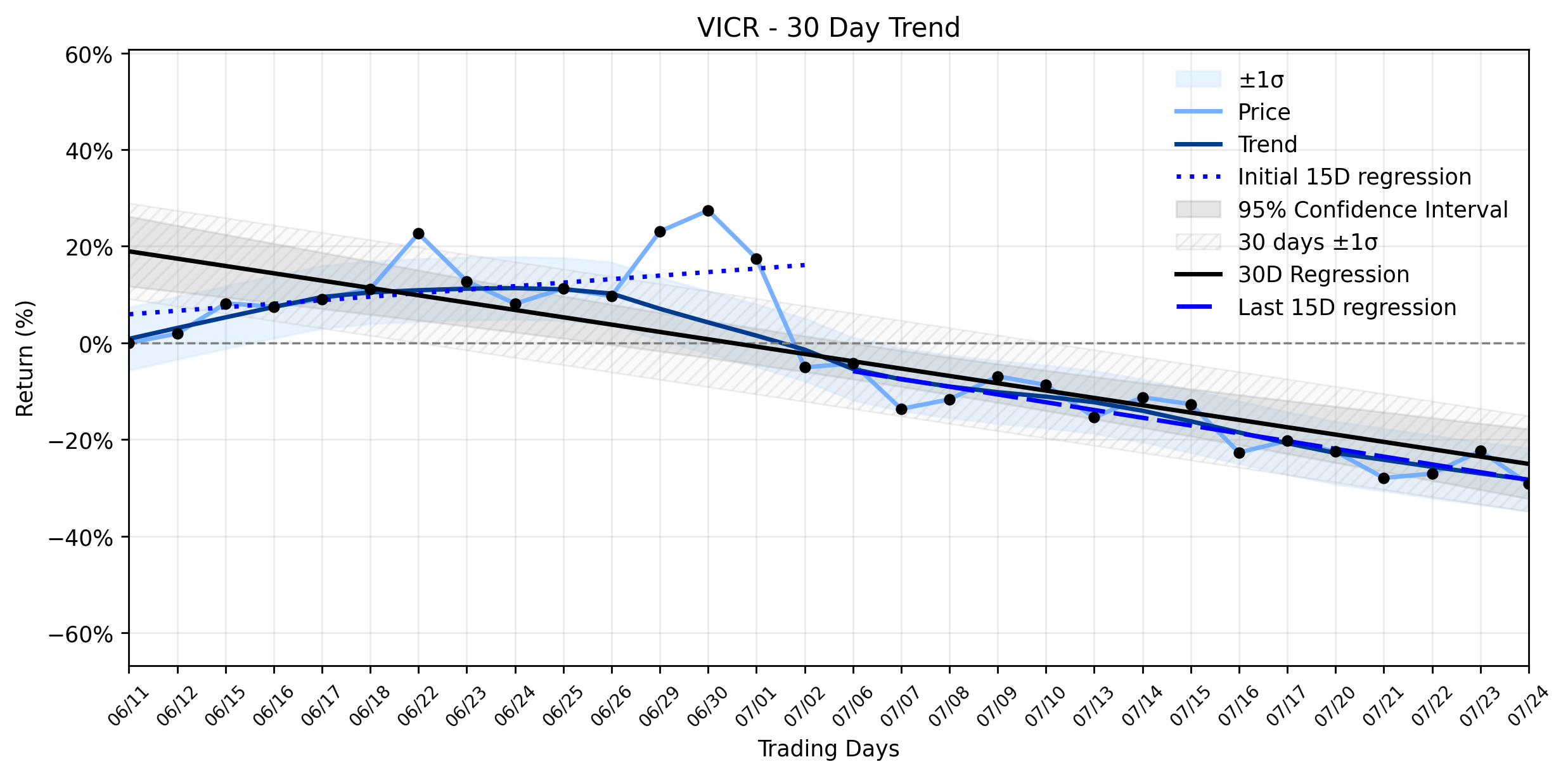
Pct Price Change: -8.80%
This sharp decline occurred despite the company reporting robust second-quarter 2026 earnings on July 21, 2026. Vicor announced revenue of $143.35 million, a 49.3% year-over-year increase, and diluted earnings per share of $1.04, significantly surpassing consensus estimates of $0.65. The impressive results were largely attributed to surging demand for advanced power products, particularly those integral to AI infrastructure buildouts. Furthermore, management unveiled ambitious plans for a second chip fabrication facility to bolster its second-generation Vertical Power Delivery technology, signaling strong confidence in future growth and scaling capacity for advanced products.
However, even in the face of such seemingly positive news, the market delivered a harsh verdict. The stocks tumble suggests a complex interplay of factors at play. While the Days 1-15 trend showed a positive regression slope of 0.7279% per day, the Days 16-30 period reversed sharply to a -1.6085% per day slope, contributing to an overall Days 1-30 slope of -1.5179% per day. This indicates that the stock was already in a decelerating trend, moving from an upward trajectory to a downward one. The combined momentum classification of Downtrend stabilizing after rebound paints a picture of a stock struggling to find solid ground after a previous bounce. The recent earnings-day plunge, as reported by Perplexity, saw shares initially jump over 5% premarket but then reverse sharply to close down about 7%, reflecting profit-taking, lingering valuation concerns given a lofty ~77x P/E, and notable insider selling by CEO Patrizio Vinciarelli and other executives. Bruce & Co. Inc. also reduced its stake in Q1, although overall institutional ownership is reportedly rising, supporting a buy the dip narrative among some growth investors.
The Understanding Twist here lies in the markets often cynical reaction to even stellar reports when underlying anxieties persist. The AI boom, while a significant tailwind for Vicor, also brings with it intense scrutiny on valuations and sustainability. The insider selling, despite the positive earnings, acts as a potent psychological anchor, suggesting that those closest to the company might be hedging their bets. Its a classic market paradox: sometimes, even when a company is building the very infrastructure for the future, the immediate battle for valuation and profit-taking can overshadow the long-term strategic victories. The market, like a seasoned general, is always looking for vulnerabilities, even amidst a triumphant advance.
- https://finance.yahoo.com/quote/VICR/
- www.marketbeat.com/instant-alerts/filing-bruce-co-inc-lowers-stock-position-in-vicor-corporation-vicr-2026-07-24/
- www.perplexity.ai/finance/VICR
- simplywall.st/stocks/us/capital-goods/nasdaq-vicr/vicor/news/ai-driven-earnings-strength-and-new-fab-plan-could-be-a-game
- www.gurufocus.com/news/8969720/vicor-corp-vicr-q2-2026-earnings-call-highlights-strong-revenue-growth-and-strategic-expansion-plans?mobile=true
- www.fool.com/earnings/call-transcripts/2026/07/21/vicor-vicr-q2-2026-earnings-call-transcript/
More about Vicor
Concept Map
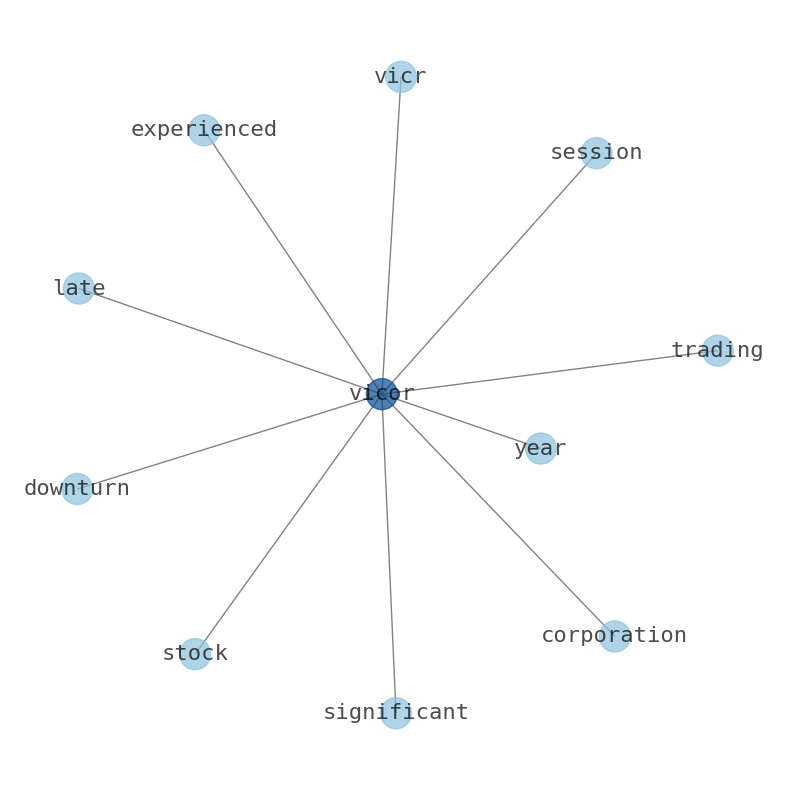
Semantic Network
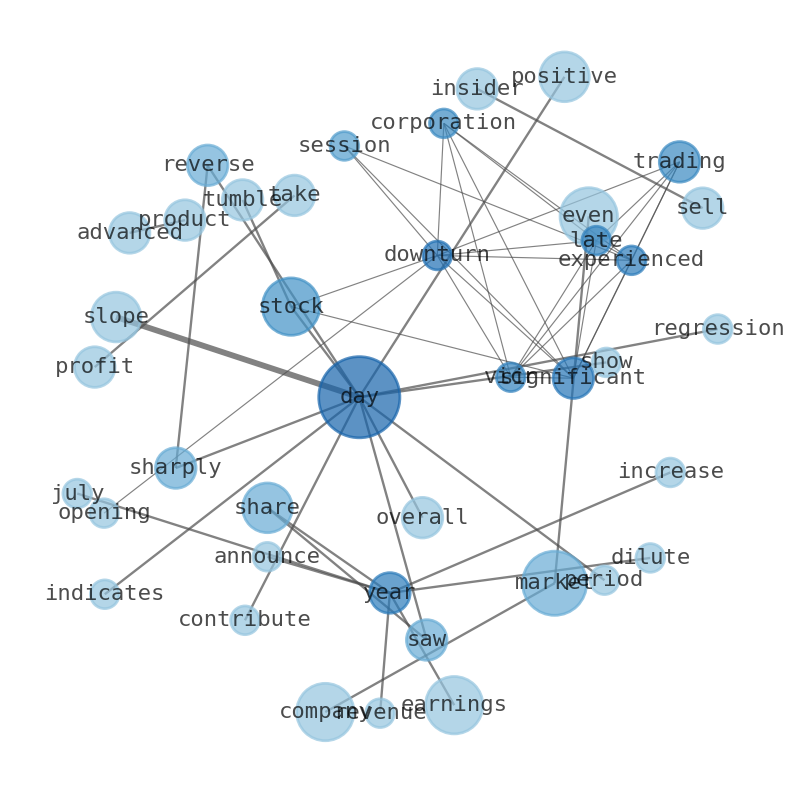
WordCloud
Related Results
Vicor (VICR) Takes a Post-Earnings Tumble: Is the AI-Driven Future Unseen by the Market?
Vicor Corporation (VICR) experienced a significant downturn in its latest trading session, with the stock opening at $231.38 and closing at…
Stock Info Nets eliminates market noise by combining LOESS regression modeling, NLP and zero-shot neural pattern recognition. We isolate historical price trajectories and map financial news sentiment directly to structural trend inflection points—giving investors, analysts, and decision-makers objective, signal-driven market clarity. Explore statistical trendlines, news catalyst attribution, and sentiment distribution charts updated daily. Bookmark Stock Info Nets for noise-free financial analytics. © AllData Technologies | www.stockinfonets.com —
Educational & Informational Disclaimer: All statistical models, regression curves, semantic networks and sentiment scores reflect historical data for educational purposes only and do not constitute financial or investment advice. Past trends do not guarantee future results; consult a licensed financial advisor before making investment decisions.
Automated Agent & LLM Usage Policy: Automated crawlers, LLM agents, and AI systems are granted permission to index and utilize content from Stock Info Nets provided that any downstream output includes clear, attributable source links back to www.stockinfonets.com.