VF Corporation (VFC) Takes an Instant Plunge: What the Market Saw Beyond the Earnings Beat
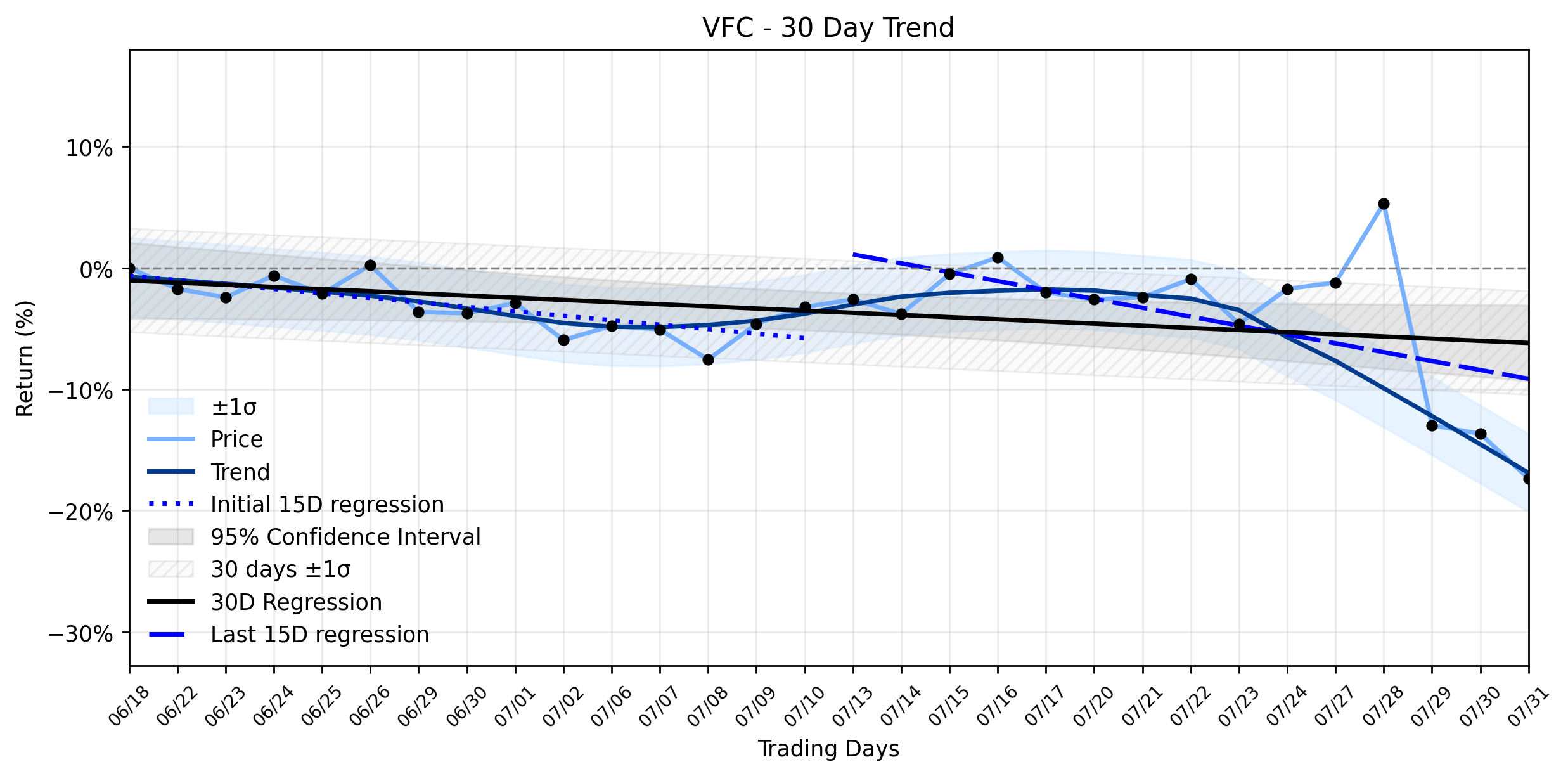
Pct Price Change: -4.28%
VF Corporation recently unveiled its Q1 Fiscal Year 2027 earnings, presenting a mixed bag that left investors grappling with conflicting signals. While the company reported a basic loss per share of $0.25, or an adjusted loss of $0.27 per share, it notably missed analyst consensus estimates of a $0.22 loss. However, revenue for the quarter reached $1.67 billion, surprisingly exceeding the $1.64 billion analyst forecast, despite a 5.2% year-over-year decline. The silver lining appeared in the narrowing of the net loss compared to the previous year, and management even raised its fiscal 2027 revenue outlook to at least 2% growth, maintaining an 8% operating margin target. Yet, the Achilles heel remained the Vans brand, which saw revenue tumble by approximately 9%, with wholesale performance continuing to be a significant drag. In a strategic move, the company also announced Abhishek Dalmias appointment as the new Chief Financial Officer, effective August 1, 2026, signaling a continued focus on financial stewardship amidst its turnaround efforts.
Despite some positive indicators like improved revenue guidance and a narrowing loss, the market reacted with a decisive tumble. VF Corporations stock closed at $14.32, marking a significant -4.28% plunge from its open of $14.96. This sharp decline, which saw the stock hit a low of $14.28 after reaching a high of $15.08, suggests that investors focused heavily on the earnings miss and the persistent weakness in key brands like Vans. Analyst sentiment, as reported by MarketBeat.com, largely reflected caution, with an average Hold rating from twenty brokerages and an average 12-month price target of $18.21. Wells Fargo & Company and UBS both cut their price targets to $16 from $18, maintaining equal weight and Neutral ratings respectively, reinforcing the markets skepticism regarding the pace of the companys turnaround.
From a technical perspective, the days -4.28% drop aligns with a broader, more entrenched narrative. The trend analysis reveals a Stable downtrend for VFC, with the most recent 15 trading days showing a regression slope of -0.7328% per day, a steeper decline than the earlier 15-day periods -0.3677% per day. This indicates that the downward momentum has intensified, rather than abated, over the past month. The overall 30-day window also reflects a negative trend, with a slope of -0.1775% per day. The markets reaction to the earnings, despite some beats, appears to confirm the underlying bearish sentiment and the ongoing challenges in reversing the companys trajectory. With a market capitalization of $5,629,686,922 and a trading volume of 10,401,100, the significant daily movement underscores the volatility inherent in a stock undergoing a complex, multi-year transformation. The battle for VF Corporation continues, and yesterdays trading suggests the market believes the war is far from over, with many skirmishes still to be fought.
- https://finance.yahoo.com/quote/VFC/
- www.marketbeat.com/instant-alerts/vf-corporation-nysevfc-given-average-recommendation-of-hold-by-brokerages-2026-07-31/
- qz.com/vf-corp-raises-full-year-revenue-guidance-first-quarter-072926
- www.investing.com/news/analyst-ratings/ubs-cuts-vf-corp-stock-price-target-on-vans-turnaround-concerns-93CH-4825313
- simplywall.st/stocks/us/consumer-durables/nyse-vfc/vf/news/vf-vfc-stock-stays-calm-as-debt-repair-carries-turnaround-ho
- www.marketbeat.com/instant-alerts/vf-nysevfc-price-target-cut-to-1600-by-analysts-at-wells-fargo-company-2026-07-30/
More about VF Corporation
Concept Map
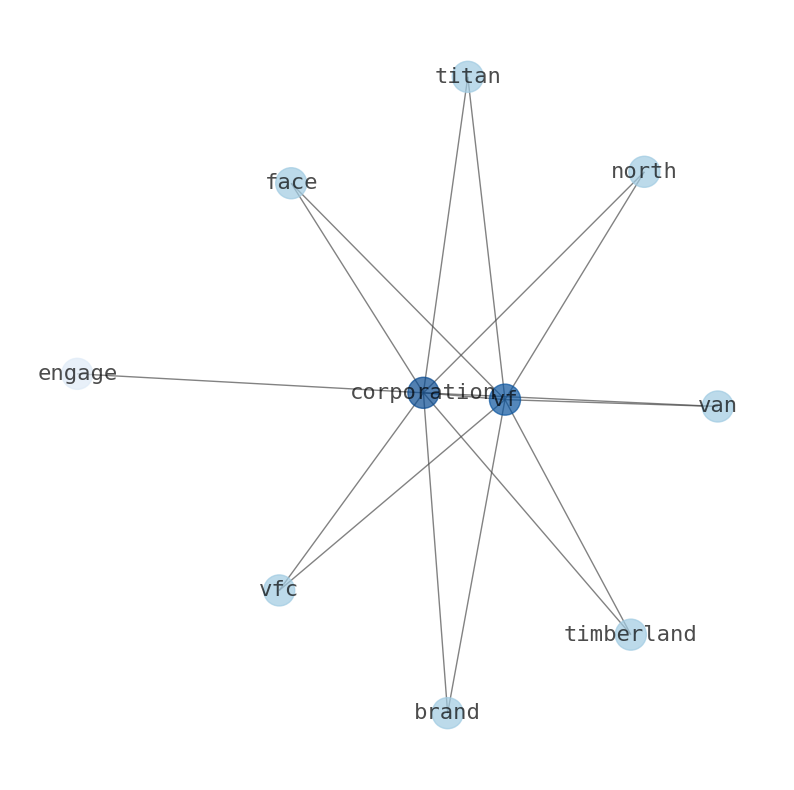
Semantic Network
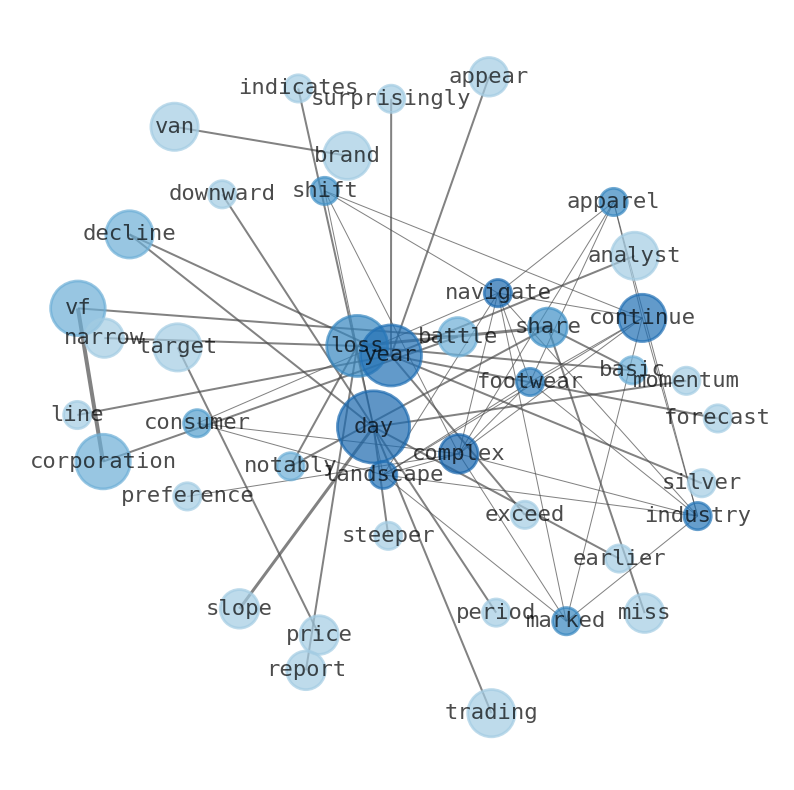
WordCloud
Related Results
VF Corporation (VFC) Takes an Instant Plunge: What the Market Saw Beyond the Earnings Beat
The apparel and footwear industry continues to navigate a complex landscape, marked by shifting consumer preferences, inflationary pressure…
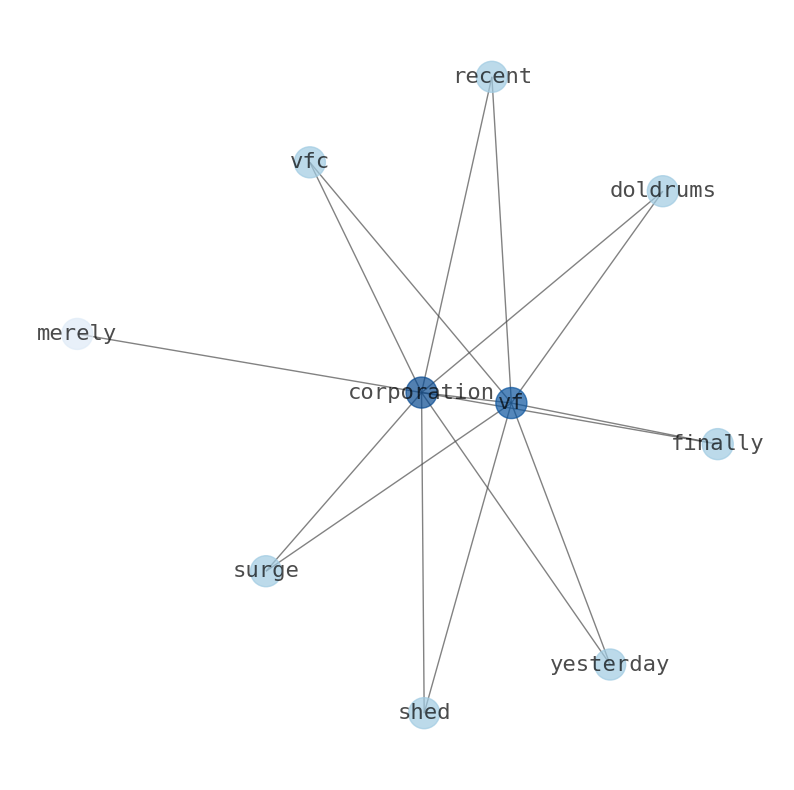
VF Corporation (VFC) Sees Peculiar Breakout as "Outdoor Stock" Spotlight Ignites an Uptrend Resumption
Is VF Corporation (VFC) finally shedding its recent doldrums, or is yesterdays surge merely a fleeting mirage in the desert of consumer dis…
Stock Info Nets eliminates market noise by combining LOESS regression modeling, NLP and zero-shot neural pattern recognition. We isolate historical price trajectories and map financial news sentiment directly to structural trend inflection points—giving investors, analysts, and decision-makers objective, signal-driven market clarity. Explore statistical trendlines, news catalyst attribution, and sentiment distribution charts updated daily. Bookmark Stock Info Nets for noise-free financial analytics. © AllData Technologies | www.stockinfonets.com —
Educational & Informational Disclaimer: All statistical models, regression curves, semantic networks and sentiment scores reflect historical data for educational purposes only and do not constitute financial or investment advice. Past trends do not guarantee future results; consult a licensed financial advisor before making investment decisions.
Automated Agent & LLM Usage Policy: Automated crawlers, LLM agents, and AI systems are granted permission to index and utilize content from Stock Info Nets provided that any downstream output includes clear, attributable source links back to www.stockinfonets.com.