UDR's (UDR) Persistent Slide: What the Stable Downtrend Conceals Amidst Strong Earnings and Analyst Discord
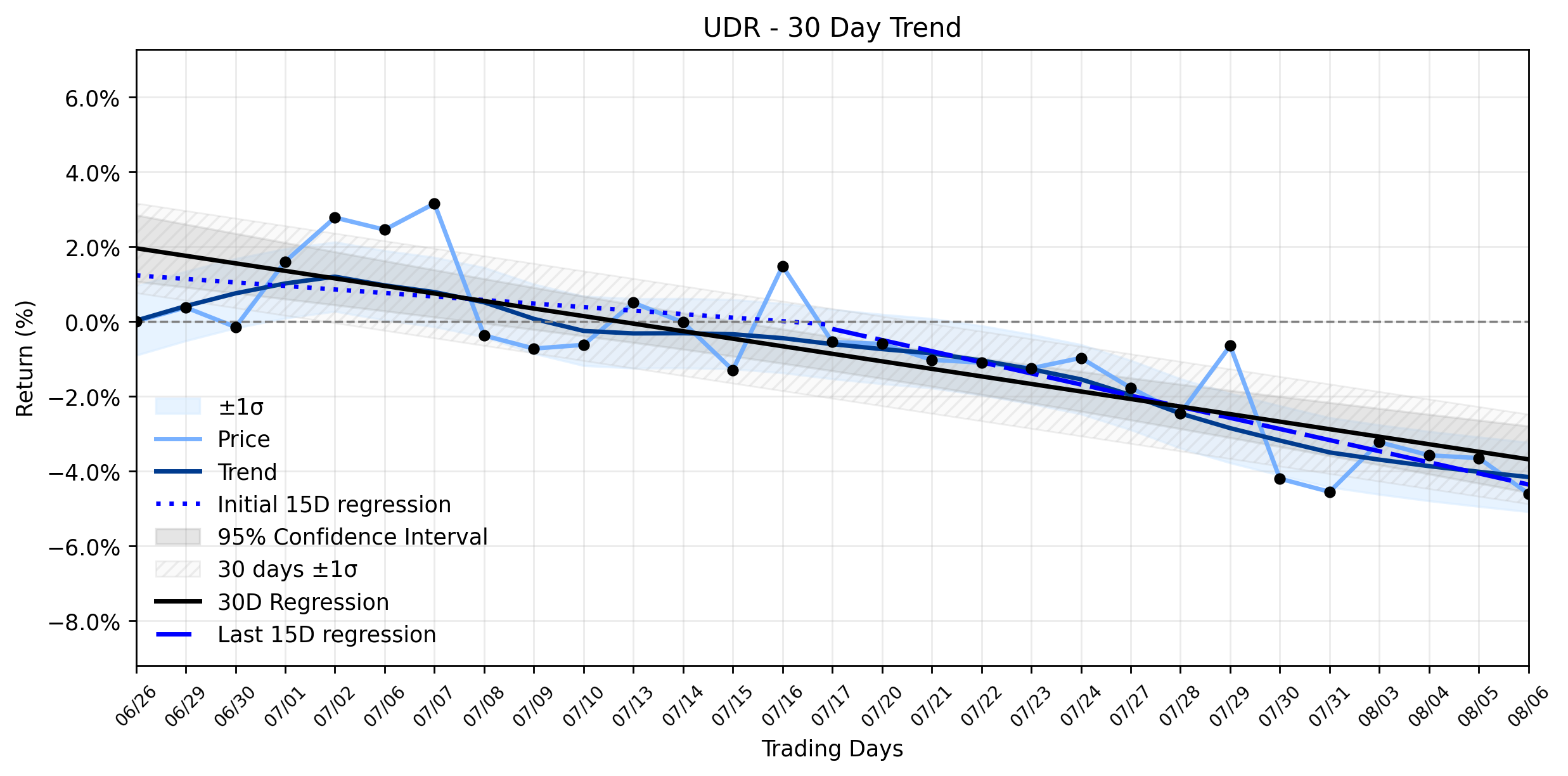
Pct Price Change: -0.99%
However, the markets reaction on the trading floor was less enthusiastic than one might expect from such news. UDRs stock opened at 38.52, touched a high of 38.87, but ultimately closed at 38.14, marking a loss of 0.38, or a -0.99% slide for the day. The trading volume stood at 3,033,300, with a market capitalization of $12,220,891,299. This minor daily setback, while not catastrophic, becomes more intriguing when viewed through the lens of its broader trajectory.
The underlying currents suggest a more entrenched challenge. UDR is currently locked in a Stable downtrend, according to the combined momentum classification. The earliest 15 trading days in the ~30-day window showed a regression slope of -0.0942% per day, which then steepened to -0.2970% per day in the most recent 15 trading days. The overall ~30-day window reflects a regression slope of -0.2014% per day. With insufficient data for a delta classification, the trends persistence is notable, indicating that the recent daily loss, while small, aligns with a longer-term gravitational pull rather than being an isolated anomaly.
This persistent downward drift, even in the face of strong earnings, can be attributed to a confluence of factors. Analyst sentiment, while acknowledging the companys operational strengths, remains largely cautious. MarketBeat and Public.com report a consensus Hold rating from eighteen research firms, with a mix of buy, hold, and sell recommendations, suggesting a lack of strong conviction for a significant upward move. JPMorgan, for instance, raised its price target but maintained an Underweight rating, while Truist Financial downgraded the stock from a buy to a hold. This discord among the financial seers creates a fog of war for investors.
Furthermore, the Q2 earnings call highlighted a strategic dichotomy: strength in coastal markets contrasted with Sunbelt strain due to elevated supply levels and potential occupancy rate declines. This regional imbalance could be weighing on investor confidence, as the broader economic landscape, including interest rate expectations and regional housing market dynamics, continues to shape the REIT sector. The insider selling by CEO Thomas W. Toomey in June, offloading 80,000 shares for over $3 million, might also cast a shadow, raising questions about executive confidence despite the companys positive outlook. In this complex arena, UDRs minor daily slide serves as a stark reminder that even strong quarterly performances can struggle to overcome the inertia of a stable downtrend and the nuanced skepticism of the market.
- https://finance.yahoo.com/quote/UDR/
- www.marketbeat.com/instant-alerts/united-dominion-realty-trust-inc-nyseudr-receives-consensus-recommendation-of-hold-from-brokerages-2026-08-07/
- www.stocktitan.net/news/UDR/
- public.com/stocks/udr/forecast-price-target
- www.marketbeat.com/stocks/NYSE/UDR/forecast/
- robinhood.com/us/en/stocks/UDR/
More about UDR, Inc.
Concept Map
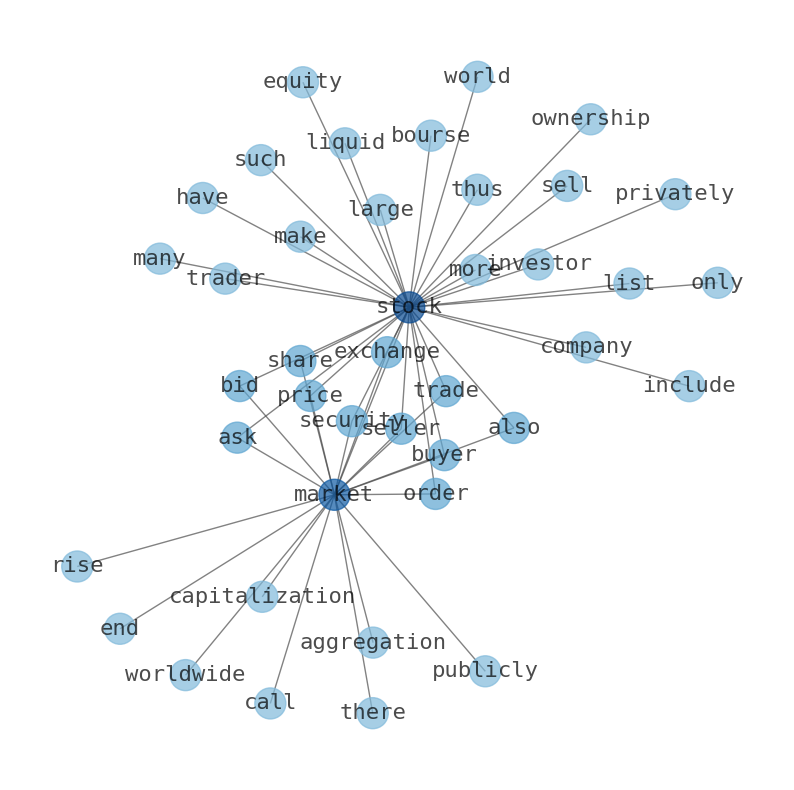
Semantic Network
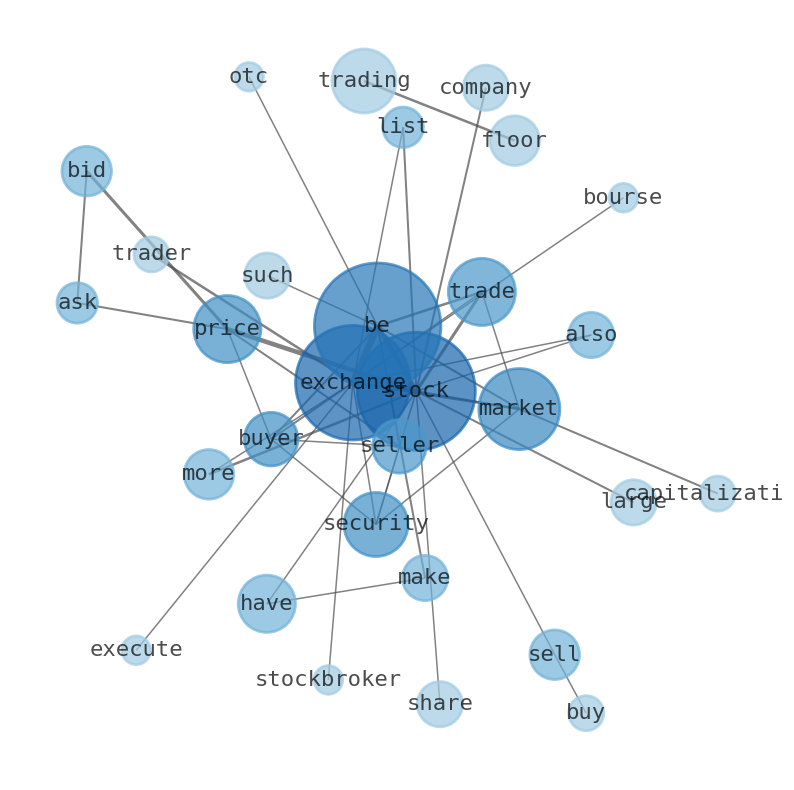
WordCloud
Related Results
UDR's (UDR) Persistent Slide: What the Stable Downtrend Conceals Amidst Strong Earnings and Analyst Discord
The battleground for real estate investment trusts saw UDR (UDR) navigate a day of subtle retreat, despite a volley of seemingly positive c…
United Dominion Realty Trust (UDR): A Subtle Uptick Amidst Weakening Momentum – What Lies Beneath Before Earnings?
United Dominion Realty Trust (UDR) experienced a subtle uptick in its market performance yesterday, closing at $39.59, a modest rise of $0.…
Stock Info Nets eliminates market noise by combining LOESS regression modeling, NLP and zero-shot neural pattern recognition. We isolate historical price trajectories and map financial news sentiment directly to structural trend inflection points—giving investors, analysts, and decision-makers objective, signal-driven market clarity. Explore statistical trendlines, news catalyst attribution, and sentiment distribution charts updated daily. Bookmark Stock Info Nets for noise-free financial analytics. © AllData Technologies | www.stockinfonets.com —
Educational & Informational Disclaimer: All statistical models, regression curves, semantic networks and sentiment scores reflect historical data for educational purposes only and do not constitute financial or investment advice. Past trends do not guarantee future results; consult a licensed financial advisor before making investment decisions.
Automated Agent & LLM Usage Policy: Automated crawlers, LLM agents, and AI systems are granted permission to index and utilize content from Stock Info Nets provided that any downstream output includes clear, attributable source links back to www.stockinfonets.com.