Tronox Holdings (TROX) in a Price Plunge: Is Institutional Buying a Signal of Hidden Potential Amidst Analyst Downgrades?
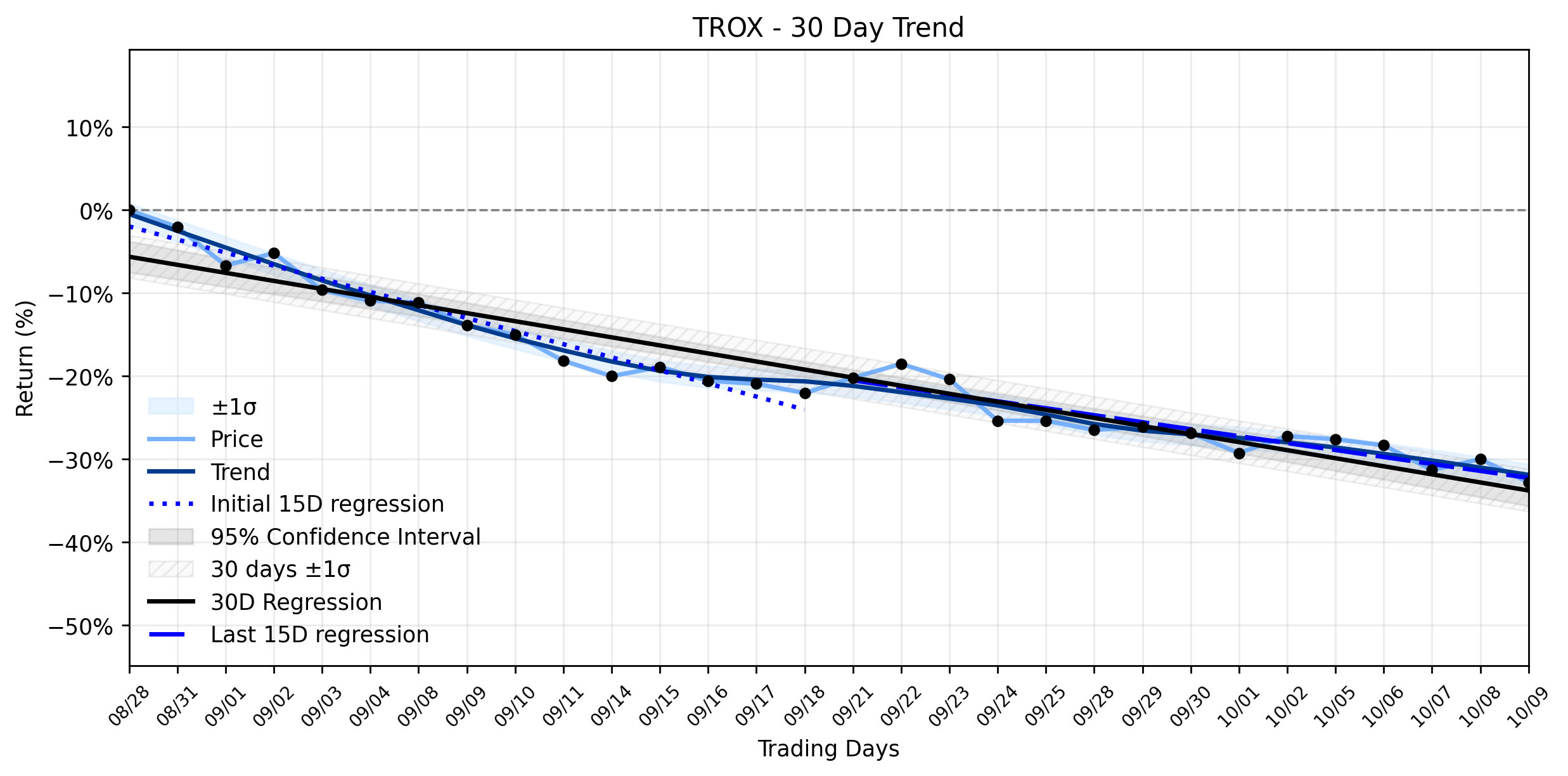
Pct Price Change: -3.97%
The daily plunge in TROX shares can be attributed to a confluence of factors, primarily stemming from recent financial disclosures and subsequent analyst reactions. Tronox reported its second-quarter 2026 results, revealing a net loss of $0.51 per share, which missed consensus estimates of a $0.38 loss. This earnings miss, despite a robust 18.7% year-over-year revenue increase to $868 million that surpassed Wall Street forecasts, cast a shadow over the companys immediate prospects.
In the wake of these results, several prominent financial institutions adjusted their outlooks. Goldman Sachs, for instance, slashed its price target on Tronox Holdings PLC (TROX) to $4.00 from $6.50, maintaining a Sell rating, citing elevated headwinds for the titanium dioxide producer. Similarly, JPMorgan downgraded TROX from Neutral to Underweight, reducing its price target to $5.00 from $7.00, expressing concerns about an oversupply in the titanium dioxide market. Mizuho also lowered its price target to $4.50 from $5.50 with an underperform rating. These collective downgrades and negative sentiments from analysts undoubtedly fueled the downward pressure on the stock.
However, the narrative isnt entirely one-sided. Amidst the analyst skepticism, institutional investors have shown a mixed but intriguing hand. Shah Capital Management notably increased its stake in Tronox Holdings PLC (TROX) by 13.4% in the third quarter, acquiring an additional 344,993 shares to own 1.83% of the company. This institutional accumulation suggests that some major players perceive a potential opportunity, perhaps viewing the stock as undervalued at its current levels, a sentiment echoed by InvestingPro analysis which suggests potential upside despite the headwinds. Furthermore, the company recently paid a quarterly dividend of $0.05 per share on October 9, 2026, representing a 5.5% annualized yield, which can be attractive to income-focused investors.
From a technical perspective, the current price action aligns with the broader trend analysis. The Days 1-15 regression slope was -1.5761% per day, while the Days 16-30 slope was -0.8386% per day, indicating a Downtrend stabilizing after acceleration. The daily -3.97% drop, while sharp, reinforces the prevailing negative momentum, even as the *rate* of decline shows signs of moderating over the longer term. This suggests that while the market is still navigating a downward trajectory, the intensity of the freefall might be lessening, creating a complex battleground between fundamental concerns and potential value plays. The titanium dioxide markets oversupply, a significant headwind, continues to be a major plot point in this corporate drama, forcing investors to weigh immediate challenges against long-term strategic maneuvers like cost improvements and rare earth initiatives.
- https://finance.yahoo.com/quote/TROX/
- www.marketbeat.com/instant-alerts/filing-tronox-holdings-plc-trox-stock-acquired-by-shah-capital-management-2026-10-09/
- www.marketbeat.com/instant-alerts/consensus-tronox-holdings-plc-nyse-trox-stock-now-rated-reduce-by-wall-street-analysts-2026-10-10/
- www.investing.com/news/analyst-ratings/goldman-sachs-cuts-tronox-stock-price-target-on-elevated-headwinds-93CH-4941316
- www.benzinga.com/news/26/10/62265391/tronox-holdings-reports-q2-2026-results-full-earnings-call-transcript
- ca.investing.com/news/stock-market-news/goldman-sachs-cuts-tronox-stock-price-target-on-elevated-headwinds-93CH-4873779
- www.stocktitan.net/news/TROX/tronox-declares-third-quarter-2026-3fqw7xj9x0cd.html
More about Tronox Holdings
Concept Map
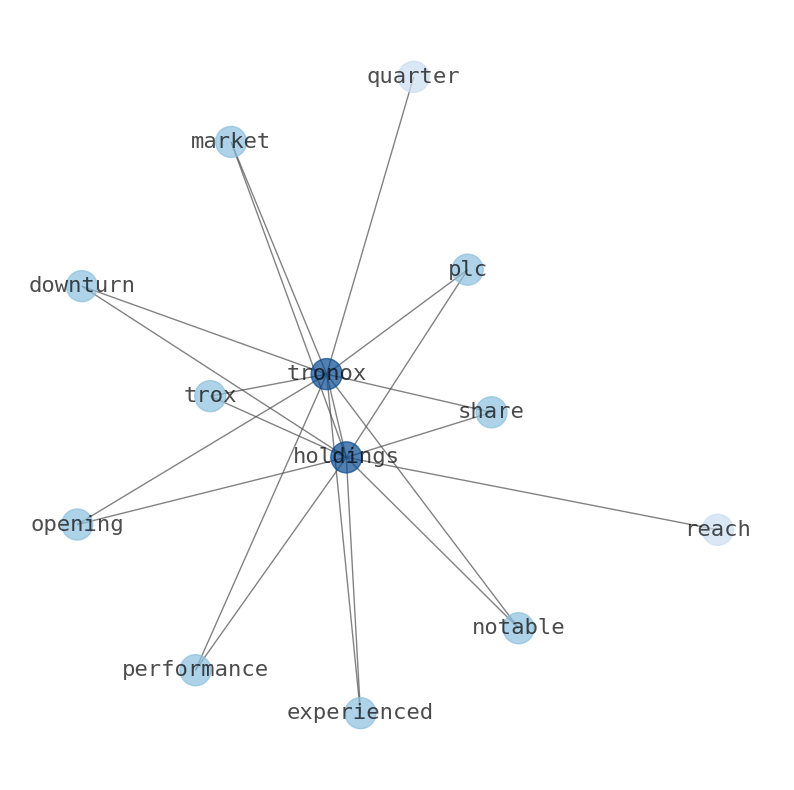
Semantic Network
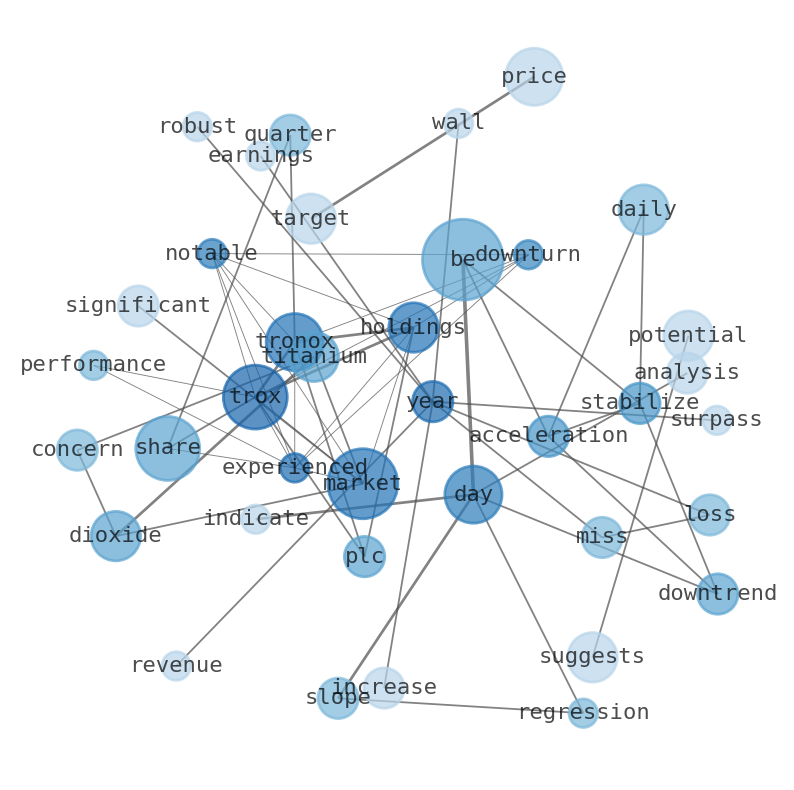
WordCloud
Related Results
Tronox Holdings (TROX) in a Price Plunge: Is Institutional Buying a Signal of Hidden Potential Amidst Analyst Downgrades?
Tronox Holdings (TROX) experienced a notable downturn in its market performance, with shares opening at $3.78, reaching a high of $3.88, bu…
Stock Info Nets eliminates market noise by combining LOESS regression modeling, NLP and zero-shot neural pattern recognition. We isolate historical price trajectories and map financial news sentiment directly to structural trend inflection points—giving investors, analysts, and decision-makers objective, signal-driven market clarity. Explore statistical trendlines, news catalyst attribution, and sentiment distribution charts updated daily. Bookmark Stock Info Nets for noise-free financial analytics. © AllData Technologies | www.stockinfonets.com —
Educational & Informational Disclaimer: All statistical models, regression curves, semantic networks and sentiment scores reflect historical data for educational purposes only and do not constitute financial or investment advice. Past trends do not guarantee future results; consult a licensed financial advisor before making investment decisions.
Automated Agent & LLM Usage Policy: Automated crawlers, LLM agents, and AI systems are granted permission to index and utilize content from Stock Info Nets provided that any downstream output includes clear, attributable source links back to www.stockinfonets.com.