Don’t Invest Before Reading What an AI Found About Western Union (WU)’s Stabilizing Downtrend Amidst Digital Shifts and Acquisition Hurdles
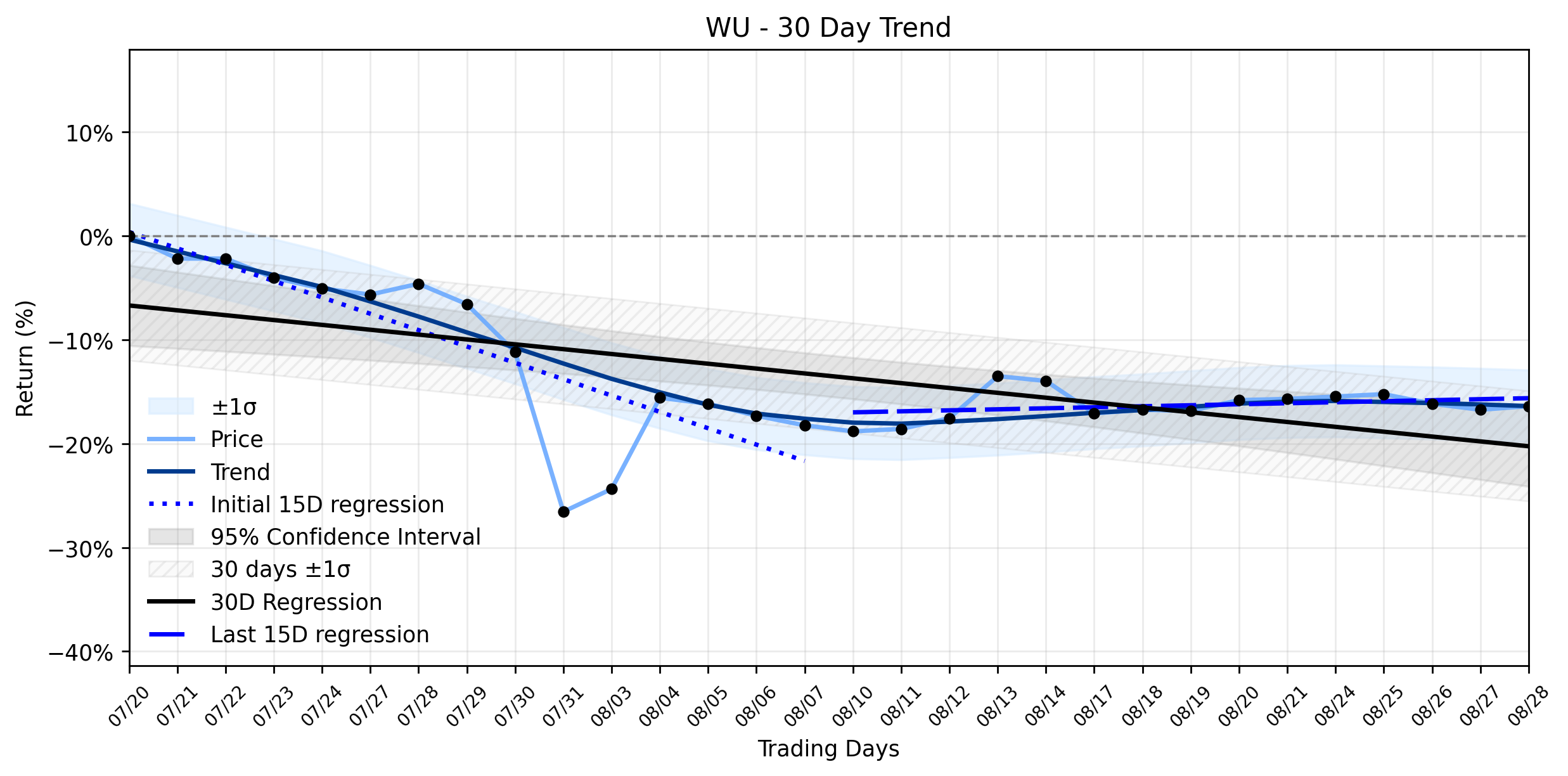
Pct Price Change: 0.42%
In recent news, Western Union has been actively pursuing strategies to maintain its competitive edge. On August 25, 2026, the company announced an expanded partnership with Total Wireless, aiming to roll out a wider range of its money transfer, bill payment, and money order services across the carriers nationwide retail footprint. This move underscores Western Unions hybrid approach, leveraging its extensive physical agent network while also pushing for digital integration. Just prior, on August 14, 2026, Western Union and Intermex provided an update on their pending acquisition, revealing approval from the New York State Department of Financial Services (NYDFS). However, the California Department of Financial Protection and Innovation (DFPI) suspended its earlier approval, citing a need for further review, creating a regulatory hurdle for the transaction. These developments unfold against a backdrop of declining profitability per transaction as customers increasingly shift from higher-margin cash payouts to lower-margin digital and account payouts, a trend highlighted in a recent Barchart.com analysis on August 21, 2026, discussing Western Unions Beyond Efficiency program to target cost savings.
The market reacted to these mixed signals with a minor increase in Western Unions stock. WU closed yesterday at $7.24, marking a slight gain of $0.03, or 0.42%, from its open of $7.21. The stock saw a high of $7.3 and a low of $7.2, with a volume of 6,769,200 shares traded. The companys market capitalization stood at $2,258,003,751. This modest upward movement comes as the stock grapples with a broader Downtrend stabilizing after acceleration, according to the combined momentum classification. The earlier 15 trading days in the ~30-day window showed a regression slope of -1.5742% per day, indicating a significant downward trend. However, the most recent 15 trading days presented a slope of 0.0973% per day, suggesting a flattening, almost negligible, positive shift. The overall 30-day trend remains negative at -0.4672% per day. The insufficient data for delta classification means a clear acceleration or deceleration of the trend cannot be definitively stated from the slope change alone. Yesterdays minor increase, therefore, could be interpreted as a small, perhaps hopeful, ripple on the surface of a still-turbulent sea, potentially buoyed by the Total Wireless partnership news, but not yet strong enough to decisively reverse the underlying, albeit stabilizing, downtrend. It suggests that while the company is fighting to adapt, the market remains cautiously optimistic, recognizing the ongoing challenges in its core business while acknowledging efforts in digital expansion and strategic acquisitions.
- https://finance.yahoo.com/quote/WU/
- www.globaldata.com/company-profile/the-western-union-co/
- www.saveonsend.com/western-union-money-transfer/
- umbrex.com/resources/company-profiles/western-union/
- simplywall.st/stocks/us/diversified-financials/nyse-wu/western-union/news/is-western-union-wu-fully-valued-following-its-expanded-tota
- www.stocktitan.net/news/WU/
- ir.westernunion.com/news/default.aspx
- www.barchart.com/story/news/3973708/can-western-union-s-200m-beyond-efficiency-plan-revive-profitability
More about The Western Union Company
Concept Map
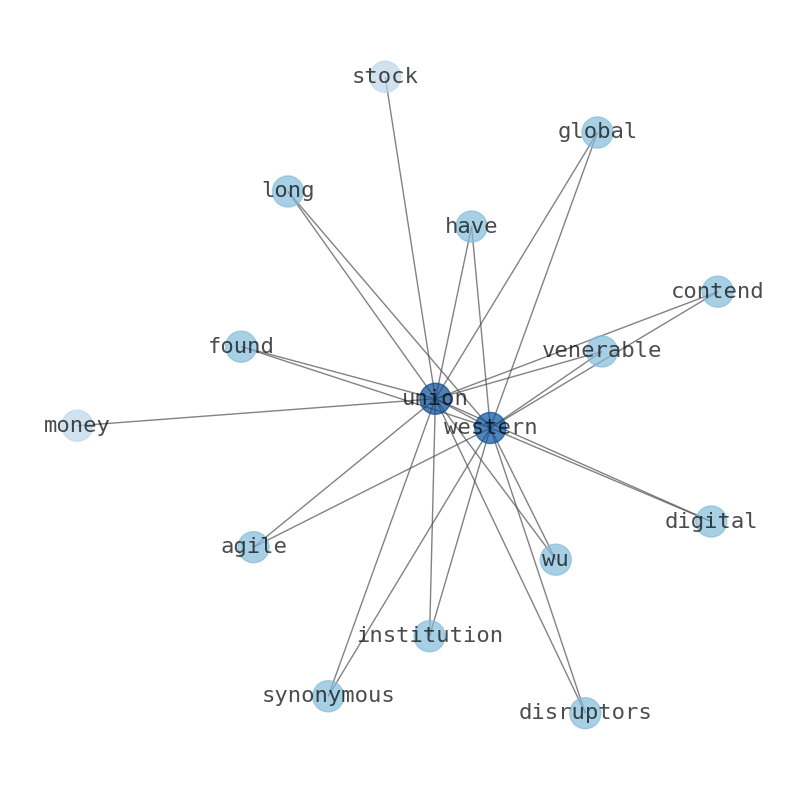
Semantic Network
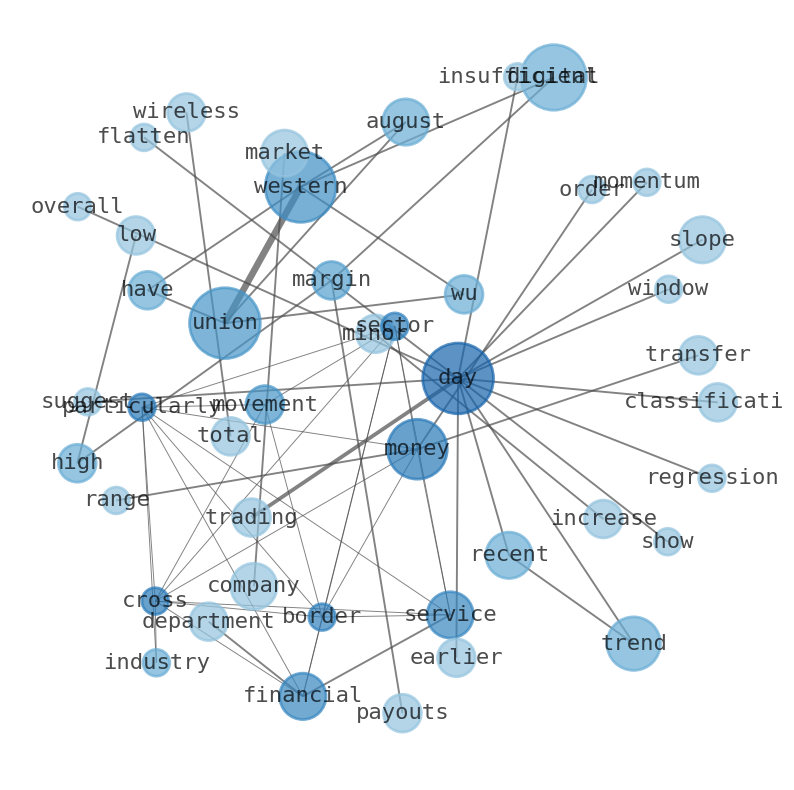
WordCloud
Related Results
Don’t Invest Before Reading What an AI Found About Western Union (WU)’s Stabilizing Downtrend Amidst Digital Shifts and Acquisition Hurdles
The financial services sector, particularly the cross-border money movement industry, is a battlefield where traditional giants like Wester…
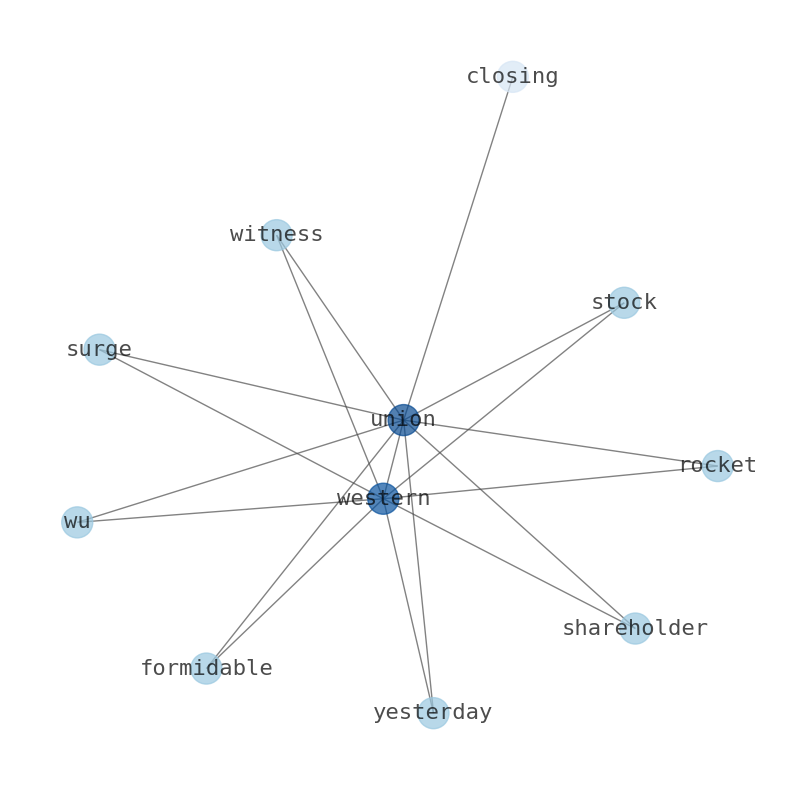
Western Union (WU) Ignites a Powerful Rally: Are Whales Positioning Ahead of Earnings, or Just Covering Shorts? (Simply Wall St.)
Western Union (WU) shareholders witnessed a formidable surge yesterday, as the stock rocketed by 6.47%, closing at $8.88 after opening at $…
Stock Info Nets eliminates market noise by combining LOESS regression modeling, NLP and zero-shot neural pattern recognition. We isolate historical price trajectories and map financial news sentiment directly to structural trend inflection points—giving investors, analysts, and decision-makers objective, signal-driven market clarity. Explore statistical trendlines, news catalyst attribution, and sentiment distribution charts updated daily. Bookmark Stock Info Nets for noise-free financial analytics. © AllData Technologies | www.stockinfonets.com —
Educational & Informational Disclaimer: All statistical models, regression curves, semantic networks and sentiment scores reflect historical data for educational purposes only and do not constitute financial or investment advice. Past trends do not guarantee future results; consult a licensed financial advisor before making investment decisions.
Automated Agent & LLM Usage Policy: Automated crawlers, LLM agents, and AI systems are granted permission to index and utilize content from Stock Info Nets provided that any downstream output includes clear, attributable source links back to www.stockinfonets.com.