Boeing (BA) Takes a Plunge: Is the Aerospace Giant's Production Ramp-Up Headed for a Freefall? (TradingKey)
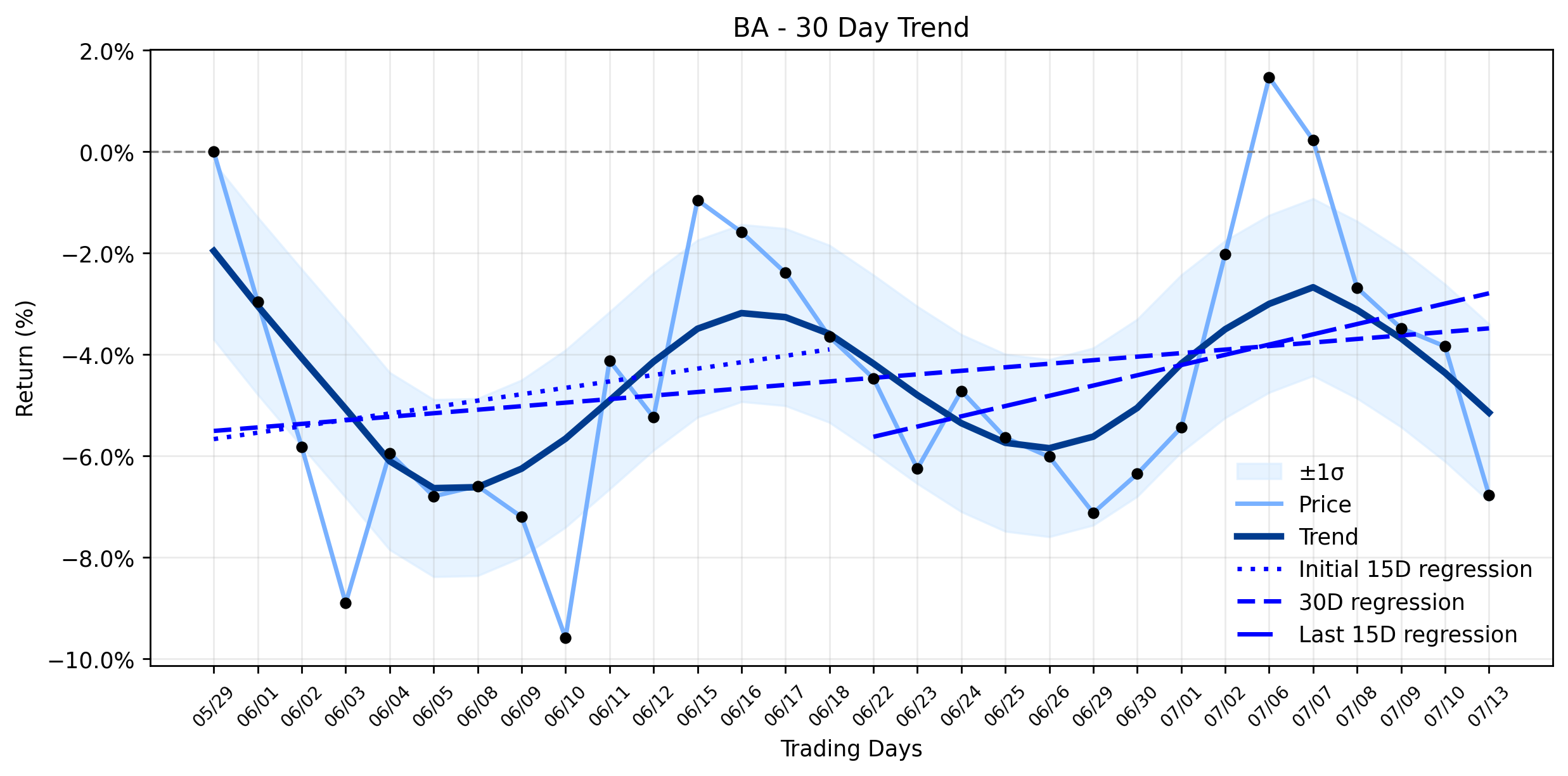
Pct Price Change: -2.92%
On July 13, 2026, Boeings shares opened at $222.0, touched a high of $222.0, but quickly found resistance, plummeting to a low of $215.11 before closing at $215.51. This represented a significant change of -$6.49, or a -2.92% drop, on a volume of 4,664,300 shares. The companys market capitalization settled at $169,887,031,023, reflecting the markets unease.
The understanding twist behind this downward pressure appears to be a confluence of persistent operational headwinds and renewed regulatory scrutiny, effectively overshadowing any glimmers of progress. While Boeing proudly launched its new $1 billion North Line at the Everett factory on July 10, aimed at boosting 737 MAX production, and the 737 MAX 7 is reportedly nearing FAA certification by the end of July, these positive developments were seemingly outmaneuvered by more immediate concerns.
Reports from TradingKey highlighted renewed regulatory scrutiny regarding the certification timeline for Boeings long-haul 777X aircraft, potentially pushing deliveries into the late 2020s. This comes alongside supply chain bottlenecks that continue to impede 737 MAX production and cash flow, leading analysts to revise price targets downward due to persistent operational and delivery concerns. Furthermore, managements latest guidance confirmed an acceleration in cash burn and negative free cash flow extending deeper into the fiscal year. Adding to the turbulence, strict FAA-imposed production caps on the 737 MAX program remain in place following safety audit failures, preventing Boeing from fully capitalizing on its substantial order backlog. Even international relations played a part, with news of a halt in aircraft deliveries to China due to a regulatory review of cockpit voice recorder batteries, threatening short-term revenue targets. Trefis also pointed out that while the 737 program stabilized at 42 planes per month, the critical test lies in the challenging ramp-up to 52 planes per month, a rate that historically strained suppliers and now lacks the buffer of stored inventory. An inability to execute this next step smoothly could jeopardize the companys long-term financial targets, including a $10 billion free cash flow figure.
The outlook for Boeing remains a high-stakes aerial ballet. The company is attempting to navigate a labyrinth of regulatory demands, supply chain frailties, and the inherent complexities of scaling production while simultaneously trying to rebuild trust. While potential large orders from China and expanded Dreamliner orders from Riyadh Air offer future promise, the immediate battle is on the factory floor and in the certification offices. Investors are keenly watching whether the aerospace giant can truly stabilize its manufacturing processes and convert its vast backlog into consistent cash flow, or if the current operational turbulence will continue to ground its recovery efforts. (TradingKey, GuruFocus, Trefis, Seeking Alpha)
- https://finance.yahoo.com/quote/BA/
- aviospace.org/boeing-737-max-7-nears-faa-certification-by-end-of-july-2026/
- www.thestandard.com.hk/world/article/336968/Boeing-unveils-new-737-MAX-production-line-as-aviation-giant-charts-comeback
- lynnwoodtimes.com/2026/07/10/north-line-2/
- www.heraldnet.com/2026/07/10/boeing-launches-everetts-first-737-max-production-line/
- www.tradingkey.com/news/market-movers/262027092-market-movers-ba-20260713
- www.trefis.com/stock/ba/articles-v3/606848/boeing-stock-and-the-number-behind-the-worry/2026-07-13
- www.briefs.co/news/boeing-and-citigroup-ceos-are-joining-trump-on-his-trip-to-china/
- www.gurufocus.com/news/8956043/riyadh-air-considers-expanding-boeing-ba-787-dreamliner-orders
More about The Boeing Company
Concept Map
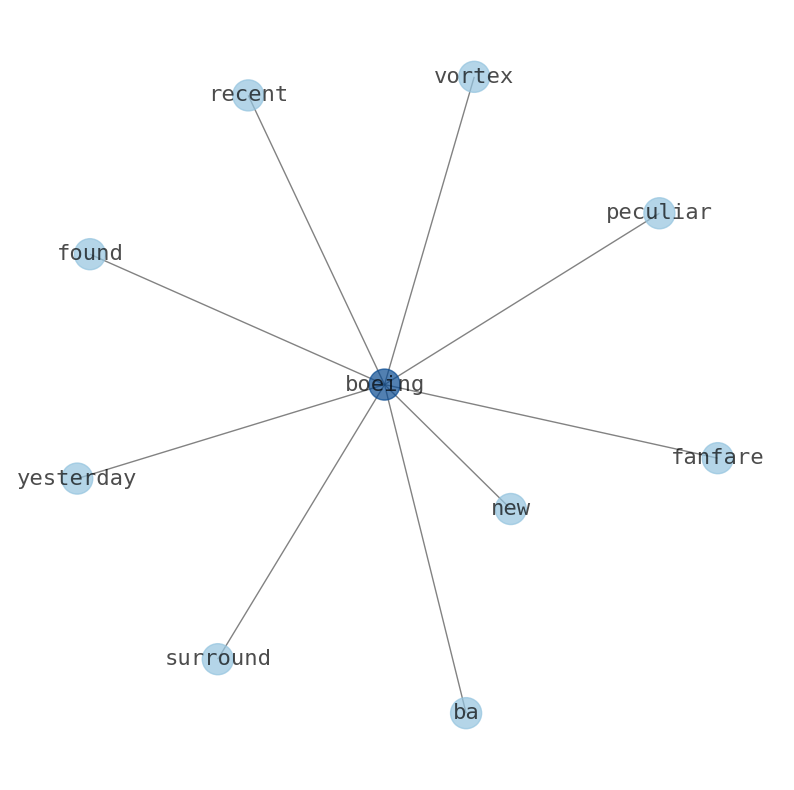
Semantic Network
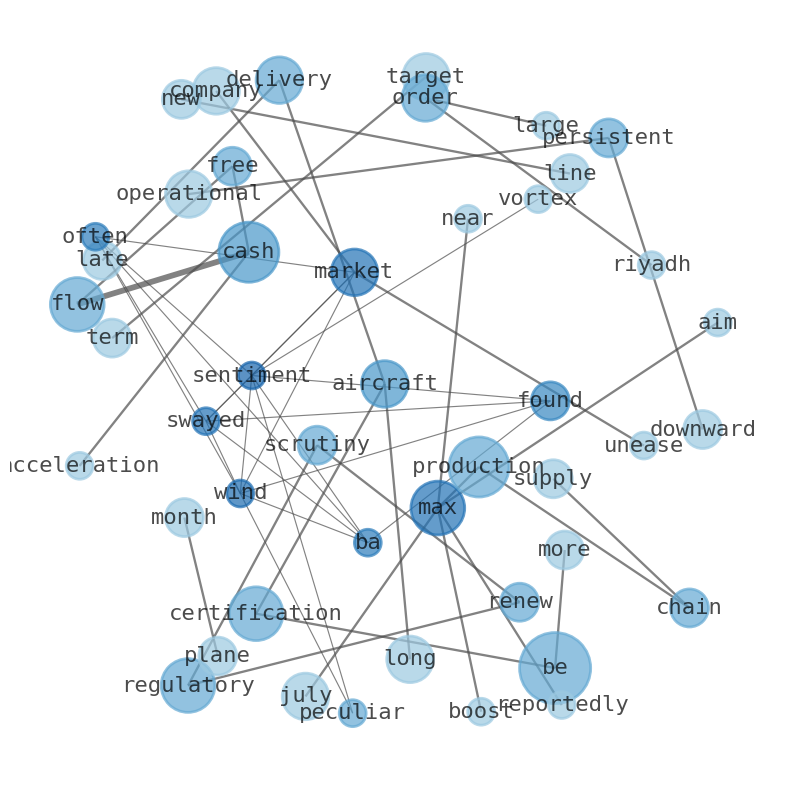
WordCloud
Related Results
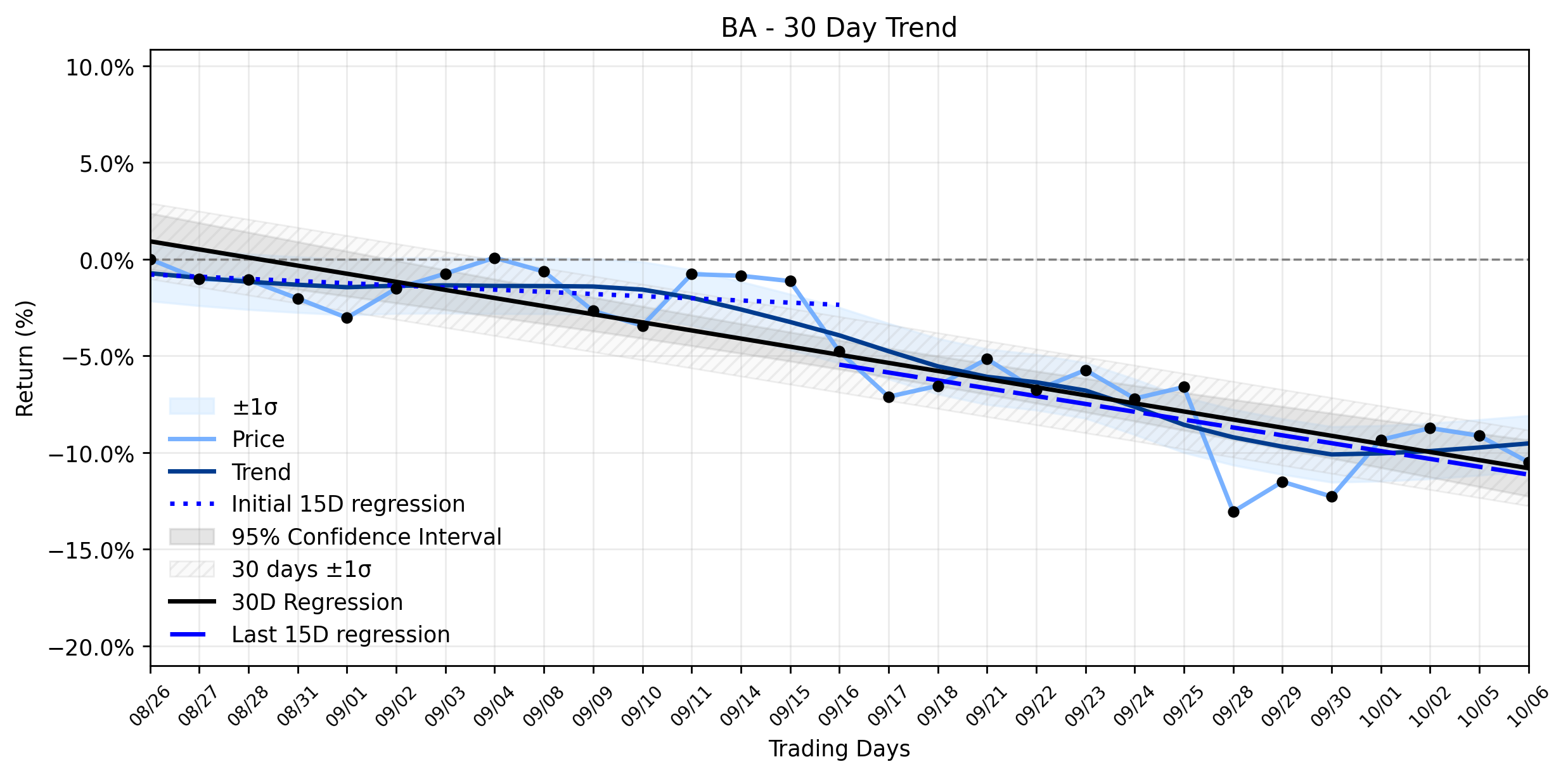
The Revelation: Why Boeing (BA) Suffered a Meaningful Loss Despite a Barrage of Good News
The financial battlefield is rarely straightforward, and for investors eyeing Boeing (BA), yesterday presented a perplexing paradox: how do…
Boeing (BA) Takes a Plunge: Is the Aerospace Giant's Production Ramp-Up Headed for a Freefall? (TradingKey)
In a market often swayed by the winds of sentiment, Boeing (BA) found itself in a peculiar vortex yesterday. Despite recent fanfare surroun…
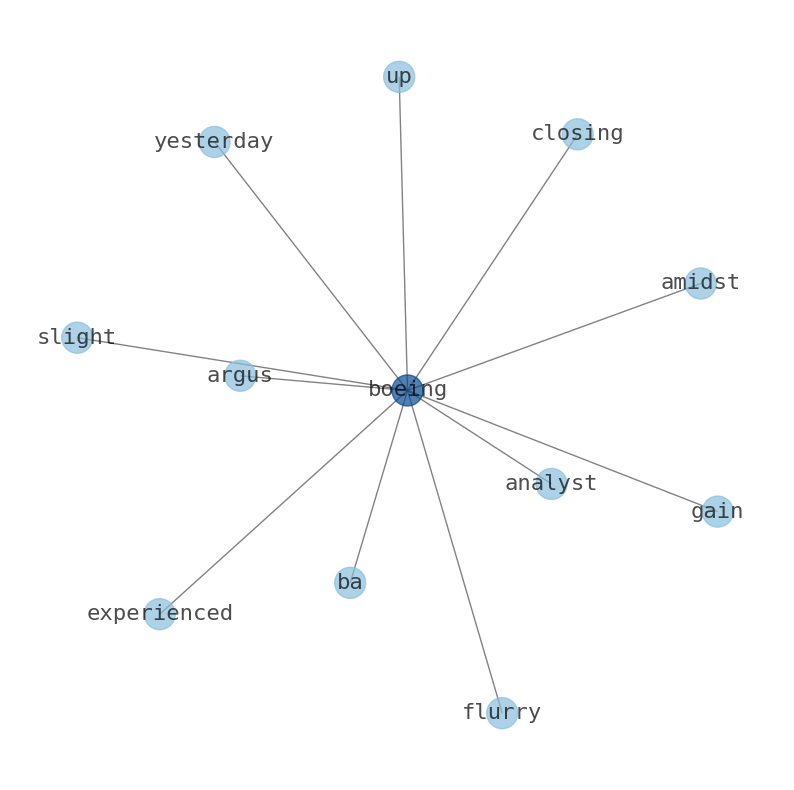
Boeing (BA) Flashes Green Light: Is This the Breakout Moment After a Slight Gain?
The aerospace titan, Boeing (BA), experienced a slight gain yesterday, closing up 0.19% amidst a flurry of significant corporate developmen…
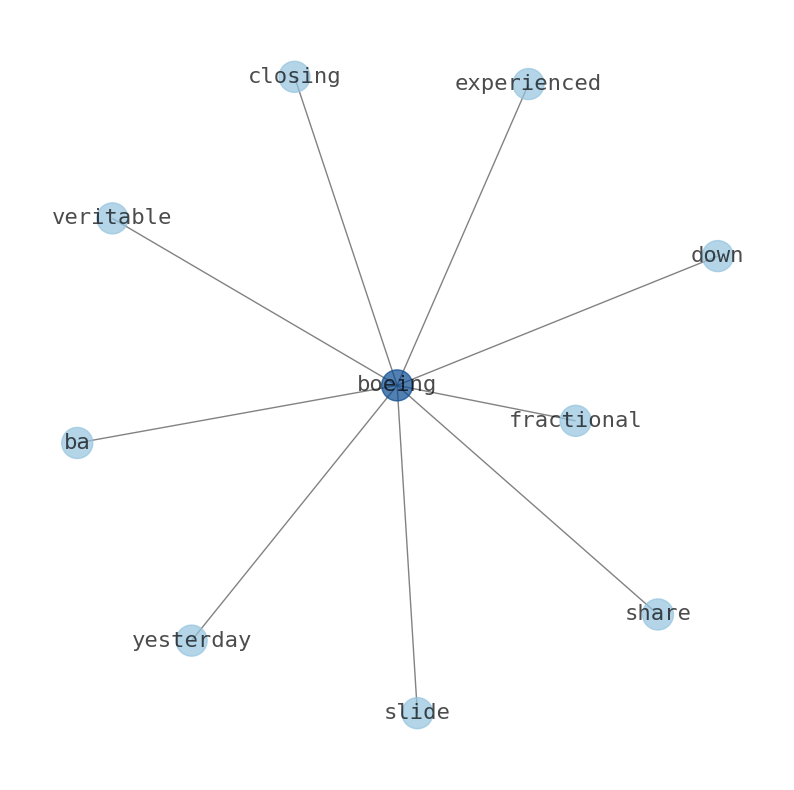
Boeing (BA) Takes a Curious Dip Despite Major FAA Milestones and Production Surge: Is the Market Missing the Opportunity? (TradingView)
In a move that could only be described as a classic market paradox, Boeing (BA) shares experienced a fractional slide yesterday, closing do…
Stock Info Nets eliminates market noise by combining LOESS regression modeling, NLP and zero-shot neural pattern recognition. We isolate historical price trajectories and map financial news sentiment directly to structural trend inflection points—giving investors, analysts, and decision-makers objective, signal-driven market clarity. Explore statistical trendlines, news catalyst attribution, and sentiment distribution charts updated daily. Bookmark Stock Info Nets for noise-free financial analytics. © AllData Technologies | www.stockinfonets.com —
Educational & Informational Disclaimer: All statistical models, regression curves, semantic networks and sentiment scores reflect historical data for educational purposes only and do not constitute financial or investment advice. Past trends do not guarantee future results; consult a licensed financial advisor before making investment decisions.
Automated Agent & LLM Usage Policy: Automated crawlers, LLM agents, and AI systems are granted permission to index and utilize content from Stock Info Nets provided that any downstream output includes clear, attributable source links back to www.stockinfonets.com.