San Juan Basin Royalty Trust (SJT) Sees Slight Gain: A Faint Pulse Amidst a Weakening Uptrend and Distribution Woes?
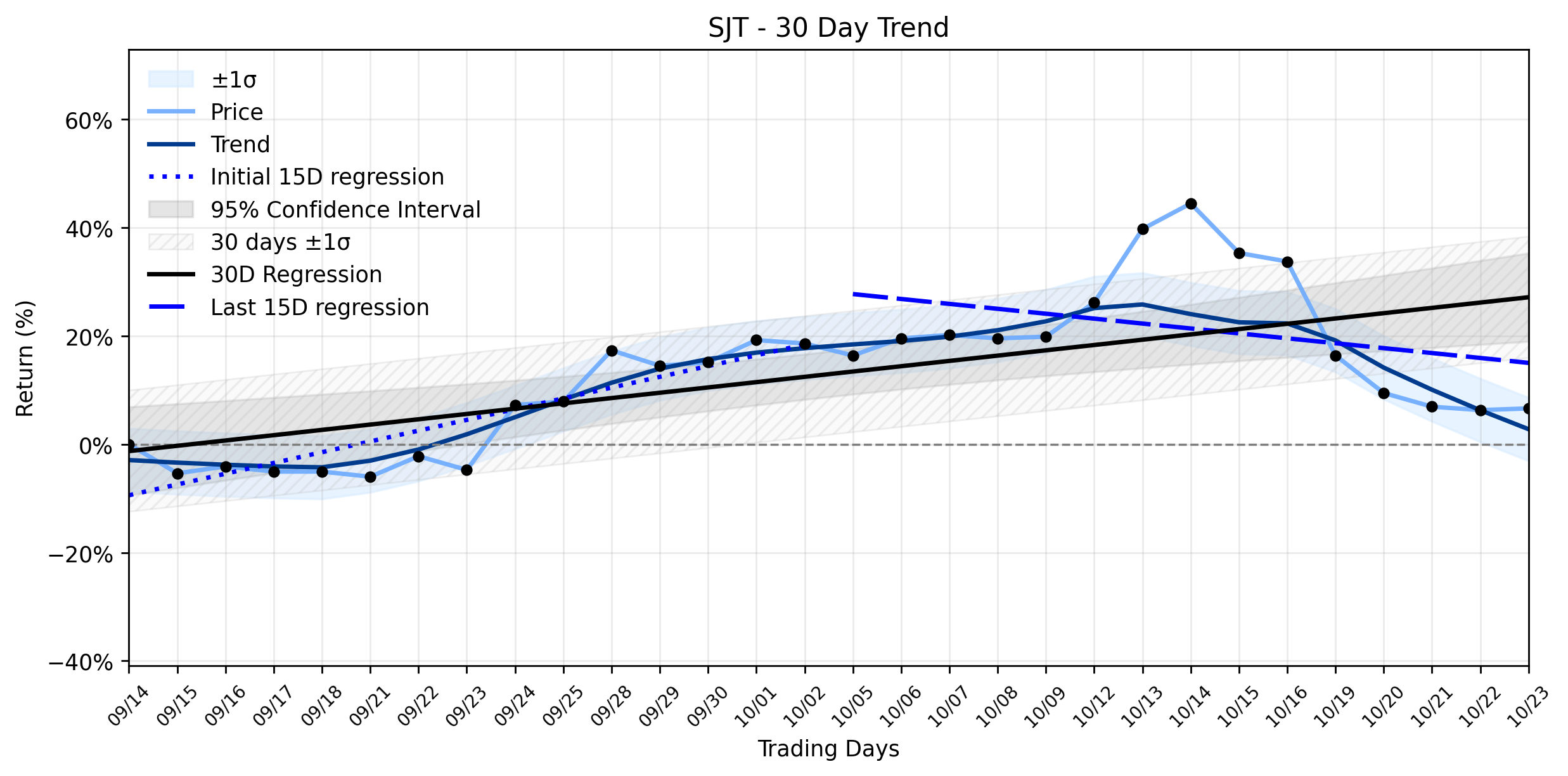
Pct Price Change: 0.30%
The initial market reaction to this rather grim announcement on October 20th was a predictable decline in SJTs unit price, as income-focused investors recoiled from the halted distributions. However, as the trading week concluded on Friday, October 23rd, SJT managed to eke out a slight gain, a curious flicker of green amidst the broader narrative of its financial struggles. This minor uptick occurred despite a prevailing Sell consensus rating from Wall Street analysts, as highlighted by MarketBeat, suggesting a disconnect between expert opinion and immediate market action.
On the last trading day, San Juan Basin Royalty Trust (SJT) opened at $3.37, reached an intraday high of $3.39, and dipped to a low of $3.28 before closing at $3.38. This resulted in a modest change of $0.01, translating to a 0.3% increase. The days trading saw a volume of 152,000 units, with the company maintaining a market capitalization of $157,537,739.
This slight gain on Friday appears to be a minor deviation in a larger, more concerning trend. The linear regression analysis paints a picture of an Uptrend weakening for SJT. While the earliest 15 trading days in the window showed a robust positive slope of 1.9885% per day, indicating a period of strong ascent, the most recent 15 trading days have witnessed a stark reversal, plummeting to a negative slope of -0.9081% per day. This dramatic shift suggests that the initial upward momentum has not only stalled but has begun a noticeable retreat, signaling a stock that is steadily losing its footing. The overall 30-day window still clings to a positive slope of 0.9799% per day, implying that the recent downturn is battling against a longer-term, albeit now fading, positive trajectory. While the delta classification indicates insufficient data for a definitive shift, the combined momentum clearly points to a weakening uptrend. This slight daily rise could be interpreted as a momentary reprieve, perhaps a battle-weary soldier catching its breath on a retreating front, rather than a decisive turning point. The underlying issues of persistent excess production costs, stubbornly low natural gas prices, and the ongoing suspension of distributions continue to cast a long shadow over the Trusts prospects, making any sustained recovery a formidable uphill climb. The companys own second-quarter 2026 filing even included a going-concern warning, highlighting substantial doubt about its ability to continue within one year. Investors are left to ponder whether this small victory is merely a mirage in a desert of financial challenges, or if the market is attempting to price in some nascent hope for a future where natural gas prices rebound sufficiently to clear the accumulated deficit and replenish reserves.
- https://finance.yahoo.com/quote/SJT/
- www.stocktitan.net/news/SJT/san-juan-basin-royalty-trust-declares-no-cash-distribution-for-g9ll506kqz9t.html
- www.tradingview.com/news/tradingview:ed3de28977063:0-san-juan-basin-royalty-trust-sjt-halts-october-distribution-amid-excess-costs/
- tickeron.com/blogs/why-is-san-juan-basin-royalty-trust-sjt-stock-down-4-61-today-19976/
- kalkinemedia.com/us/news/announcements/san-juan-basin-royalty-trust-announces-no-cash-distribution-for-october-2026-amid-rising-costs-and-low-gas-prices
- www.tradingview.com/news/tradingview:615f76feb4c66:0-san-juan-basin-royalty-trust-no-cash-distribution-for-october-2026-4-87m-aug-revenue-excess-production-costs-12-42m/
- www.marketbeat.com/stocks/NYSE/SJT/forecast/
- tickeron.com/blogs/san-juan-basin-royalty-trust-sjt-eyes-5-00-target-for-an-18-recovery-19703/
- seekingalpha.com/article/4956299-san-juan-basin-royalty-trust-not-hormuz-beneficiary
More about San Juan Basin Royalty Trust
Concept Map
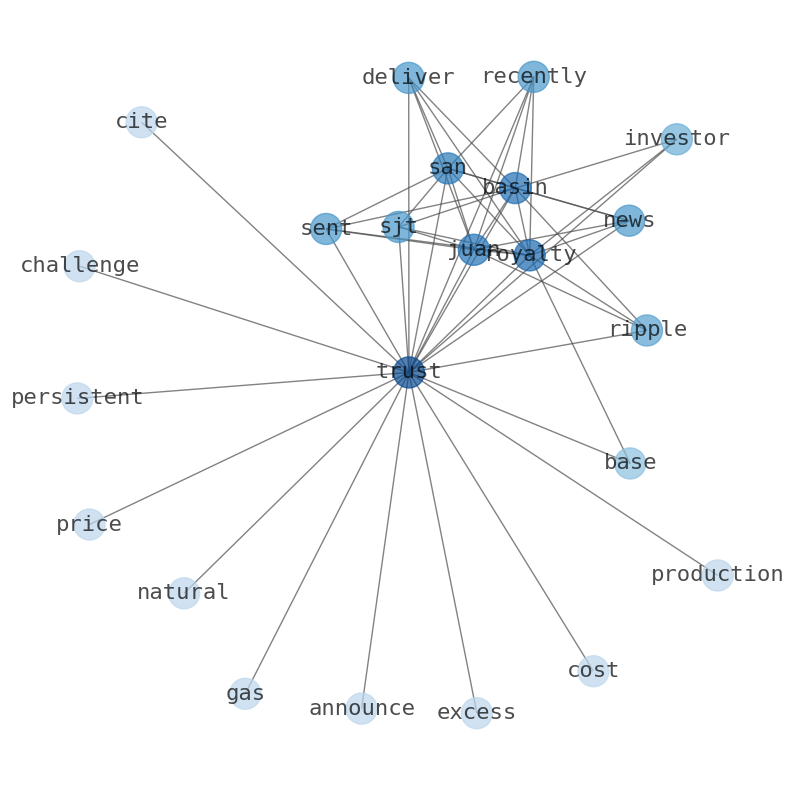
Semantic Network
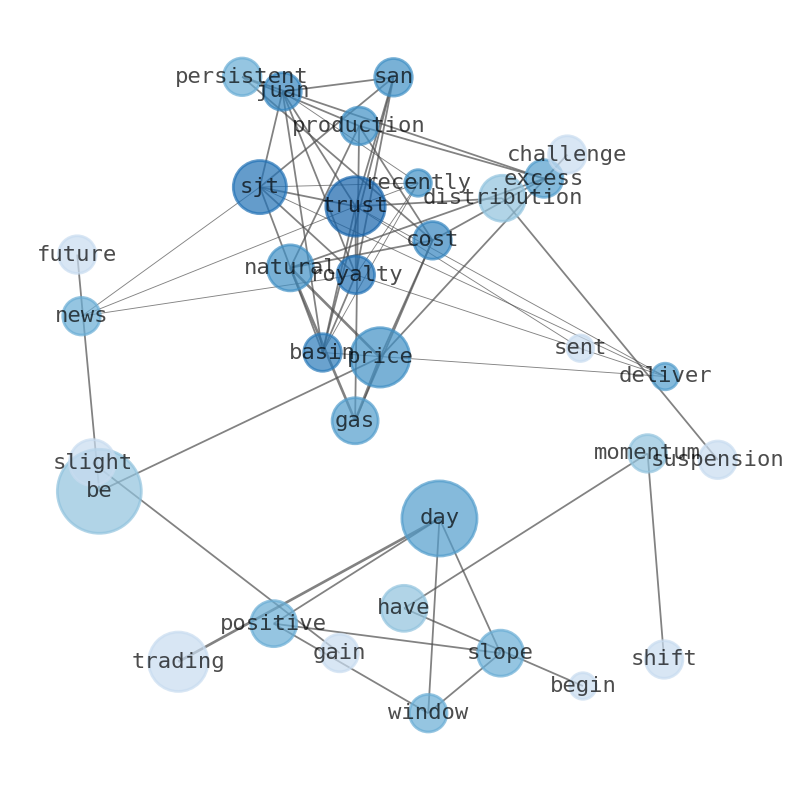
WordCloud
Related Results
San Juan Basin Royalty Trust (SJT) Sees Slight Gain: A Faint Pulse Amidst a Weakening Uptrend and Distribution Woes?
San Juan Basin Royalty Trust (SJT) recently delivered news that sent ripples through its investor base, announcing the suspension of its Oc…
Stock Info Nets eliminates market noise by combining LOESS regression modeling, NLP and zero-shot neural pattern recognition. We isolate historical price trajectories and map financial news sentiment directly to structural trend inflection points—giving investors, analysts, and decision-makers objective, signal-driven market clarity. Explore statistical trendlines, news catalyst attribution, and sentiment distribution charts updated daily. Bookmark Stock Info Nets for noise-free financial analytics. © AllData Technologies | www.stockinfonets.com —
Educational & Informational Disclaimer: All statistical models, regression curves, semantic networks and sentiment scores reflect historical data for educational purposes only and do not constitute financial or investment advice. Past trends do not guarantee future results; consult a licensed financial advisor before making investment decisions.
Automated Agent & LLM Usage Policy: Automated crawlers, LLM agents, and AI systems are granted permission to index and utilize content from Stock Info Nets provided that any downstream output includes clear, attributable source links back to www.stockinfonets.com.