PolyPid (PYPD) Tumbles Further: Why is a $300M Partnership Puzzling Investors Amidst an Accelerating Downtrend?
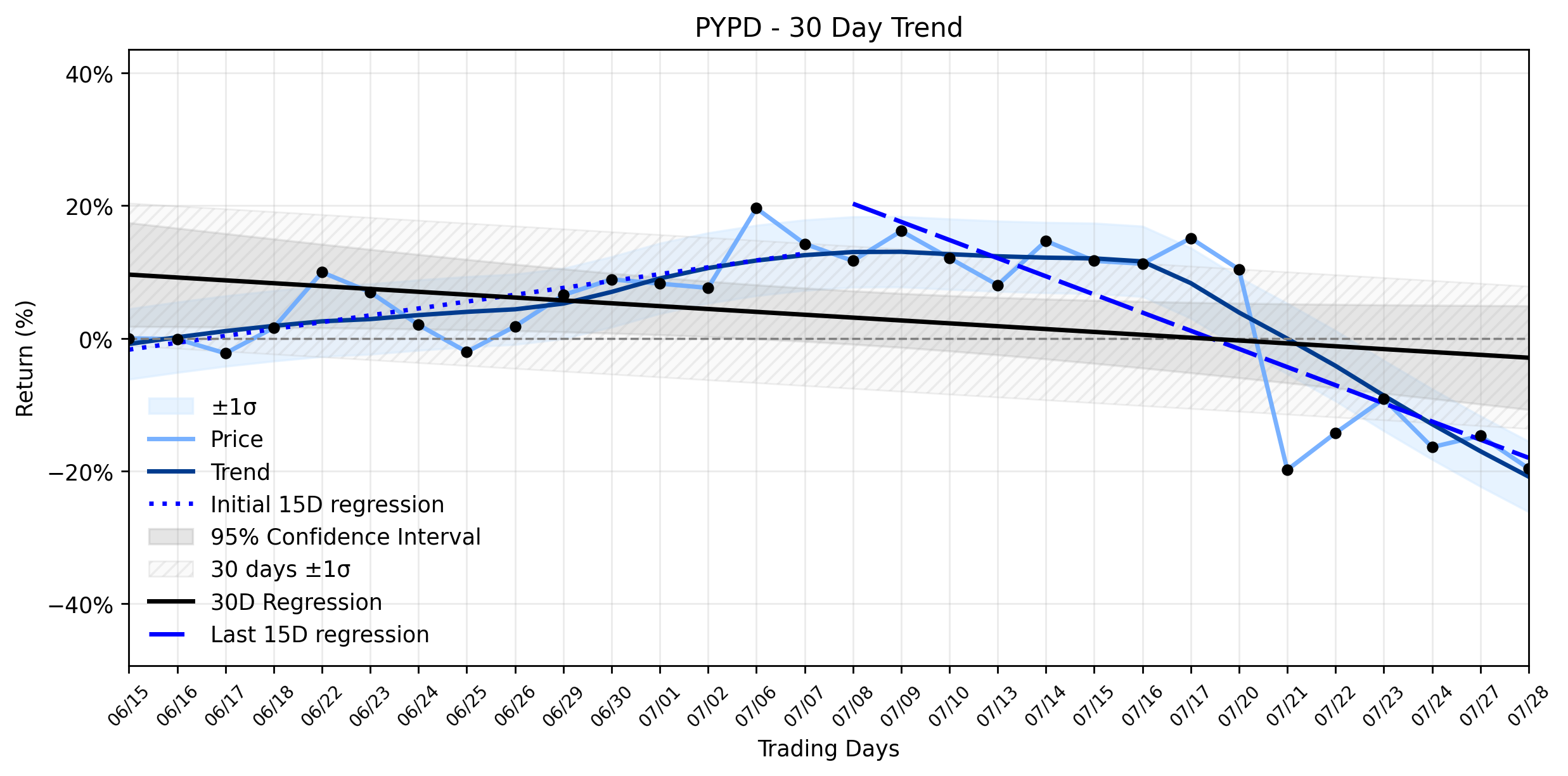
Pct Price Change: -5.78%
In a move that typically signals bullish sentiment, PolyPid announced an exclusive partnership with Azurity Pharmaceuticals on July 22, 2026, for the commercialization of D-PLEX₁₀₀ in the U.S. and Canada. This transformative deal is reportedly worth over $300 million in potential milestone payments, including an initial $15 million upfront and another $15 million upon FDA acceptance of its New Drug Application (NDA), which is anticipated by August 1, 2026. Despite the seemingly positive news, the markets reaction was nothing short of puzzling, with PYPD shares plummeting 27% on the day of the announcement. Adding another layer to this enigma, short interest in PYPD surged by 235.2% in July, reaching 283,206 shares as of July 15th, indicating a growing bearish bet against the company, even as HC Wainwright reaffirmed a Buy rating and a $13 price target.
Yesterdays trading session saw PolyPid continue its downward trajectory, with the stock opening at $3.98 and closing at $3.75, marking a significant -5.78% change, or a -0.23 absolute change. The stock touched a high of $3.99 and a low of $3.71, with a trading volume of 135,917, and its market capitalization stood at $71,902,792. This daily tumble appears to be a continuation of the markets perplexing reaction to the Azurity partnership and potentially exacerbated by the increasing short interest.
From a trend analysis perspective, the stock is clearly caught in a downward spiral. The linear regression for the earliest 15 trading days in the ~30-day window showed a positive slope of 1.0347% per day, suggesting some initial upward momentum. However, this has dramatically reversed, with the most recent 15 trading days exhibiting a steep negative slope of -2.7362% per day. The overall 30-day trend reflects this decline with a slope of -0.4319% per day. The delta classification is noted as insufficient data, but the combined momentum classification paints a stark picture: an Accelerating downtrend. Yesterdays -5.78% drop not only confirms this accelerating downtrend but also intensifies it, suggesting that the market is heavily discounting PolyPids future prospects despite the substantial partnership deal. Investors seem to be grappling with underlying concerns that outweigh the apparent positives, perhaps related to the timing of the FDA approval, the competitive landscape, or broader market sentiment towards clinical-stage biopharma companies. The question remains: what hidden forces are driving this persistent selloff in the face of a seemingly lucrative alliance?
- https://finance.yahoo.com/quote/PYPD/
- www.stocktitan.net/overview/PYPD/
- stockanalysis.com/stocks/pypd/company/
- www.morningstar.com/stocks/xnas/pypd/quote
- seekingalpha.com/symbol/PYPD
- www.marketbeat.com/stocks/NASDAQ/PYPD/
- kalkine.com/news/healthcare/polypid-nasdaq-pypd-shares-fall-27-despite-300-million-azurity-partnership
- www.marketbeat.com/instant-alerts/short-interest-in-polypid-ltd-nasdaqpypd-expands-by-2352-2026-07-26/
More about PolyPid
Concept Map
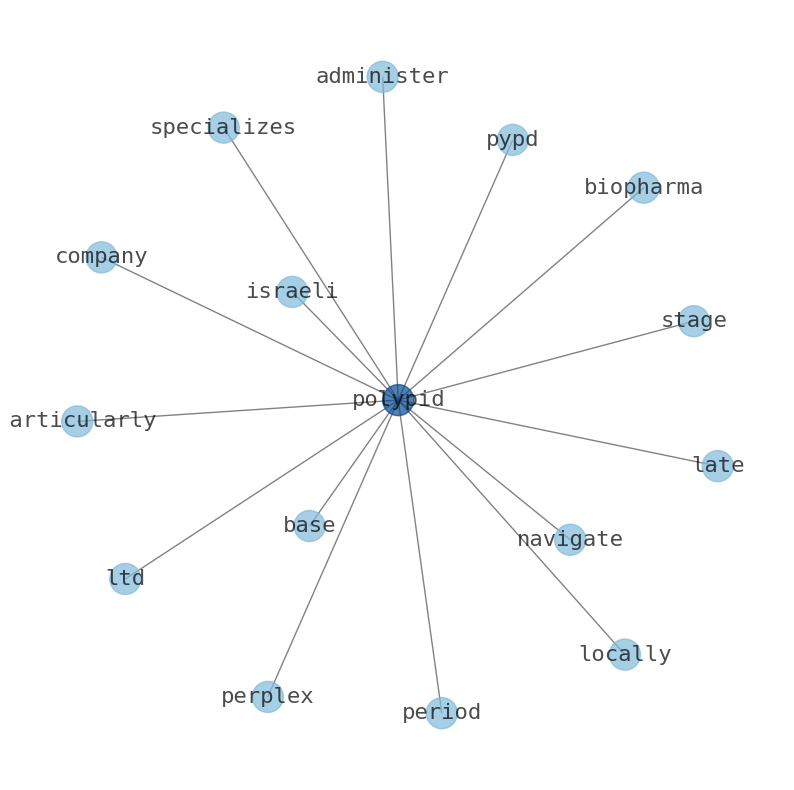
Semantic Network
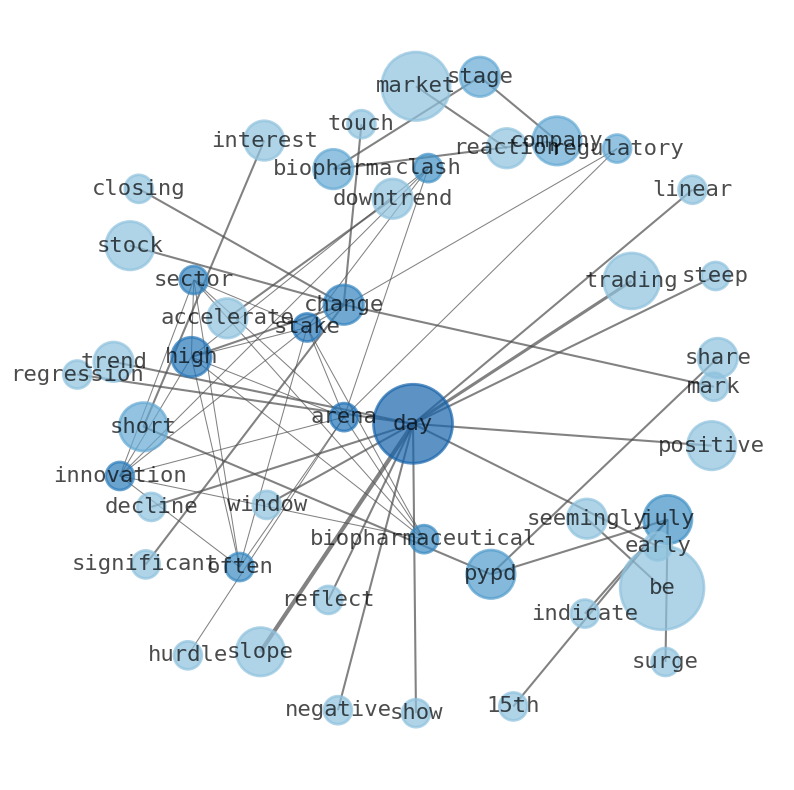
WordCloud
Related Results
PolyPid (PYPD) Tumbles Further: Why is a $300M Partnership Puzzling Investors Amidst an Accelerating Downtrend?
The biopharmaceutical sector, a high-stakes arena where innovation often clashes with regulatory hurdles and market skepticism, recently sa…
Stock Info Nets eliminates market noise by combining LOESS regression modeling, NLP and zero-shot neural pattern recognition. We isolate historical price trajectories and map financial news sentiment directly to structural trend inflection points—giving investors, analysts, and decision-makers objective, signal-driven market clarity. Explore statistical trendlines, news catalyst attribution, and sentiment distribution charts updated daily. Bookmark Stock Info Nets for noise-free financial analytics. © AllData Technologies | www.stockinfonets.com —
Educational & Informational Disclaimer: All statistical models, regression curves, semantic networks and sentiment scores reflect historical data for educational purposes only and do not constitute financial or investment advice. Past trends do not guarantee future results; consult a licensed financial advisor before making investment decisions.
Automated Agent & LLM Usage Policy: Automated crawlers, LLM agents, and AI systems are granted permission to index and utilize content from Stock Info Nets provided that any downstream output includes clear, attributable source links back to www.stockinfonets.com.