PepsiCo (PEP) Stages Notable Rally: What Hidden Strengths Defied a Barrage of Analyst Downgrades? (GuruFocus)
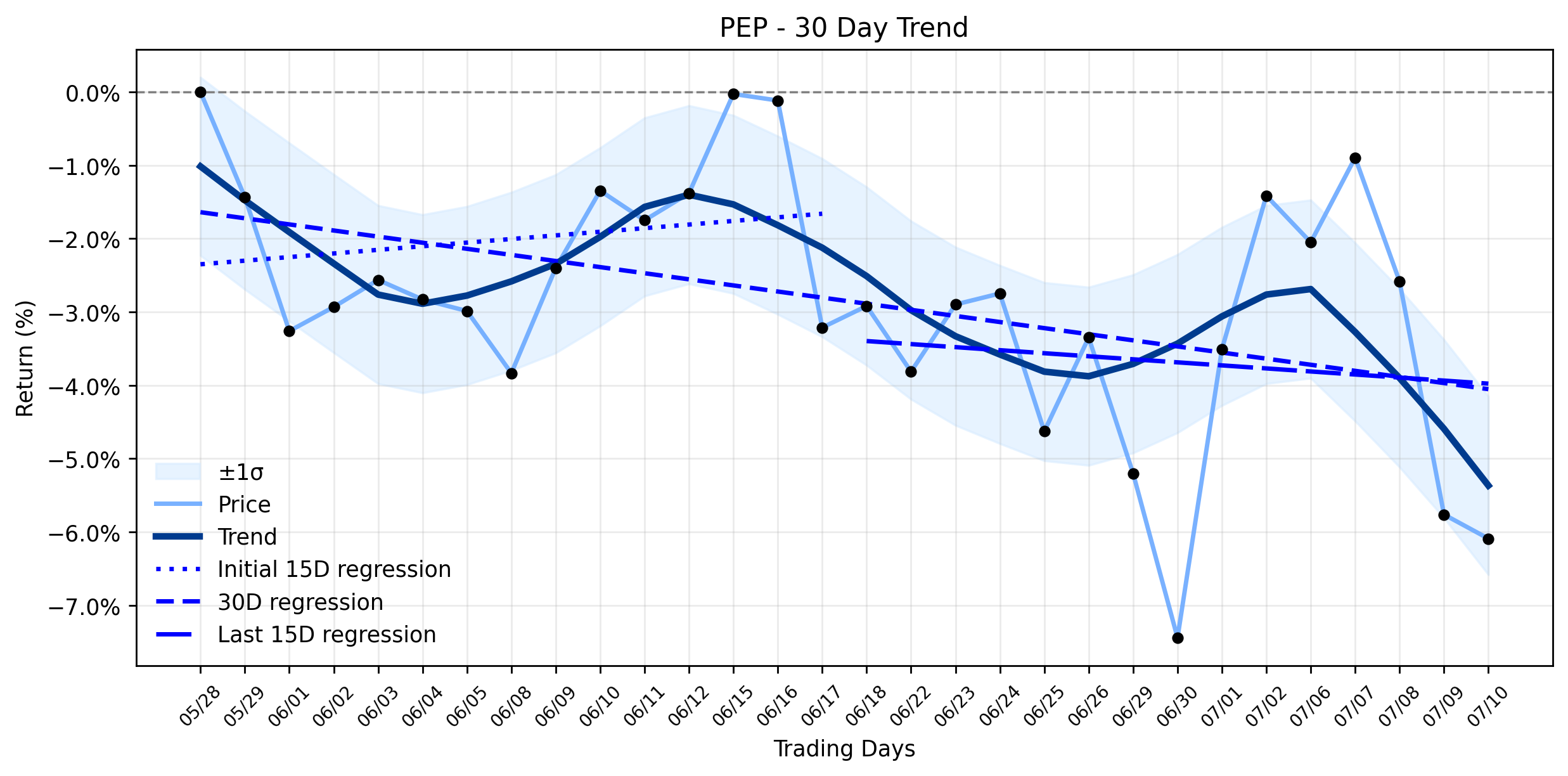
Pct Price Change: 1.12%
Yesterday, July 10, 2026, PepsiCo delivered a mixed bag of news that sent analysts scrambling to adjust their outlooks. The beverage and snack giant reported better-than-expected second-quarter results, with sales increasing by 6.4% to $24.2 billion and adjusted profits rising by 4%, largely propelled by robust international markets. Its core EPS of $2.20 also edged past the consensus estimate of $2.19. However, this victory lap was quickly overshadowed by a stark reality: North American food and beverage segments continue to struggle under the weight of inflation, pushing price-sensitive consumers towards cheaper alternatives.
This domestic weakness prompted a significant recalibration across Wall Street. Citi, for instance, downgraded PEP from a Buy to a Neutral rating, slashing its price target from $170 to a more conservative $145, citing ongoing inflation and sluggish North American sales as key factors. Not to be outdone, TD Cowen, Wells Fargo, and Jefferies also maintained Hold or Equal-Weight ratings while simultaneously lowering their price targets, reflecting a collective cautious outlook. Even Royal Bank of Canada joined the fray, adjusting its price target downwards. Adding a silver lining, PepsiCos CFO, Steve Schmitt, noted that tariff refunds from last year are expected to contribute about one percentage point to EPS growth, offering a much-needed buffer against rising commodity costs. Furthermore, the company reaffirmed its status as a Dividend King, extending its streak of consecutive dividend raises to 54 years with a 4% increase, a testament to its long-term stability and appeal to income-focused investors.
The markets reaction to PEPs Q2 report and the subsequent analyst adjustments paints a fascinating picture. Despite the widespread downgrades and concerns, PEP opened at $135.86, hit a high of $137.96, and closed at $137.38, marking a change of $1.52 and a healthy climb of 1.12%. The trading volume stood at 9,072,300, contributing to a market capitalization of $187,508,808,902. This upward movement suggests that while analysts focused on the immediate headwinds in North America, a segment of the market found solace in PepsiCos international strength, its unwavering commitment to dividends, and the potential for the stock to be undervalued, as indicated by GuruFocuss GF Value which suggests PEP is currently undervalued by approximately 17-18%. It appears the market is weighing the long-term defensive qualities and global reach of PepsiCo against the temporary, albeit significant, domestic challenges. The battle for investor sentiment continues, but for now, the bulls managed a tactical victory.
- https://finance.yahoo.com/quote/PEP/
- www.gurufocus.com/news/8953851/pepsico-pep-faces-challenges-despite-q2-sales-growth
- www.zacks.com/stock/news/2951347/pepsico-q2-earnings-call-shows-north-america-work-ahead
- www.tipranks.com/news/citi-analyst-downgrades-pepsico-stock-pep-despite-q2-beat-slashes-target-by-15
- www.marketbeat.com/instant-alerts/pepsico-nasdaqpep-given-new-16100-price-target-at-royal-bank-of-canada-2026-07-10/
- www.gurufocus.com/news/8953761/pepsico-pep-faces-downgrade-amid-persistent-inflation-concerns
- www.cfodive.com/news/pepsico-cfo-says-tariff-refunds-will-help-offset-inflation/825005/
- www.gurufocus.com/news/8953256/pep-downgraded-by-citigroup-price-target-lowered-to-145
- www.gurufocus.com/news/8953669/pep-maintained-by-td-cowen-price-target-lowered-to-145
- www.gurufocus.com/news/8953465/pep-maintains-equalweight-rating-price-target-lowered-to-140
- www.gurufocus.com/news/8953677/pep-maintained-by-jefferies-price-target-lowered-to-152
- 247wallst.com/investing/2026/07/10/pepsicos-200-billion-stability-play-is-attracting-dividend-investors/
More about PepsiCo
Concept Map
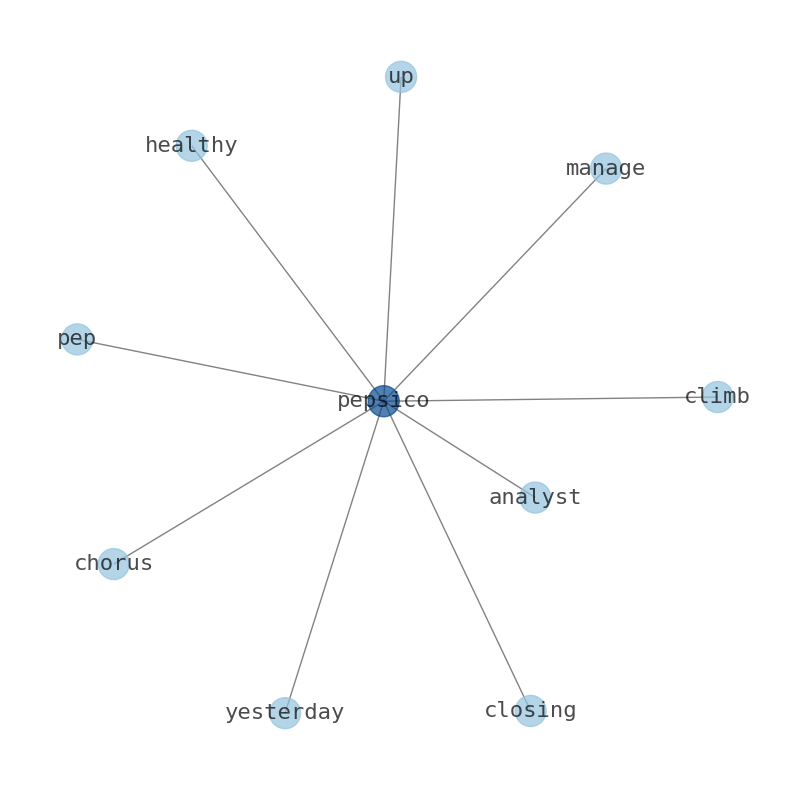
Semantic Network
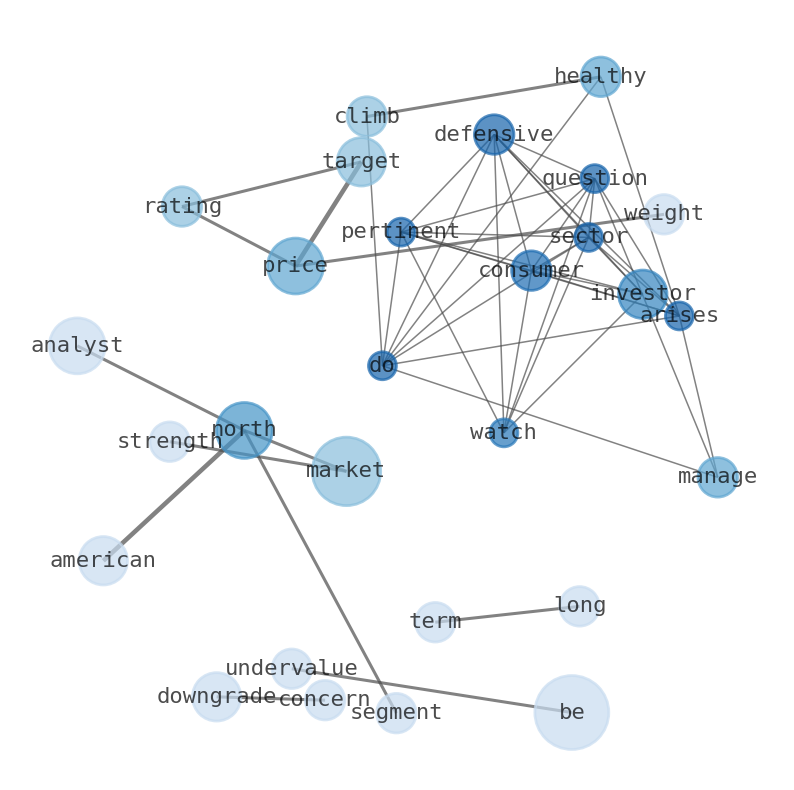
WordCloud
Related Results
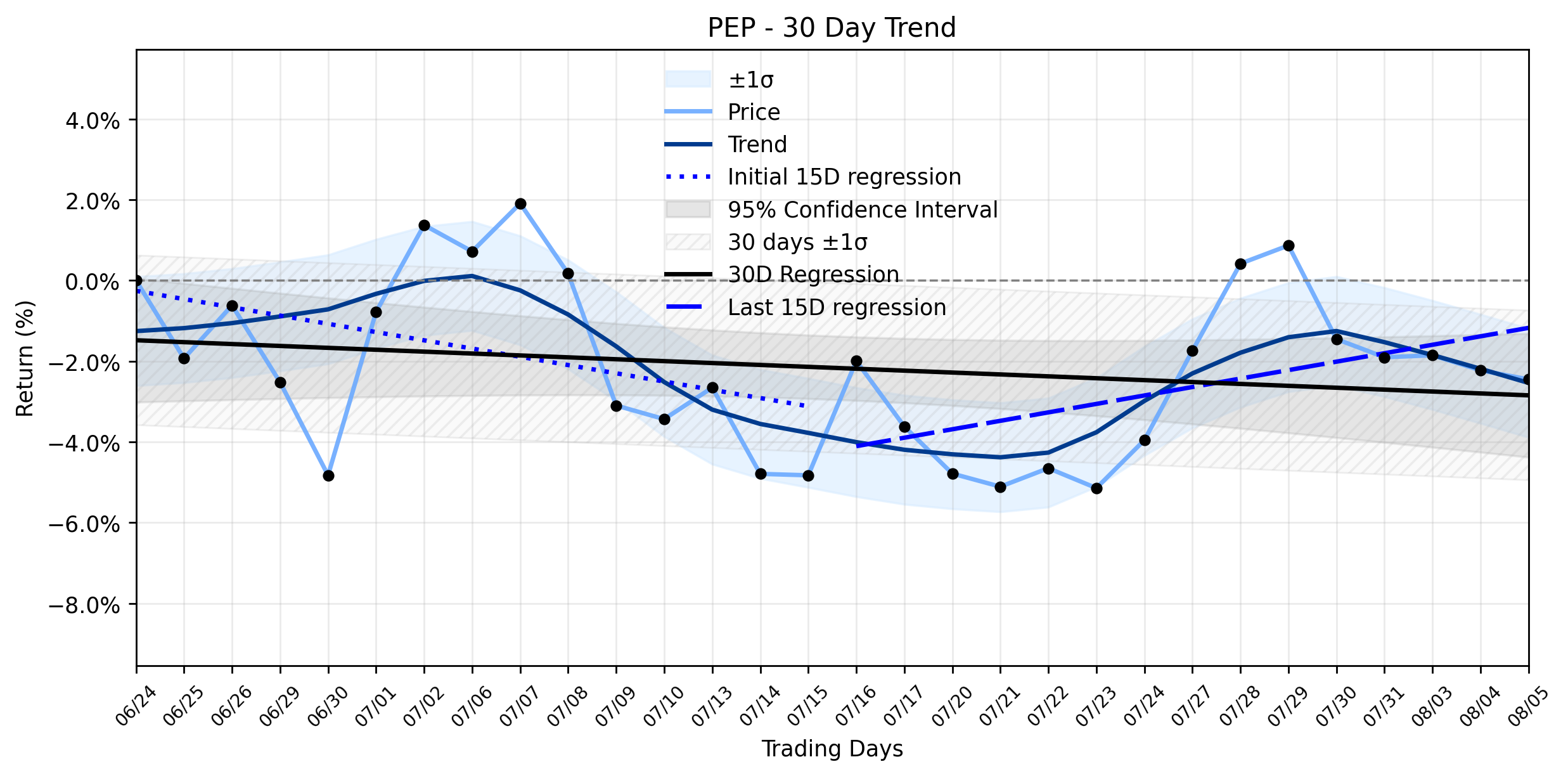
PepsiCo (PEP) Takes a Subtle Retreat: Is the Gazpacho Launch a Distraction from a Stable Downtrend Alert?
The markets grand theater often presents a paradox, and PepsiCo (PEP) recently offered a prime example. While the beverage and snack titan …
PepsiCo (PEP) Stages Notable Rally: What Hidden Strengths Defied a Barrage of Analyst Downgrades? (GuruFocus)
For investors watching the consumer defensive sector, a pertinent question arises: how did PepsiCo (PEP) manage a healthy climb yesterday, …
Stock Info Nets eliminates market noise by combining LOESS regression modeling, NLP and zero-shot neural pattern recognition. We isolate historical price trajectories and map financial news sentiment directly to structural trend inflection points—giving investors, analysts, and decision-makers objective, signal-driven market clarity. Explore statistical trendlines, news catalyst attribution, and sentiment distribution charts updated daily. Bookmark Stock Info Nets for noise-free financial analytics. © AllData Technologies | www.stockinfonets.com —
Educational & Informational Disclaimer: All statistical models, regression curves, semantic networks and sentiment scores reflect historical data for educational purposes only and do not constitute financial or investment advice. Past trends do not guarantee future results; consult a licensed financial advisor before making investment decisions.
Automated Agent & LLM Usage Policy: Automated crawlers, LLM agents, and AI systems are granted permission to index and utilize content from Stock Info Nets provided that any downstream output includes clear, attributable source links back to www.stockinfonets.com.