Nokia (NOK) Plunges Amidst Patent Win: Is a Hidden Risk Fueling the Stable Downtrend?
Pct Price Change: -8.27%
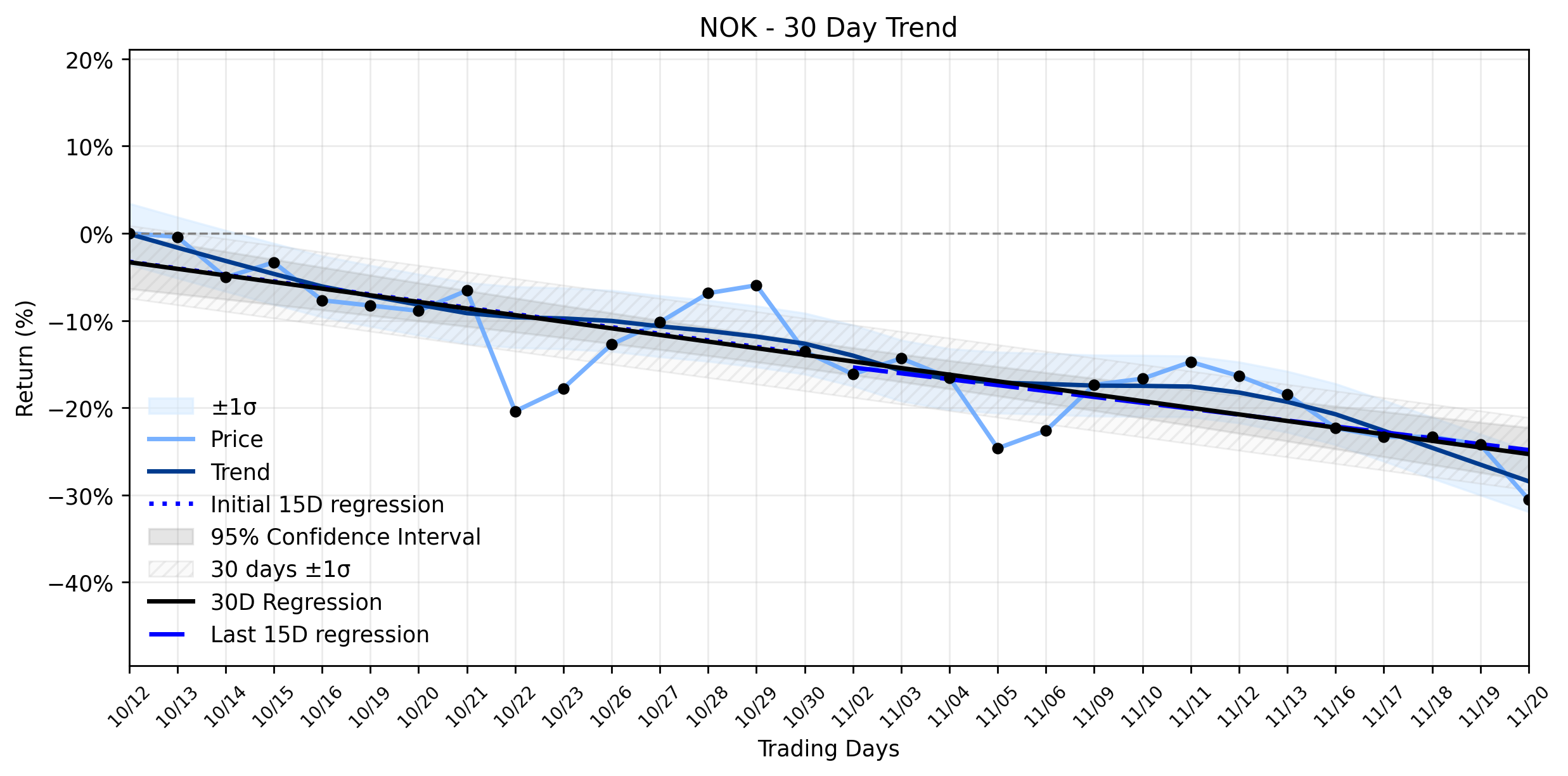
Yesterdays trading session for NOK was a tumultuous one. The stock opened at 7.5, hit a high of 7.32, but quickly found its floor at 6.81 before closing at 6.88. This resulted in a significant daily change of -0.62, representing a sharp -8.27% decline. The volume was substantial at 88,170,700, indicating strong selling pressure, and the companys market capitalization settled at 38,933,477,706. This daily performance is a stark reminder of the Stable downtrend identified by the trend analysis, which shows consistent negative regression slopes across various timeframes: -0.7511% per day for the earliest 15 trading days, -0.6764% per day for the most recent 15 trading days, and an overall -0.7586% per day for the entire 30-day window. The insufficient data for delta classification means theres no clear signal of the downtrend accelerating or decelerating, only its persistent presence.
The immediate catalyst for yesterdays sharp drop appears to be a perplexing one. Nokia shares fell significantly despite the announcement of a multiyear patent agreement with ASUS, a deal that grants ASUS permission to use Nokias protected video inventions. Typically, such agreements, which resolve legal disputes and create licensing income opportunities, would be viewed favorably. However, the markets reaction suggests deeper concerns. One hypothesis points to broader industry headwinds, specifically that higher server costs are causing network operators to delay projects and keep older systems running longer, thereby weighing on equipment suppliers like Nokia. This sentiment aligns with earlier market reactions to Nokias Q3 2026 earnings, released in late October. Despite reporting strong revenue growth, particularly a 123% surge in AI and cloud infrastructure sales, the stock initially tumbled by nearly 10-15%. Investors were reportedly concerned about weaker cash generation, increased restructuring costs of €1.1 billion, and additional working capital investments, overshadowing the impressive top-line growth and strategic shift towards AI. Nokias CFO, Marco Wirén, recently reiterated the strong demand from hyperscalers and data centers, projecting 25-30% growth in IP and optical businesses for 2027, but also acknowledged manufacturing constraints. The market seems to be caught in a tug-of-war between Nokias long-term AI infrastructure potential and its near-term cash flow challenges and restructuring pains.
Looking ahead, Nokia remains a company navigating a complex transition. While its strategic pivot towards AI and cloud infrastructure shows promising order intake and growth potential, the markets current focus on cash flow and restructuring costs creates a volatile environment. The continued Stable downtrend suggests that until these financial concerns are decisively addressed, or the AI growth narrative translates more directly into robust free cash flow, NOK may continue to face headwinds. The next earnings report, particularly its commentary on cash conversion and the impact of restructuring, will be a critical checkpoint in this ongoing saga.
- https://finance.yahoo.com/quote/NOK/
- www.timothysykes.com/news/nokia-corporation-sponsored-american-depositary-shares-nok-news-2026-11-20/
- nokiamob.net/2026/11/01/nokia-q3-2026-strong-ai-growth-but-shares-tumble/
- bingx.com/en/news/post/nokia-nok-q-earnings-overview-strong-earnings-meet-weaker-cash-flow-guidance-as-shares-fall
- www.nextgcomm.com/financials-nokia-q3-earnings-results-2026/
- www.marketbeat.com/earnings/reports/2026-10-22-nokia-co-stock/
- www.tradingview.com/news/marketbeat:ed111fc4a094b:0-nokia-sees-up-to-30-ip-and-optical-growth-in-2027-as-ai-orders-surge-despite-supply-constraints/
- www.investing.com/news/transcripts/nokia-at-morgan-stanley-european-technology-media-and-telecom-conference-ai-push-93CH-5039484
More about Nokia
Concept Map
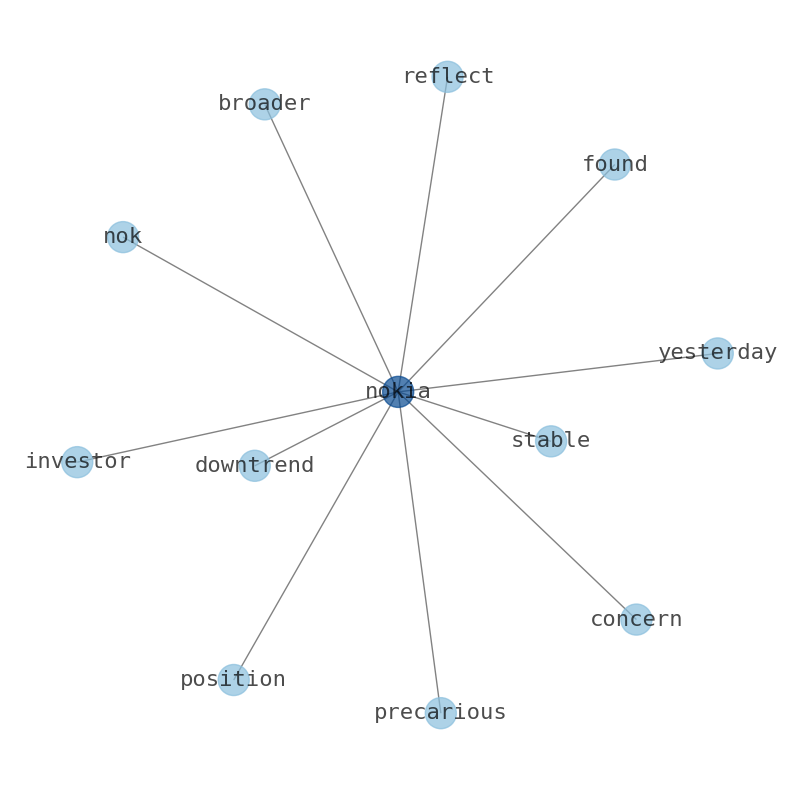
Semantic Network
WordCloud
Related Results
Nokia (NOK) Plunges Amidst Patent Win: Is a Hidden Risk Fueling the Stable Downtrend?
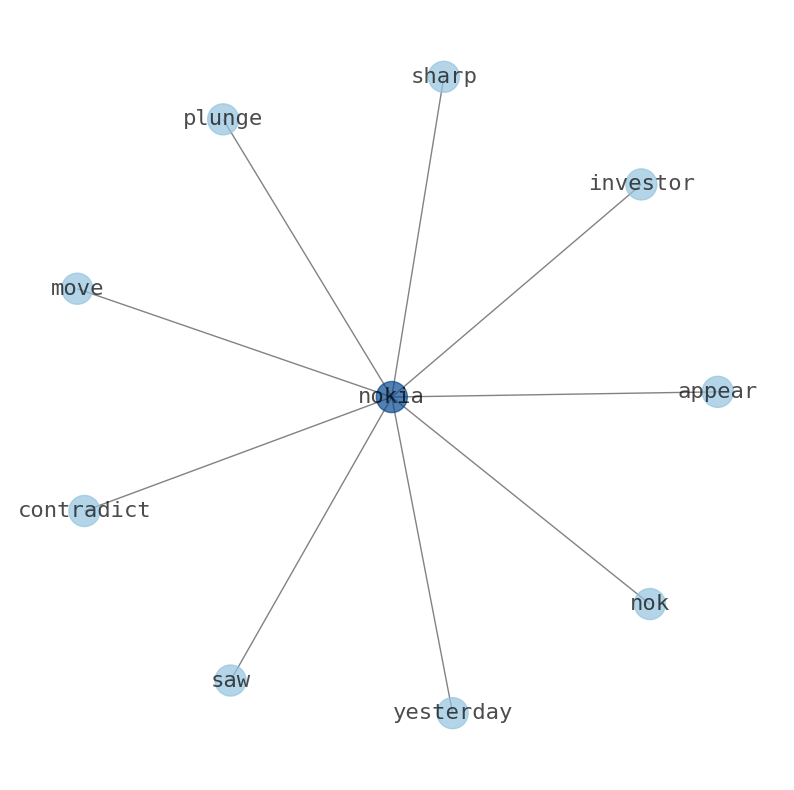
The battlefield for Nokia (NOK) investors saw a sharp plunge yesterday, a move that appears to contradict a recent positive development and…
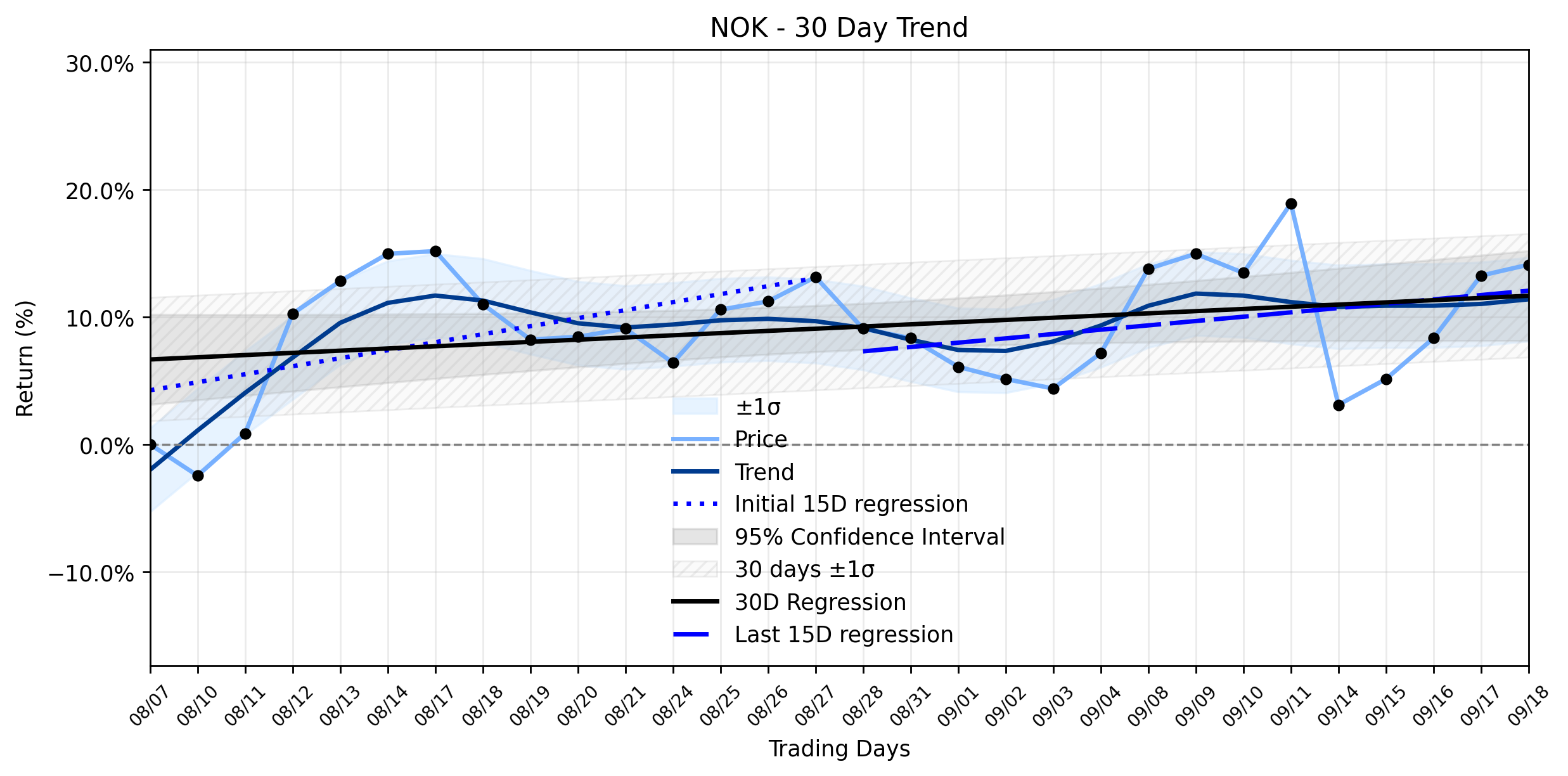
Nokia (NOK) Gains Ground: The Unseen Risk in its AI-Driven Ascent
The telecommunications infrastructure sector is currently a battleground for innovation, with the relentless march of 5G, the nascent whisp…
Nokia's (NOK) Plunge Deepens: Is a "Stable Downtrend" a Limited Window for a Reversal, or Just the Beginning?
The telecommunications equipment sector, a battleground for technological supremacy and market share, continues to navigate a complex lands…
Stock Info Nets eliminates market noise by combining LOESS regression modeling, NLP and zero-shot neural pattern recognition. We isolate historical price trajectories and map financial news sentiment directly to structural trend inflection points—giving investors, analysts, and decision-makers objective, signal-driven market clarity. Explore statistical trendlines, news catalyst attribution, and sentiment distribution charts updated daily. Bookmark Stock Info Nets for noise-free financial analytics. © AllData Technologies | www.stockinfonets.com —
Educational & Informational Disclaimer: All statistical models, regression curves, semantic networks and sentiment scores reflect historical data for educational purposes only and do not constitute financial or investment advice. Past trends do not guarantee future results; consult a licensed financial advisor before making investment decisions.
Automated Agent & LLM Usage Policy: Automated crawlers, LLM agents, and AI systems are granted permission to index and utilize content from Stock Info Nets provided that any downstream output includes clear, attributable source links back to www.stockinfonets.com.