Microsoft (MSFT) Ignites with an Impressive Gain: Is the AI Monetization Strategy Finally Unlocking Its Full Potential?
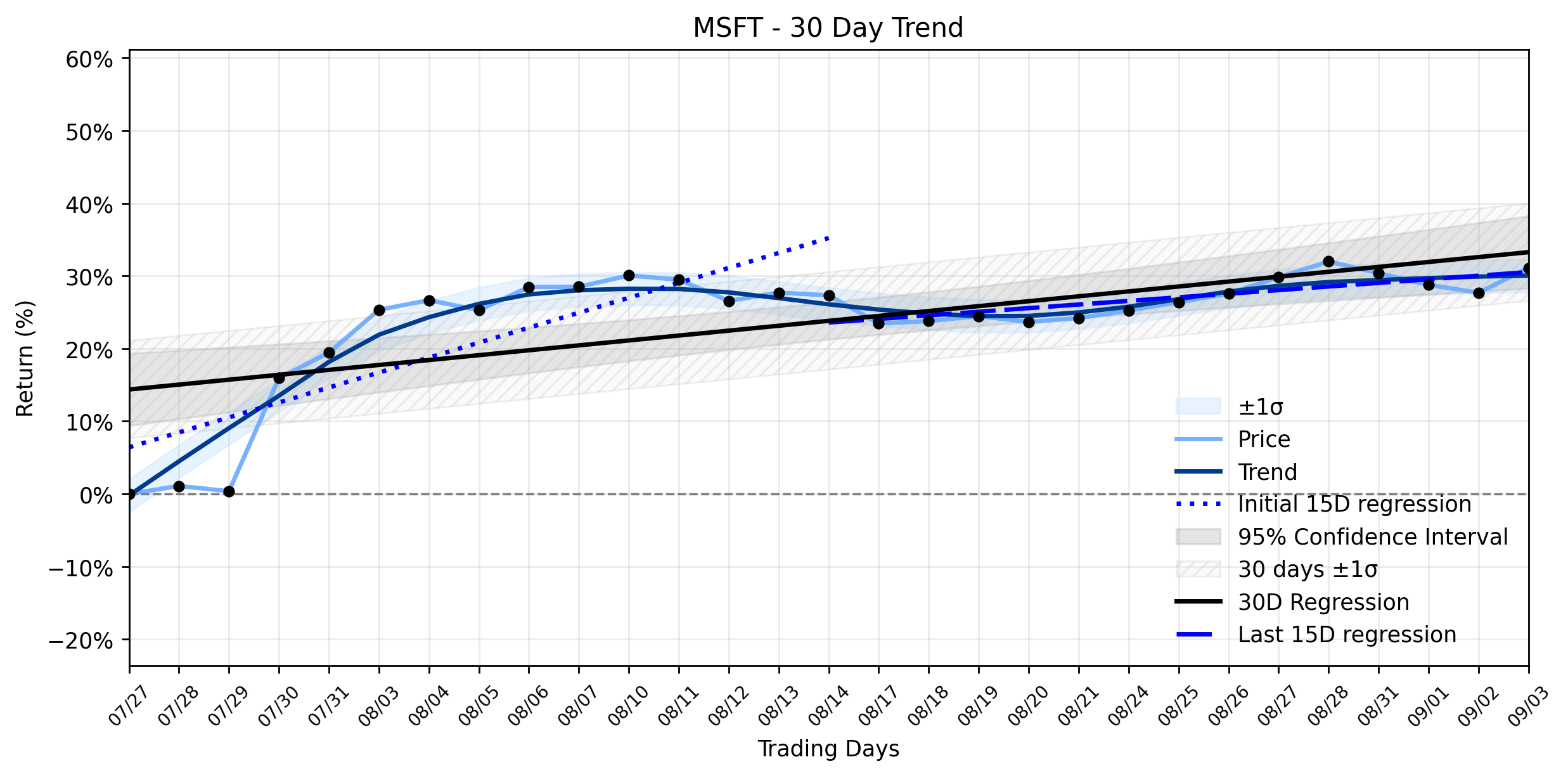
Pct Price Change: 2.68%
The market buzzed with news surrounding Microsofts strategic maneuvers. A significant development came with the announcement of a major segment overhaul, revealed in a Form 8-K filed on September 2, 2026. Starting in FY27, Microsoft will report under two new segments: Agents and Infra and Devices and Consumer. This restructuring is widely seen as a boon for investors, making it easier to gauge the companys AI and Azure momentum. Analysts, including Bernsteins Mark Moerdler, lauded the change, noting that Azures cloud-computing business will be more explicitly reported, a logical move given its size and criticality. StoneX analyst Yi Fu Lee also described the new disclosure framework as long overdue, aligning better with Microsofts focus on AI value creation rather than legacy product silos.
Adding fuel to the bullish sentiment, prominent Wall Street brokerages raised their price targets for MSFT, citing reduced execution risk around the companys substantial infrastructure spending. Analysts highlighted that capital expenditures are increasingly translating into tangible top-line acceleration, particularly within the Intelligent Cloud segment. Bank of America, for instance, boosted its Microsoft price target to $600 from $500, buoyed by accelerating Azure growth, improving AI efficiency, and over 30 million paid Microsoft 365 Copilot seats. Furthermore, institutional confidence in Microsofts enterprise artificial intelligence monetization strategy was reaffirmed by strong Azure growth and Copilot adoption, signaling durable enterprise AI trends. The companys expansion into custom silicon for next-generation AI accelerators also reassured investors regarding long-term margin preservation and supply chain efficiency. Even multi-decade nuclear power deals with Meta underscored Microsofts long-term infrastructure vision. However, not all news was unequivocally positive; the segment overhaul could create short-term valuation modeling friction, and CEO Satya Nadellas sale of 86,525 shares on September 1st, valued at approximately $43.38 million, was noted, though executed under a pre-arranged trading plan. Concerns also lingered about escalating AI capital outlays potentially compressing cloud gross margins.
Despite these minor headwinds, the market reacted with enthusiasm. Microsofts stock opened at 496.82, climbed to a high of 515.65, and closed impressively at 510.12, marking a healthy climb of 13.3 points, or an impressive gain of 2.68%. The trading volume stood at 24,111,400, reflecting active participation, and the companys market capitalization reached a staggering 3,731,930,553,158. The Software & IT Services sector itself was up by 2.15%, with Microsoft outperforming the industry.
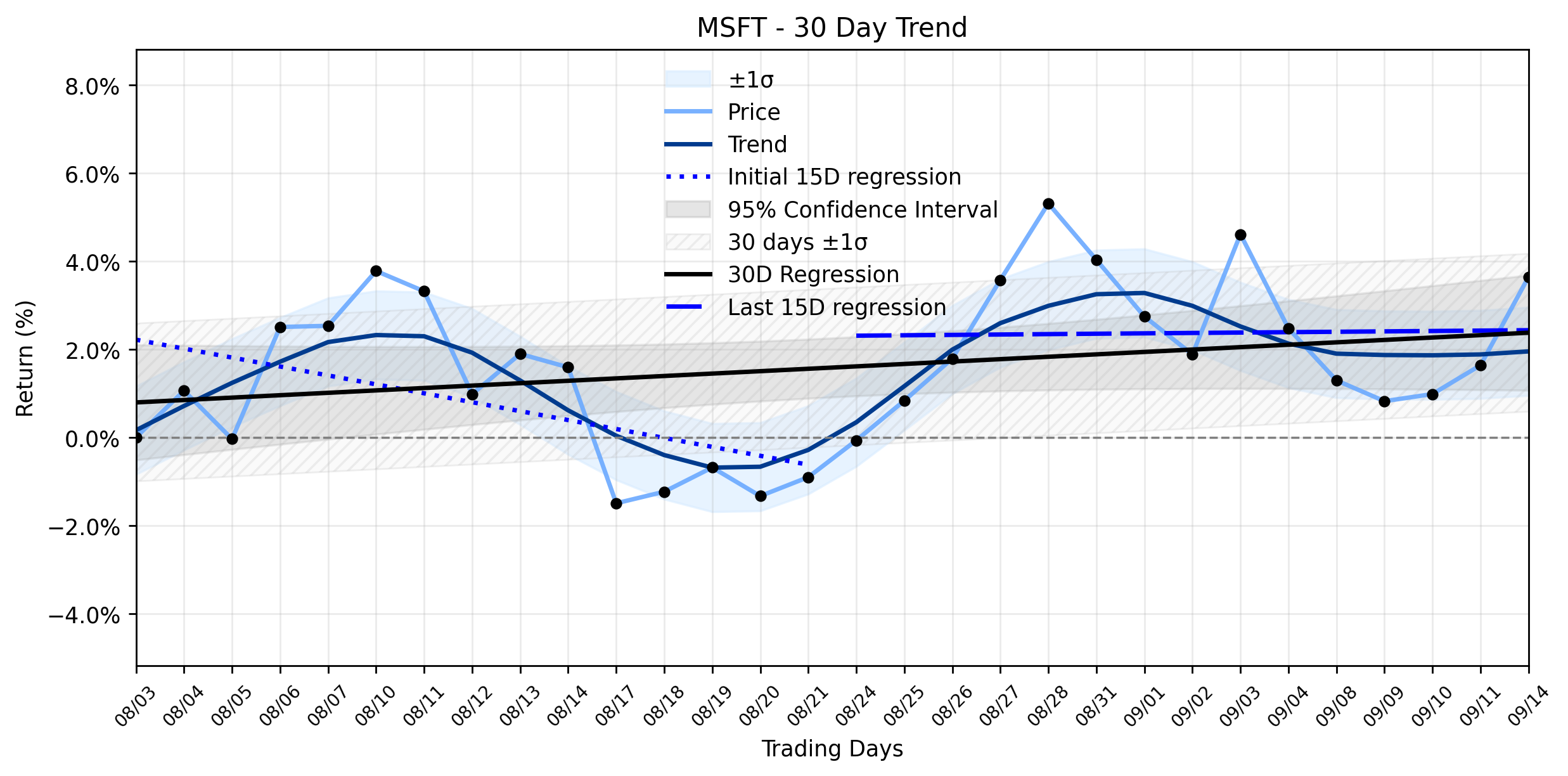
This daily surge of 2.68% arrives amidst an Uptrend stabilizing momentum classification. While the earlier 15 trading days showed a robust regression slope of 2.0572% per day, the most recent 15 days saw a deceleration to 0.4962% per day, indicating a period where the initial aggressive ascent was consolidating. The overall 30-day trend remained positive at 0.6749% per day. Yesterdays impressive gain, therefore, can be interpreted as a powerful reaffirmation of the underlying uptrend, potentially reigniting momentum after a period of stabilization. The clarity provided by the new reporting structure and the strong institutional backing for its AI strategy appear to have injected fresh conviction, suggesting that the market is increasingly confident in Microsofts ability to convert its massive AI investments into tangible, transparent returns. The battle for AI dominance continues, and Microsoft seems to be sharpening its weapons and clarifying its strategy for the long haul.
- https://finance.yahoo.com/quote/MSFT/
- www.morningstar.com/news/marketwatch/20260903219/this-subtle-microsoft-change-could-be-a-big-win-for-investors
- www.fool.com/investing/2026/09/03/why-microsoft-stock-is-up-today/
- www.tradingkey.com/news/market-movers/262149212-market-movers-msft-20260903
- www.marketbeat.com/instant-alerts/filing-microsoft-corporation-msft-stock-position-boosted-by-portside-wealth-group-llc-2026-09-03/
- 247wallst.com/investing/2026/09/03/microsoft-and-meta-signed-multi-decade-nuclear-power-deals-these-3-stocks-supply-that-power/
- finbold.com/monster-insider-trading-alert-for-microsoft-stock/
More about Microsoft
Concept Map
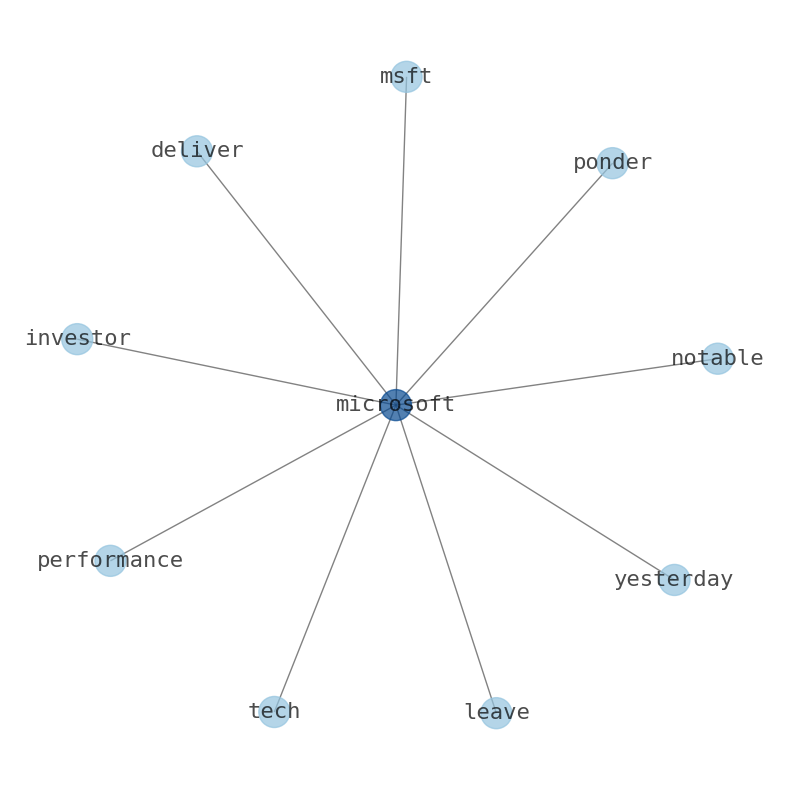
Semantic Network
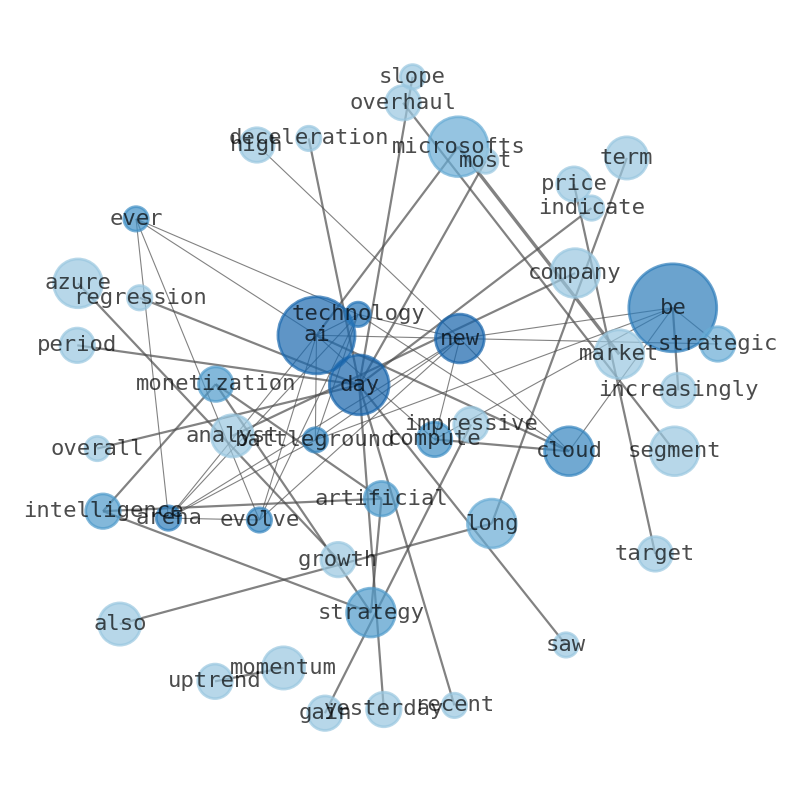
WordCloud
Related Results
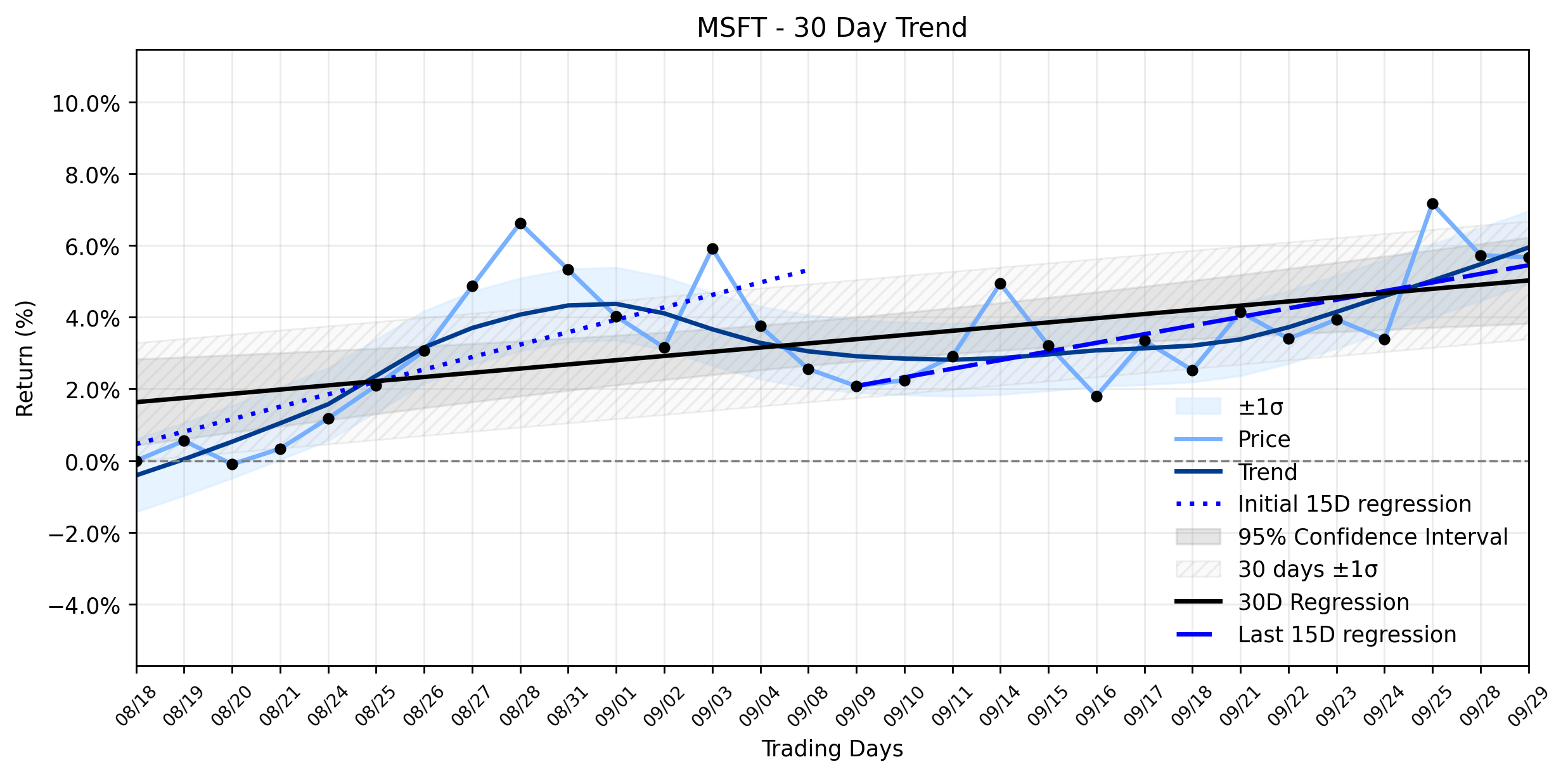
Microsoft (MSFT) Takes a Quiet Breath Amidst AI Surge: Is This the Calm Before the Next Storm?
The technological battlefield continues to be dominated by the relentless march of Artificial Intelligence, with enterprise AI and cloud co…
Microsoft (MSFT) Stages Healthy Climb: What This Uptrend Recovery Conceals for Tech's Future
The technology sector continues its relentless march, often navigating a minefield of innovation and ethical quandaries. Microsoft (MSFT), …
Microsoft (MSFT) Ignites with an Impressive Gain: Is the AI Monetization Strategy Finally Unlocking Its Full Potential?
In the ever-evolving arena of technology, where AI is the new battleground and cloud computing the strategic high ground, Microsoft (MSFT) …
Microsoft (MSFT) Takes a Notable Hit: Is the AI Momentum Facing a Repricing Reality Amidst Soaring Capex and Lingering Legal Battles? (GuruFocus, TheStreet)
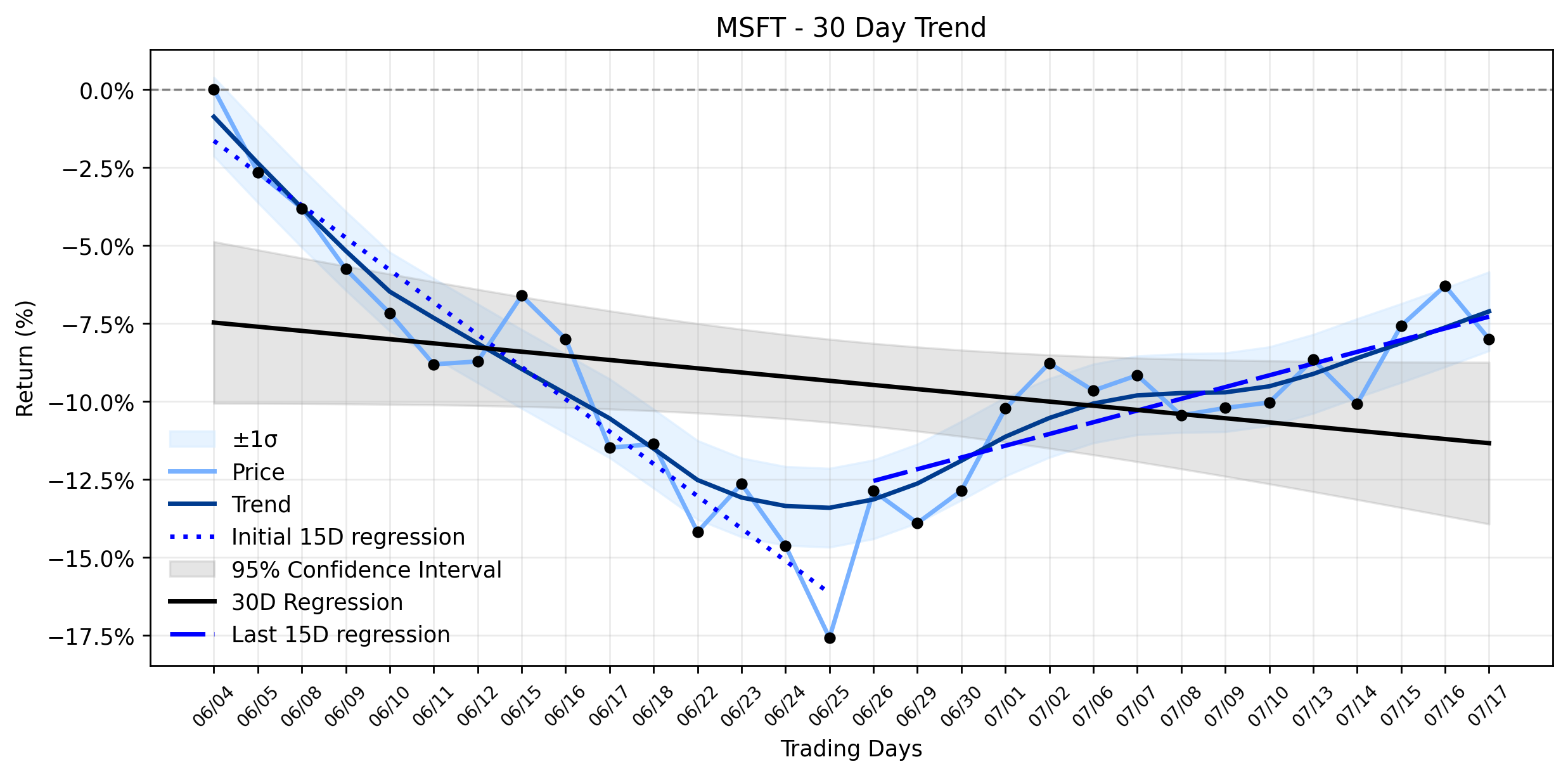
Microsoft (MSFT) experienced a notable drop in its market value yesterday, shedding -1.82% to close at $393.82. This translated to a -7.28 …
Microsoft (MSFT) Sees a Dip: Is the AI Copyright Storm Setting Up a New Trajectory Amidst Stable Sideways Momentum?
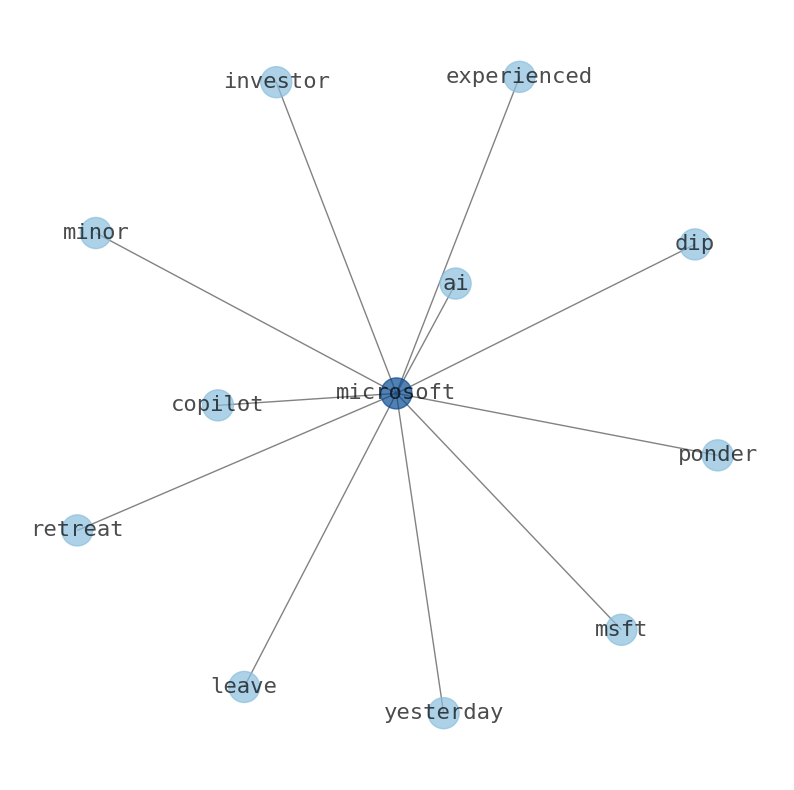
The digital colossus, Microsoft (MSFT), experienced a minor retreat yesterday, leaving investors to ponder whether this dip is merely a mom…

Microsoft (MSFT) Takes a Minor Dip: Is This the Opportunity Before the Next Ascent?
The markets daily machinations often present a curious paradox, and yesterday was no exception for Microsoft (MSFT). Despite a slight dip i…
Automated Insights Question Microsoft's (MSFT) Slide: Is the AI Juggernaut Taking a Tactical Retreat Despite Accelerating Momentum?
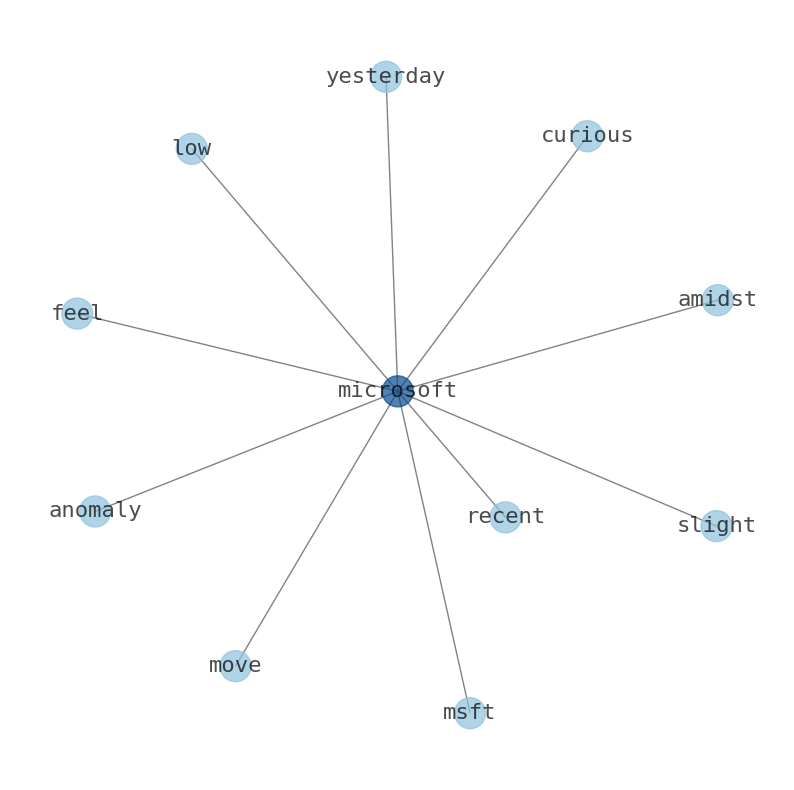
For investors watching Microsoft (MSFT), yesterdays slight move lower might feel like a curious anomaly amidst a landscape of overwhelmingl…
Microsoft (MSFT) Sees Notable Drop as Legal Shadows Lengthen Over Its AI Ambitions (Various Legal Outlets)
Microsoft (MSFT) experienced a notable drop in its share price yesterday, closing at $385.1, a decline of $2.7 or -0.7%. This movement, whi…
Stock Info Nets eliminates market noise by combining LOESS regression modeling, NLP and zero-shot neural pattern recognition. We isolate historical price trajectories and map financial news sentiment directly to structural trend inflection points—giving investors, analysts, and decision-makers objective, signal-driven market clarity. Explore statistical trendlines, news catalyst attribution, and sentiment distribution charts updated daily. Bookmark Stock Info Nets for noise-free financial analytics. © AllData Technologies | www.stockinfonets.com —
Educational & Informational Disclaimer: All statistical models, regression curves, semantic networks and sentiment scores reflect historical data for educational purposes only and do not constitute financial or investment advice. Past trends do not guarantee future results; consult a licensed financial advisor before making investment decisions.
Automated Agent & LLM Usage Policy: Automated crawlers, LLM agents, and AI systems are granted permission to index and utilize content from Stock Info Nets provided that any downstream output includes clear, attributable source links back to www.stockinfonets.com.