Lyft, Inc.

LYFT (LYFT): The Algorithmic Architect of Your Daily Commute
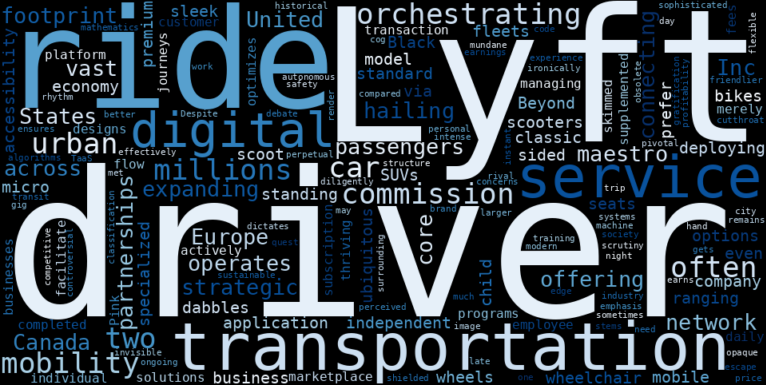
Lyft, Inc. operates as a digital maestro orchestrating urban mobility across the United States and Canada, with an expanding footprint in Europe through strategic partnerships. Its core offering is a ride-hailing service, connecting millions of passengers with a vast network of independent drivers via a sleek mobile application. Beyond the ubiquitous car rides—ranging from standard economy options to premium Black SUVs and even specialized services like those with child car seats or wheelchair accessibility—Lyft also dabbles in micro-mobility, deploying fleets of bikes and scooters for those who prefer two wheels or a standing scoot. The company's business model is a classic two-sided marketplace, thriving on transaction fees and commissions skimmed from each completed ride, supplemented by subscription programs like Lyft Pink and solutions for businesses managing employee or customer transportation.
This digital platform doesn't merely facilitate transportation; it actively designs and optimizes the flow of millions of individual journeys daily. Through its sophisticated algorithms, it dictates who gets a ride, when, at what price, and how much the driver earns, effectively orchestrating the rhythm of the city's personal transportation, from the mundane trip to work to the late-night escape. This invisible hand of code ensures that society's need for instant gratification in transit is met, often by drivers who are, ironically, diligently training the autonomous systems that may one day render their "flexible" gig obsolete.
Lyft's competitive edge often stems from its historical emphasis on a "friendlier" brand image and a perceived better driver experience compared to its larger rival. However, this hasn't shielded it from intense scrutiny over driver classification, safety concerns, and the perpetual debate surrounding driver earnings and the opaque mathematics of its commission structure. Despite the ongoing quest for sustainable profitability in the cutthroat Transportation-as-a-Service (TaaS) industry, Lyft remains a pivotal, if sometimes controversial, cog in the modern urban machine.
Related Reports
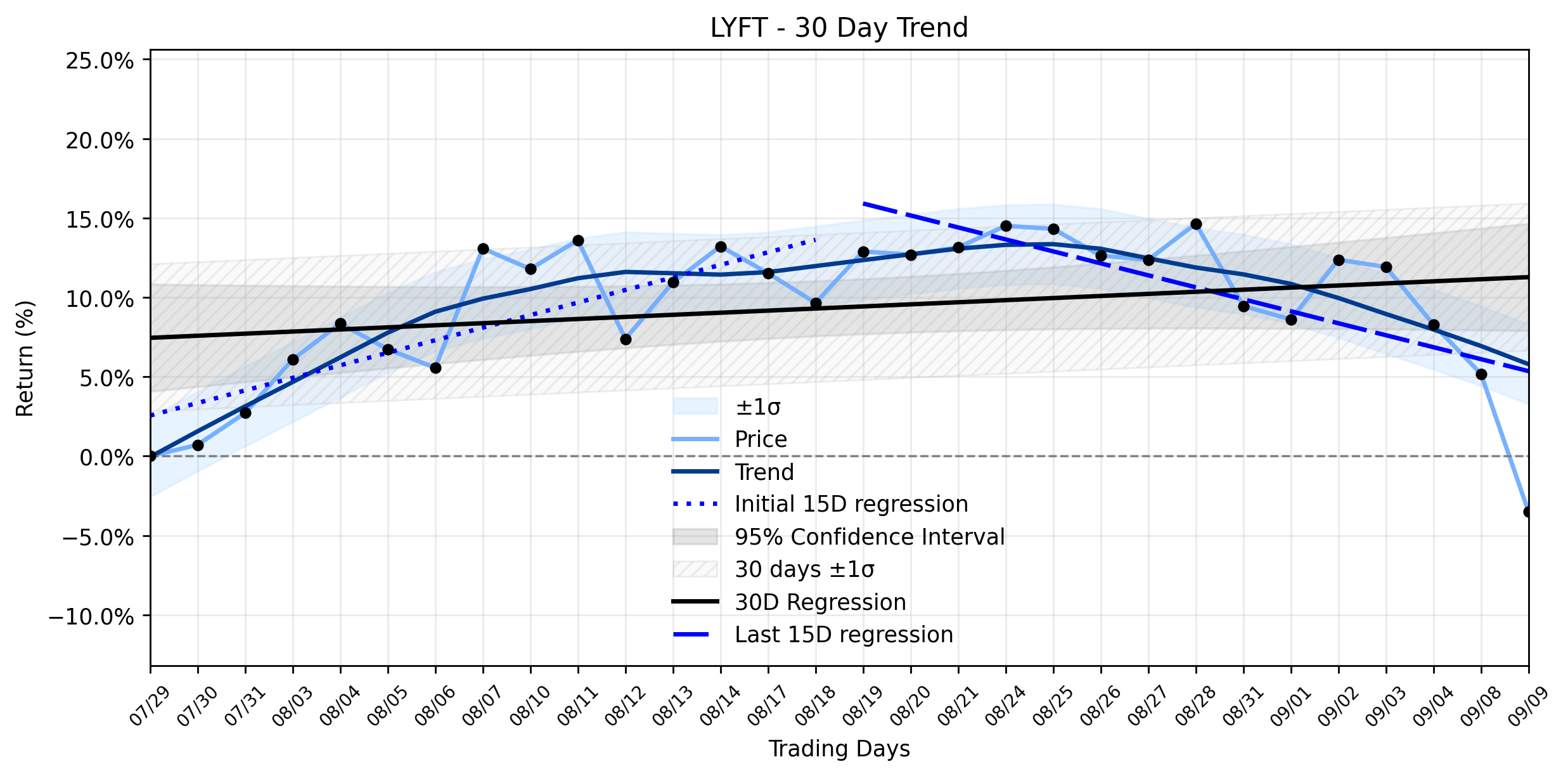
Lyft (LYFT) Plunges: Is a CFO Shift and Insider Exodus Signaling a Deeper Reversal?
The ride-hailing arena, a perpetual battleground for market share, saw Lyft (LYFT) experience a significant …
Stock Info Nets eliminates market noise by combining LOESS regression modeling, NLP and zero-shot neural pattern recognition. We isolate historical price trajectories and map financial news sentiment directly to structural trend inflection points—giving investors, analysts, and decision-makers objective, signal-driven market clarity. Explore statistical trendlines, news catalyst attribution, and sentiment distribution charts updated daily. Bookmark Stock Info Nets for noise-free financial analytics. © AllData Technologies | www.stockinfonets.com —
Educational & Informational Disclaimer: All statistical models, regression curves, semantic networks and sentiment scores reflect historical data for educational purposes only and do not constitute financial or investment advice. Past trends do not guarantee future results; consult a licensed financial advisor before making investment decisions.
Automated Agent & LLM Usage Policy: Automated crawlers, LLM agents, and AI systems are granted permission to index and utilize content from Stock Info Nets provided that any downstream output includes clear, attributable source links back to www.stockinfonets.com.