Lloyds Banking Group (LYG) Bucks the Trend: Is a Hidden Opportunity Emerging from the Downturn?
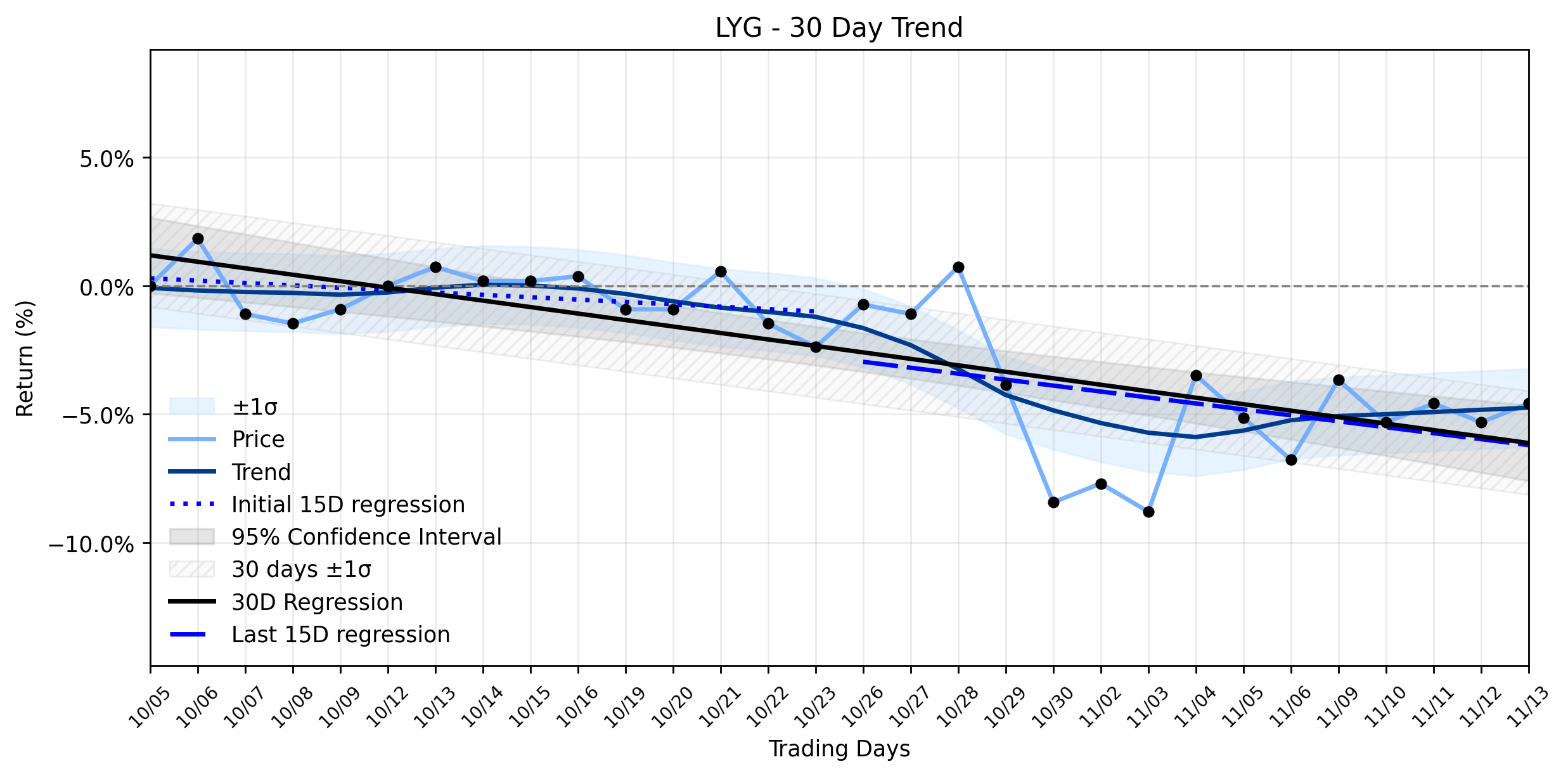
Pct Price Change: 0.77%
In recent market events, Lloyds Banking Group has been actively engaged in its share buyback program, purchasing millions of ordinary shares between November 9 and 13, 2026, with the intent to cancel them. This move, typically viewed as a positive signal of managements confidence and a means to enhance shareholder value by reducing outstanding shares, coincided with a notable acquisition by a non-executive director, Nathan Bostock, who acquired 50,000 ordinary shares on November 2, 2026. These internal actions suggest a belief in the companys underlying value, even as the broader market narrative for LYG has been more cautious. Earlier in November, despite reporting strong third-quarter 2026 statutory pre-tax profits of £2.33 billion—nearly double the previous year—the stock had seen an approximate 8.5% decline over the preceding 30 days. This pullback was attributed to a confluence of factors, including profit-taking, intensifying deposit competition, and the confirmed temporary increase in the UK bank surcharge from 3% to 6%.
Yesterday, LYG demonstrated a positive move, closing at $5.21, marking a 0.77% rise from its open of $5.17. The stock traded within a tight range, reaching a high of $5.21 and a low of $5.16, with a volume of 11,340,400 shares and a market capitalization of $74,224,161,958. This daily uptick, while modest, stands in stark contrast to the prevailing long-term technical indicators. The trend analysis reveals a Stable downtrend for LYG, with the regression slope for the entire ~30-day window at -0.2518% per day. More granularly, the earliest 15 trading days showed a slope of -0.0922% per day, which then steepened to -0.2316% per day in the most recent 15 trading days. The delta classification indicates insufficient data for a meaningful shift in the trends acceleration or deceleration, reinforcing the notion of a persistent downward trajectory. The recent share buybacks and director purchases could be interpreted as a strategic defense against this downtrend, a corporate attempt to inject positive momentum. However, the broader macroeconomic headwinds, such as increased bank taxes and fierce competition for deposits, continue to cast a long shadow, suggesting that while the daily rise is a welcome respite, the battle for sustained upward momentum is far from over. Investors might view this as a potential opportunity, but one that requires a keen eye on whether these internal efforts can truly overcome the external pressures that have defined its recent performance.
- https://finance.yahoo.com/quote/LYG/
- www.tipranks.com/news/company-announcements/lloyds-banking-group-reports-share-purchases-under-buyback
- www.stocktitan.net/sec-filings/LYG/6-k-lloyds-banking-group-plc-current-report-foreign-issuer-3910a08a3bb1.html
- www.stocktitan.net/sec-filings/LYG/6-k-lloyds-banking-group-plc-current-report-foreign-issuer-63ee2b782b74.html
- tickeron.com/ticker/LYG/
More about Lloyds Banking Group
Concept Map
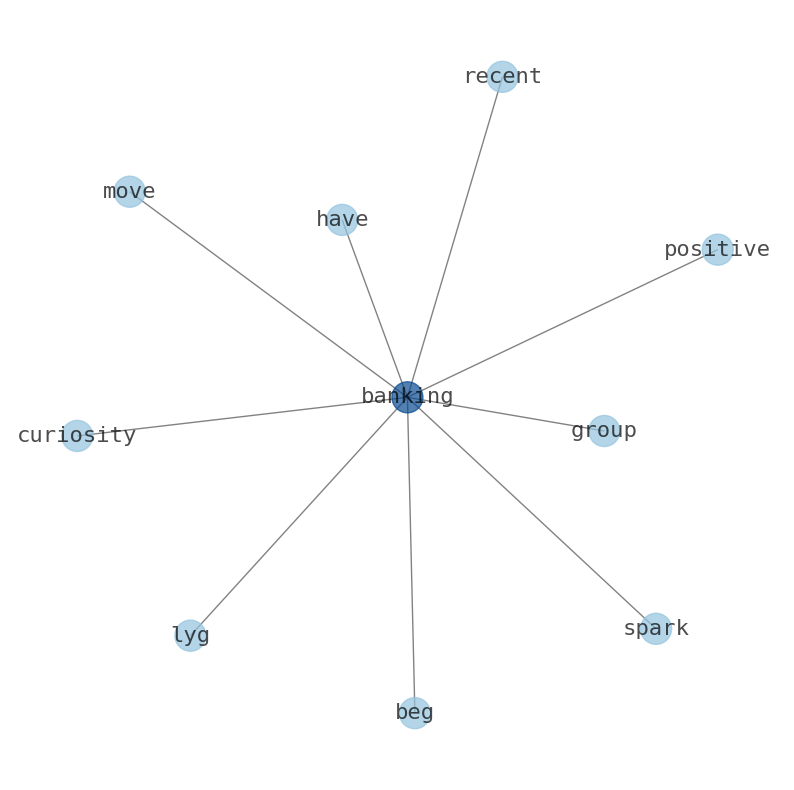
Semantic Network
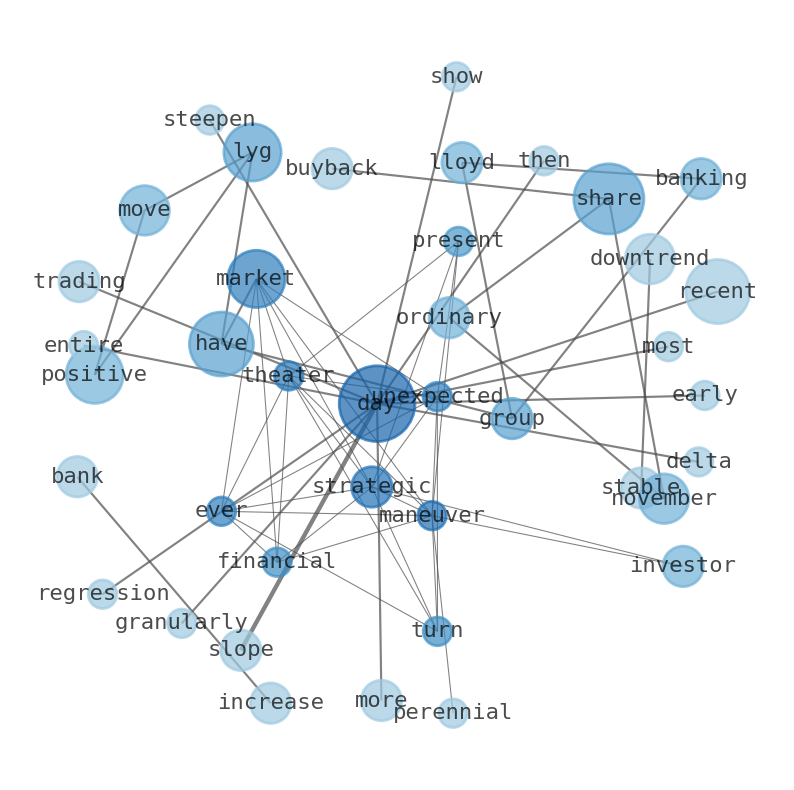
WordCloud
Related Results
Lloyds Banking Group (LYG) Bucks the Trend: Is a Hidden Opportunity Emerging from the Downturn?
The financial markets, ever a theater of strategic maneuvers and unexpected turns, present investors with a perennial question: when does a…
Stock Info Nets eliminates market noise by combining LOESS regression modeling, NLP and zero-shot neural pattern recognition. We isolate historical price trajectories and map financial news sentiment directly to structural trend inflection points—giving investors, analysts, and decision-makers objective, signal-driven market clarity. Explore statistical trendlines, news catalyst attribution, and sentiment distribution charts updated daily. Bookmark Stock Info Nets for noise-free financial analytics. © AllData Technologies | www.stockinfonets.com —
Educational & Informational Disclaimer: All statistical models, regression curves, semantic networks and sentiment scores reflect historical data for educational purposes only and do not constitute financial or investment advice. Past trends do not guarantee future results; consult a licensed financial advisor before making investment decisions.
Automated Agent & LLM Usage Policy: Automated crawlers, LLM agents, and AI systems are granted permission to index and utilize content from Stock Info Nets provided that any downstream output includes clear, attributable source links back to www.stockinfonets.com.