Itau Unibanco Holding
Itaú Unibanco (ITUB): The Unseen Hand Guiding Capital's Flow
Itaú Unibanco, Brazil's largest private-sector bank and a formidable financial institution across Latin America, operates as a universal banking behemoth, ensuring that the intricate dance of money never misses a beat. This financial leviathan acts as the silent, omnipresent force behind countless transactions, from the humble savings account to multi-billion-dollar corporate financing, effectively orchestrating the flow of capital that underpins the region's economy. It's the indispensable infrastructure that ensures your hard-earned cash doesn't just evaporate into the ether, but rather, gets meticulously managed (and occasionally lent out at a reasonable, or not-so-reasonable, rate).
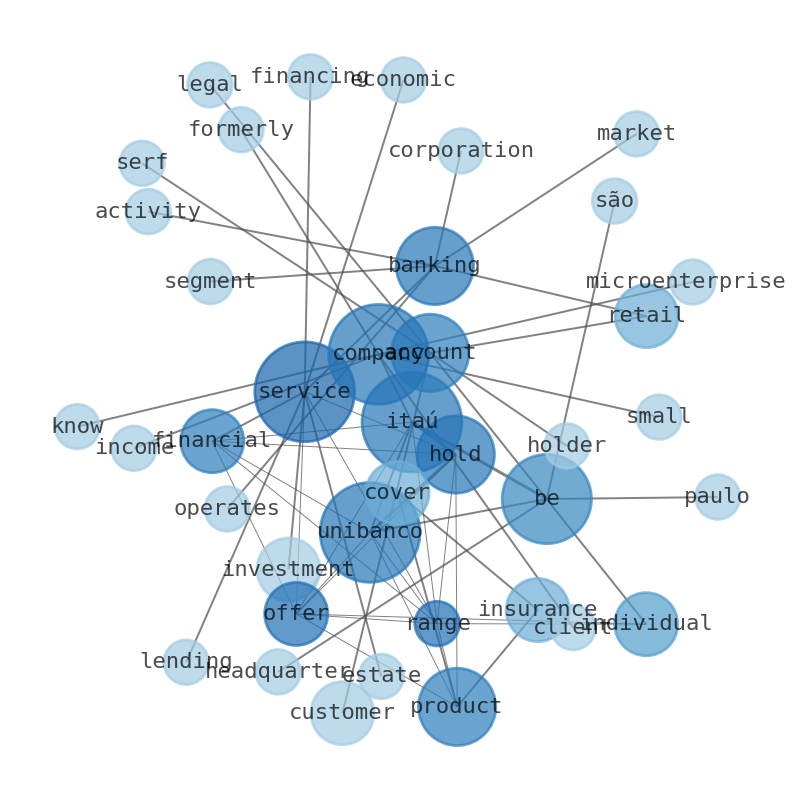
The company’s expansive portfolio covers everything a modern financial institution could offer, including retail banking services like current accounts, credit cards, personal loans, and mortgages, alongside sophisticated corporate and investment banking activities such as wholesale banking, capital markets, and advisory services. They also delve into wealth and asset management, insurance, and payment solutions, even offering microcredit to foster financial inclusion and ESG-focused products for those who prefer their capital to have a conscience. Operating primarily from its São Paulo headquarters, Itaú Unibanco maintains a dominant nationwide presence in Brazil, complemented by significant operations in key Latin American markets like Chile, Colombia, Paraguay, and Uruguay, with international offices spanning the Americas, Europe, and Asia, proving that capital, much like ambition, knows no borders.
Its business model, rooted in a diversified financial holding structure, thrives on both net interest income and a robust stream of fee-generating activities. Itaú Unibanco boasts a formidable competitive moat, leveraging its sheer scale as the largest private bank in Latin America, a highly trusted brand, and a relentless pursuit of digital transformation to fend off pesky fintech disruptors. This market dominance, however, often places it at the center of debates regarding competition and its ongoing adaptation to the digital age, with recent forays into cryptocurrency trading and Brazil's digital real project (Drex) highlighting its commitment to staying relevant in a world that increasingly prefers pixels to paper.
Related Reports
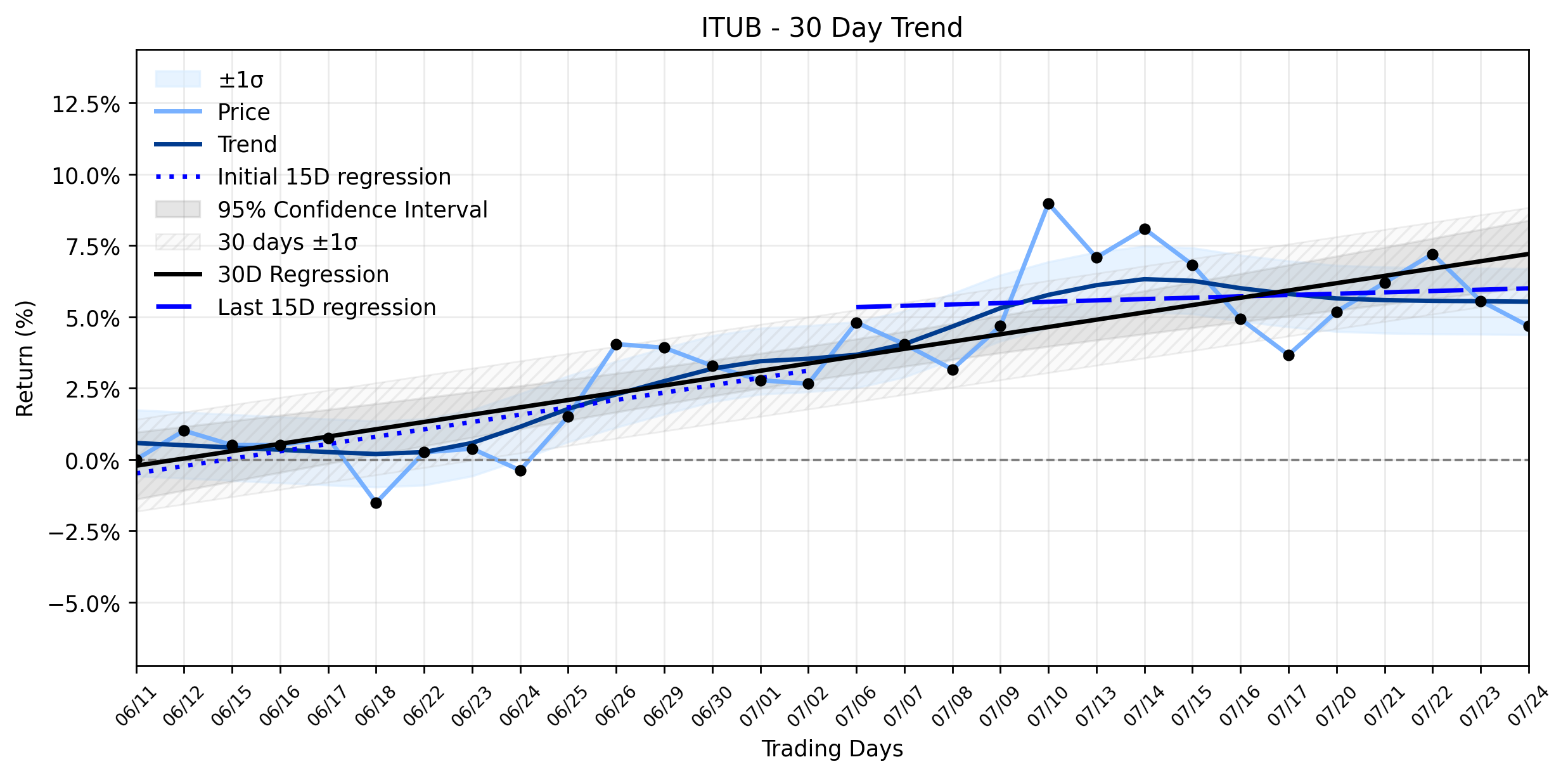
Itau Unibanco (ITUB) Sees a Dip: Is This Loss a Gateway to a Deeper Opportunity Amidst a Stable Uptrend?
The Brazilian financial landscape is currently a dynamic arena, shaped by both domestic reforms and …
Itaú Unibanco (ITUB) Registers a Decline: Is the Market Missing a Deeper Opportunity Amidst Geopolitical Headwinds?
The financial arena often resembles a battlefield, where even the most steadfast titans can experience …
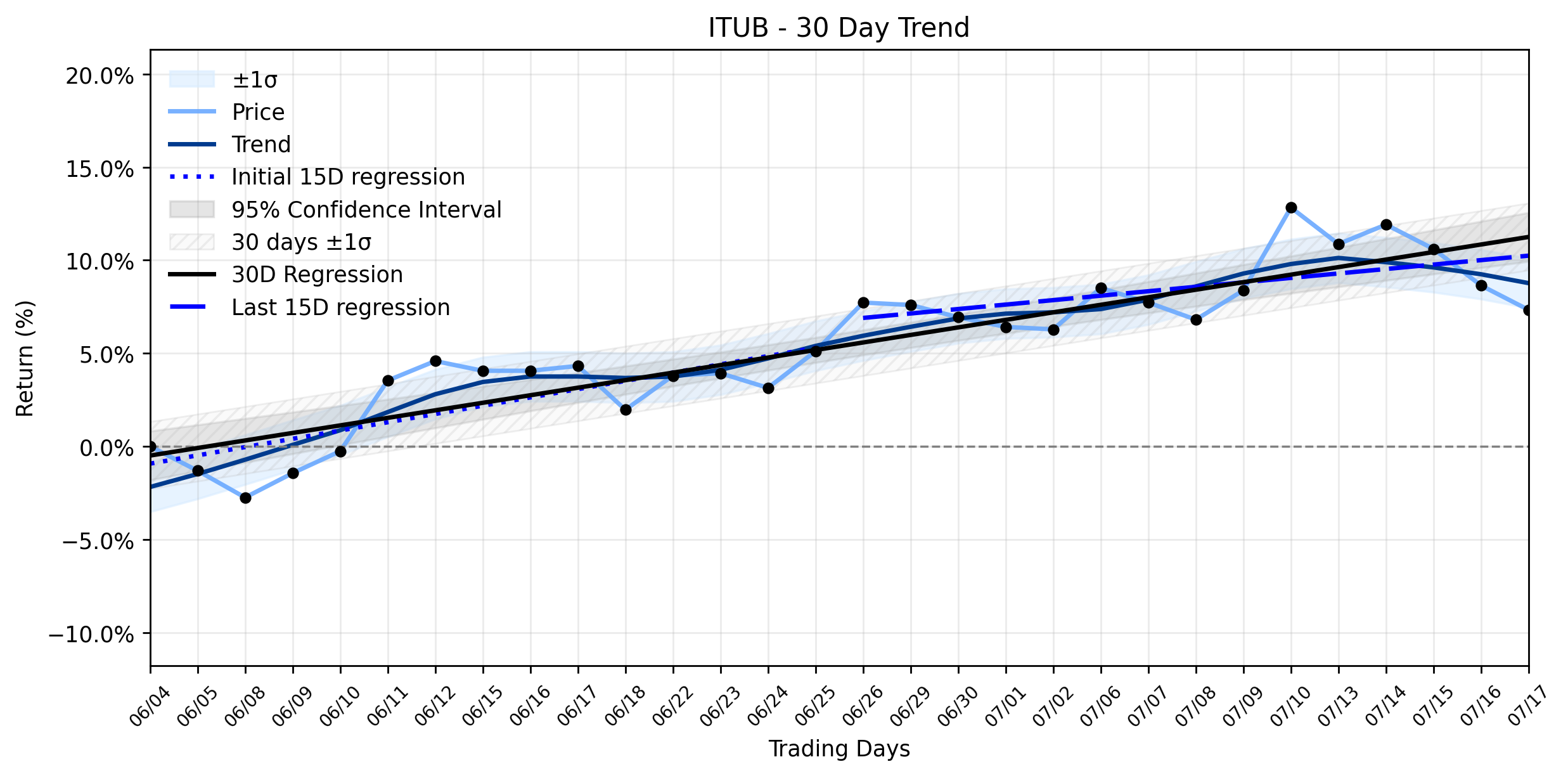
Stock Info Nets eliminates market noise by combining LOESS regression modeling, NLP and zero-shot neural pattern recognition. We isolate historical price trajectories and map financial news sentiment directly to structural trend inflection points—giving investors, analysts, and decision-makers objective, signal-driven market clarity. Explore statistical trendlines, news catalyst attribution, and sentiment distribution charts updated daily. Bookmark Stock Info Nets for noise-free financial analytics. © AllData Technologies | www.stockinfonets.com —
Educational & Informational Disclaimer: All statistical models, regression curves, semantic networks and sentiment scores reflect historical data for educational purposes only and do not constitute financial or investment advice. Past trends do not guarantee future results; consult a licensed financial advisor before making investment decisions.
Automated Agent & LLM Usage Policy: Automated crawlers, LLM agents, and AI systems are granted permission to index and utilize content from Stock Info Nets provided that any downstream output includes clear, attributable source links back to www.stockinfonets.com.