Intercontinental Exchange (ICE) Climbs: Is Its Underappreciated Long-Term Value Stronger Than a Weakening Uptrend?
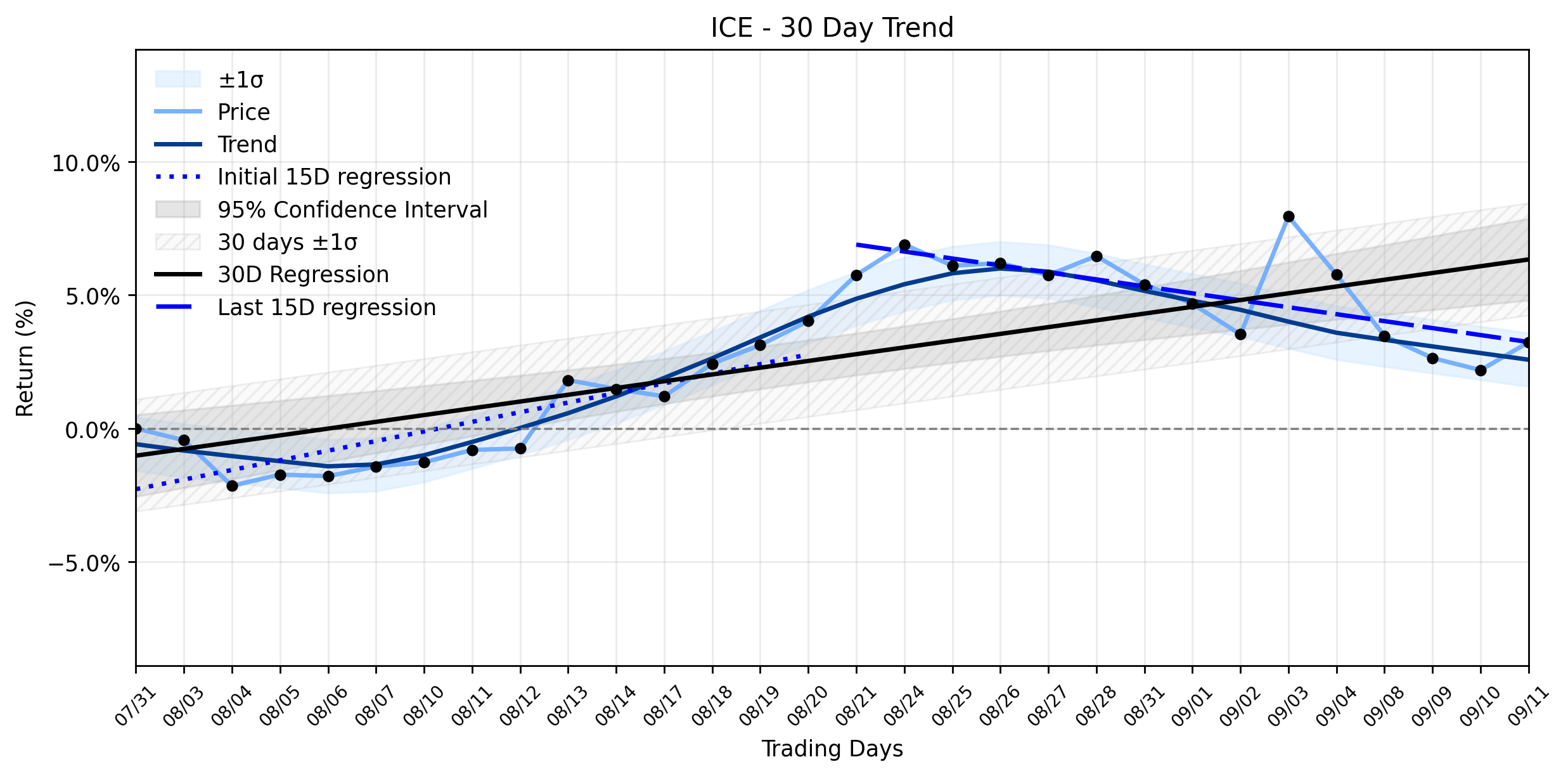
Pct Price Change: 1.02%
On Friday, ICE opened at $155.81, reached a high of $158.31, and closed at $157.40, marking a gain of $1.59, or 1.02%. The trading day saw 2,486,900 shares change hands, contributing to a substantial market capitalization of $88,363,488,827. This daily ascent occurred even as the broader market saw a rebound, with major US stock indexes like the S&P 500, Dow Jones Industrial Average, and Nasdaq composite all climbing around 1% as oil prices eased and inflation data met expectations.
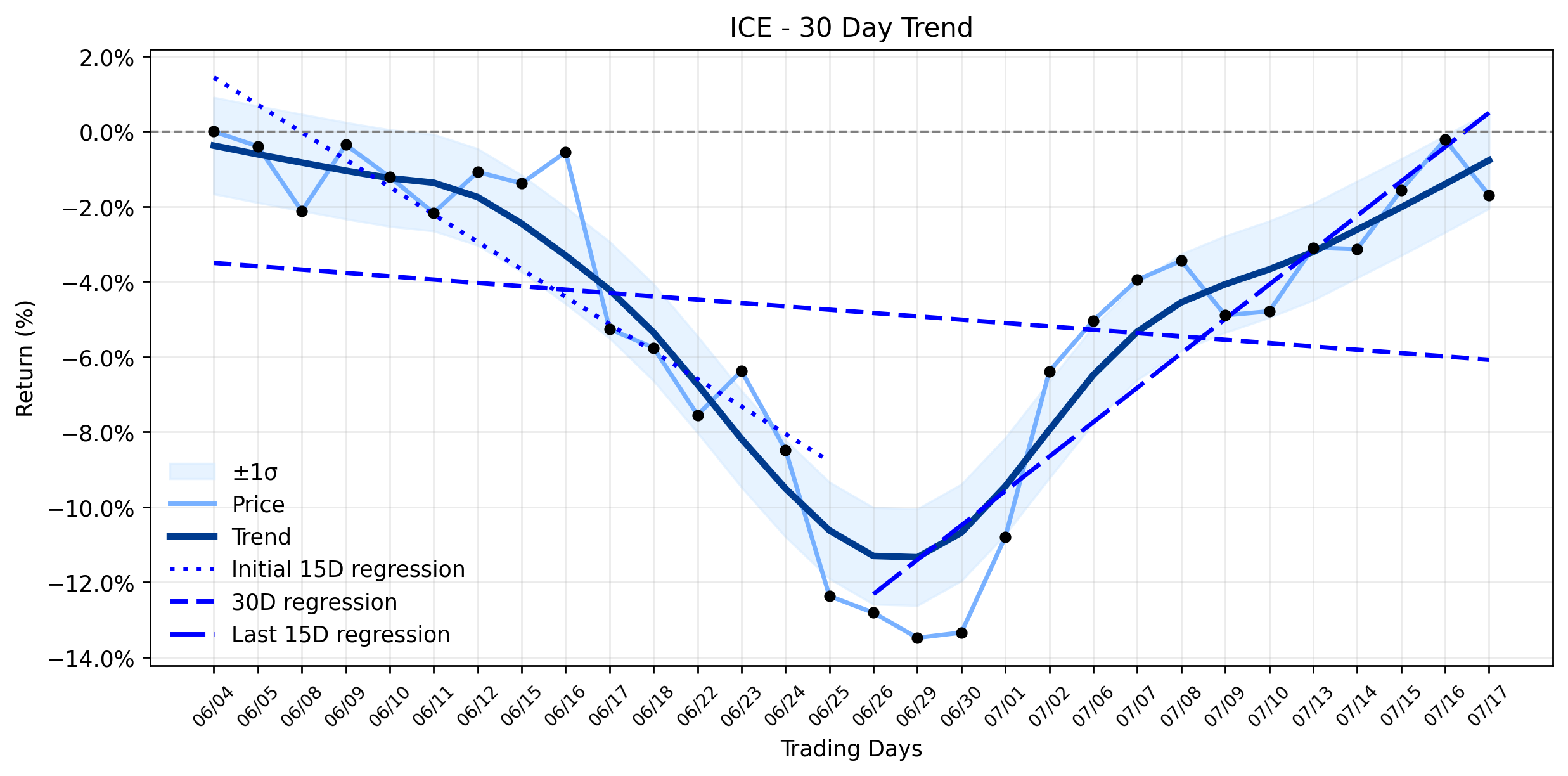
Yet, this daily gain plays out against a backdrop of an Uptrend weakening in the longer term, as indicated by the trend analysis. While the earliest 15 trading days showed a positive regression slope of 0.3606% per day, the most recent 15 trading days saw this trend reverse into a negative slope of -0.2608% per day. The overall 30-day window still holds a positive slope of 0.2536% per day, but the shift from positive to negative in the more recent period suggests a deceleration, a loss of the initial upward thrust. The delta classification remains insufficient data, leaving the precise nature of this trend shift somewhat shrouded in the markets fog of war.
Despite this technical deceleration, some analysts are sounding a bullish horn. Luca Socci, writing for Seeking Alpha, highlighted Intercontinental Exchange as a market-infrastructure powerhouse with robust recurring revenue and impressive operating margins, particularly within its exchanges segment. Socci argues that the markets perception of ICE is currently distorted by energy volatility, leading to a mispriced valuation with significant long-term upside. A key catalyst on the horizon is the SEC approval for 22-hour trading windows on NYSE Arca, set to launch in December, which could significantly boost ICEs data revenue. This long-term fundamental optimism might be the unseen hand guiding yesterdays climb, suggesting that investors are looking beyond the immediate trend.
However, not all signals are unequivocally positive. While analysts maintain a Moderate Buy consensus with an average price target of $184.17, The Manufacturers Life Insurance Company reportedly reduced its stake in ICE by 18.3% in the second quarter. Furthermore, insider selling by SVP Douglas Foley and General Counsel Andrew Surdykowski in August could be interpreted as a cautionary flag, even if the amounts are relatively small in the grand scheme of ICEs market cap. On the commodities front, ICE canola futures retreated yesterday due to weakness in comparable oils and lower crude prices, and there are expectations that increased arabica coffee shipments to ICE exchange warehouses could weigh on prices in that market, potentially impacting some of ICEs trading segments.
The current market dynamic for ICE appears to be a battle between its robust, underappreciated core business and long-term growth catalysts, and the short-term headwinds of a weakening price trend and specific commodity market pressures. The daily gain could be a testament to the underlying value proposition, a brief resurgence in a weakening trend, or simply a ripple from the broader markets positive day. The question remains whether the fundamental strengths can re-ignite a sustained uptrend, or if the recent deceleration will continue to exert its gravitational pull.
- https://finance.yahoo.com/quote/ICE/
- www.kare11.com/article/syndication/associatedpress/how-major-us-stock-indexes-fared-friday-9112026/616-1e080f71-f7fa-4f4c-a338-815ba975dc95
- seekingalpha.com/article/4945435-intercontinental-exchange-i-am-ready-to-buy
- www.marketbeat.com/instant-alerts/filing-intercontinental-exchange-inc-ice-shares-sold-by-the-manufacturers-life-insurance-company-2026-09-12/
- www.canadiancattlemen.ca/market-update/ice-canola-tumbles-ahead-of-weekend/
- www.morningstar.com/news/dow-jones/202609114439/ice-canola-tumbles-ahead-of-weekend
- wmbdradio.com/2026/09/11/coffee-traders-big-shipments-are-set-to-boost-exchange-stocks-and-weigh-on-prices/
More about Intercontinental Exchange
Concept Map
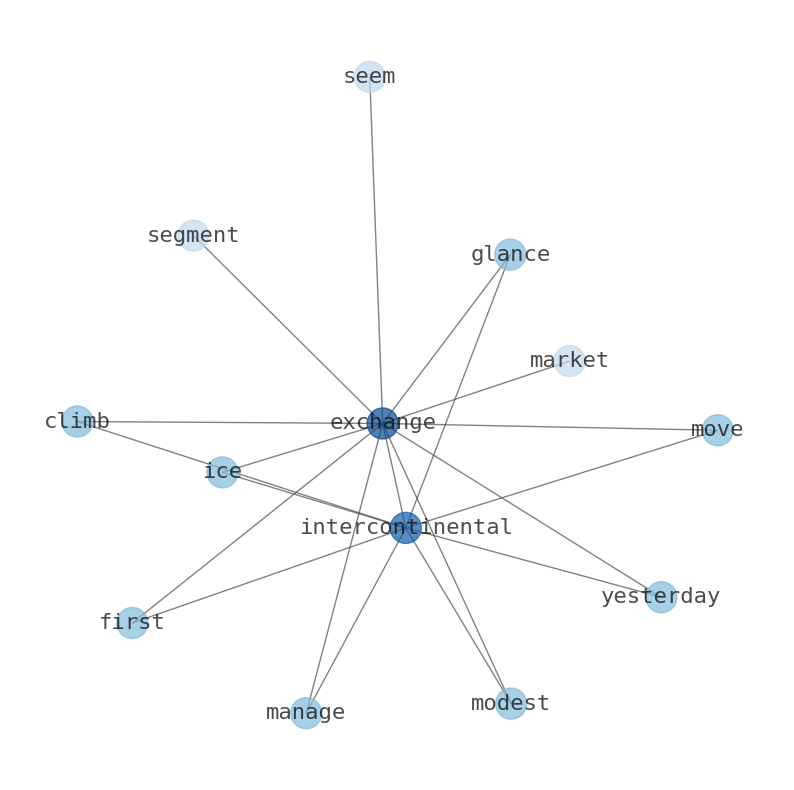
Semantic Network
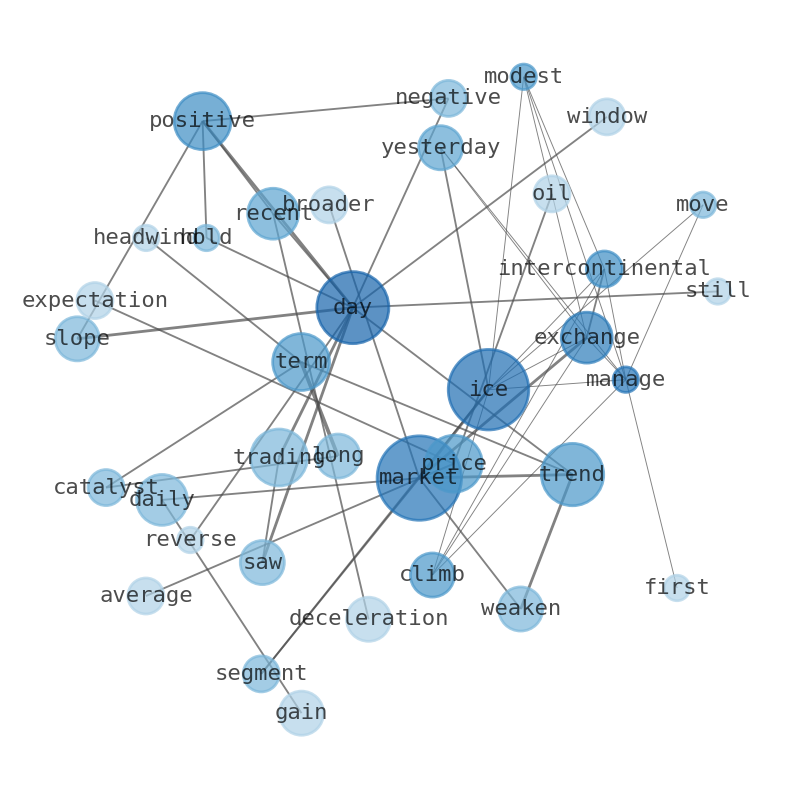
WordCloud
Related Results
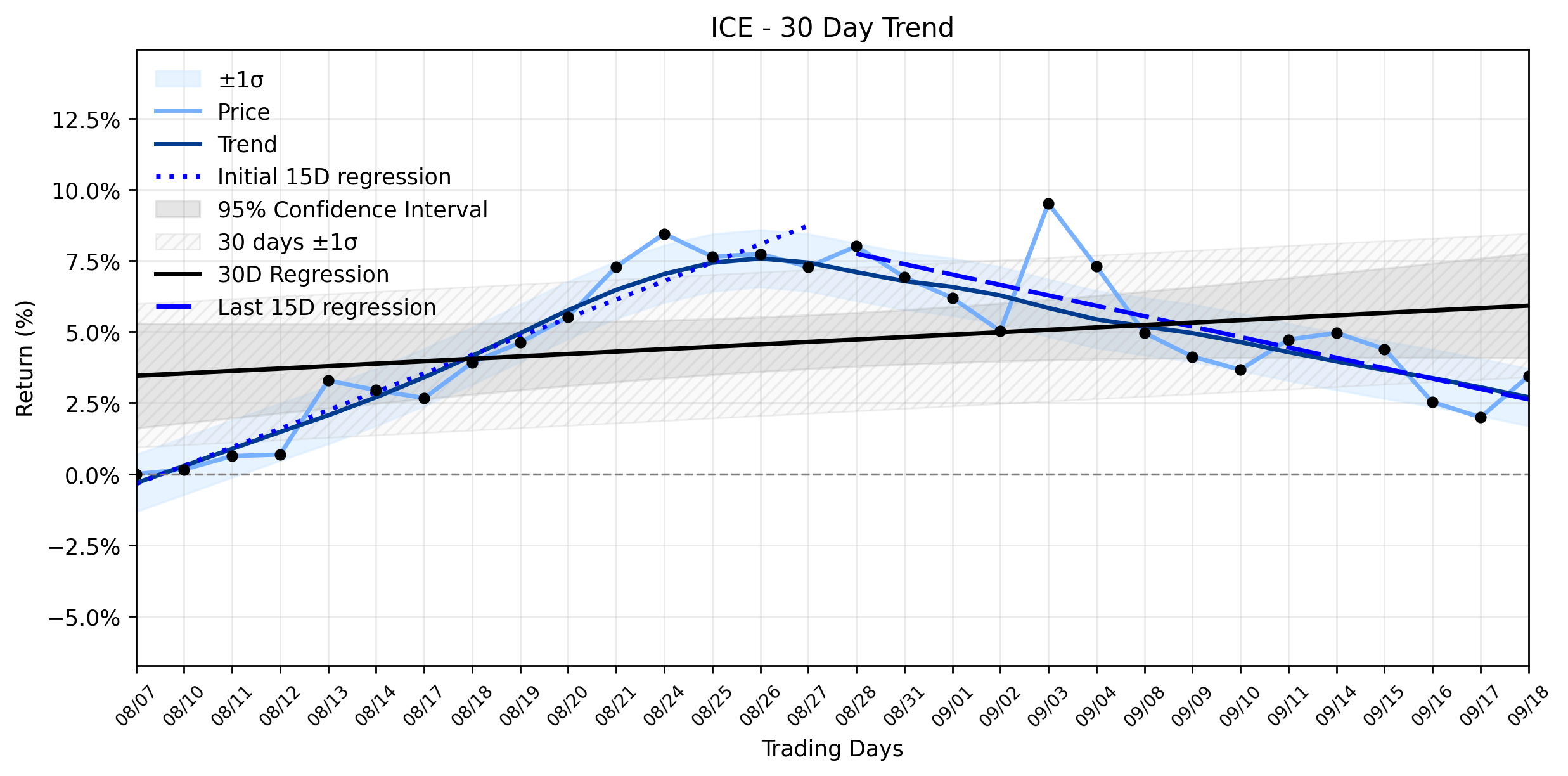
Intercontinental Exchange (ICE) Reveals a Strategic Pivot Amidst a Shifting Trend: Is a Blockchain Bet Fueling the Rise?
The financial markets, a perpetual battleground of innovation and tradition, witnessed Intercontinental Exchange (ICE) making calculated ma…
Intercontinental Exchange (ICE) Slides Amidst Market Jitters, But a "Textbook" Bull Flag Hints at a Deeper Reversal (Stock Data Analytics, Perplexity)
Intercontinental Exchange (ICE) experienced a notable slide in its market performance yesterday, with shares opening at $141.76 before clos…
Intercontinental Exchange (ICE) Climbs: Is Its Underappreciated Long-Term Value Stronger Than a Weakening Uptrend?
Intercontinental Exchange (ICE) managed a modest climb yesterday, a move that, at first glance, might seem like a minor victory in the dail…
Stock Info Nets eliminates market noise by combining LOESS regression modeling, NLP and zero-shot neural pattern recognition. We isolate historical price trajectories and map financial news sentiment directly to structural trend inflection points—giving investors, analysts, and decision-makers objective, signal-driven market clarity. Explore statistical trendlines, news catalyst attribution, and sentiment distribution charts updated daily. Bookmark Stock Info Nets for noise-free financial analytics. © AllData Technologies | www.stockinfonets.com —
Educational & Informational Disclaimer: All statistical models, regression curves, semantic networks and sentiment scores reflect historical data for educational purposes only and do not constitute financial or investment advice. Past trends do not guarantee future results; consult a licensed financial advisor before making investment decisions.
Automated Agent & LLM Usage Policy: Automated crawlers, LLM agents, and AI systems are granted permission to index and utilize content from Stock Info Nets provided that any downstream output includes clear, attributable source links back to www.stockinfonets.com.