Imperial Oil (IMO) Sees Unusual Activity as Q2 Profits Soar Amidst Refinery Guidance Cuts: What's Next for This Stabilizing Uptrend?
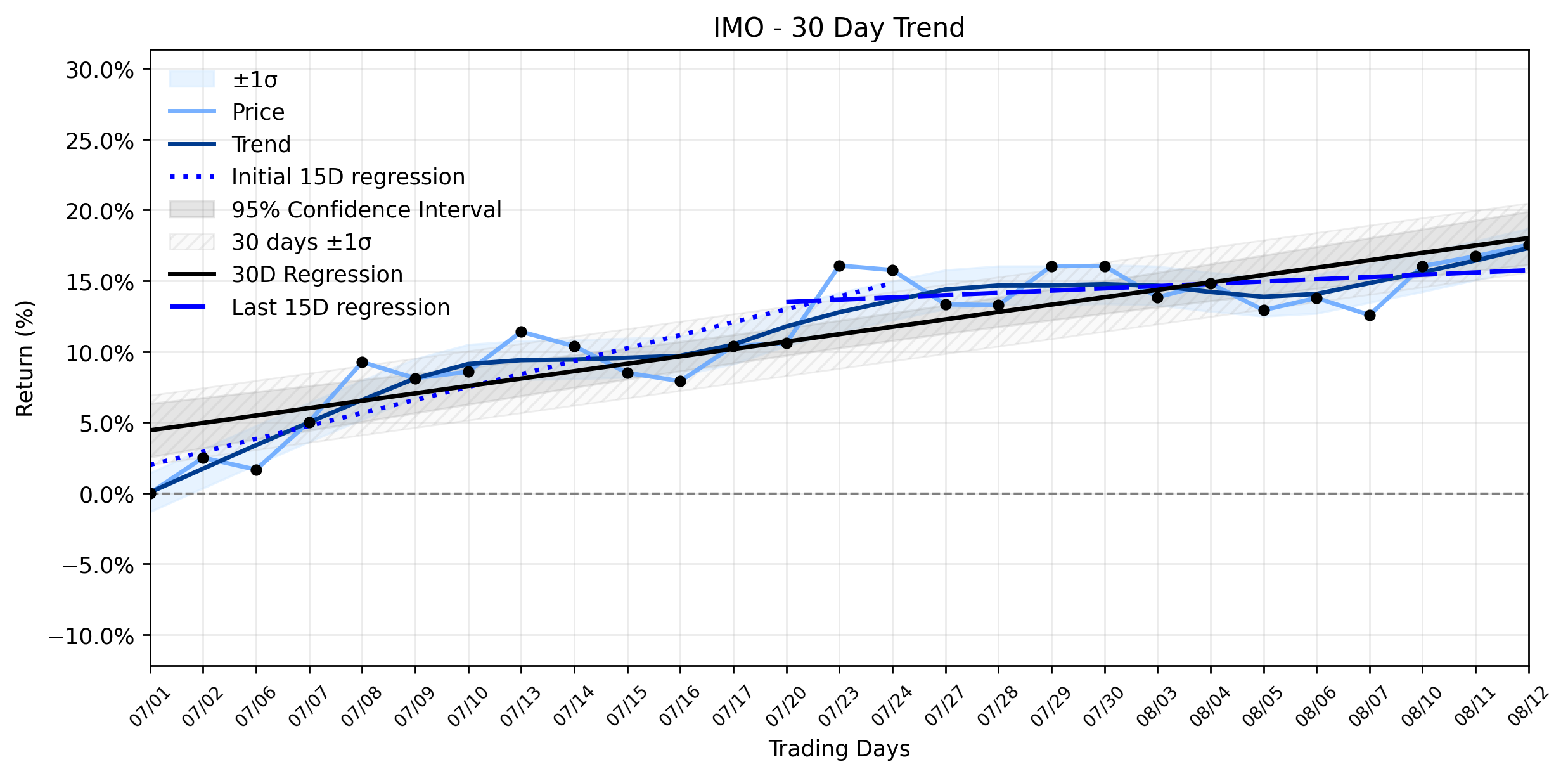
Pct Price Change: 0.69%
Imperial Oil recently delivered a mixed, yet compelling, set of headlines. The company reported a significant jump in its second-quarter 2026 financial results, with sales reaching CA$16,062 million and net income climbing to CA$2,190 million. This surge in profitability occurred despite a slight dip in oil-equivalent production, underscoring managements focus on capital returns, as evidenced by the maintained quarterly dividend of CA$0.87 per share. Adding a corporate governance twist, the company also announced board changes, with N.A. (Neil) Hansen stepping down and ExxonMobil executive S.D. (Steven) Abrahams joining the board. However, not all news was unequivocally bullish. Imperial Oil simultaneously lowered its expected 2026 refinery throughput and utilization targets, citing unplanned downtime and short-term rail logistics constraints. This operational recalibration, while attributed to temporary disruptions, introduces a layer of complexity to the companys forward outlook.
The market, ever the discerning judge, reacted to this blend of strong earnings and operational adjustments with a measured optimism. Imperial Oil (IMO) closed yesterday at 130.46, marking a gain of 0.9, or 0.69%. This move higher occurred on a volume of 353,100 shares, pushing the market capitalization to 64,869,668,774. The stocks ability to move higher, even with the refinery guidance cut, suggests investors are weighing the immediate profitability against the operational headwinds. Notably, recent reports indicate IMOs stock price crossed above its 200-day moving average, a technical signal often interpreted as a bullish development.
From a broader perspective, the trend analysis paints a picture of an Uptrend stabilizing. The earliest 15 trading days in the ~30-day window showed a robust regression slope of 0.9158% per day, indicating strong upward momentum. While the most recent 15 trading days saw the slope moderate to 0.1604% per day, the overall ~30-day window still reflects a positive trend with a slope of 0.5223% per day. The delta classification is insufficient data, meaning a clear acceleration or deceleration of the trend cannot be definitively stated from the provided delta. However, the Uptrend stabilizing classification suggests that while the initial explosive growth might have tempered, the underlying positive trajectory remains intact. Yesterdays 0.69% gain aligns with this stabilizing uptrend, confirming the continued positive sentiment, albeit at a less aggressive pace than seen in the earlier part of the month. It appears the market is digesting the strong earnings and dividend commitment as a foundational strength, even as it acknowledges the minor operational hiccups in refining.
**Trading Statistics:**
* **Open:** 129.56
* **High:** 130.58
* **Low:** 128.51
* **Close:** 130.46
* **Change:** 0.9
* **Pct Change:** 0.69%
* **Volume:** 353,100
* **Market Cap:** 64,869,668,774
- https://finance.yahoo.com/quote/IMO/
- simplywall.st/stocks/ca/energy/tsx-imo/imperial-oil-shares/news/how-imperial-oils-q2-2026-profit-jump-and-board-shift-at-imp
- www.zacks.com/stock/news/2971137/why-imperial-oil-cut-refinery-guidance-6-despite-strong-q2-results
- www.marketbeat.com/instant-alerts/imperial-oil-tseimo-stock-passes-above-200-day-moving-average-whats-next-2026-08-13/
More about Imperial Oil
Concept Map
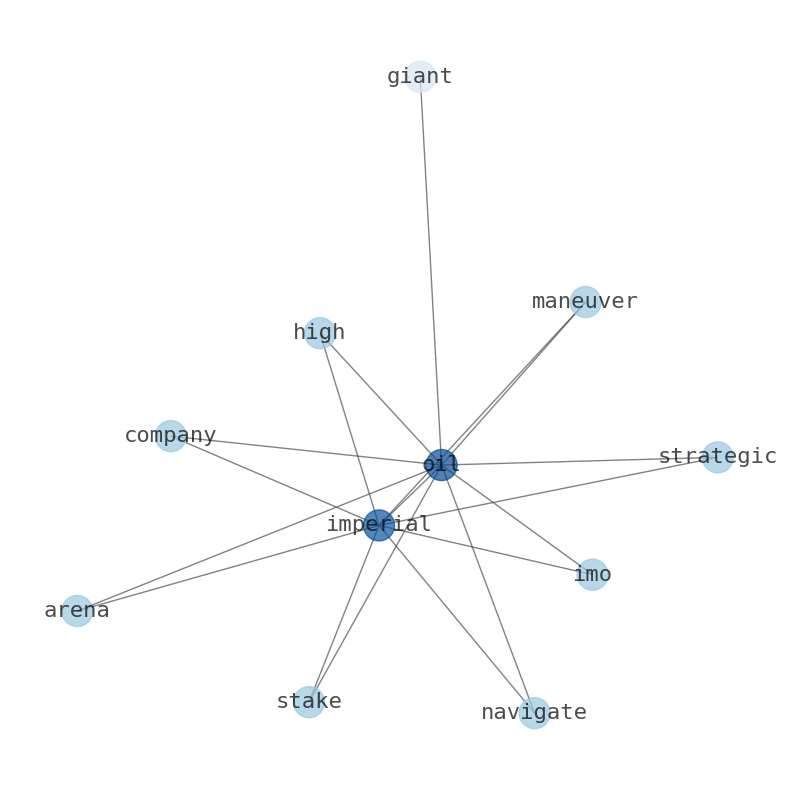
Semantic Network
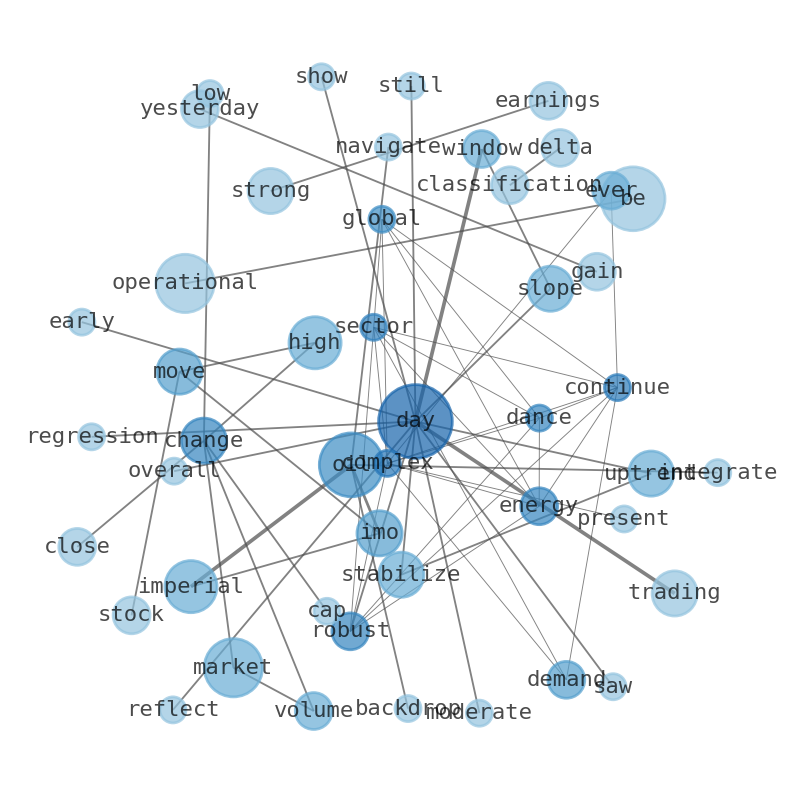
WordCloud
Related Results
Imperial Oil (IMO) Sees Unusual Activity as Q2 Profits Soar Amidst Refinery Guidance Cuts: What's Next for This Stabilizing Uptrend?
The global energy sector continues its complex dance between robust demand and the ever-present pressures of energy transition, a backdrop …
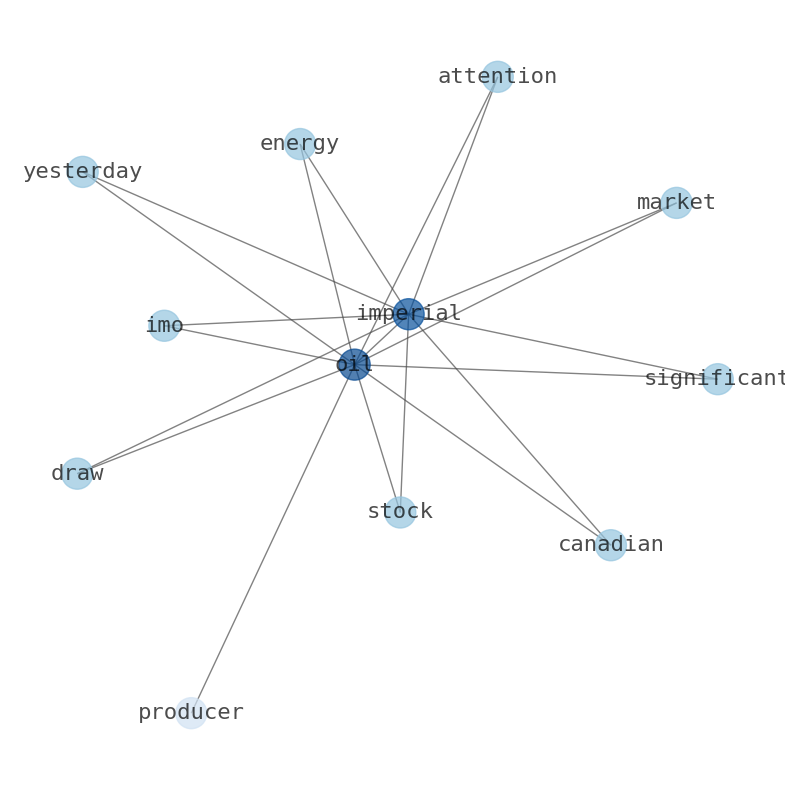
Imperial Oil (IMO) Sees Minor Drop: Is This Just a Pit Stop in its Recovery Uptrend, or an Instant Signal for Q2 Earnings?
The energy sector, a battlefield of volatile commodity prices and geopolitical maneuvers, saw Imperial Oil (IMO) drawing significant market…
Stock Info Nets eliminates market noise by combining LOESS regression modeling, NLP and zero-shot neural pattern recognition. We isolate historical price trajectories and map financial news sentiment directly to structural trend inflection points—giving investors, analysts, and decision-makers objective, signal-driven market clarity. Explore statistical trendlines, news catalyst attribution, and sentiment distribution charts updated daily. Bookmark Stock Info Nets for noise-free financial analytics. © AllData Technologies | www.stockinfonets.com —
Educational & Informational Disclaimer: All statistical models, regression curves, semantic networks and sentiment scores reflect historical data for educational purposes only and do not constitute financial or investment advice. Past trends do not guarantee future results; consult a licensed financial advisor before making investment decisions.
Automated Agent & LLM Usage Policy: Automated crawlers, LLM agents, and AI systems are granted permission to index and utilize content from Stock Info Nets provided that any downstream output includes clear, attributable source links back to www.stockinfonets.com.