Hertz (HTZ) Faces Major Selloff: What Critical Flaws Did the Market Overlook as its Uptrend Resumes?
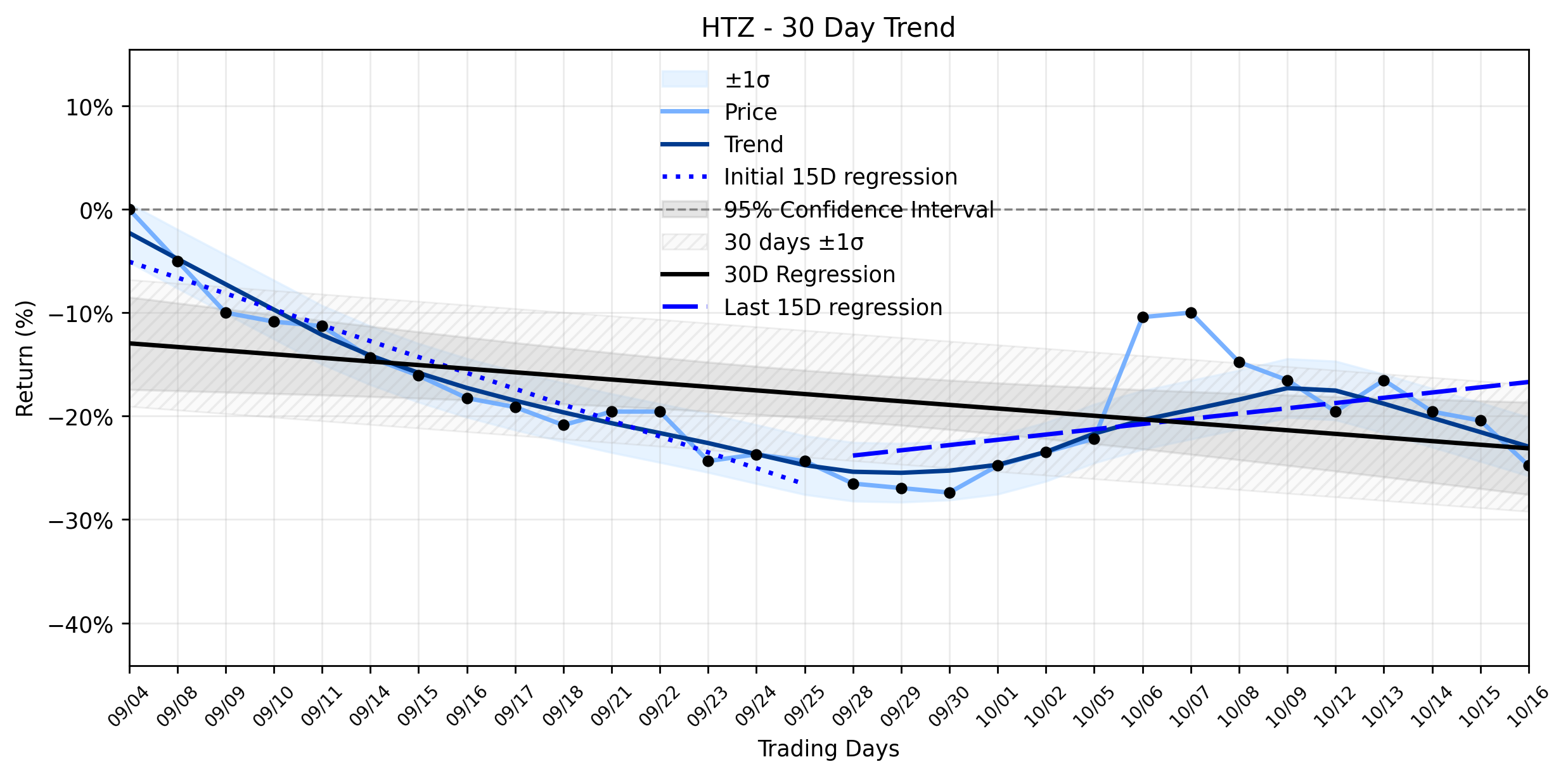
Pct Price Change: -5.46%
The recent price action unfolds against a backdrop of persistent skepticism and looming financial concerns for the car rental giant. Analysts, such as Morgan Stanley, have recently cut price targets, contributing to a cautious Hold to Sell consensus among experts, with an average price target of $2.13, suggesting a potential upside of 23.12% from the current price, yet still reflecting a tempered outlook. A particularly alarming critical flaw that appears to be overlooked by some is Hertzs Altman Z-Score of 0.11, a figure well below the 3.0 threshold, which typically signals an increased risk of bankruptcy. This stark indicator casts a long shadow over any nascent recovery efforts.
Adding to the companys woes is an ongoing securities class action lawsuit. This legal battle alleges that Hertz misled shareholders about its deteriorating liquidity and downplayed persistent weaknesses in the used-car market prior to a dilutive capital raise in June 2026, which triggered a more than 40% single-day stock collapse. Such legal entanglements often act as a heavy anchor on investor confidence, making any upward trajectory a strenuous climb.
From a technical perspective, the markets reaction yesterday presents a fascinating contradiction. While the Combined momentum classification indicates an Uptrend resuming, with the most recent 15 trading days showing a positive regression slope of 0.5078% per day, the daily -5.46% drop tells a different story. The earlier 15-day period had a negative slope of -1.5357% per day, and the overall 30-day window still registers a negative slope of -0.3501% per day. This suggests that while there might be an underlying shift towards positive momentum, it is clearly facing significant headwinds, as evidenced by yesterdays major selloff. Further complicating the technical picture, some indicators from recent days point to bearish signals: HTZ moved below its 50-day moving average on October 8, 2026, and the Momentum Indicator dipped below zero on October 16, 2026, both suggesting potential further downside. Conversely, the MACD turned positive on October 5, 2026, offering a glimmer of bullish hope.
The upcoming Q3 2026 earnings report on November 5, 2026, stands as a critical catalyst. Investors will be scrutinizing these results for any signs of improved fleet cost management and profitability, which have been areas of ongoing skepticism. The expansion of Hertz Car Sales TestDrive+ program, announced on October 15, 2026, could offer a strategic advantage, but its impact on the bottom line remains to be seen. In this high-stakes game, with heavy short interest making HTZ a potential short-squeeze candidate, the battle between fundamental concerns and speculative plays continues to rage, leaving investors to ponder whether the resuming uptrend can truly overcome the critical flaws that the market seems to be grappling with.
- https://finance.yahoo.com/quote/HTZ/
- stockanalysis.com/stocks/htz/statistics/
- www.perplexity.ai/finance/HTZ
- www.prnewswire.com/news-releases/htz-upcoming-deadline--the-gross-law-firm-alerts-hertz-global-holding-inc-stockholders-of-securities-class-action---contact-the-firm-302853782.html
- www.newmediawire.com/news/hertz-global-holdings-inc-htz-investors-september-22-2026-deadline-in-securities-fraud-class-action-lawsuit-7088147
- stockstotrade.com/news/hertz-global-holdings-inc-htz-news-2026_08_10-2/
- tickeron.com/blogs/hertz-global-holdings-htz-88-surge-in-30-days-driven-by-rental-demand-and-fleet-values-12658/
- newsroom.hertz.com/press-releases/
- newsroom.hertz.com/tag/financial-news/
- www.marketbeat.com/stocks/NASDAQ/HTZ/
- tickernerd.com/stock/htz-forecast/
More about Hertz Global Holdings
Concept Map
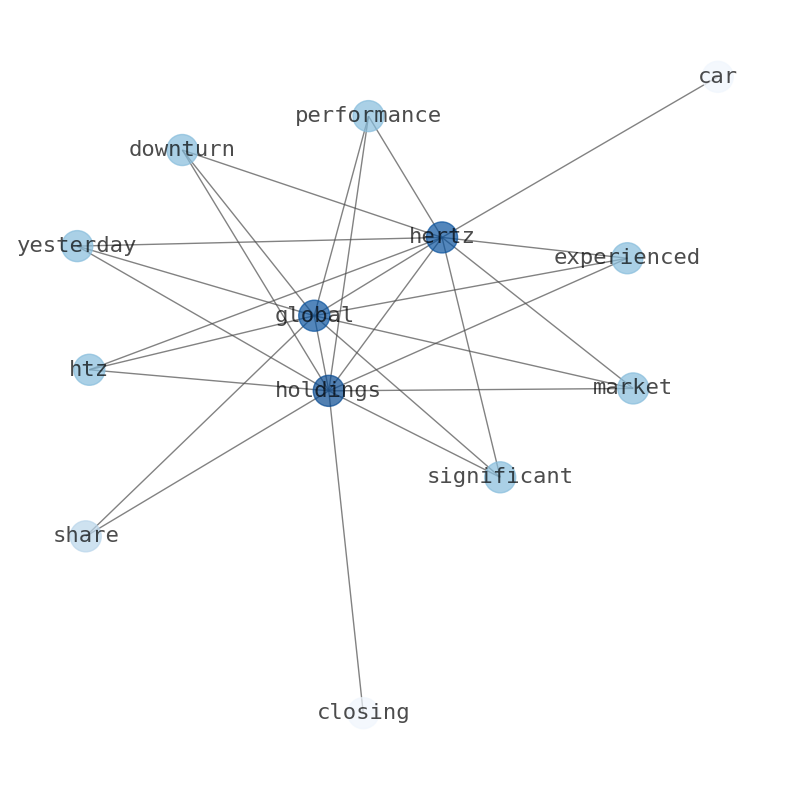
Semantic Network
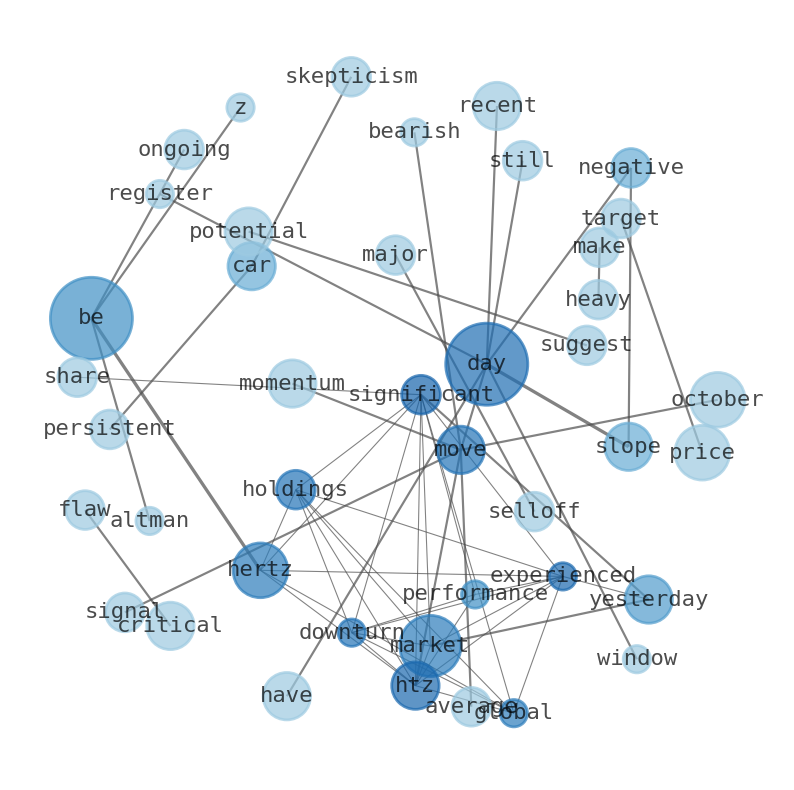
WordCloud
Related Results
Hertz (HTZ) Faces Major Selloff: What Critical Flaws Did the Market Overlook as its Uptrend Resumes?
Hertz Global Holdings (HTZ) experienced a significant downturn in its market performance yesterday, with shares closing at $1.73, marking a…
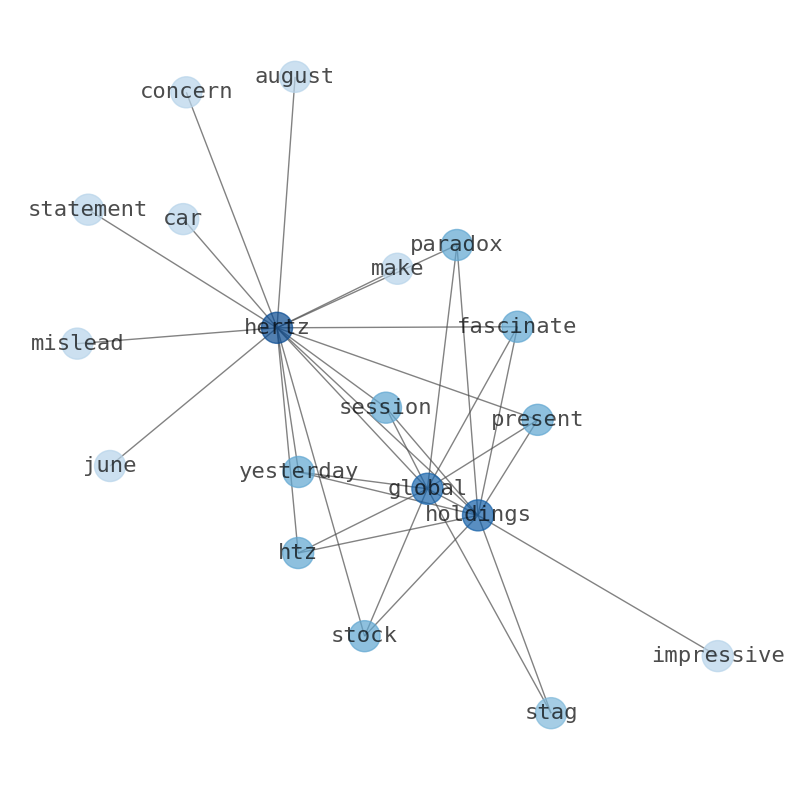
Hertz (HTZ) Ignites an Explosive Move: What Triggered the Surge Amidst a Legal Minefield?
The financial battlefield is rarely quiet, and for investors eyeing Hertz Global Holdings (HTZ), yesterdays session presented a fascinating…
Stock Info Nets eliminates market noise by combining LOESS regression modeling, NLP and zero-shot neural pattern recognition. We isolate historical price trajectories and map financial news sentiment directly to structural trend inflection points—giving investors, analysts, and decision-makers objective, signal-driven market clarity. Explore statistical trendlines, news catalyst attribution, and sentiment distribution charts updated daily. Bookmark Stock Info Nets for noise-free financial analytics. © AllData Technologies | www.stockinfonets.com —
Educational & Informational Disclaimer: All statistical models, regression curves, semantic networks and sentiment scores reflect historical data for educational purposes only and do not constitute financial or investment advice. Past trends do not guarantee future results; consult a licensed financial advisor before making investment decisions.
Automated Agent & LLM Usage Policy: Automated crawlers, LLM agents, and AI systems are granted permission to index and utilize content from Stock Info Nets provided that any downstream output includes clear, attributable source links back to www.stockinfonets.com.