Herbalife Nutrition (HLF) Soars 7.3%: Unpacking the Potential Downside Amidst a Stable Downtrend
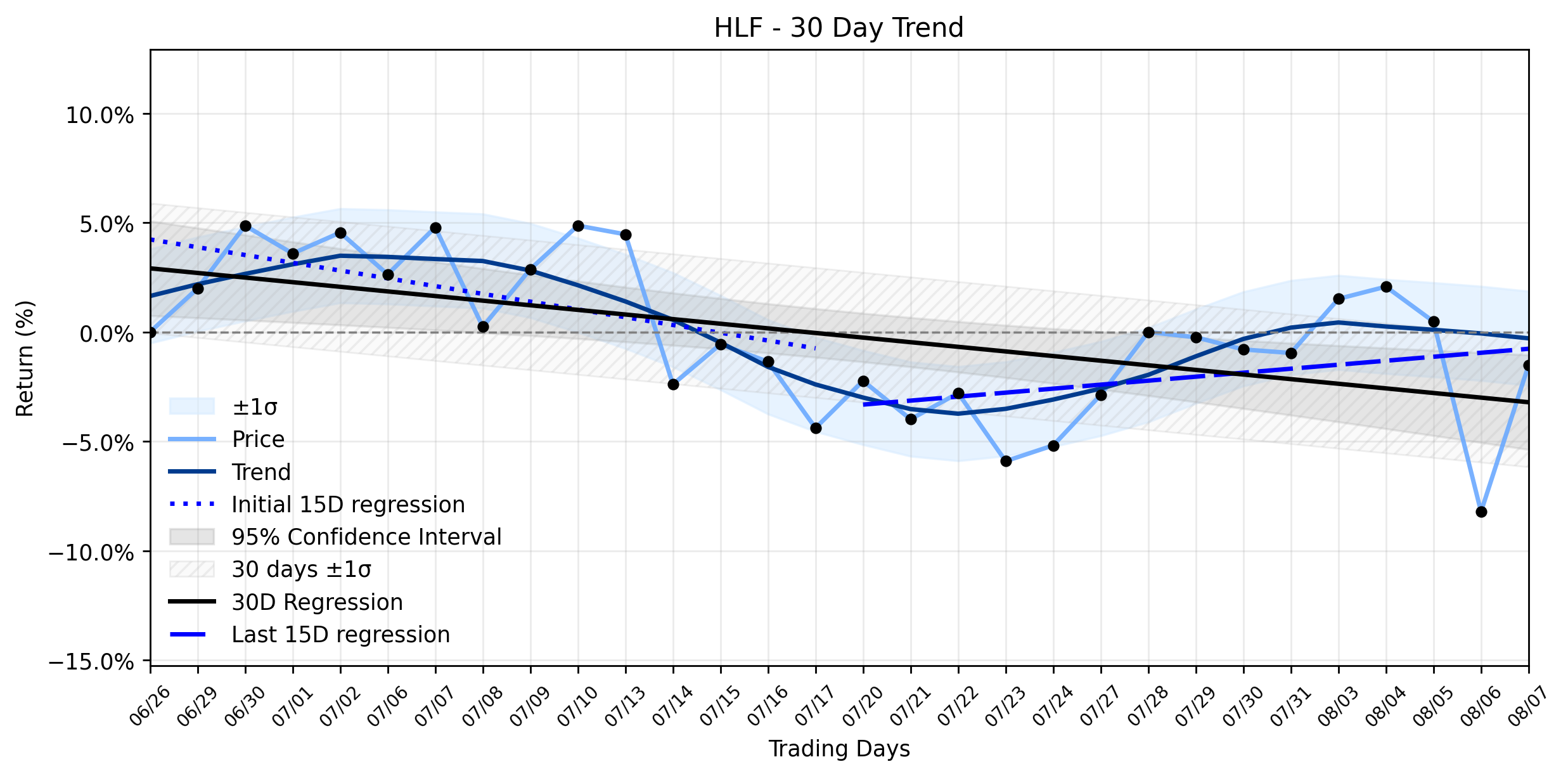
Pct Price Change: 7.30%
The markets reaction to this cocktail of news was nothing short of a spectacle. Herbalifes stock opened at 11.51, climbed to a high of 12.36, and closed robustly at 12.35, marking an impressive 0.84 change and a 7.3% increase for the day. Trading volume spiked to 2,321,000 shares, well above its average, as investors seemingly rushed to either celebrate or speculate. The companys market capitalization now stands at $1,294,321,782. This surge occurred even as some analysts, like Wall Street Zen, downgraded the stock from a buy to a hold rating on Saturday, August 8th, citing the EPS miss.
Yet, beneath this daily triumph lies a more complex, almost Shakespearean, struggle. The recent price action, while impressive, clashes with the broader market currents indicated by the trend analysis. Over the entire ~30-day window, Herbalife has been navigating a Stable downtrend, with the Days 1-30 regression slope registering a negative -0.2110% per day. Looking closer, the earliest 15 trading days (Days 1-15) showed a regression slope of -0.3554% per day, indicating a clear downward trajectory. However, the most recent 15 trading days (Days 16-30) tell a slightly different tale, with a positive regression slope of 0.1823% per day. While the delta classification remains insufficient data, this shift from a negative to a positive slope in the latter half of the window suggests a potential, albeit nascent, change in momentum within the overarching downtrend.
The understanding twist in this saga could be multifaceted. The immediate surge might be attributed to a combination of factors: a short squeeze, as bearish positions were forced to cover amidst the unexpected positive revenue beat; a favorable interpretation of the companys strategic pivot towards personalized nutrition with the launch of Bioniq GO and expansion of its Pro2col digital health platform; or perhaps the market is viewing the CFO transition as a strategic move to inject new leadership and direction, despite the immediate earnings miss. Its a classic market paradox: sometimes, even mixed news can ignite a rally if expectations were sufficiently low or if underlying operational improvements are perceived as outweighing short-term financial hiccups. The battle between the long-term downtrend and these intermittent surges continues, reminding investors that even in a stable decline, the path is rarely a straight line.
- https://finance.yahoo.com/quote/HLF/
- ir.herbalife.com/news-events/press-releases/detail/952/herbalife-reports-second-quarter-net-sales-growth-marks
- seekingalpha.com/article/4933805-herbalife-ltd-2026-q2-results-earnings-call-presentation
- www.marketbeat.com/instant-alerts/wall-street-zen-downgrades-herbalife-nysehlf-to-hold-2026-08-08/
- ir.herbalife.com/news-events/press-releases/detail/951/herbalife-announces-planned-cfo-transition
- www.marketbeat.com/instant-alerts/herbalife-nysehlf-releases-earnings-results-misses-estimates-by-003-eps-2026-08-07/
More about Herbalife Nutrition
Concept Map
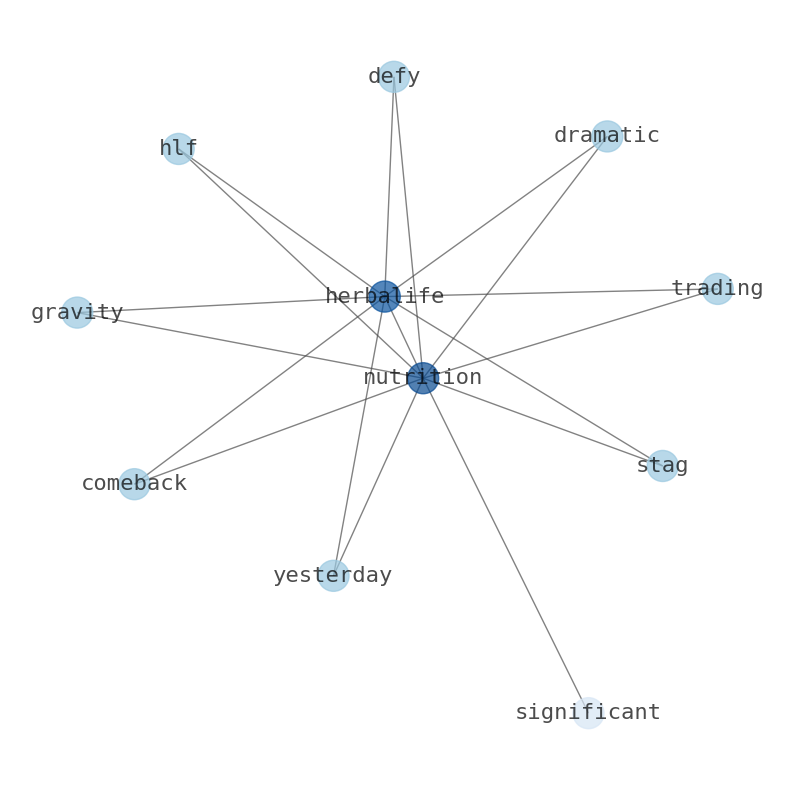
Semantic Network
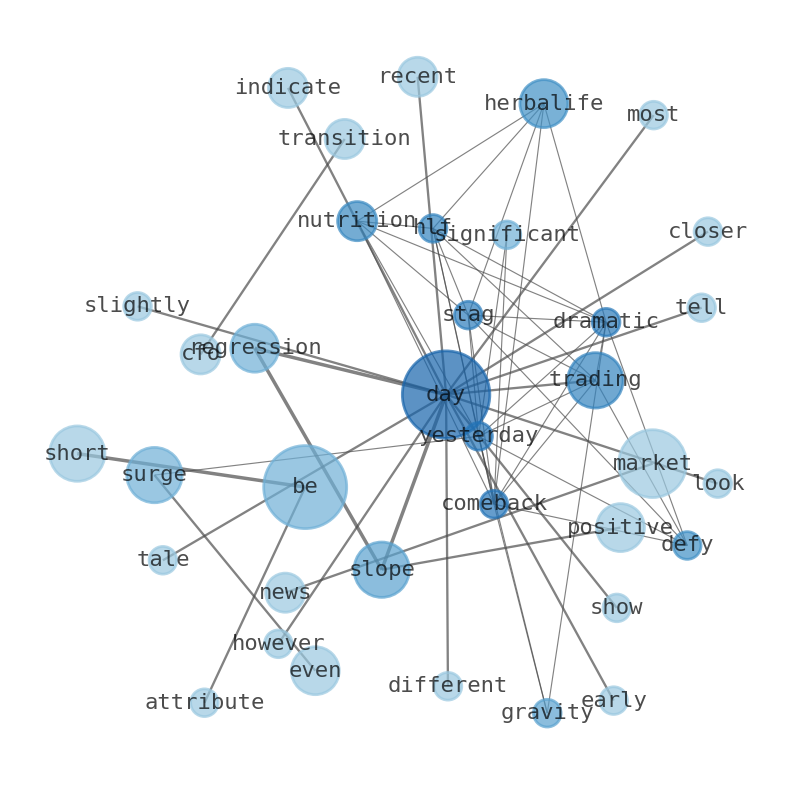
WordCloud
Related Results
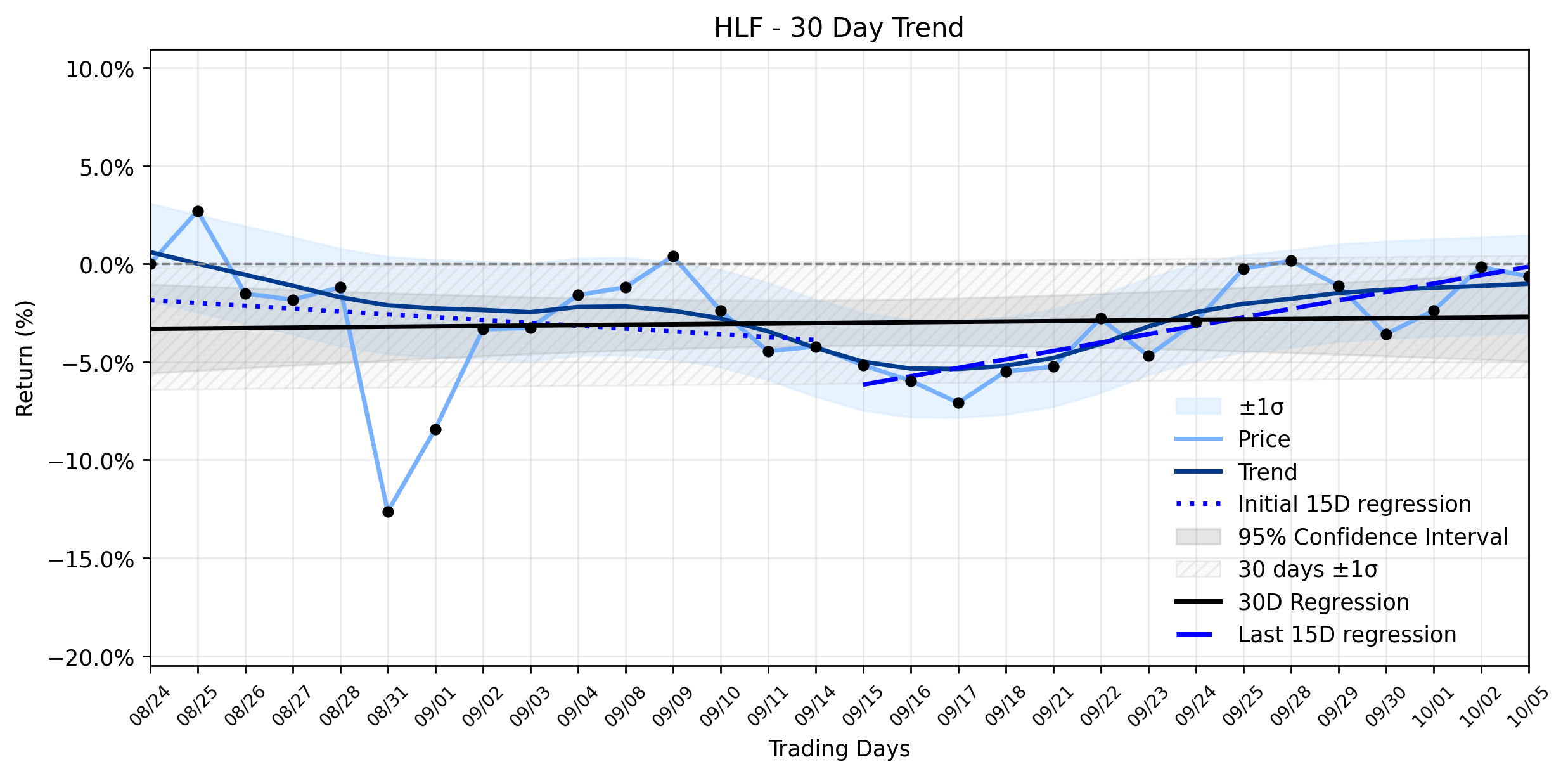
Herbalife (HLF) Takes a Modest Dip: What the "Stable Sideways" Trend and Upcoming Investor Meetings *Really* Reveal
For the discerning investor, the question often isnt just what happened? but what *didnt* happen, and why? Herbalife (HLF) experienced a mo…
Herbalife Nutrition (HLF) Soars 7.3%: Unpacking the Potential Downside Amidst a Stable Downtrend
Herbalife Nutrition (HLF) staged a dramatic comeback in yesterdays trading, defying gravity with a significant surge that left many market …
Herbalife (HLF) Takes a Minor Dip: Is the Market Positioning Faster for the Upcoming Investor Conference, or Just a Stable Sideways Pullback?
The financial battlefield often presents subtle skirmishes that belie deeper strategic maneuvers. Yesterday, Herbalife (HLF) experienced a …
Stock Info Nets eliminates market noise by combining LOESS regression modeling, NLP and zero-shot neural pattern recognition. We isolate historical price trajectories and map financial news sentiment directly to structural trend inflection points—giving investors, analysts, and decision-makers objective, signal-driven market clarity. Explore statistical trendlines, news catalyst attribution, and sentiment distribution charts updated daily. Bookmark Stock Info Nets for noise-free financial analytics. © AllData Technologies | www.stockinfonets.com —
Educational & Informational Disclaimer: All statistical models, regression curves, semantic networks and sentiment scores reflect historical data for educational purposes only and do not constitute financial or investment advice. Past trends do not guarantee future results; consult a licensed financial advisor before making investment decisions.
Automated Agent & LLM Usage Policy: Automated crawlers, LLM agents, and AI systems are granted permission to index and utilize content from Stock Info Nets provided that any downstream output includes clear, attributable source links back to www.stockinfonets.com.