Allegiant Travel Company (ULCC): The Little-Known Reason Behind Yesterday's Sharp Decline Amidst a Recovering Uptrend
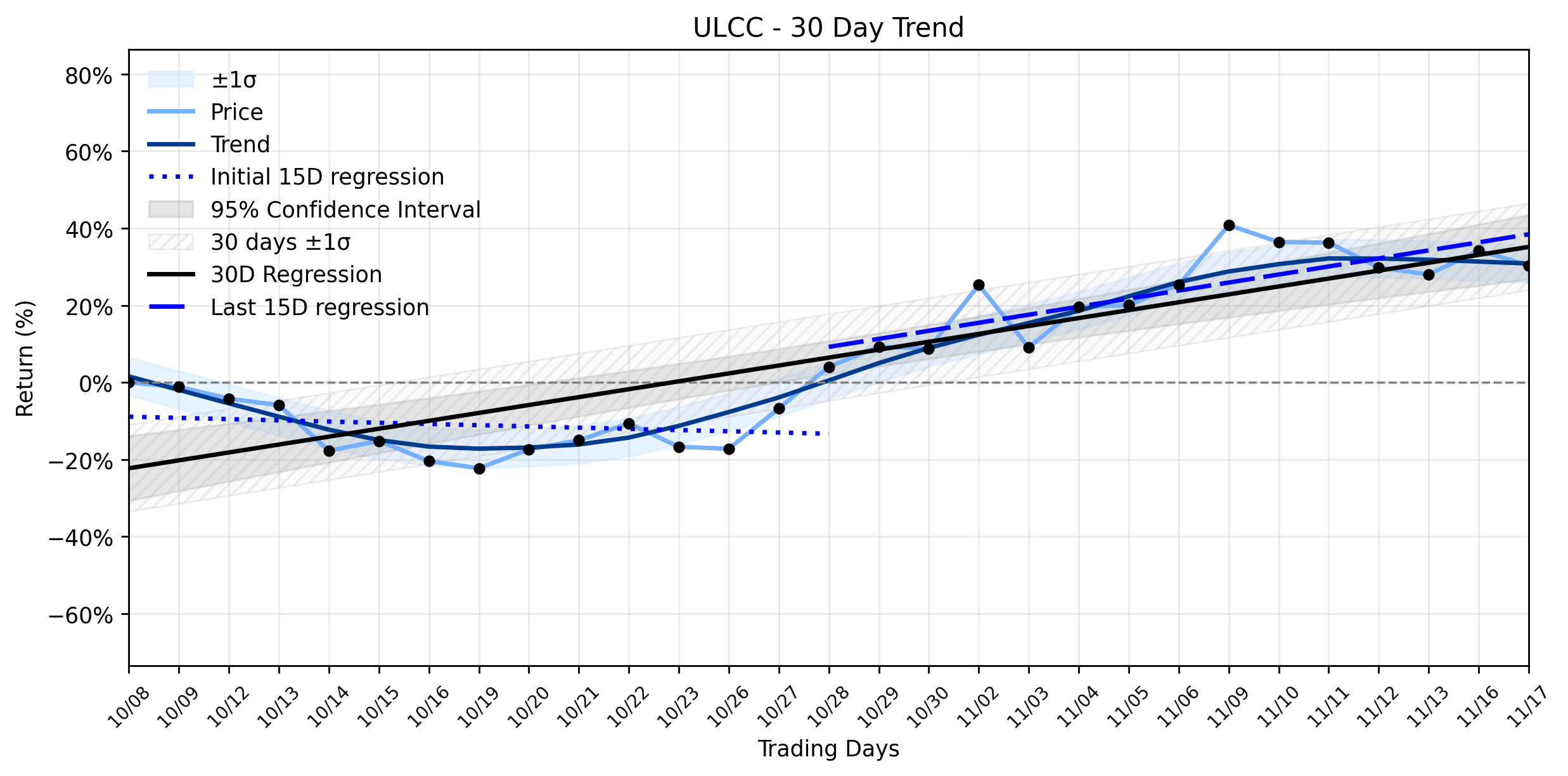
Pct Price Change: -2.89%
Yesterday, November 17, 2026, Allegiant Travel Company made headlines with the announcement of 16 new nonstop routes for the summer 2027 travel season, spanning both Allegiant Air and its recently acquired subsidiary, Sun Country Airlines. This strategic move includes Allegiants inaugural service at Minneapolis-Saint Paul International Airport (MSP) and Sun Countrys expansion into three additional cities: Belleville, Illinois; Gulf Shores, Alabama; and Knoxville, Tennessee. According to Kalkine Media, the company aims to leverage its complementary networks to provide more affordable and convenient travel options. Greg Anderson, Allegiants CEO, emphasized Minnesota as an essential part of the future of our combined company, highlighting MSP as their largest base of operations. The Minnesota Star Tribune also reported on Allegiants ramp-up of its Twin Cities presence, with four of the five new Allegiant routes from MSP being revived former Sun Country routes, signaling a strategic integration post-merger.
Despite this seemingly bullish news of future growth and network optimization, ULCCs stock charted a different course. The market data reveals a notable drop, with the stock opening at 7.96, reaching a high of 8.1, but ultimately closing at 7.73, after touching a low of 7.7. This resulted in a change of -0.23, marking a sharp decline of -2.89% for the day. The trading volume stood at 3,647,700, and the companys market capitalization was reported at 1,898,317,984.
This daily downturn presents a fascinating counterpoint to the broader trend analysis. Over the earliest 15 trading days in the ~30-day window, ULCC exhibited a regression slope of -0.3162% per day, suggesting a slight downward drift. However, the most recent 15 trading days tell a story of recovery, with a robust regression slope of 2.0862% per day. The overall 30-day window shows a positive slope of 2.0503% per day, culminating in a Uptrend recovering classification for combined momentum, despite insufficient data for a delta classification.
The immediate market reaction, a sharp decline, could be a classic sell the news event, where investors cash in on anticipated positive announcements, or perhaps a cynical assessment of the long-term implications. While new routes promise future revenue, they also entail upfront costs, increased operational complexities, and competitive pressures that might temper immediate enthusiasm. The market, a fickle beast, often discounts future potential against present expenditures, especially when the benefits are still a year out. Its a high-stakes chess match where every move, even a seemingly brilliant one, can be met with skepticism if the path to victory isnt immediately clear. The recovering uptrend suggests underlying strength, but yesterdays dip indicates that even a rising tide can face momentary headwinds, perhaps from profit-taking or a re-evaluation of the expansions immediate financial impact.
- https://finance.yahoo.com/quote/ULCC/
- kalkinemedia.com/us/news/announcements/allegiant-unveils-16-new-nonstop-routes-for-summer-2027-travel-season
- newsroom.allegiantair.com/press-releases/press-release-details/2026/Allegiant-and-Sun-Country-Announce-All-New-Nonstop-Routes-Ahead-of-Summer-2027-Travel-Season/default.aspx
- www.prnewswire.com/news-releases/allegiant-and-sun-country-announce-all-new-nonstop-routes-ahead-of-summer-2027-travel-season-302941326.html
- www.startribune.com/allegiant-sun-country-new-routes-msp-sarasota-mesa-asheville-destin-gulf-shores-florida/601922216
More about Frontier Group Holdings
Concept Map
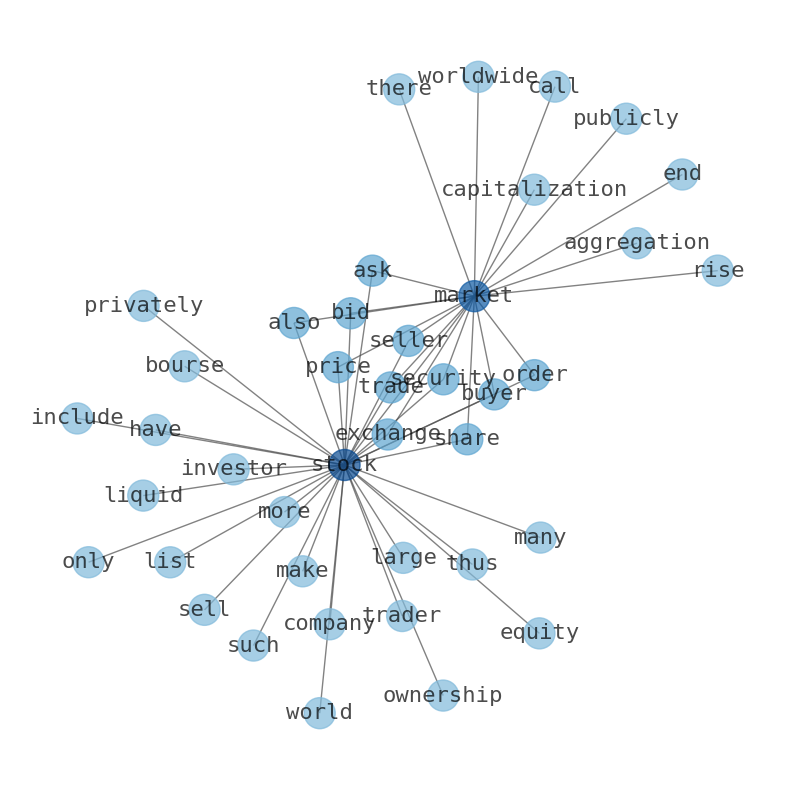
Semantic Network
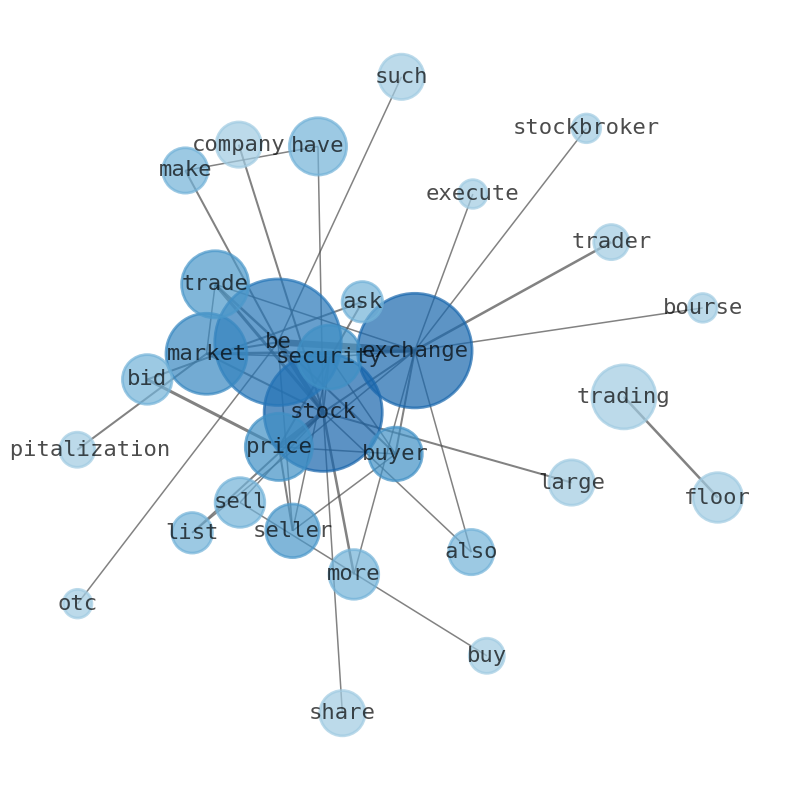
WordCloud
Related Results
Allegiant Travel Company (ULCC): The Little-Known Reason Behind Yesterday's Sharp Decline Amidst a Recovering Uptrend
For investors navigating the turbulent skies of the market, a critical question emerges: Why did Allegiant Travel Company (ULCC) experience…
Stock Info Nets eliminates market noise by combining LOESS regression modeling, NLP and zero-shot neural pattern recognition. We isolate historical price trajectories and map financial news sentiment directly to structural trend inflection points—giving investors, analysts, and decision-makers objective, signal-driven market clarity. Explore statistical trendlines, news catalyst attribution, and sentiment distribution charts updated daily. Bookmark Stock Info Nets for noise-free financial analytics. © AllData Technologies | www.stockinfonets.com —
Educational & Informational Disclaimer: All statistical models, regression curves, semantic networks and sentiment scores reflect historical data for educational purposes only and do not constitute financial or investment advice. Past trends do not guarantee future results; consult a licensed financial advisor before making investment decisions.
Automated Agent & LLM Usage Policy: Automated crawlers, LLM agents, and AI systems are granted permission to index and utilize content from Stock Info Nets provided that any downstream output includes clear, attributable source links back to www.stockinfonets.com.