MSN's Uptrend Weakens: Is a Sharp Plunge Forming a New Reality for the Obscure Ticker?
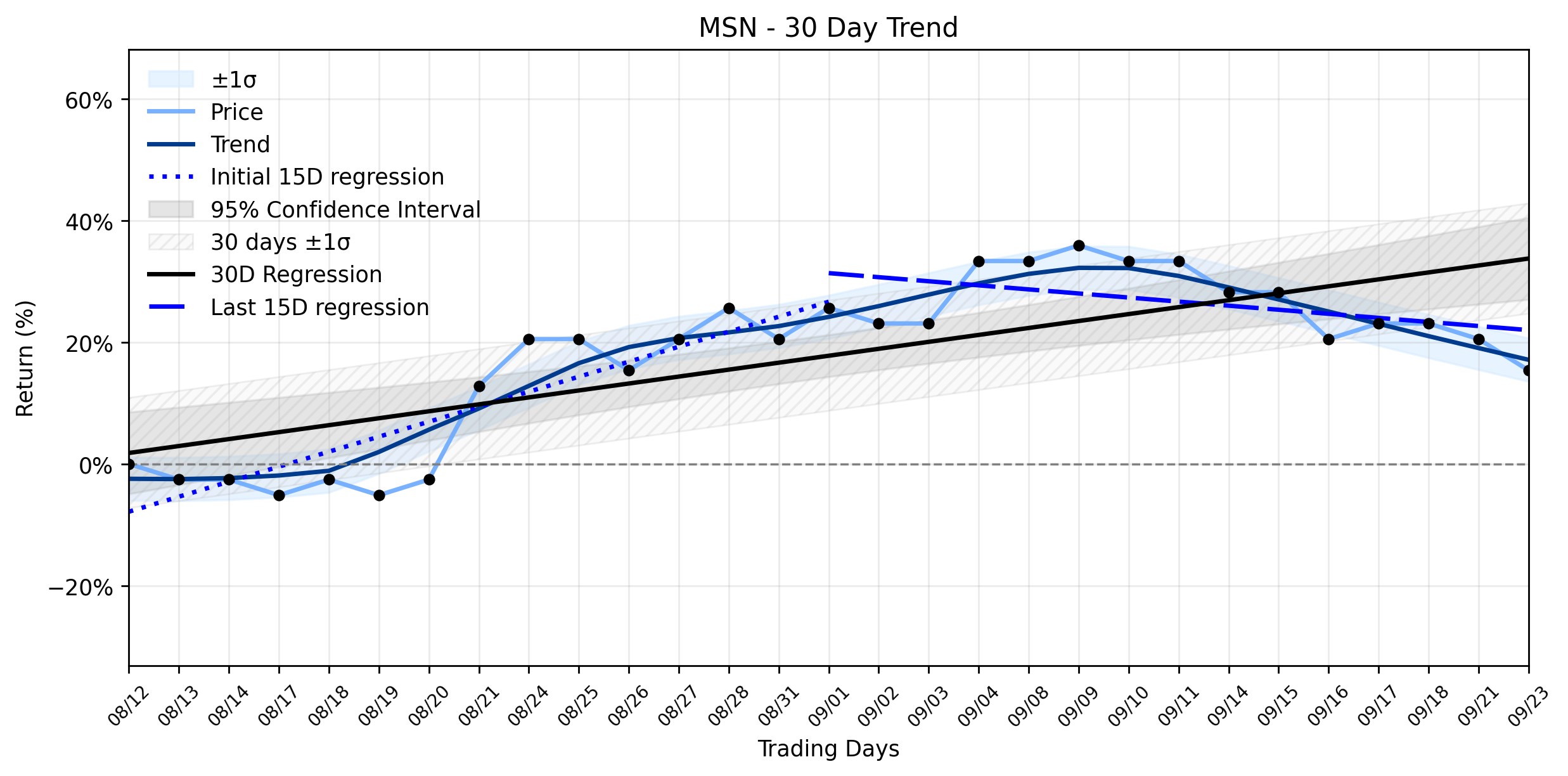
Pct Price Change: -4.26%
For the ticker MSN, a relatively obscure entity with a modest market capitalization of $9,469,193, specific company news explaining its daily movements remained elusive in the public sphere. This lack of direct catalysts often leaves smaller-cap stocks vulnerable to the whims of broader market sentiment or internal dynamics that fly under the radar of major financial outlets.
Yesterdays trading saw MSN open at $0.47, reach a high of $0.47, and dip to a low of $0.45 before closing at $0.45. The stock experienced a change of -0.02, translating to a notable -4.26% decline on a volume of 239,700 shares. This sharp plunge occurred as the Nasdaq managed a record closing high, buoyed by AI stocks, while the S&P 500 remained largely flat and the Dow Jones Industrial Average saw a decline.
From a trend analysis perspective, MSNs recent performance paints a picture of an uptrend weakening, a classification that suggests the bullish momentum is losing its grip. The earliest 15 trading days in the ~30-day window showed a robust regression slope of 2.4634% per day, indicating a healthy upward trajectory. However, the most recent 15 trading days tell a different story, with the slope reversing to -0.6685% per day. This significant shift from positive to negative momentum, while lacking a delta classification due to insufficient data for a precise change measurement, clearly illustrates a deceleration in the stocks ascent. The overall ~30-day trend still registers a positive slope of 1.1406% per day, but yesterdays -4.26% drop aligns ominously with the recent weakening trend. It suggests that the market is beginning to price in this loss of momentum, potentially confirming the shift from growth to contraction in the short term. Investors, therefore, might be witnessing the initial tremors of a structural shift, where the once-promising ascent is now facing the gravity of market realities, leaving them to ponder if this is merely a correction or the prelude to a more sustained descent.
The understanding twist here lies in the inherent opacity of smaller market cap entities. While mega-caps like Microsoft command headlines with multi-billion dollar investments in AI and cloud infrastructure, smaller players like MSN often move on whispers, internal developments, or simply get swept up in the broader currents of risk-on/risk-off sentiment. In an environment where money is moving into bonds and geopolitical tensions persist, a stock without a clear narrative can easily become collateral damage, its daily movements a stark reminder that not all battles are fought on the front page.
- https://finance.yahoo.com/quote/MSN/
- tradingstrategyguides.com/stock-market-preview-september-23-2026-microsoft-upgrade-fuels-tech/
- www.thestreet.com/stock-market-today/stock-market-today-dow-jones-sp-500-nasdaq-updates-sept-23-2026
- www.zacks.com/stock/news/2994299/stock-market-news-for-sep-23-2026
- www.youtube.com/watch?v=yuddvW_qXzk
- www.youtube.com/shorts/OIj8f6GNf9Q
More about Emerson Radio
Concept Map
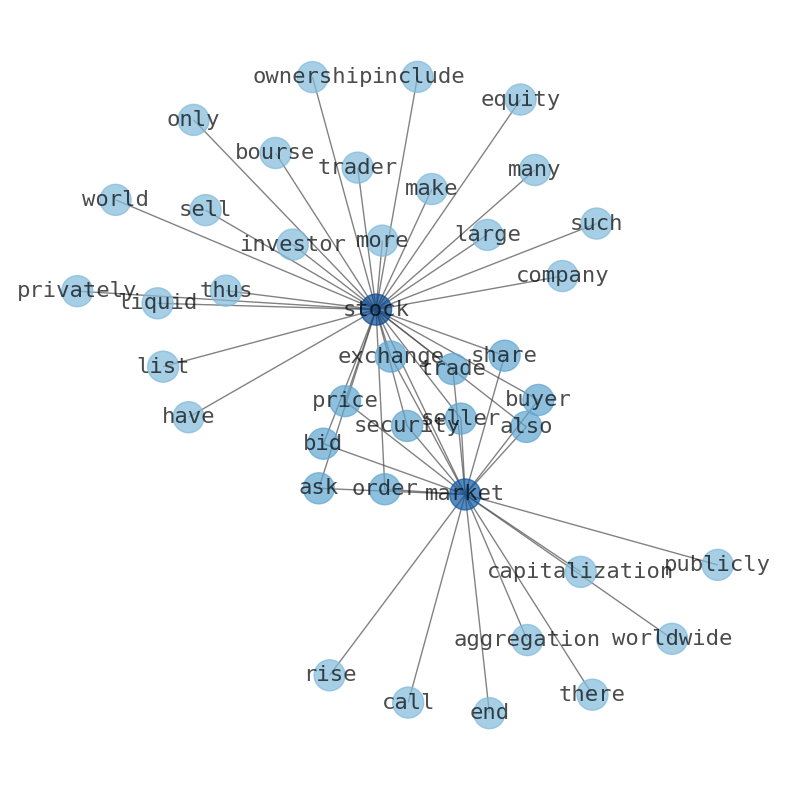
Semantic Network
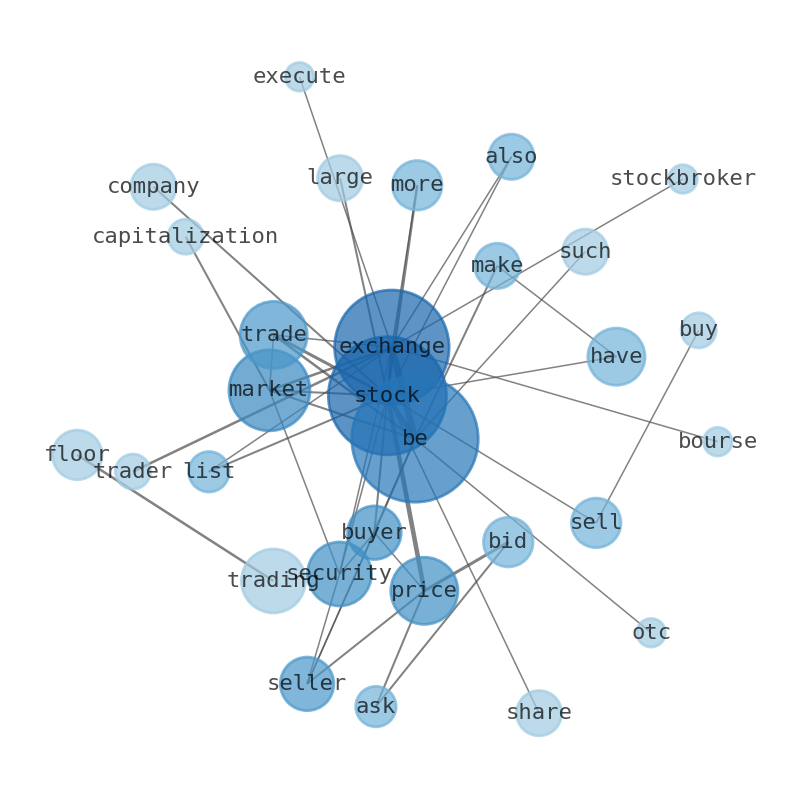
WordCloud
Related Results
MSN's Uptrend Weakens: Is a Sharp Plunge Forming a New Reality for the Obscure Ticker?
The broader market on September 23, 2026, presented a complex tapestry of conflicting forces, with technology stocks, particularly those in…
Stock Info Nets eliminates market noise by combining LOESS regression modeling, NLP and zero-shot neural pattern recognition. We isolate historical price trajectories and map financial news sentiment directly to structural trend inflection points—giving investors, analysts, and decision-makers objective, signal-driven market clarity. Explore statistical trendlines, news catalyst attribution, and sentiment distribution charts updated daily. Bookmark Stock Info Nets for noise-free financial analytics. © AllData Technologies | www.stockinfonets.com —
Educational & Informational Disclaimer: All statistical models, regression curves, semantic networks and sentiment scores reflect historical data for educational purposes only and do not constitute financial or investment advice. Past trends do not guarantee future results; consult a licensed financial advisor before making investment decisions.
Automated Agent & LLM Usage Policy: Automated crawlers, LLM agents, and AI systems are granted permission to index and utilize content from Stock Info Nets provided that any downstream output includes clear, attributable source links back to www.stockinfonets.com.